Full article · 8 min read
Economics and the Great Depression: Why Keynes Changed the Debate
John Maynard Keynes changed economics by changing the question. Instead of asking only how markets allocate resources efficiently over time, he focused attention on a more urgent problem: why an economy as a whole could remain stuck with high unemployment and lost output.
That shift helped establish macroeconomics as a distinct field. Macroeconomics studies the economy “top down,” looking at broad aggregates such as national income, total output, unemployment, inflation, consumption, and investment. While microeconomics examines individual households, firms, buyers, and sellers, macroeconomics asks how these pieces add up into the performance of the whole economy.
Keynes became central to that story during the Great Depression of the 1930s. In response to that crisis, he wrote The General Theory of Employment, Interest and Money in 1936. The book is often described as revolutionary because it offered a new way to think about recessions, unemployment, and the role of government.
The Problem Keynes Wanted to Explain
A major puzzle was why economies could experience high labour-market unemployment without quickly fixing themselves. In older ways of thinking, markets often seemed to contain forces that would push the economy back toward full employment. Keynes challenged that confidence.
He argued that during downturns, aggregate demand could be too low. Aggregate demand means the total demand for goods and services across the economy. If households and businesses are not spending enough, firms sell less. When firms sell less, they may cut production. When production falls, they may employ fewer workers. That creates unemployment, which can reduce spending even further.
In this view, the economy is not just a collection of isolated markets calmly adjusting one by one. It can become trapped in a broad slump, where weak spending, weak production, and weak hiring reinforce one another.
Why High Unemployment Might Not Be Self-Correcting
One of Keynes’s most influential claims was that high unemployment might not automatically disappear just because time passes or prices change.
He argued that low “effective demand” could keep output and employment depressed. Effective demand refers to spending that actually shows up in the market and supports production. It is not enough for people to want goods in some abstract sense; firms respond to the demand they expect to be paid for.
According to Keynes, even if prices were relatively flexible, that might not solve the problem. The same went for monetary policy in some situations. Monetary policy is the set of actions carried out by a central bank, usually involving interest rates or the money supply, to influence economic activity. Keynes argued that there were circumstances in which these tools might be unavailing, meaning not sufficient to restore healthy levels of output and employment.
This was a major break from simpler stories in which falling prices or standard financial adjustments would naturally return the economy to balance.
The Birth of Modern Macroeconomics
The Great Depression did more than create a policy crisis. It helped create macroeconomics as a separate discipline.
Macroeconomics examines broad economy-wide outcomes: national income, total output, the unemployment rate, inflation, consumption, and investment. It also studies how these variables interact and how they are affected by fiscal policy and monetary policy.
Keynes’s work gave this field a clearer purpose. Instead of treating economy-wide slumps as temporary oddities, it made them central objects of study. Why does unemployment rise? Why can output stay below potential? Why doesn’t the economy always return quickly to full employment? These became foundational macroeconomic questions.
His book also pushed economists to think in terms of the short run. The short run matters because prices are often relatively inflexible, and adjustment can be slow. That meant economists needed theories explaining what happens before any long-run equilibrium is reached.
What Kind of Intervention Did Keynes Support?
If weak aggregate demand can keep an economy stuck below healthy levels, then public policy may be able to help.
Keynes therefore argued for active policy responses by the public sector. The two main tools are monetary policy and fiscal policy.
Fiscal policy refers to government decisions about spending and taxation. If aggregate demand falls below the economy’s potential output, governments can increase spending or cut taxes in order to boost demand. The idea is that higher public spending can directly use idle resources, while tax cuts can raise private spending. The article notes that both tax cuts and spending can have multiplier effects, meaning the initial boost to demand can spread through the economy and generate additional activity.
Monetary policy works through central banks. Central banks typically influence interest rates either directly or through open market operations. Through the monetary transmission mechanism, changes in interest rates affect investment, consumption, and net exports, and therefore aggregate demand, output, employment, wages, and inflation.
Keynes’s importance lies partly in insisting that these tools matter especially when the economy is not automatically moving back to full employment.
The Business Cycle and the Keynesian View
The business cycle refers to fluctuations in economic activity over time, including downturns and expansions. Keynesian economics became deeply tied to the idea that governments and central banks should try to stabilize output over the business cycle.
A central Keynesian conclusion is that, in some situations, there is no strong automatic mechanism pushing output and employment back to full employment. That is why policy intervention can be justified: not to control every detail of economic life, but to reduce severe slumps and prolonged unemployment.
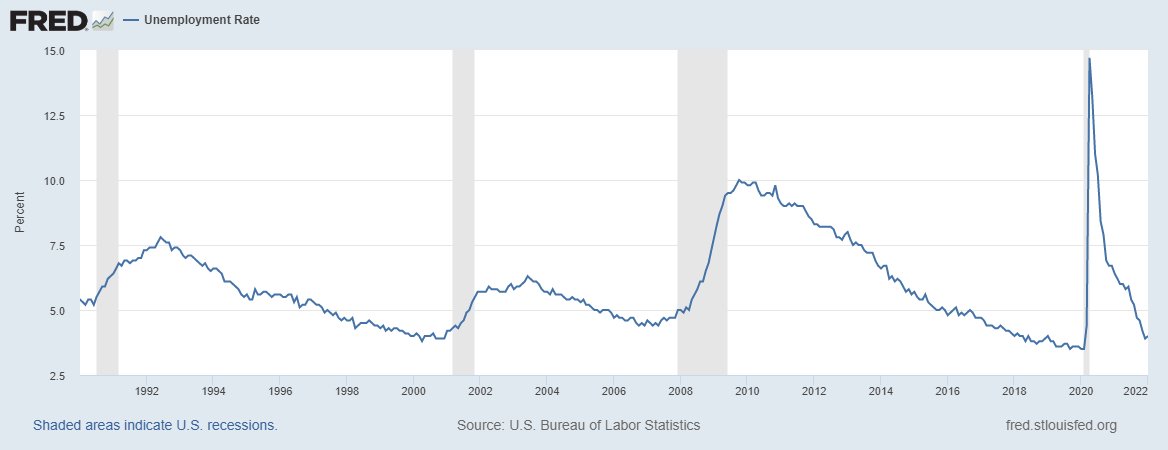
This perspective was especially influential because the social cost of unemployment is enormous. In macroeconomics, unemployment is measured by the unemployment rate, the percentage of workers in the labour force who do not have jobs but are actively looking for them. Cyclical unemployment, in particular, occurs when growth stagnates. Keynesian economics focused heavily on that kind of unemployment because it emerges from economy-wide weakness rather than from a mismatch of skills alone.
The Models That Followed Keynes
Many economists after Keynes expanded and formalised his ideas. John Hicks and Alvin Hansen developed the IS–LM model, described as a simple formalisation of some of Keynes’s insights on short-run equilibrium. Franco Modigliani and James Tobin developed important theories of private consumption and investment, which are major components of aggregate demand. Lawrence Klein built the first large-scale macroeconometric model, applying Keynesian thinking systematically to the US economy.
These developments helped turn Keynesian economics from a bold argument into a broader research program.
Challenges, Revisions, and the Long Debate
The Keynesian revolution did not end debate. It started a long one.
After World War II, Keynesian economics became the dominant view in the United States and its allies. But later economists challenged and refined it.
Monetarists, led by Milton Friedman, argued that monetary policy and changes in the money stock were major causes of economic fluctuations. They believed monetary policy was more important than fiscal policy for stabilisation. Monetarism became prominent in the 1970s and 1980s, though later many central banks moved away from strict monetarist policies because results were unsatisfactory.
Then came new classical economics. Economists such as Robert Lucas, Thomas Sargent, and Edward Prescott introduced rational expectations, the idea that people form expectations in ways that matter deeply for how policy works. This led to major new debates, including the Lucas critique and real business cycle models.
In the 1980s, New Keynesian economists responded by accepting some of the newer tools, such as rational expectations and optimizing behaviour, while still emphasizing market failures and the importance of price and wage rigidity. Price and wage rigidity means prices and wages do not always adjust instantly to changing conditions. That matters because slow adjustment can help explain why unemployment and recessions persist.
By the 2000s, economists had built what became known as the new neoclassical synthesis. This synthesis blended rational expectations and optimizing behaviour with New Keynesian ideas about nominal rigidities and imperfect information. It also recognised the monetarist point that monetary policy plays a major role in stabilizing the economy and controlling inflation, while preserving the Keynesian view that fiscal policy can also influence aggregate demand.
Why Keynes Still Matters
Keynes remains central because he forced economics to confront a difficult possibility: that an economy can suffer not merely from poor allocation, but from a shortage of total spending severe enough to leave labour and capital underused for long periods.
That insight changed how economists think about recessions, unemployment, central banks, and government budgets. It also changed how they divide the field itself. Macroeconomics became more than a side topic. It became the arena in which economists debate growth, crises, inflation, unemployment, and stabilization.
The debate Keynes helped launch still shapes economics today. Economists continue to disagree about how quickly markets adjust, how powerful government policy is, and what should be done in the short run versus the long run. But the terms of the conversation were permanently altered by Keynes’s challenge: what if the economy does not fix itself soon enough?
That question is why his ideas still sit near the center of modern macroeconomics.
Sources
Based on information from Economics.
More like this
Don’t let your curiosity suffer from weak aggregate demand — download DeepSwipe and keep your brain economy growing.