Full article · 7 min read
Humans and the Prefrontal Cortex: The Brain Region Behind Planning, Tools, and Civilization
What helped humans become so adaptable, so social, and so capable of reshaping the world? A major part of the answer lies in a region of the brain just behind the forehead: the prefrontal cortex, often shortened to PFC.
Humans are the only living species in the genus Homo, and compared with other primates, they stand out not just for walking on two legs or using their hands with remarkable precision, but also for their unusually large brains relative to body size. More specifically, humans have a disproportionately larger volume of both cerebral white matter and gray matter in the prefrontal cortex than any other primate species. That expansion is linked to higher-order executive functions — the mental abilities that support planning, self-control, decision-making, and other forms of complex thought.
This part of the brain did not matter in isolation. It helped humans adapt to varied environments, develop sophisticated tools, and build the complex social structures that eventually became civilizations.
What is the prefrontal cortex?
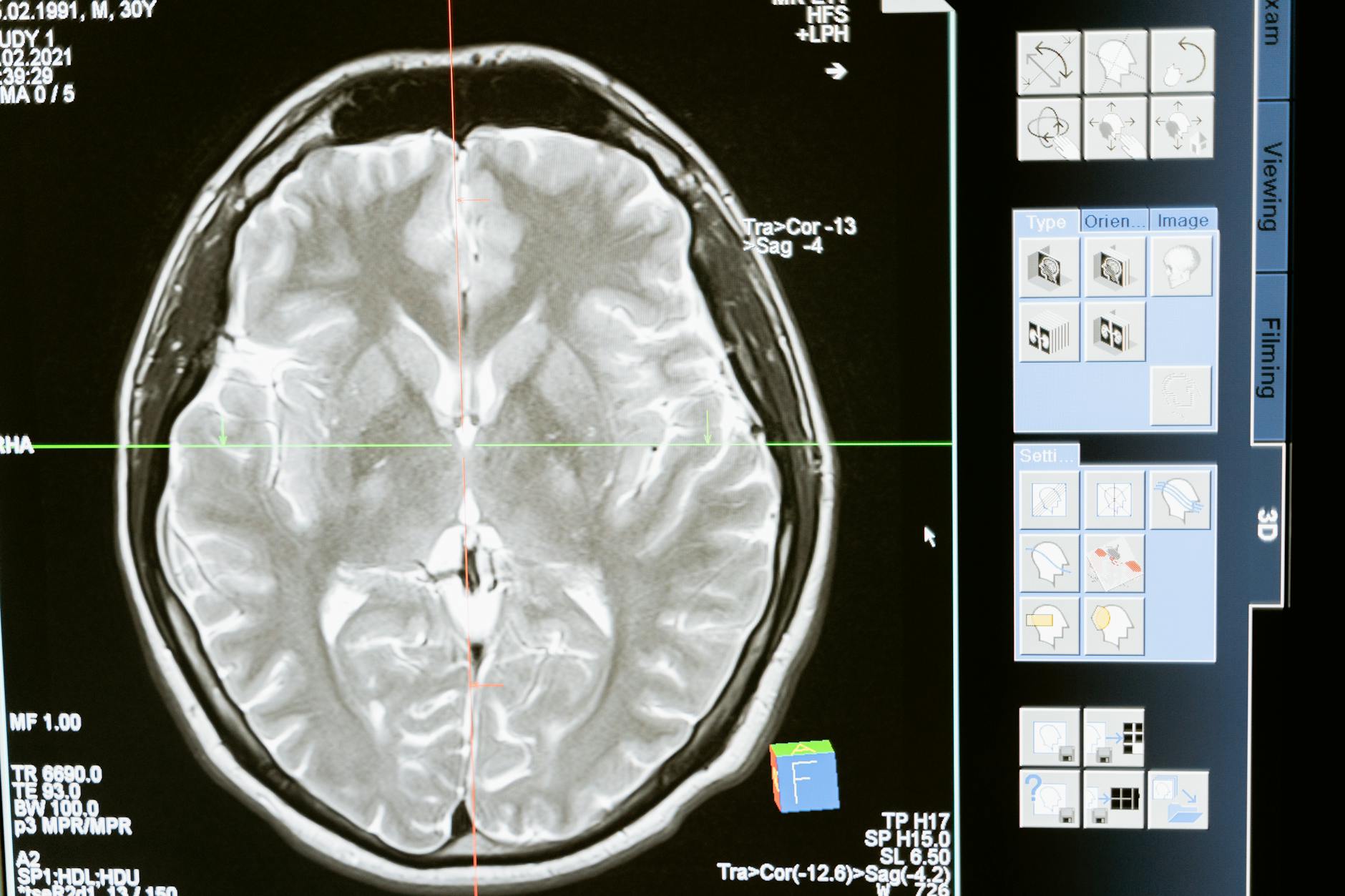
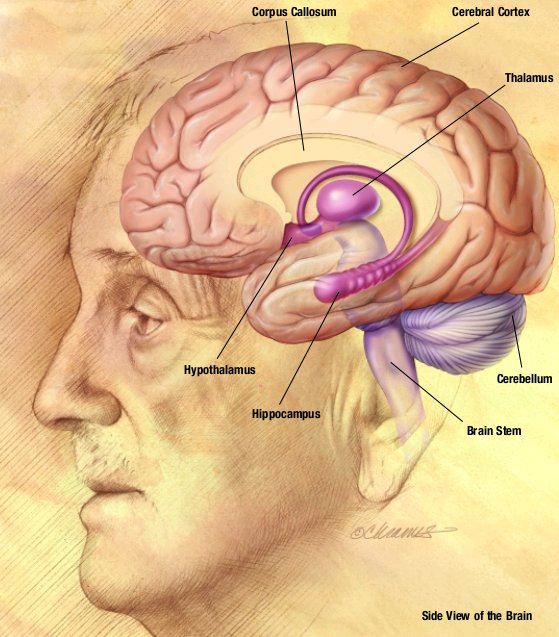
The prefrontal cortex is the front part of the brain's cerebral cortex, located behind the forehead. It is associated with higher cognition, meaning the kinds of mental activity involved in thought, reasoning, and abstraction.
When researchers talk about executive functions, they mean the mental processes that help a person organize behavior toward goals. These include planning ahead, focusing attention, controlling impulses, and making decisions. In practical terms, this is the kind of brainpower involved in everything from coordinating a hunt to building institutions, following social norms, or imagining a future that does not yet exist.
Humans have especially large amounts of both gray matter and white matter in this region. Gray matter contains neuron cell bodies and is involved in processing information. White matter consists of bundles of nerve fibers that connect different brain regions, helping information move efficiently through the brain. A larger volume of both suggests not just more processing capacity, but stronger coordination across the systems involved in thought and behavior.
Why humans stand out among primates
Humans are primates, and more specifically great apes. Yet several traits set them apart. They are characterized by hairlessness, obligate bipedality, manual dexterity with opposable thumbs, precision grip, and high intelligence. Their brains are also large compared with body size, a feature described as a high encephalization quotient.
That larger brain supports advanced cognitive skills, but the prefrontal cortex appears especially important because it is tied to the functions that turn intelligence into organized action. A large memory or strong perception alone would not build cities, create laws, or sustain scientific traditions. Executive control helps humans do those things over long periods and within large groups.
This is one reason the human brain is often discussed alongside social complexity. Humans do not simply survive as isolated individuals. They live in layered networks of families, peers, organizations, and political states. Such societies depend on values, norms, traditions, and shared systems of behavior. Managing life inside those systems requires attention, restraint, prediction, cooperation, and flexible thinking — all qualities associated with higher cognition.
The prefrontal cortex and human adaptation
Humans are one of the most adaptable species on Earth. They are present in nearly all regions of the world, from tropical rainforest and arid desert to arctic regions and heavily polluted cities. They have even explored Antarctica, the deep sea, outer space, and the Moon.
That adaptability is not just physical. Humans often survive by changing their behavior, inventing new tools, and altering their surroundings. They use technology, clothing, irrigation, urban planning, construction, and many other methods to live in environments that would otherwise be hostile.
The mental skills linked to the prefrontal cortex help make that possible. Planning allows people to prepare for seasons, travel, and scarcity. Decision-making helps groups respond to changing conditions. Self-control supports cooperation and long-term goals. Abstract thought makes it possible to imagine solutions before they physically exist.
Humans were hunter-gatherers for most of their history, and behavioral modernity emerged roughly 160,000 to 60,000 years ago. Later, the Neolithic Revolution brought agriculture and permanent settlement in multiple places. That transition required more than raw strength or instinct. It depended on the ability to organize labor, manage resources, maintain long-term settlements, and pass down increasingly complex knowledge.
From mental control to tools and technology
The human story is also a story of tools. Stone tools were used by proto-humans at least 2.5 million years ago, and technology became much more sophisticated around 1.8 million years ago. Controlled use of fire began around 1 million years ago. Much later came the wheel, metalworking, paper, the printing press, and a long chain of innovations that reshaped daily life.
Sophisticated tools do not emerge from hand anatomy alone. Humans do have manual dexterity, opposable thumbs, and precision grip, but using those abilities well requires coordination between perception, intention, and planning. Executive functions help humans sequence actions, solve problems, and pursue goals over time.
This matters especially when technologies become cumulative. Humans are unusual in their ability to transmit knowledge across generations and keep building on it. Teaching and learning preserve cultural identity, and accumulated knowledge can be tested, refined, and expanded. Over time, that has produced scientific laws, engineering systems, and vast technical traditions.
The prefrontal cortex fits naturally into that picture. A brain region associated with reasoning, abstraction, and controlled behavior helps explain how humans move from making tools to building tool-making cultures.
The social brain behind complex societies
Humans are highly social. They form relationships based on kinship, marriage, friendship, shared identity, institutions, and political organization. They also create languages, traditions, religions, and governments. This is where executive functions become especially important.
Complex societies require people to follow rules, delay gratification, coordinate with strangers, and navigate layered social worlds. Humans tend to belong to multiple social groups at once, from families and peer networks to corporations and states. Living this way demands flexible thought and behavior.
The human brain is not only capable of reasoning but also of cognition shaped by experience, perception, and social development across the life span. Humans can also use language in uniquely open-ended ways. Human language can produce an effectively infinite number of meanings from a limited number of symbols, and it can refer to things not present in the immediate environment. That ability supports planning, law, storytelling, science, and collective memory.
The same broad mental capacities tied to higher cognition also support philosophy, religion, science, and art. Humans seek explanations, imagine alternative worlds, and create institutions that outlast individuals. The prefrontal cortex is not the whole story, but it is deeply connected to the kind of cognition those achievements require.
A brain built for imagination and control
Several features of human psychology line up with the idea of enhanced higher cognition. Humans may be the only animals with episodic memory and the ability to engage in mental time travel — mentally revisiting past events or projecting into possible futures. They also show strong capacities for abstraction, self-awareness, and complex emotional life.
These abilities matter because planning depends on imagining outcomes before they happen. Decision-making depends on comparing possibilities. Self-control depends on resisting immediate impulses in favor of longer-term aims. Whether the goal is storing food, maintaining a social bond, or building a civilization, executive control turns thought into sustained action.
Even human curiosity reflects this broader pattern. The desire to understand and influence phenomena has driven the development of science, technology, philosophy, mythology, religion, and other frameworks of knowledge. Humans do not merely react to the world; they try to explain it, reshape it, and explain themselves.
Why this brain region mattered so much
A larger prefrontal cortex did not make humans powerful in one narrow way. It helped them combine multiple strengths: intelligence, cooperation, tool use, planning, and cultural learning. That combination let humans spread across the globe, establish permanent settlements, create civilizations, and eventually explore places as extreme as Antarctica, the deep sea, and outer space.
Humans remain animals, but they are unusual animals — highly social, highly curious, and equipped with a brain that supports unusually advanced executive functions. The enlarged prefrontal cortex is one of the clearest clues to how that happened.
Behind laws, cities, agriculture, science, trade, and even the ability to imagine tomorrow lies a patch of tissue behind the forehead that helps humans decide, organize, and hold a plan in mind. It may not look dramatic from the outside, but it helped make human history possible.
Sources
Based on information from Human.
More like this
Give your prefrontal cortex something to plan for — download DeepSwipe and train your brain on fascinating ideas, one swipe at a time.