Full article · 7 min read
Earth’s Troposphere: the Thin Layer Where Weather, Life, and Flight Meet
The troposphere is the lowest layer of Earth’s atmosphere, and even though it is relatively thin, it is where most of the action happens. It is the layer people live in, the layer land plants and land animals depend on, and the layer where nearly all weather forms.
What makes the troposphere especially remarkable is how much of the atmosphere is packed into it. Roughly 80% of the atmosphere’s mass is found here. In fact, about half of the atmosphere’s total mass is concentrated in just the lower 5.5 kilometers. That means the air around us is part of a dense, compressed zone sitting under the weight of all the layers above it.
This is also the part of the atmosphere most directly tied to everyday life. It contains nearly all atmospheric water vapor, which is why clouds, rain, storms, and most other familiar weather phenomena happen here rather than high above in the more rarefied layers.
What exactly is the troposphere?
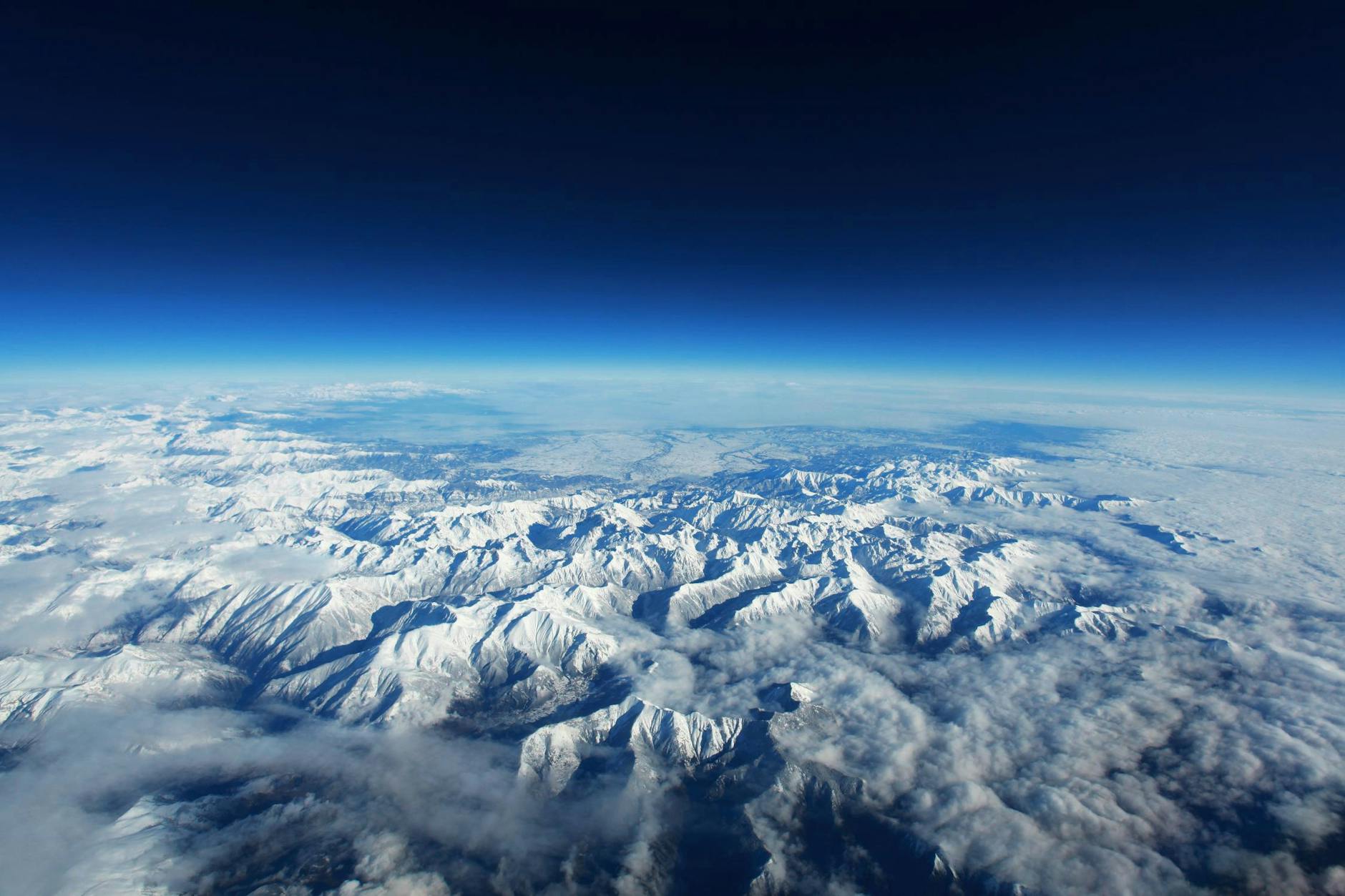
The troposphere extends from Earth’s surface to an average height of about 12 kilometers. Its upper boundary is called the tropopause. That height is not the same everywhere: it is about 9 kilometers near the geographic poles and around 17 kilometers near the Equator, with some variation due to weather.
The name reflects motion. The troposphere is a layer defined by strong vertical mixing, meaning air is constantly moving and turning over. This mixing is a major reason why weather is so active there.
The troposphere is denser than all the atmospheric layers above it. A simple reason is compression: a larger weight of atmosphere sits on top of it, squeezing the air below into a smaller volume. That gives the troposphere the pressure, density, moisture, and motion that make it the atmosphere’s busiest zone.
Why weather happens here
If you want to know why thunderstorms tower upward, why clouds gather, or why most moisture stays close to the ground, the answer keeps pointing back to the troposphere.
Nearly all atmospheric water vapor is found in this layer. The atmosphere’s ability to retain water decreases as temperature declines, and because it generally gets colder with height in the troposphere, about 90% of water vapor is held in its lower part. That concentration of moisture is one of the main reasons weather develops here.
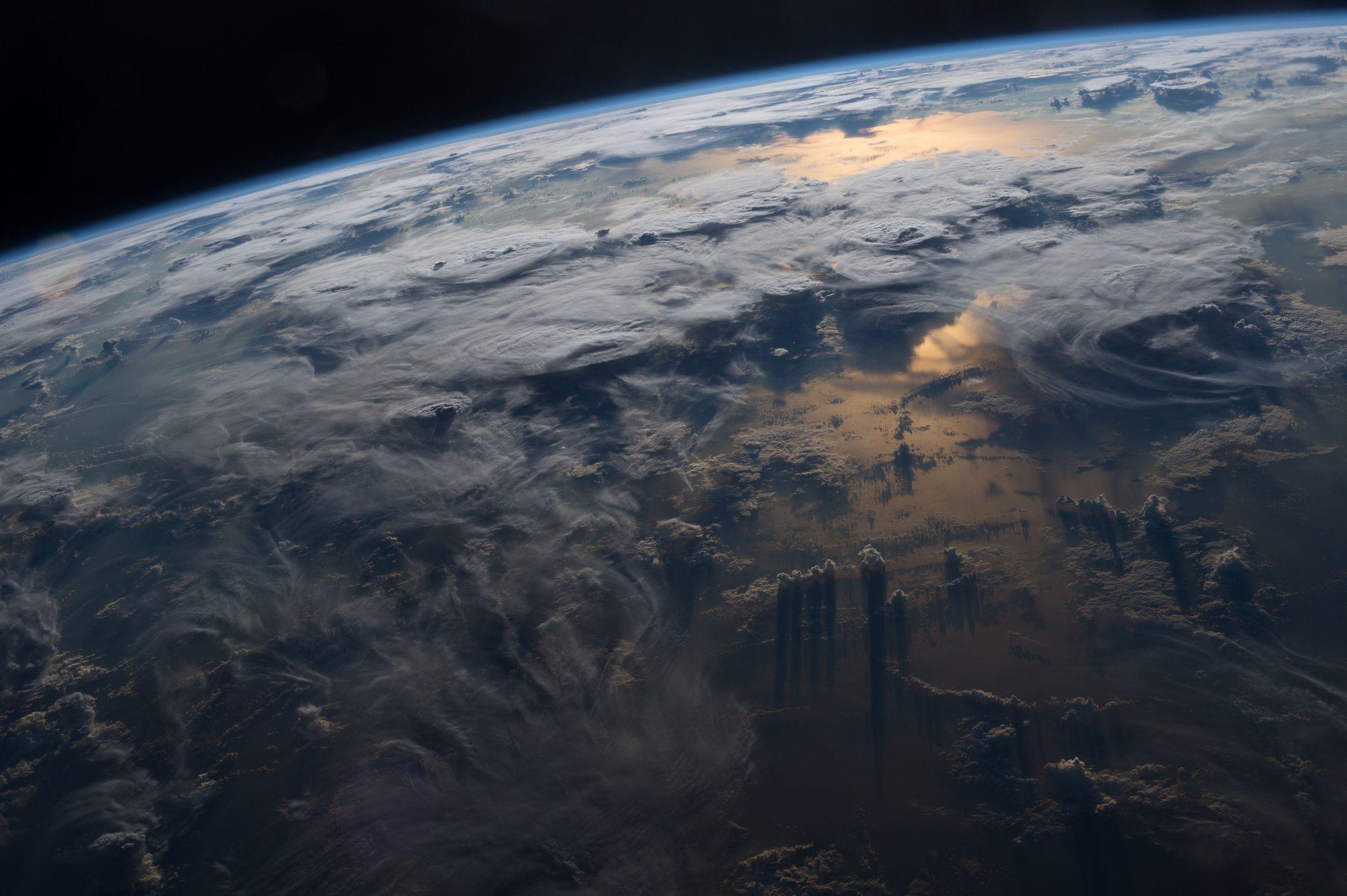
The troposphere contains basically all the weather-associated cloud genus types generated by active wind circulation. In plain terms, this is the cloud-making layer. It is where familiar weather systems form, move, and change.
Some storm clouds can grow so tall that they push into the boundary above. Very tall cumulonimbus thunderclouds can penetrate the tropopause and rise into the lower part of the stratosphere. But even then, they begin in the troposphere, where the moisture and turbulent motion needed for storm growth are concentrated.
Why higher usually means colder
A key feature of the troposphere is that temperature usually declines with altitude. The main reason is that this layer is mostly heated from below, through energy transfer from Earth’s surface. The ground and oceans absorb energy and then warm the air above them.
Because the heating starts near the surface, the lowest part of the troposphere is typically the warmest. As you move upward, temperatures generally fall. This vertical pattern helps drive mixing, as warmer and cooler air interact and move.
That temperature drop is one of the defining characteristics of the troposphere. It is also what helps distinguish it from the stratosphere above, where temperature rises with altitude instead.
There are exceptions. The tropopause itself is often marked by a temperature inversion, which means a layer of relatively warm air lies above colder air. In some places it may instead be a zone that is isothermal with height, meaning temperature remains roughly constant over a vertical distance.
At night, another kind of temperature inversion can form close to the ground. Earth’s surface radiates more energy than it gains from the atmosphere, cooling the ground. Nearby air cools as well, creating conditions where local temperature can increase with altitude up to around 1,000 meters. This can change how air mixes near the surface.
The layer where life on land exists
For life on land, the troposphere is the essential atmospheric layer. Air suitable for terrestrial plant photosynthesis and for the respiration of terrestrial animals is found here. That makes the troposphere not just the weather layer, but the life-support layer for the surface world.
Earth’s atmosphere as a whole protects the planet by shielding the surface from most meteoroids and ultraviolet solar radiation, reducing day-night temperature extremes, retaining heat through the greenhouse effect, and redistributing heat and moisture by air currents. But for organisms living on land, the troposphere is where those planet-wide atmospheric benefits become immediate and practical.
It is the layer in direct contact with forests, deserts, grasslands, cities, farms, mountains, and oceans. The part of the troposphere closest to the ground is called the planetary boundary layer. This zone is directly affected by Earth’s surface, mainly through turbulent diffusion. During the day it is usually well mixed, while at night it often becomes more stably layered with weaker or intermittent mixing.
Its depth can vary a lot, from about 100 meters on clear, calm nights to 1,000 to 1,500 meters or more during the afternoon.
Why the troposphere feels busy and changeable
The troposphere is not calm. It is the main arena of atmospheric circulation, the large-scale movement of air that helps distribute heat around the planet. This circulation works together with ocean circulation to move energy from one region to another.
The flow of air around Earth is divided into three main convection cells by latitude: the Hadley cell around the equator, the Ferrel cell in the mid-latitudes, and the Polar cell in high latitudes. These patterns shape the way air rises, sinks, and travels across the globe.
Where these cells meet, jet streams form. Jet streams are narrow, fast-moving bands of air that usually flow from west to east at about 9,100 meters altitude, which places them in the troposphere. They shift with conditions and are strongest in winter, when the contrast between hot and cold air is most pronounced. In the middle latitudes, instabilities in the jet streams are responsible for moving weather systems.
That is one reason weather can change so quickly. The troposphere is not just moist and mixed; it is dynamically connected across continents and oceans.
The troposphere and aviation
Most conventional aviation activity takes place in the troposphere. This is the layer accessible by propeller-driven aircraft, and it is also where commercial airliners commonly cruise, typically between 9 and 12 kilometers above sea level.
Jets operating in the troposphere often leave contrails behind them. Contrails form from jet engine water emission at altitudes where the atmospheric temperature is about −53 °C, typically around 7.7 kilometers for modern engines.
That makes the troposphere the atmosphere people know not only from standing on the ground and watching clouds, but also from looking out an airplane window.
A thin layer with an outsized role
Compared with the full height of Earth’s atmosphere, the troposphere is just the bottom slice. The atmosphere continues upward through the stratosphere, mesosphere, thermosphere, and exosphere, with no sharp boundary separating atmosphere from outer space. Yet the lowest layer does an astonishing amount of the practical work that shapes everyday life.
It contains most of the atmosphere’s mass, nearly all of its water vapor, and the conditions that support land-based life. It is where temperatures usually decrease with height, where air mixes vigorously, where clouds and storms form, and where most aircraft fly.
So while space may begin far above, the drama humans actually experience is mostly packed into this thin atmospheric shell hugging the surface. The troposphere is not just the first layer of the atmosphere. It is the layer that makes Earth feel alive.
Sources
Based on information from Atmosphere of Earth.
More like this
Chase the forecast of your curiosity — download DeepSwipe and explore more layers of knowledge, starting from the ground up.