Full article · 6 min read
How Electricity Transformed Manufacturing
Electricity did far more than light up factories. It changed the entire logic of production.
Before electrification spread, many factories relied on line shafts and belts. A line shaft was a long rotating rod that carried mechanical power across a workshop, while belts transferred that motion to individual machines. It worked, but it tied factory layouts to a rigid system. Machines had to sit where the power transmission allowed, and the setup required ongoing maintenance.
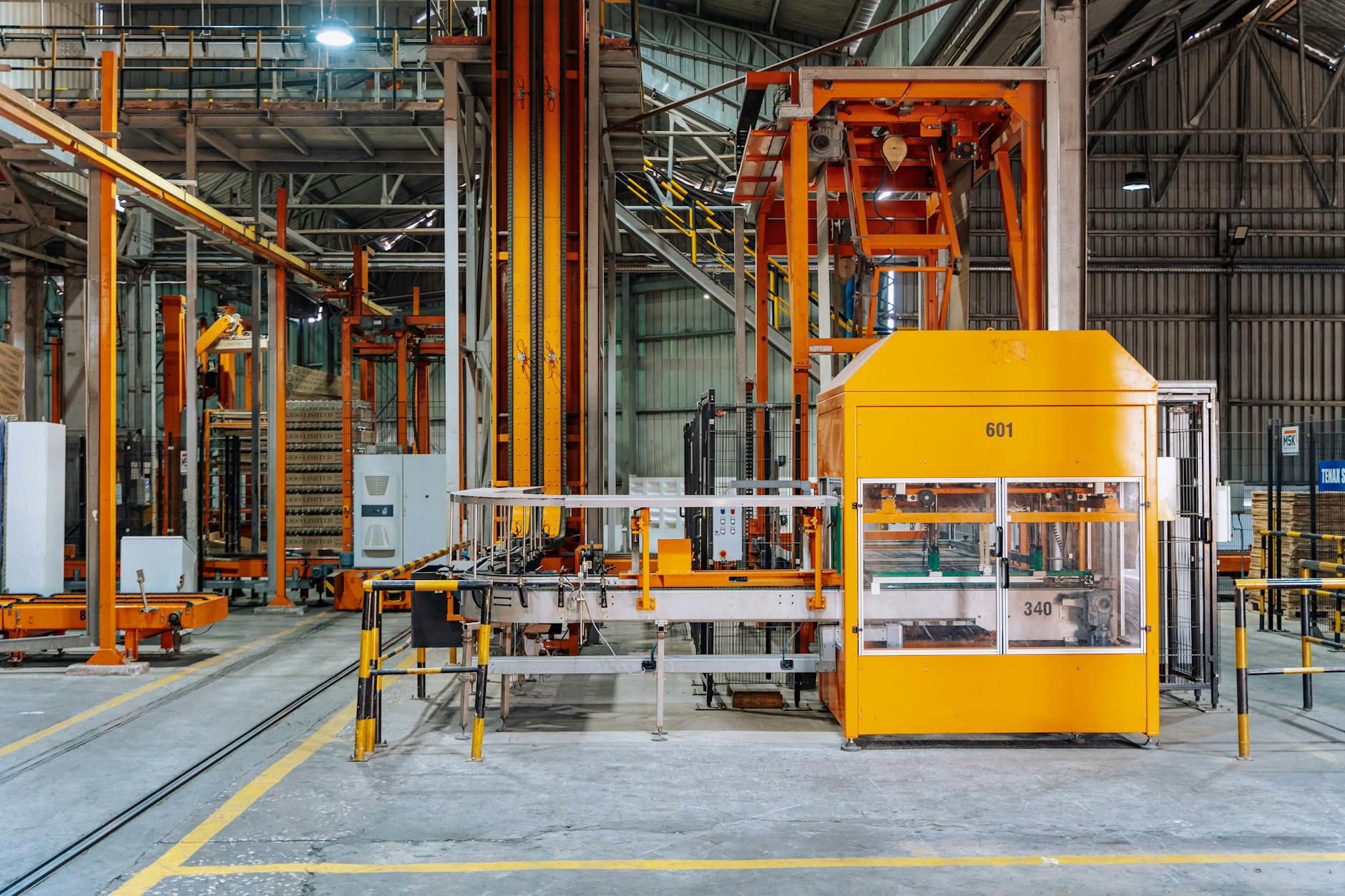
When factories began switching to electric motors, manufacturing became more flexible. Instead of depending so heavily on a central mechanical system, power could be delivered more directly to where it was needed. That gave factory owners and engineers more freedom to organize work, place equipment, and redesign production flow. It also reduced maintenance compared with the older arrangement of shafts and belts.
Electrification changed more than energy
Factory electrification had begun gradually in the 1890s after the introduction of practical DC and AC motors. DC stands for direct current, while AC means alternating current, two different ways electricity can be delivered to machines. The pace of electrification became fastest between 1900 and 1930, helped by the spread of electric utilities with central stations and lower electricity prices between 1914 and 1917.
This was not simply a story of replacing one power source with another. Electricity reshaped how factories operated. Many factories saw a 30% increase in output as the shift to electric motors expanded. That kind of jump shows that electrification was not just about doing the same work with a new power source. It allowed manufacturers to reorganize production itself.
The impact was especially important for modern mass production. Once electric power could be used across many stages of work, manufacturing became easier to coordinate at scale. Everyday goods, not just specialized industrial products, could be produced in greater quantities and with new systems of handling, mixing, moving, and assembly.
A dramatic example: Ball Brothers Glass
One of the clearest examples of electrification in action came from the Ball Brothers Glass Manufacturing Company in Muncie, Indiana, around 1900. The company electrified its mason jar plant and introduced a new automated process that changed labor and output on a remarkable scale.
Glass blowing machines replaced 210 craftsman glass blowers and helpers. That single change reveals how automation and electrification could transform production roles that had once depended on intensive human skill and physical effort.
Material handling changed just as dramatically. A small electric truck was able to move 150 dozen bottles at a time. By comparison, the hand trucks used before could carry only 6 dozen bottles at a time. That is not a small efficiency gain; it is a complete rethinking of movement inside the factory.
Other tasks were transformed as well. Electric mixers replaced men using shovels to handle sand and other ingredients that were fed into the glass furnace. An electric overhead crane replaced 36 day laborers who had been moving heavy loads across the factory. In this one plant, electricity reached into multiple steps of manufacturing: shaping the product, transporting it, preparing raw materials, and moving heavy equipment and loads.
That is why electrification mattered so much. It was not confined to a single machine. Power flowed through every step.
Why electric motors mattered so much
Electric motors gave factories more than speed. They gave them control.
Under older systems, power often had to be mechanically distributed across the building. That meant the whole factory could be constrained by how motion was transmitted. With electric motors, manufacturers gained more flexibility in manufacturing. Machines no longer depended as heavily on one centralized mechanical arrangement.
This flexibility mattered because manufacturing is not just the making of goods. It includes all the intermediary stages involved in producing and integrating components into a final product. When power becomes easier to apply at each stage, the entire system can be redesigned.
Manufacturing engineering, the branch of engineering focused on designing and optimizing the manufacturing process, fits directly into this story. The manufacturing process begins with product design and material specification, and then those materials are modified through manufacturing into the desired product. Electrification improved the environment in which those processes took place, because it made production systems more adaptable and easier to optimize.
The link to mass production
Electrification also helped accelerate mass production. Mass production means making large quantities of goods using organized, repeatable systems. In the late 1910s and 1920s, Henry Ford’s Ford Motor Company popularized mass production, introducing electric motors to the already known technique of chain or sequential production.
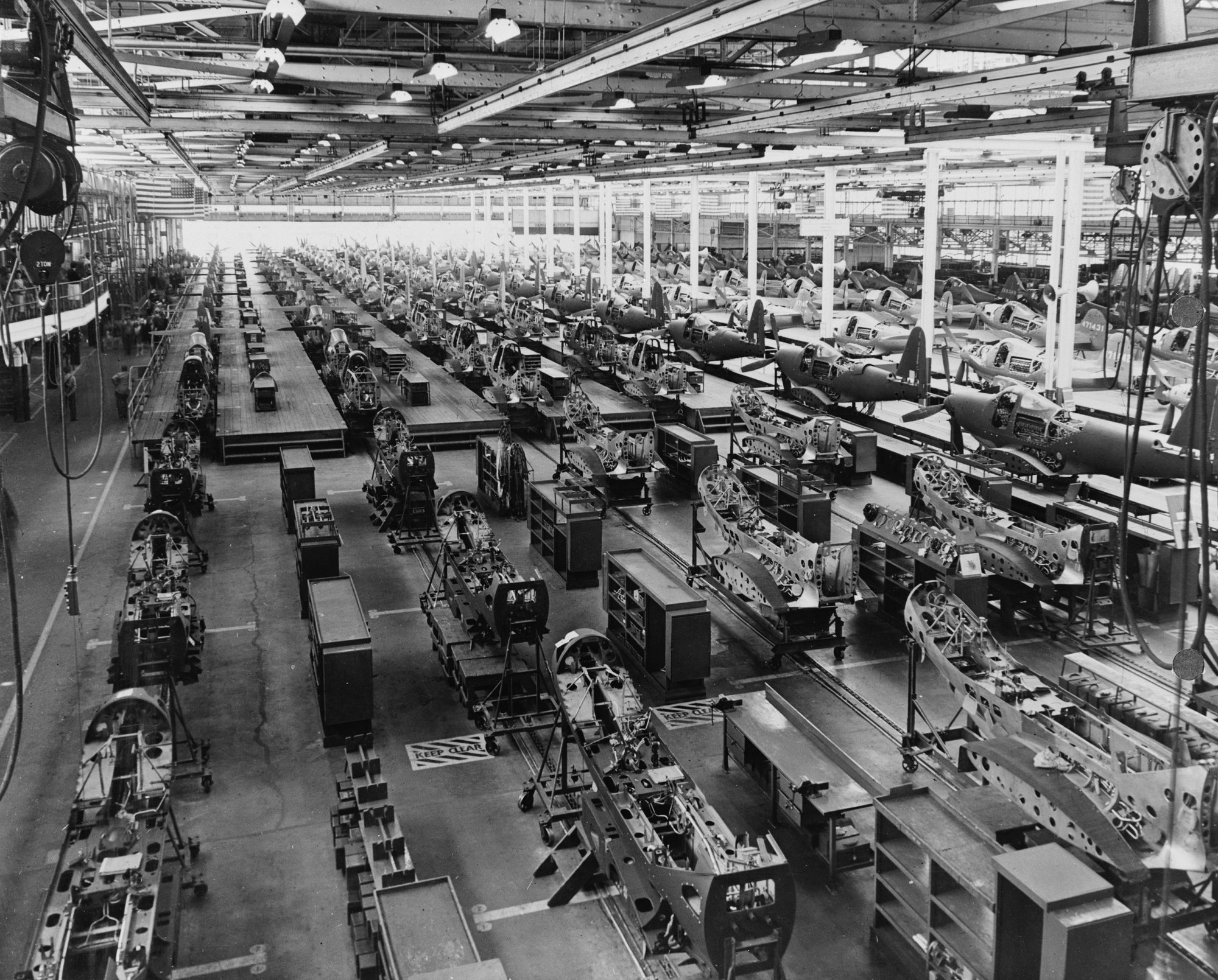
Chain or sequential production is the idea that work moves through a fixed order of steps, with each stage contributing to the finished product. Electric motors supported this kind of flow. They made it easier to arrange machine tools and equipment systematically in production.
Ford’s production of the Model T used 32,000 machine tools. These included special-purpose tools and fixtures designed or built to carry out specific operations efficiently. A fixture is a device that holds a workpiece securely in place during manufacturing. Ford used tools such as multiple spindle drill presses that could drill every hole on one side of an engine block in one operation, and a multiple head milling machine that could machine 15 engine blocks at the same time while they were held on a single fixture.
Although this was a broader mass-production story, electrification helped make these kinds of systems practical and powerful. It reinforced the shift from isolated manual effort to integrated factory systems.
A turning point in modern manufacturing
The rise of electric power fits into a much longer history of manufacturing. Human ancestors made stone tools millions of years ago. Bronze and iron transformed the strength and shape of tools. The Industrial Revolution brought machines, steam power, water power, machine tools, chemical manufacturing, and the mechanized factory system. But electrification marked a special turning point within modern manufacturing because it changed the internal organization of the factory itself.
Factories could become more responsive, more automated, and more efficient. Work that had once relied on human muscle or awkward manual transport could be shifted to machines designed for continuous use. The result was not merely higher output, but a different kind of production environment.
This mattered economically because manufacturing performance is often judged through dimensions such as cost, quality, dependability, flexibility, and innovation. Electrification directly improved flexibility and often supported gains in output, helping manufacturers rethink how they balanced these priorities.
The deeper meaning of factory electrification
What makes electrification so fascinating is that it was both visible and invisible.
Visible changes included electric trucks, mixers, cranes, and glass-blowing machines. Invisible changes included the redesign of workflow, the reduction of maintenance, and the freedom to organize machines in better ways. A factory no longer had to behave like a giant mechanical organism driven through spinning shafts and belts. It could become a more modular, adaptable system.
That shift helped prepare manufacturing for the twentieth century. It connected power, machinery, process design, and organization into one larger transformation. In places like the Ball Brothers plant, the effects were immediate and measurable. Across industry as a whole, they helped lay the groundwork for modern production.
Electricity did not simply make factories run. It rewired manufacturing from the inside out.
Sources
Based on information from Manufacturing.
More like this
Rewire your brain like an electrified factory — download DeepSwipe and power up your knowledge one swipe at a time.


