Full article · 9 min read
Manufacturing and the Industrial Revolution
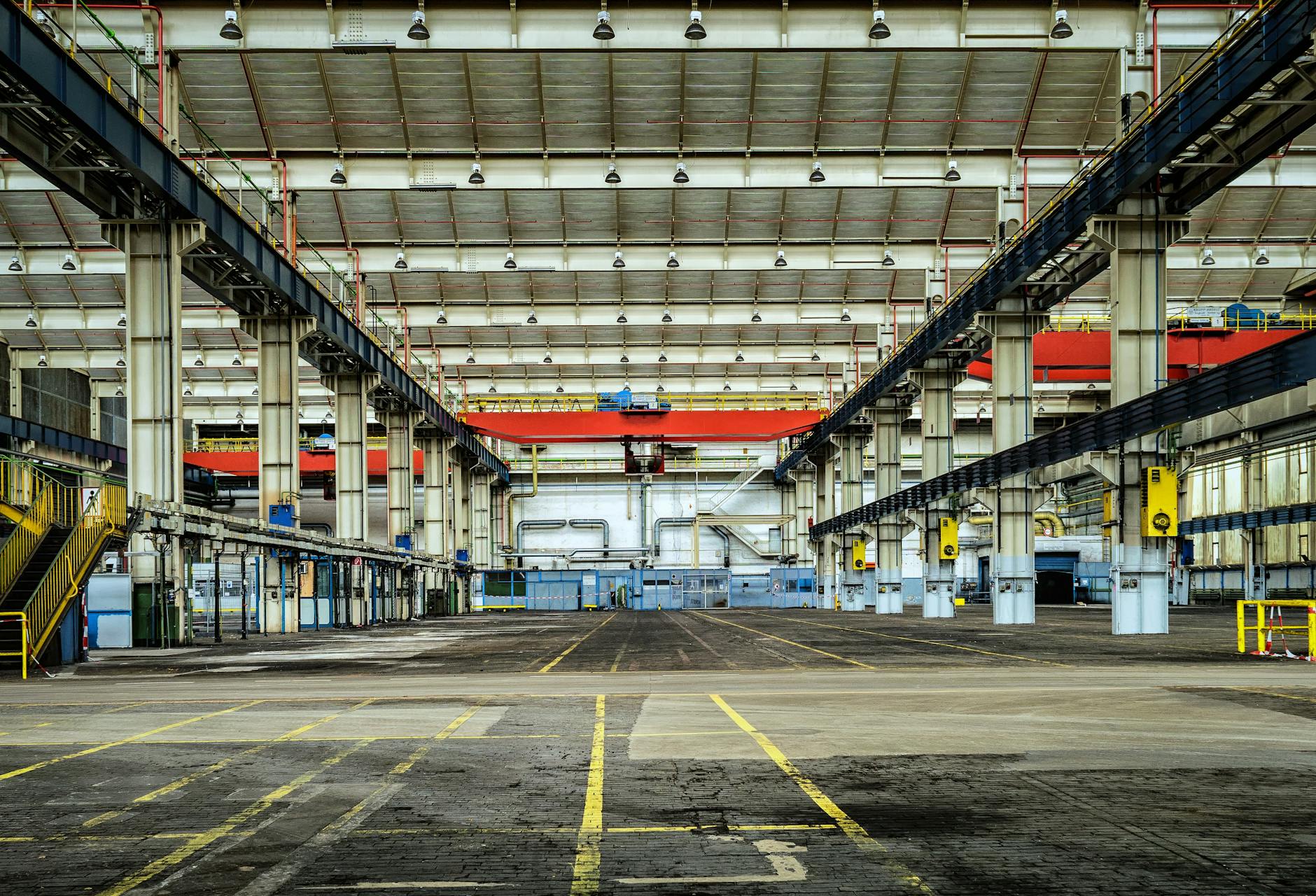
The Industrial Revolution was not simply a moment when factories got larger. It was a deep transformation in how human beings made things. Production moved away from hand methods and toward machines, and manufacturing became a more organized, system-based activity. Instead of goods being produced mainly through scattered craft work, factories increasingly gathered labor, machines, tools, and power into one coordinated process.
Manufacturing is the production of goods using equipment, labor, machines, tools, and sometimes chemical or biological processing. In the Industrial Revolution, this broad idea took on a new scale. Raw materials were transformed into finished goods in ways that were faster, more standardized, and more connected to the wider economy than before.
From hand production to machine systems
Before industrialization, making goods often depended heavily on skilled hand labor. The great shift from about 1760 to the 1830s in Europe and the United States changed that. Manufacturing began to rely increasingly on machines, along with new chemical manufacturing and iron production processes. Steam power and water power became more important, machine tools developed, and the mechanized factory system rose to prominence.
A mechanized factory system means production is organized around machines working in a planned sequence rather than around individual artisans making items largely by hand. This was a major change because it made manufacturing more predictable and easier to expand. Instead of one person completing an item from start to finish, production could be broken into stages.
This period also brought an unprecedented rise in the rate of population growth. Manufacturing was no longer only about making useful goods. It became one of the central forces shaping society, employment, and economic growth.
Why textiles led the Industrial Revolution
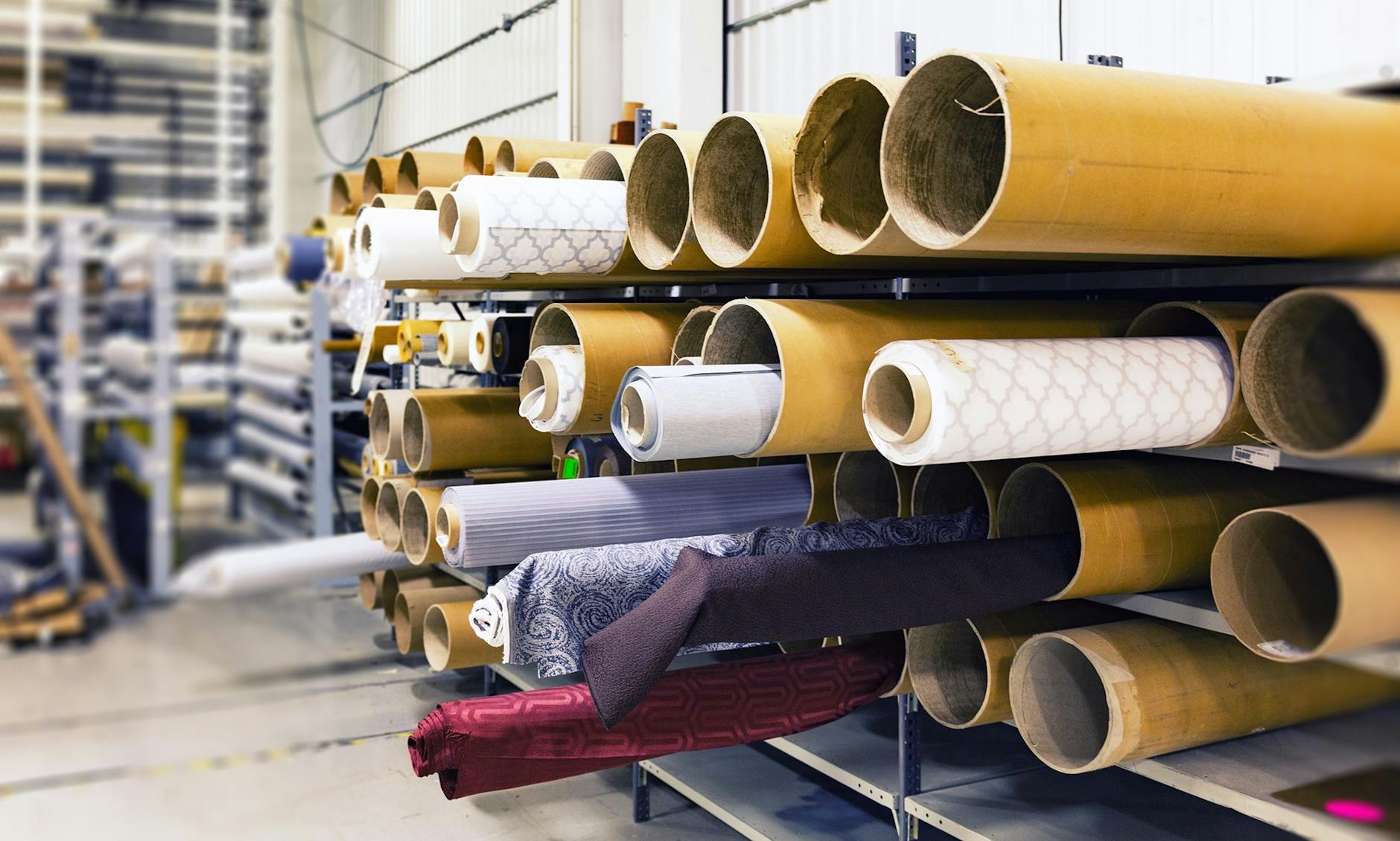
Among all industries, textiles stood at the center of the early Industrial Revolution. Textiles are cloth and fabric products, including the making of thread, yarn, and woven materials. This sector dominated in employment, value of output, and capital invested. It was also the first major industry to adopt modern production methods.
That leadership matters because textiles showed what industrial manufacturing could become. Mechanized spinning began in Britain in the 1780s, and this helped launch rapid industrialization. Spinning is the process of turning fibers into thread or yarn. When that process became mechanized, production increased dramatically compared with hand methods.
Britain was the first place where this rapid industrialization took hold on a large scale. After 1800, high growth in steam power and iron production reinforced the transformation already underway in textiles. In time, mechanized textile production spread from Great Britain to continental Europe and the United States. Important centers of textiles, iron, and coal emerged in Belgium and the United States, while France later became notable for textiles as well.
Textiles were a natural proving ground for industrial methods because they involved repetitive tasks that could be systematized. Once machines could spin and process fibers efficiently, the logic of factory production became clearer to other sectors too.
Steam, water, iron, and the new factory age
The Industrial Revolution was not caused by one invention alone. It was a combination of changes in power, materials, and organization. Water power and steam power allowed factories to operate machinery at a scale that hand labor could not match. New iron production processes also helped provide stronger and more reliable materials for machines and infrastructure.
Machine tools were another essential part of the transformation. These are tools used to shape or manufacture metal and other materials with precision. Their development made it easier to build more machines, maintain them, and standardize production. In that sense, manufacturing began to feed on itself: better machines made it possible to build even better machines.
The result was a factory system that was more than a collection of workers under one roof. It was an interconnected production environment in which machines, labor, raw materials, and power sources were coordinated. That coordination is one reason manufacturing became such a defining feature of the secondary sector of the economy, the part of the economy that transforms raw materials into finished products.
Why early industrial growth slowed down
The first wave of industrial breakthroughs was dramatic, but it did not accelerate forever. From the late 1830s to the early 1840s, an economic recession took hold as the adoption of early Industrial Revolution innovations slowed and their markets matured.
When markets mature, it means the first burst of demand and expansion has already happened. Technologies such as mechanized spinning and weaving had spread widely enough that they no longer produced the same explosive growth as before. The early gains from adopting these methods were real, but once those methods became more common, the pace of change naturally became less dramatic.
This is an important reminder that industrial revolutions do not move in one straight upward line. Early innovations can transform production, but after the easiest gains are captured, economies often need a fresh set of breakthroughs to start a new growth surge.
The bridge to the Second Industrial Revolution
Even during this slowdown, innovation did not stop. In the 1840s and 1850s, newer technologies were introduced widely, including locomotives, steamboats, steamships, hot blast iron smelting, and the electrical telegraph. These innovations were important, but they were not powerful enough on their own to sustain the same high rates of growth that the earliest industrial breakthroughs had generated.
Still, they helped build the foundation for what came next. Manufacturing was becoming more technologically capable and more connected across regions. Transport improved. Communication improved. Industrial processes continued to advance. All of this set the stage for a later and even more powerful wave of transformation.
Steel, mass production, and assembly lines
After 1870, rapid economic growth returned through a new cluster of innovations now called the Second Industrial Revolution. This phase pushed manufacturing into a far more powerful era.
Among the key developments were new steel-making processes, mass production, assembly lines, electrical grid systems, the large-scale manufacture of machine tools, and the use of increasingly advanced machinery in steam-powered factories.
Steel mattered because improved methods of making it expanded what industry could build and how reliably it could build it. Mass production meant making large quantities of standardized goods efficiently. Assembly lines organized production into a sequence of steps, with each stage contributing to the final product. This approach increased speed and consistency.
Electrical grid systems also transformed manufacturing by improving access to power. Instead of relying only on earlier arrangements, factories could operate within a more flexible and extensive energy network. Alongside this, large-scale machine tool production gave manufacturers the means to produce with greater precision and volume.
Together, these changes moved manufacturing beyond the first factory age and into a system of industrial power that shaped everyday life on a much broader scale.
Light, longer hours, and mechanized everyday production
The late 19th century brought another practical shift: incandescent light bulbs became practical for general use in the late 1870s, thanks to improvements in vacuum pumps and materials research. This had a profound effect on the workplace because factories could now run second and third shifts.
That detail captures something essential about manufacturing: sometimes a technology changes production not by altering the product itself, but by changing the conditions of work. Better lighting meant factories were less tied to daylight, which expanded operating time and output.
At the same time, more industries embraced mechanization. Shoe production was mechanized during the mid-19th century. Sewing machines and agricultural machinery such as reapers were mass-produced in the mid to late 19th century. The mass production of bicycles began in the 1880s. Steam-powered factories also became widespread.
These developments show how industrial manufacturing spread from a few leading sectors into many parts of economic life. The methods pioneered in one industry increasingly influenced others.
Electrification and a new level of factory efficiency
Modern manufacturing took another leap with electrification. Factories had begun to electrify gradually in the 1890s after the introduction of practical DC and AC motors, but the process moved fastest between 1900 and 1930. Falling electricity prices and the establishment of electric utilities with central stations helped speed that change.
Electric motors allowed more flexibility in manufacturing and needed less maintenance than line shafts and belts. Many factories saw a 30% increase in output as electric motors became more common. Electrification enabled modern mass production and had a major impact on the manufacturing of everyday items.
One vivid example came from Ball Brothers Glass Manufacturing Company around 1900 at its mason jar plant in Muncie, Indiana. Glass blowing machines replaced 210 craftsman glass blowers and helpers. A small electric truck could handle 150 dozen bottles at a time, while hand trucks had carried only 6 dozen. Electric mixers replaced men using shovels to handle sand and other ingredients, and an electric overhead crane replaced 36 day laborers moving heavy loads across the factory.
This was manufacturing becoming not only mechanized, but increasingly automated and electrically powered.
Ford and the logic of flow production
Mass production became especially famous in the late 1910s and 1920s through Henry Ford's Ford Motor Company. Ford introduced electric motors to the already known technique of chain or sequential production. In this kind of system, production moves in an ordered flow from one stage to the next.
Ford also bought or designed and built special-purpose machine tools and fixtures. These included multiple spindle drill presses that could drill every hole on one side of an engine block in one operation, and a multiple head milling machine that could machine 15 engine blocks at the same time on a single fixture. A fixture is a device used to hold a workpiece steady in exactly the right position during manufacturing.
These tools were arranged systematically in the production flow, and some had special carriages for rolling heavy items into machining positions. Production of the Ford Model T used 32,000 machine tools. This illustrates how manufacturing had become a carefully engineered system rather than just a place where machines happened to be present.
Industrial revolutions were really revolutions in organization
What ties all of this together is not only machinery, but organization. The Industrial Revolution and the Second Industrial Revolution transformed manufacturing because they changed how labor, power, materials, and machines were coordinated.
Factories did not merely get bigger. Textiles demonstrated the power of mechanized production. Early growth then slowed as markets matured. After that, steel, mass production, assembly lines, and electrical systems opened a new industrial age. From mechanized spinning in Britain to the large-scale machine systems of Ford, manufacturing became one of the defining structures of the modern economy.
In that sense, the real revolution was not just in what factories made, but in how production itself was designed.
Sources
Based on information from Manufacturing.
More like this
From spinning frames to assembly lines, manufacturing history is full of game-changing systems—build your own knowledge machine with DeepSwipe.


