Full article · 8 min read
Society: The Roles You Perform Every Day
From the moment you wake up, you move through a world full of expectations. At home, at work, with friends, online, or in public, people read your behavior through shared ideas about what is normal, appropriate, respectful, or strange. These expectations are not random. They are part of how society works.
A society is a group of individuals involved in persistent social interaction, usually sharing territory, institutions, and a distinctive culture. What makes society especially powerful is not just that people live near one another, but that they live within patterns of relationships. Those patterns shape behavior, assign duties, and help people understand who they are supposed to be in different situations.
That is where social roles come in.
What are social roles?
Social roles are the norms, duties, and patterns of behavior connected to a person’s social status. A social status is simply a person’s recognized position in social life. That position might relate to family, work, education, religion, or many other parts of society. Roles tell people, often without anyone saying it out loud, how someone in that position is expected to act.
These expectations are tied to social norms. Social norms are shared standards of acceptable behavior in a group. Some norms are informal understandings, such as how closely to stand when speaking to someone or when it is polite to interrupt. Others become formal rules or laws. Either way, norms are powerful drivers of human behavior.
Together, norms and roles help organize a highly cooperative human social world. Human societies are marked by specialization of labor through social roles. In plain terms, people do different things, fill different functions, and rely on one another. Society makes this possible by treating some actions and ideas as acceptable and others as unacceptable.
Why it can feel like you’re performing
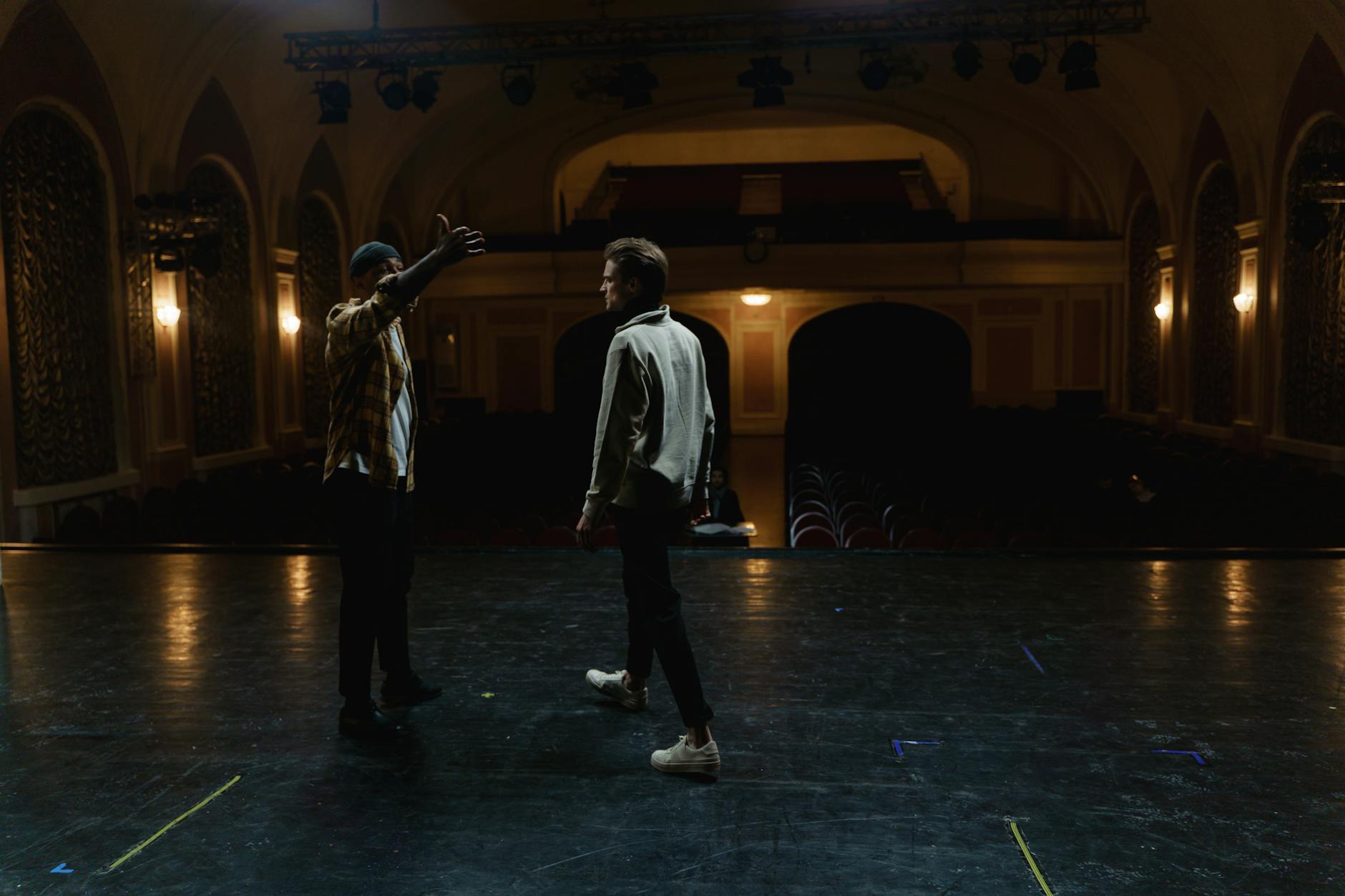
One especially vivid way to understand social roles comes from the dramaturgical lens. This perspective uses the metaphor of theater to explain social interaction. In this view, roles provide scripts that guide how people act with one another.
A script, in this sense, does not mean a literal written page. It means a recognizable pattern for behavior. When you are in a classroom, a workplace, a family gathering, or a public office, there are usually unspoken rules about tone, posture, language, and even emotion. People know when someone is “staying in character” and when someone seems out of place.
This theatrical metaphor helps explain why daily life can feel so structured. Different settings call for different performances. You may speak one way with close friends and another way in a formal meeting. You may present yourself differently depending on the audience around you. That does not necessarily mean you are being fake. It means social life is organized through roles, and those roles come with scripts.
The role of symbols and shared meaning
Roles do not work by magic. They work because people share symbols and meanings.
This idea is central to symbolic interactionism, a microsociological theory focused on individuals and how they relate to society. Symbolic interactionists study how humans use shared language to create common symbols and meanings. Those shared meanings become the frame of reference people use to understand situations and one another.
A symbol can be a word, gesture, title, or behavior that carries shared meaning. Language is especially important because it allows people to coordinate, interpret intent, and respond in socially recognizable ways. Through interaction, people create symbolic worlds, and those worlds shape individual behavior.
This means roles are not just imposed from above. They are also maintained through countless everyday interactions. Every greeting, apology, instruction, and introduction helps reinforce ideas about what kind of person someone is in a situation and what behavior fits that role.
Society shapes you—and you shape society
One of the most fascinating ideas in sociology is that society is not just something outside of us. People create it, but it also molds them.
This back-and-forth has been described as a dialectic: society is created by humans, and this creation in turn creates or molds humans. That captures a basic truth of social life. Groups shape individuals through norms, institutions, and expectations. But individuals also reproduce or alter those patterns through their actions.
That is why roles can feel stable even though the people performing them are always changing. New generations are born into existing systems of meaning and expectation. Through socialization, they learn what behaviors fit different settings and statuses. Yet because individuals act, interpret, resist, and adapt, society is never completely fixed.
Human behavior varies immensely between different societies. Humans shape society, but society in turn shapes human beings. This reciprocal relationship is one reason roles can differ across cultures and historical periods.
A bigger debate: are roles functional or conflict-driven?
Not every sociological tradition interprets roles in the same way.
Functionalism sees society as a system in which individuals work together like organs in a body. From this perspective, social roles help create order and contribute to the larger functioning of society. Individuals occupy roles within a more stable social structure, and those roles help maintain social life.
Conflict theory takes a more critical view. It argues that society is shaped by conflict between individuals and groups, especially social classes. From this perspective, roles may not simply create harmony. They can also reflect inequality, power, and systems that benefit some groups more than others.
These two views can lead to very different questions. One asks how roles help society hold together. The other asks who benefits from the existing script and who is constrained by it.
Roles, status, and everyday inequality
Social roles are tied to status, but status is not equally distributed. Larger societies, especially those with larger food surpluses, often show stratification or dominance patterns. Stratification means society is layered, with some groups having more wealth, status, or power than others.
That matters because people in different positions are often expected to behave differently, and they may also be treated differently. In some societies, roles are closely linked to class, landownership, occupation, education, or political authority. In agrarian societies, for example, social hierarchy develops largely around landownership, with governing classes and peasant majorities forming sharply different social worlds.
Roles can therefore organize cooperation, but they can also reinforce boundaries. Expectations about who leads, who obeys, who speaks, and who serves are part of how inequality can become normal.
Gender roles and kinship roles
Two of the oldest and most influential kinds of social roles are tied to gender and kinship.
Gender roles involve culturally marked divisions of norms, practices, dress, behavior, rights, duties, privileges, status, and power. These roles have varied historically, and challenges to dominant gender norms have recurred in many societies. That means gender expectations may feel natural in a given society, but they are also social patterns that can change.
Kinship roles are based on socially recognized relationships between parents, children, descendants, and relatives through marriage. Kinship is one of the most important social organizing principles in many societies. It helps transmit inheritance, status, and obligations. In everyday life, this means that roles like parent, child, spouse, or relative are not just personal labels. They come with expectations that can be deeply embedded in the larger social order.
Why norms are so powerful
One reason social roles work so effectively is that norms do not need to be constantly enforced by direct commands. People often internalize them. They learn what is acceptable and begin to regulate themselves accordingly.
This is one of the remarkable features of social life. Human society enables cooperation on a large scale, and norms help make that cooperation possible. They reduce uncertainty. They give people common expectations. They make interaction more predictable.
But predictability can be a double-edged sword. It helps with coordination, yet it can also make deviation costly. When someone breaks a norm or refuses a role, others may react with confusion, disapproval, or exclusion. That social pressure is part of what keeps roles in place.
The human side of the social script
Humans are highly social animals, and human society features especially high degrees of cooperation. Compared with our closest relatives, humans show important differences, including language, specialization of labor, and the tendency to build multigenerational camps, towns, or cities. This broader social capacity helps explain why roles become so elaborate in human life.
At the same time, roles are never the full story. Society provides scripts, but people still interpret them. They improvise, negotiate, and sometimes rewrite them. Social life is structured, yet not mechanical.
That is why the question “Who writes your script?” has no simple answer. The group shapes you through norms, institutions, and symbolic meanings. But your actions, repeated across countless moments of interaction, also help reshape the group.
Seeing social life more clearly
Once you start noticing roles, it becomes hard to stop. You can see how shared language signals expectations, how status influences behavior, how norms guide everyday decisions, and how people shift performances depending on audience and setting.
Social roles are not just abstract theory. They are part of the hidden architecture of everyday life. They help explain why people cooperate, why some behaviors feel natural and others feel risky, and why society can seem both stable and constantly changing.
In that sense, daily life really does have something in common with theater. There are scripts, symbols, audiences, and performances. But unlike a play, the stage is the whole social world, and everyone is both actor and co-author.
Sources
Based on information from Society.
More like this
Step into the social script with sharper eyes—download DeepSwipe and let every swipe reveal the roles behind everyday life.