Full article · 8 min read
Toddler Self-Discovery: How Pointing and the Mirror Test Reveal a Growing Mind
The toddler years, roughly from ages 1 to 3, are packed with change. During this period, children make major gains in movement, language, social interaction, and emotional life. Some milestones are easy to spot, like walking, running, climbing, and speaking in short phrases. Others are quieter but just as fascinating. Two of the most revealing are pointing and self-recognition in a mirror.
These behaviors may seem simple on the surface, but they show major psychological development. When a child points at something they want another person to notice, or realizes that the face in the mirror is their own, they are showing a new understanding of themselves and the world around them.
Why pointing matters so much
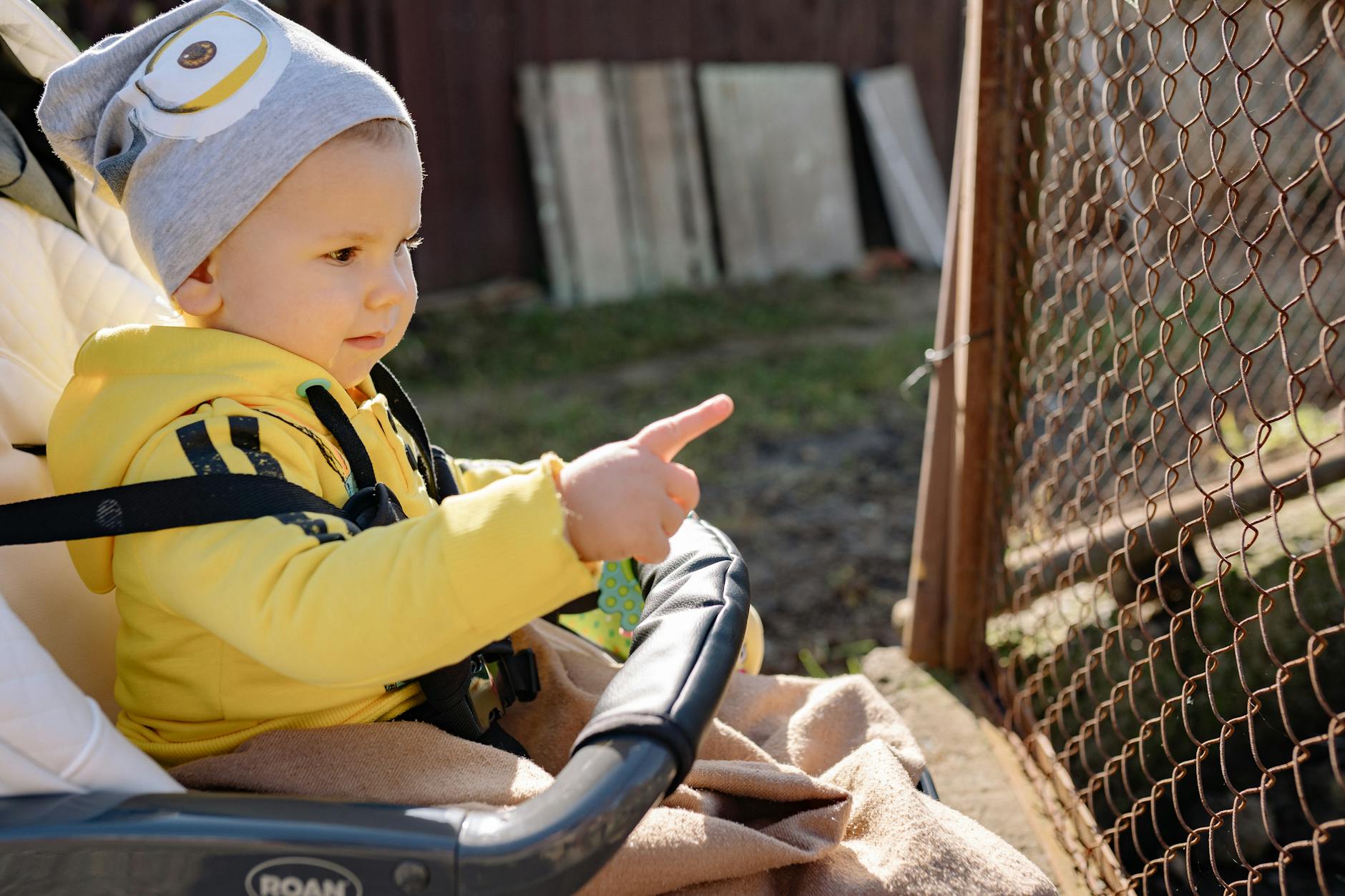
One of the important early milestones in toddler development is gaining the ability to point at something the child wants someone else to see. This usually happens before the first birthday, and it represents a major mental step forward.
Pointing is more than a gesture. It shows that a child is beginning to connect their own attention with another person’s attention. In simple terms, the toddler is not just noticing an object, but also realizing that another person can notice it too. That is a big shift in social awareness.
This fits into a broader pattern of toddler development. Young children are developing social abilities, including interacting with the world through play, taking turns, and engaging in fantasy play. Pointing can be seen as one of the earliest signs that a child is learning how to share experiences with others.
It also appears during a time when toddlers are becoming more active and independent. As they explore their environment and make their preferences known, they increasingly try to communicate what interests them, what they want, and what they need. Pointing is one of the clearest ways they do that before language becomes more advanced.
The road from gestures to words
Pointing becomes even more interesting when seen alongside language development. A toddler’s first word often appears around 12 months, although that is only an average. After that, vocabulary continues to grow steadily until around 18 months, when language often begins increasing rapidly.
At this stage, toddlers may learn as many as 7 to 9 new words a day. Around this time, they generally know about 50 words. By about 21 months, many begin combining words into simple two-word phrases such as “I go,” “mama give,” and “baby play.”
Before words become plentiful, gestures help carry meaning. A child who points is already communicating. They are already saying, in effect, “Look at that,” or “I want you to notice this.” Later, spoken language adds precision, but the social instinct behind the gesture is already in place.
This is part of why early communication milestones are so compelling. Research described in studies of child development has found links between the age at which certain milestones are reached and later intelligence, though experts advise against trying to rush children through them as long as development falls within a normal range. Development varies widely from child to child, and experts stress that children develop in their own time.
When toddlers discover the self
Another striking milestone arrives at around 18 months: self-recognition. At this age, many children begin to recognize themselves as separate physical beings with their own thoughts and actions.
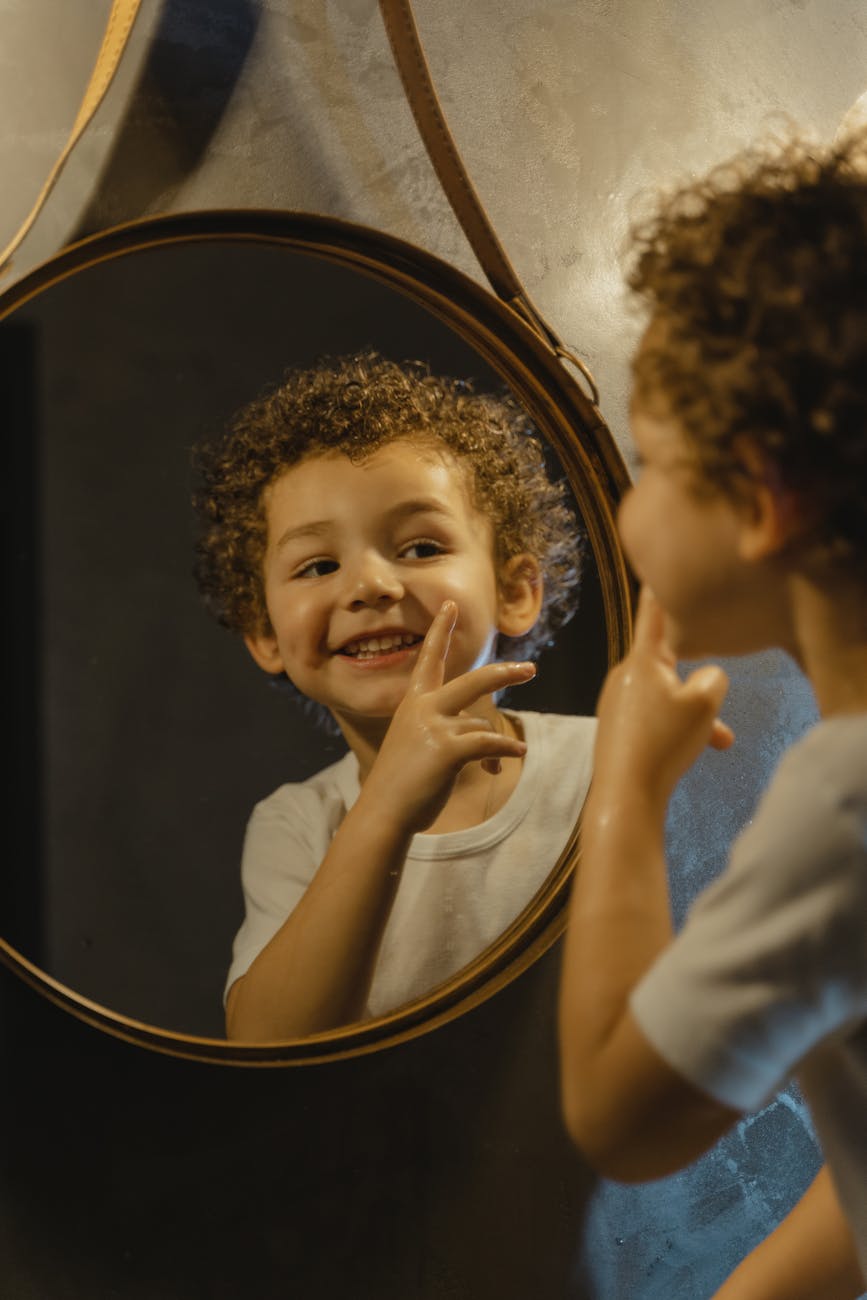
This is an extraordinary change. A younger child may look in a mirror and respond as if they are seeing another child or simply an interesting image. But once self-awareness develops, the reflection is understood in a new way. The child is no longer just looking at a face. They are realizing: that is me.
Self-awareness means recognizing oneself as an individual, separate from other people. In toddlerhood, this matters because the child is increasingly discovering that they are not just an extension of a parent. They are their own person, with their own wishes, actions, and reactions.
This new awareness helps explain a lot about toddler behavior. It appears during a period when children begin showing stronger preferences and increased independence. They explore more boldly, make their likes and dislikes known, and often test boundaries. The toddler is learning how the world works and where they fit within it.
The rouge test explained
A classic way to check for self-recognition is the rouge test. In this test, a small mark, such as lipstick, is placed on the child’s face. Then the child is shown their reflection in a mirror.
If the child sees the mark in the mirror and reaches toward their own face rather than toward the mirror, this suggests they understand that the reflection is them. That response shows they connect the image in the mirror with their own body.
The rouge test is simple, but it reveals a deep developmental shift. It is not just about noticing something unusual. It is about recognizing the self as a distinct physical being.
This milestone gives parents and caregivers a window into how a toddler is thinking. Walking and talking are often the most obvious signs of growth, but self-recognition shows that important inner changes are happening too.
New emotions: embarrassment and pride
Once self-recognition appears, new emotions begin to emerge. Along with recognizing themselves, toddlers can start to experience feelings such as embarrassment and pride that they had not previously shown.
These emotions are important because they suggest that the child is becoming aware not only of themselves, but of themselves in relation to other people. Pride can show up when a child seems pleased with an achievement. Embarrassment can appear when the child reacts to attention or to something unusual about themselves.
This emotional development is part of the broader growth happening during the toddler years. Strong feelings are common in this period. Toddlers are famous for temper tantrums, which is why this age is sometimes called “the terrible twos.” These tantrums can begin as early as nine months, depending on the child and environment.
Tantrums often happen because toddlers have intense emotions but do not yet know how to express them the way older children and adults do. Hunger, discomfort, fatigue, or a desire for more independence can all trigger them. As toddlers discover that they are separate beings from their parents, they often test boundaries while trying to understand the world around them.
Seen in that light, the arrival of embarrassment and pride makes perfect sense. A child who knows “that is me” is also becoming capable of feeling more personally and socially complex emotions.
A bigger picture of toddler development
Pointing and mirror self-recognition are only two milestones, but they sit within a much wider developmental landscape.
Toddler development is often described across several interrelated areas:
Physical growth and movement
Physical development includes growth in size as well as progress in motor control. Gross motor skills involve large muscles and allow walking, running, jumping, and climbing. Fine motor skills involve small muscles and help toddlers feed themselves, draw, and manipulate objects.
These physical abilities support exploration. A child who can move more easily can investigate more of the world, and that broader experience gives more opportunities for communication, social interaction, and self-discovery.
Vision, hearing, and speech
Vision includes seeing near and far and interpreting what is seen. Hearing and speech include receiving information, listening, understanding language, learning it, and using it to communicate effectively.
These systems matter for both pointing and mirror recognition. A toddler must be able to notice objects, faces, and reflections, and they must also learn how other people respond to what they are trying to communicate.
Social development
Social development includes interacting with others through play, taking turns, and fantasy play. Pointing is one early sign of this social connection. Mirror self-recognition adds another dimension by showing that the child is beginning to understand themselves as an individual within that social world.
Development is a continuum
Even though milestones are useful, toddler development does not happen in exactly the same way for every child. Development exists on a continuum, and there is considerable variation among individual children. There is a wide range of what can be considered normal.
Experts note that while certain milestones are expected by certain ages and stages, children develop in their own time. Caregivers are advised not to worry too much if a child does not hit every milestone at the same moment as another child. Premature birth or illness during infancy may also slow development.
That perspective is especially helpful when thinking about self-discovery milestones. One child may point earlier. Another may recognize themselves in a mirror later. What matters is the overall pattern of growth across physical, social, emotional, and language development.
Why these tiny moments feel so big
A finger pointing across the room. A toddler staring into a mirror and touching a mark on their own face. These are small moments, but they mark a huge transformation.
They show a child moving beyond simple reaction and into a richer awareness of attention, identity, and emotion. Pointing reveals an urge to share experience. Mirror recognition shows the dawning sense of self. And with that sense of self come emotions like pride and embarrassment, along with the independence and intensity that make toddlerhood so memorable.
The toddler years are often known for unsteady walking, rapid word learning, growing independence, and powerful feelings. Hidden inside those everyday changes is one of the most remarkable developments of all: the discovery of “me.”
Sources
Based on information from Toddler.
More like this
Spot more mind-blowing milestones in a swipe — download DeepSwipe and watch your curiosity grow up fast.