Full article · 7 min read
Mathematics prizes, prestige, and the million-dollar problems
Mathematics is often imagined as a world of symbols, proofs, and abstract ideas. But it also has its own forms of fame, recognition, and high-stakes challenge. Unlike many fields, mathematics has no Nobel Prize category. Instead, the discipline built its own ecosystem of honors, legendary open questions, and even problems worth a million dollars.
At the center of this world are major prizes such as the Fields Medal, the Abel Prize, the Chern Medal, the AMS Leroy P. Steele Prize, and the Wolf Prize in Mathematics. Alongside them stand famous lists of unsolved questions, especially Hilbert’s problems and the Millennium Prize Problems. Together, they do more than celebrate brilliance. They shape what mathematicians study, what the public notices, and which deep mysteries capture the imagination of the field.
The Fields Medal: the closest thing to a Nobel in mathematics
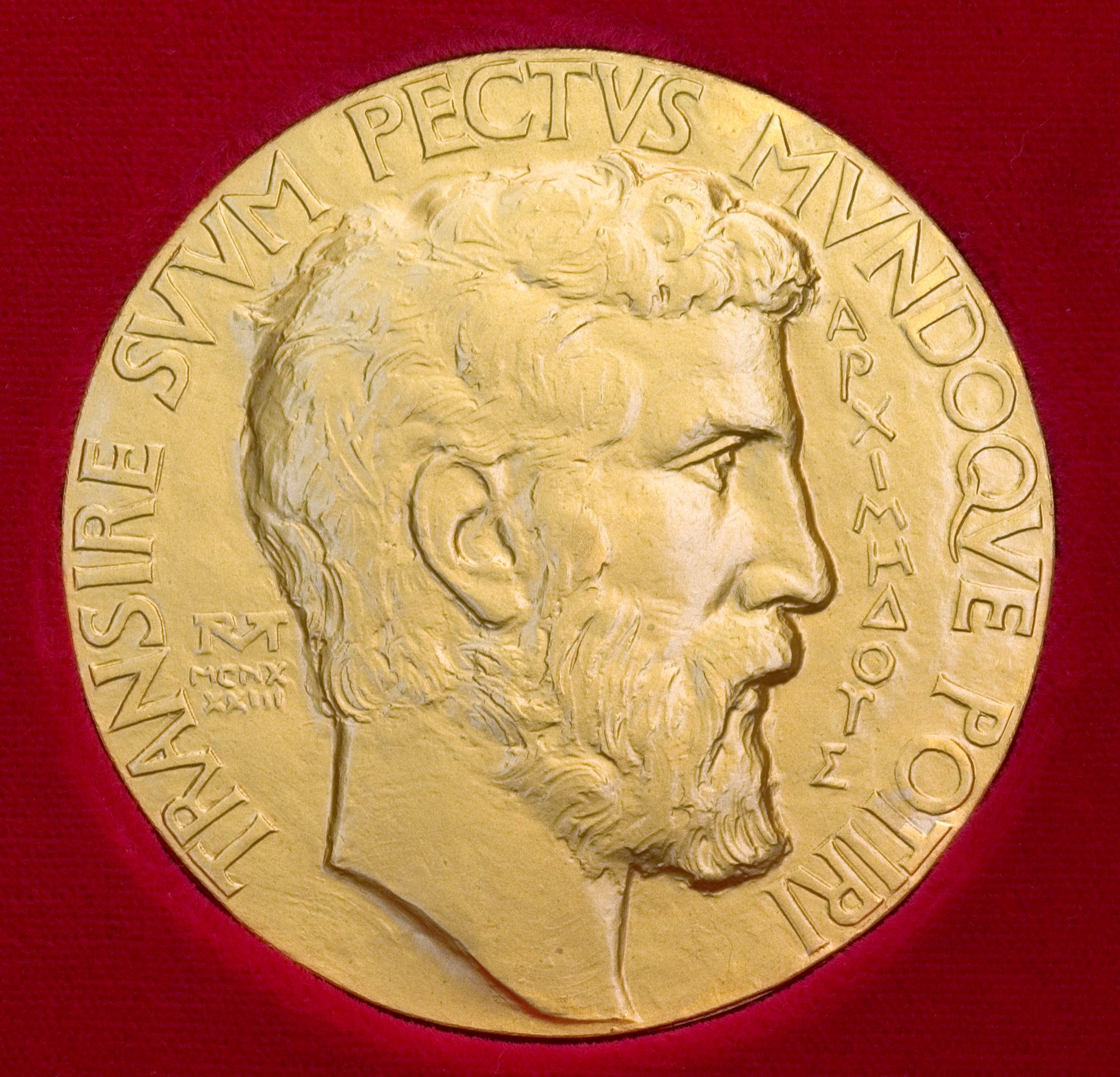
The most prestigious award in mathematics is the Fields Medal. It was established by the Canadian John Charles Fields in 1936 and is awarded every four years, except around World War II, to up to four individuals.
Because there is no Nobel Prize in mathematics, the Fields Medal is often treated as the discipline’s nearest equivalent in prestige. That comparison helps explain why it carries such symbolic weight. In mathematics, prestige is tied not only to solving hard problems, but to proving theorems with exceptional rigor. A theorem is a statement that has been shown to be true by proof, meaning a chain of deductive reasoning from accepted starting points such as axioms, definitions, or previously proved results.
That standard of proof is part of what makes mathematical recognition special. A celebrated result is not merely persuasive or experimentally supported. It must be established through reasoning that other mathematicians can examine and verify.
More than one crown: the other major prizes
The Fields Medal may be the most famous, but it is far from the only major mathematics award.
Other prestigious honors include:
- the Abel Prize, instituted in 2002 and first awarded in 2003
- the Chern Medal for lifetime achievement, introduced in 2009 and first awarded in 2010
- the AMS Leroy P. Steele Prize, awarded since 1970
- the Wolf Prize in Mathematics, instituted in 1978 and also associated with lifetime achievement
These prizes show that mathematical prestige is not concentrated in a single award. Some honors celebrate a specific level of distinction, while others emphasize a lifetime of contribution. In a field as broad as mathematics, that matters. Modern mathematics contains more than sixty first-level subject areas in the Mathematics Subject Classification, spanning topics from number theory and geometry to analysis, algebra, discrete mathematics, logic, set theory, and computational mathematics.
That breadth means awards do more than reward individuals. They help signal which kinds of work the mathematical community finds especially deep, influential, or transformative.
Hilbert’s 23 problems: a list that changed the century
Long before the million-dollar prizes, mathematics already had a famous model for setting grand challenges. In 1900, the German mathematician David Hilbert compiled a list of 23 open problems.
An open problem is a question that has not yet been solved. In mathematics, such a problem often takes the form of a conjecture, a statement believed to be true but not yet proved or disproved. Hilbert’s list became legendary because it did not merely collect hard questions. It helped guide mathematical research through the 20th century.
At least thirteen of Hilbert’s problems, depending on how some are interpreted, have been solved. That detail reveals something important about mathematics: even when a problem seems clearly stated, interpretation can matter. Definitions, assumptions, and the exact meaning of a claim are crucial, because mathematics depends on precise language. The field uses carefully defined terms such as axiom, theorem, lemma, corollary, and conjecture to keep reasoning exact and unambiguous.
Hilbert’s list became famous not only for its difficulty, but because a strong problem can reorganize a field. A well-posed challenge can inspire entirely new methods, connect distant parts of mathematics, and motivate generations of researchers.
The Millennium Prize Problems and the million-dollar challenge
In 2000, a new list of seven major open questions was published: the Millennium Prize Problems. Each carries a reward of 1 million dollars for a solution.
Only one of these problems has been solved so far: the Poincaré conjecture, solved by the Russian mathematician Grigori Perelman.
The idea of attaching a cash prize to a proof makes for dramatic headlines, but the real importance of these problems is deeper than the money. These are questions that sit near the foundations or frontiers of mathematics. A solution is valuable not just because it closes a gap, but because it often introduces new ideas, methods, and connections.
One of the Millennium problems, the Riemann hypothesis, also appears among Hilbert’s problems. That overlap shows how durable some mathematical questions can be. A truly deep problem can survive changes in style, notation, and entire eras of research.
The Poincaré conjecture: the only solved Millennium problem
Among the seven Millennium Prize Problems, the Poincaré conjecture stands alone as the one solved problem. It concerns the shape of three-dimensional spaces.
Even without the technical machinery, the basic idea can be appreciated. Geometry is not only the study of familiar lines, angles, circles, and solids. Over time it expanded into many subfields, including topology, which studies properties preserved under continuous deformations. In that setting, mathematicians ask when two spaces count as essentially the same shape and how a space can be characterized by its structural features.
That is why the Poincaré conjecture became so celebrated. It was not merely a puzzle about a particular figure. It was a fundamental question about the nature of three-dimensional space in a geometric and topological sense.
Why unsolved problems matter so much in mathematics
Mathematics grows in several ways. Sometimes mathematicians develop theories in response to science, engineering, or computation. Sometimes they pursue internal questions that arise naturally from mathematics itself. Open problems often sit at the meeting point of these two forces.
A difficult unsolved question can reshape whole branches of the subject. The article gives a famous example outside the prize lists: Fermat’s Last Theorem. Stated by Pierre de Fermat in 1637, it was proved only in 1994 by Andrew Wiles, using tools including scheme theory from algebraic geometry, category theory, and homological algebra. That story illustrates a recurring pattern in mathematics: a problem may look simple to state but require sophisticated techniques from widely separated areas.
Another example is Goldbach’s conjecture, stated in 1742 by Christian Goldbach. It says that every even integer greater than 2 is the sum of two prime numbers, and it remains unproved despite considerable effort.
These examples help explain the prestige attached to solving major problems. In mathematics, the glory is not only in getting an answer. It is in building the proof, and often in creating new mathematics along the way.
Prestige in a field built on rigor
Mathematics is unusual because its truths do not depend on scientific experimentation. A mathematical statement is accepted when it is proved from agreed principles using deductive rules. This gives the subject a special relationship to prestige.
In many fields, fame may attach to a discovery confirmed by experiment. In mathematics, recognition centers on rigor, clarity, and the lasting value of ideas. A proof can become part of the permanent structure of the discipline.
That does not mean mathematics is disconnected from the rest of knowledge. On the contrary, it is essential in the natural sciences, engineering, medicine, finance, computer science, and the social sciences. The field has repeatedly shown what has been called the unreasonable effectiveness of mathematics: ideas developed for purely mathematical reasons later find powerful applications. The article gives examples including prime factorization, once a purely theoretical topic and now central to the RSA cryptosystem, and geometric ideas such as non-Euclidean geometry and manifolds, which later became fundamental in relativity.
This is another reason prizes and famous problem lists matter. When mathematics honors certain discoveries, it is often recognizing ideas that may eventually influence far more than mathematics itself.
A culture of recognition, challenge, and enduring mystery
From the Fields Medal to the Abel Prize, from Hilbert’s 23 problems to the Millennium Prize Problems, mathematics has built a culture that celebrates both achievement and unanswered questions.
That balance is fitting. Mathematics is a discipline of proofs, but it is also a discipline of conjectures. It prizes final certainty, yet it thrives on mystery. Awards recognize what has been accomplished. Prize problems dramatize what remains unknown.
And that may be the most intriguing part of all: in a field devoted to exact truth, some of the greatest prestige comes from standing at the edge of what nobody has proved yet.
Sources
Based on information from Mathematics.
More like this
Chase million-dollar mysteries from your phone—download DeepSwipe and collect brain-prizes in mathematics every day.