Full article · 8 min read
Artificial Life: Building What Nature Didn’t
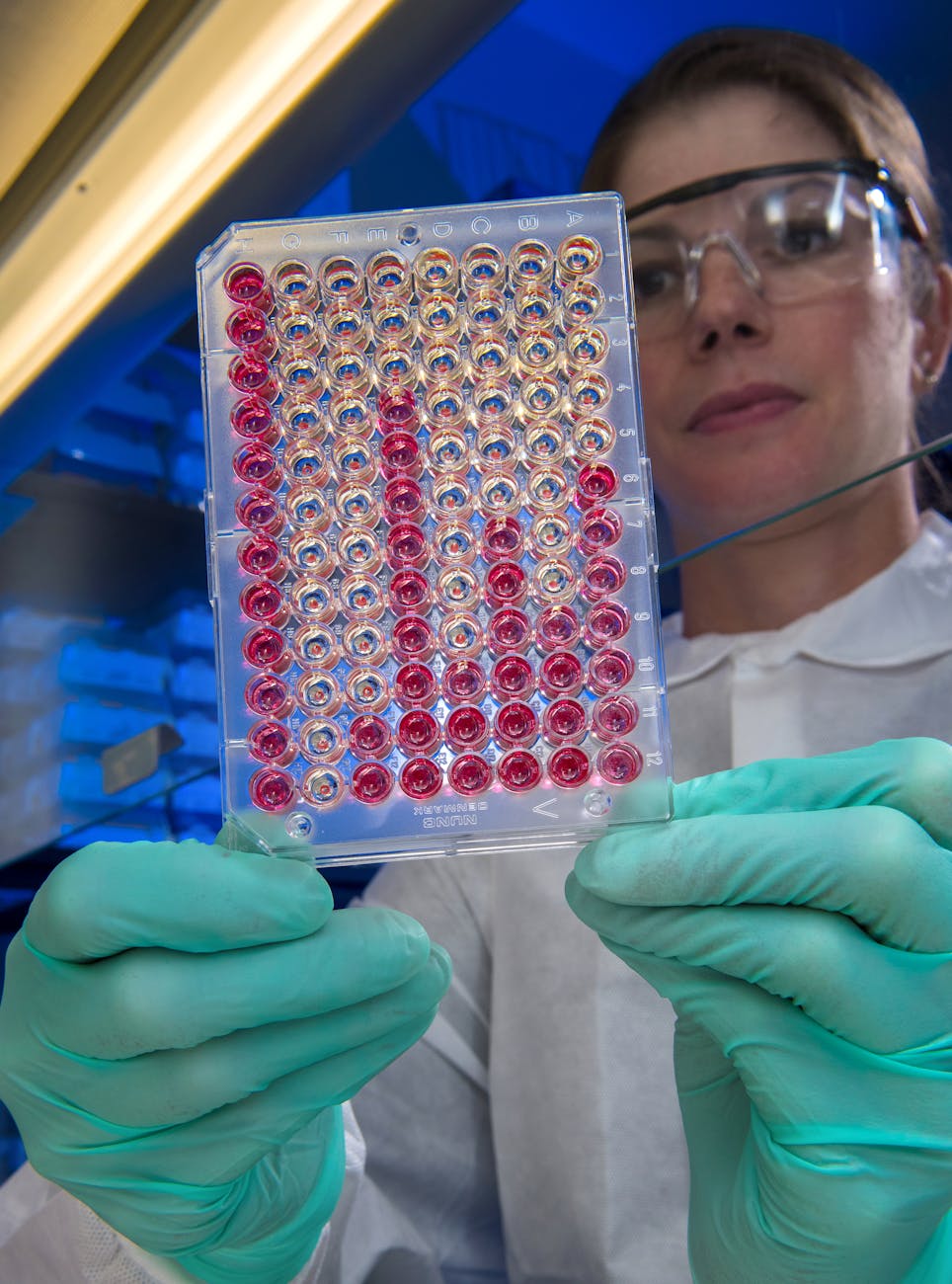
Artificial life asks a bold question: what happens when humans do not just study living systems, but try to recreate aspects of them? Instead of only observing cells, organisms, and ecosystems as they already exist, artificial life explores life by simulating or constructing lifelike systems through computers, robotics, or biochemistry.
Closely related to this is synthetic biology, a newer area of biotechnology that combines science with biological engineering. Its goal is especially striking: to design and build biological functions and systems that are not found in nature. That means going beyond copying existing organisms and instead creating new useful capabilities based on how life works.
This field sits at the intersection of some of the deepest ideas in biology. Life is not just a material object. It is usually described through processes such as homeostasis, organisation, metabolism, growth, adaptation, response to stimuli, and reproduction. Because life is a process, not a substance, it can be hard to define exactly. That difficulty is part of what makes artificial life so fascinating: by trying to build lifelike systems, researchers also test what features are truly essential to life.
What artificial life actually means
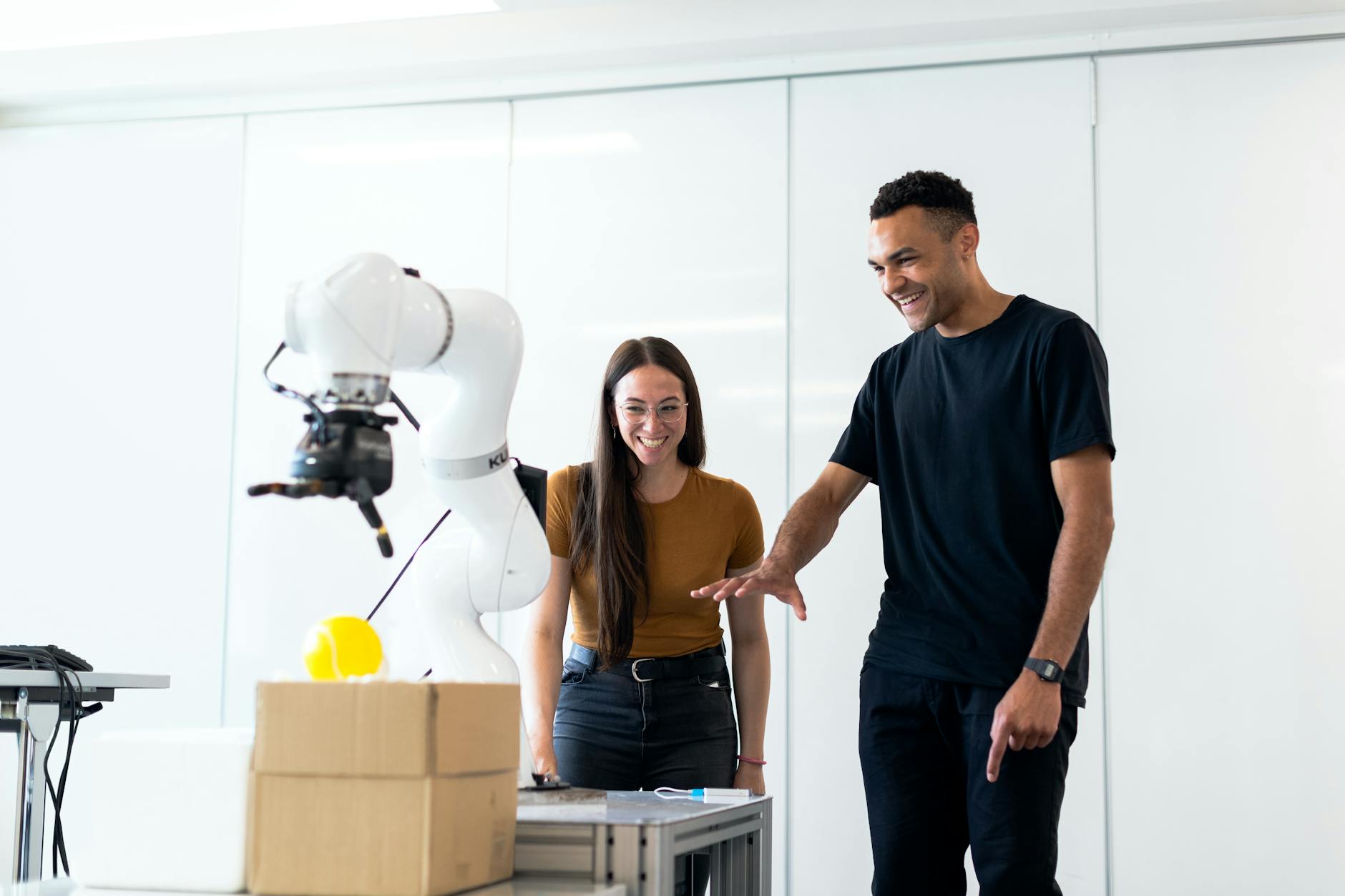
Artificial life is the simulation of any aspect of life. That simulation can happen in software, where computer models imitate living behavior; in robotics, where machines show lifelike responses or coordination; or in biochemistry, where chemical systems reproduce some of the processes associated with living matter.
The idea is not necessarily to make a complete organism in every case. A system may model only one part of life, such as self-organization, signaling, adaptation, or reproduction. Self-organization means a system can develop structure or order through its own internal processes rather than being arranged step by step from outside. This matters because many definitions of living systems emphasize that living things are self-organizing and self-producing.
Some views describe life as an open system that uses energy differences in its surroundings to create imperfect copies of itself. Others focus on living systems as hierarchical, stretching from molecular machinery to cells, tissues, organisms, populations, ecosystems, and ultimately the biosphere. Artificial life can be used to investigate parts of that hierarchy by rebuilding them in simplified or novel forms.
Synthetic biology: engineering biology on purpose
Synthetic biology goes a step further than simulation. It aims to design and construct new biological functions and systems. In simple terms, it treats biology not only as something to understand, but also as something to engineer.
It is described as a new area of biotechnology that merges science and biological engineering. Biotechnology broadly uses living systems or biological components for practical purposes. Synthetic biology expands that idea by focusing on deliberate design. Its long-term goals include building engineered biological systems that can process information, manipulate chemicals, fabricate materials and structures, produce energy, provide food, and maintain and enhance human health and the environment.
That list reveals why the field attracts so much attention. It is not only about curiosity. It is also about usefulness. If biological systems can be designed with new functions, they could become tools for solving practical problems in medicine, manufacturing, energy, agriculture, and environmental protection.
Why building life helps us understand life
Artificial life is compelling because defining life has always been difficult. Scientists and philosophers have proposed many definitions, and more than 123 have been compiled. Most modern biological definitions are descriptive rather than absolute. They identify traits commonly associated with life rather than one perfect rule.
Those traits include:
Homeostasis
Homeostasis is the regulation of internal conditions to maintain a relatively constant state. Sweating to reduce body temperature is a familiar example. A lifelike artificial system might imitate this by adjusting itself when conditions change.
Organisation
Living things are structurally composed of one or more cells, which are the basic units of life. Organisation also refers more broadly to the ordered arrangement of parts needed for biological function.
Metabolism
Metabolism is the transformation of energy and chemicals within a living system. It includes anabolism, which builds cellular components, and catabolism, which breaks down organic matter. Living things need energy for homeostasis and other activities.
Growth and adaptation
Growth means increasing in size and structure, while adaptation is the evolutionary process by which organisms become better suited to their habitats.
Response to stimuli and reproduction
Living things respond to their surroundings, whether that means a unicellular organism moving away from chemicals or a plant turning toward the sun. Reproduction is the ability to produce new organisms, either asexually or sexually.
When researchers try to simulate or engineer systems with some of these traits, they are effectively probing the boundary between the living and the non-living.
Cells, molecules, and the machinery of life
To understand how synthetic biology can build new functions, it helps to know what living systems are made of. All known life forms depend on core chemical elements including carbon, hydrogen, nitrogen, oxygen, phosphorus, and sulfur. These are used to form major biological molecules such as nucleic acids, proteins, and lipids.
Two especially important macromolecules in living things are proteins and nucleic acids. Nucleic acids include DNA and RNA. DNA carries most of the genetic instructions used in growth, development, functioning, and reproduction in all known living organisms and many viruses. Proteins act as the machinery that carries out many chemical processes of life.
Cells are the basic structural and functional units of living things. Some organisms, including bacteria and archaea, are made of single cells. Larger complex organisms are eukaryotes, whose cells contain a nucleus and membrane-bound organelles. In eukaryotic cells, proteins may be processed through the Golgi apparatus before being sent where needed.
This cellular and molecular foundation is what makes engineering biology possible. If DNA stores instructions and proteins perform functions, then changing biological instructions can change what a system does. That is one reason synthetic biology is so powerful as a concept: it works with the same informational and chemical logic that underlies life itself.
Not found in nature
One of the most exciting features of synthetic biology is that it is not limited to imitating existing organisms. Its aim is to create functions and systems not found in nature.
That idea is remarkable because natural life is the result of evolution over immense timescales. Life on Earth has existed for at least 3.5 billion years, and all current species trace back through evolution to a universal common ancestor. Over time, natural selection and other evolutionary processes produced the vast biodiversity seen today.
Synthetic biology introduces a different route to novelty. Instead of waiting for new functions to emerge through natural evolutionary history, researchers seek to design and build them intentionally. In that sense, synthetic biology expands biotechnology by shifting from discovery to construction.
Artificial life beyond Earth, and beyond ordinary conditions
The study of artificial life also connects to one of humanity’s biggest questions: could life exist elsewhere? Life is confirmed only on Earth, but extraterrestrial life is widely considered plausible, probable, or even inevitable by many thinkers. Understanding how life works under extreme or unusual conditions may help guide that search.
Life on Earth already shows astonishing versatility. Organisms inhabit soil, hot springs, deep underground rocks, the deepest parts of the ocean, and high regions of the atmosphere. Some microorganisms, called extremophiles, can withstand freezing, complete desiccation, starvation, and high radiation exposure. Their ability to survive unusual conditions has made them important for understanding the tenacity of life.
This matters for artificial life because building or simulating lifelike systems can reveal which features of living systems are robust and which are fragile. It also matters for synthetic biology, which aims to engineer systems that can process chemicals, fabricate materials, or function in difficult environments.
A practical vision: information, materials, energy, food, health
The practical goals attached to synthetic biology are broad and ambitious.
Engineered biological systems may be able to process information. In biology, information is closely tied to genetic instructions and signaling between components of living systems. Cells already carry hereditary information, and signaling coordinates activities in multicellular organisms. Synthetic biology seeks to harness and redesign such capabilities.
These engineered systems may also manipulate chemicals. Since metabolism already transforms substances within living systems, redesigned biology could direct those transformations toward useful outputs.
Another goal is to fabricate materials and structures. Living systems naturally build complex forms through organized growth and molecular machinery. Synthetic biology aims to extend this constructive ability into new applications.
The field also seeks to produce energy and food. Because all living things rely on energy transformations, biology is fundamentally tied to energy handling. Designing systems with improved or novel functions could open new ways to contribute in these areas.
Finally, synthetic biology aims to maintain and enhance human health and the environment. That makes it more than a technical discipline. It is a vision of biology as a practical toolkit for improving life while also deepening our understanding of what life is.
The bigger philosophical hook
Artificial life is not only about engineering. It is also about perspective. For centuries, people argued about whether life was just matter arranged in a complex way, whether it required some special life-principle, or whether it should be understood in terms of form, purpose, and organization. Modern biology explains living systems through cells, molecules, evolution, and energy transformations, but the question “What is life?” still has no single universally accepted answer.
That is why artificial life has such a strong intellectual pull. Every simulated cell-like system, every robot with lifelike behavior, and every engineered biological function becomes a kind of test case. Each one forces us to think more carefully about where life begins, how it sustains itself, and what features are fundamental.
In that sense, building what nature did not is also a way of seeing nature more clearly.
Sources
Based on information from Life.
More like this
Build your curiosity like synthetic biology builds new functions — download DeepSwipe and engineer your daily dose of knowledge.


