It Started With Cocaine
In 1885, American neurologist James Corning performed a bold experiment. Believing he was injecting cocaine into the fluid around the spinal cord, he in fact delivered it into the epidural space of a healthy volunteer. The neuraxial block that followed was the first recorded epidural injection—an accident that opened a new frontier.
From Single Shots to Continuous Relief
In 1901, Fernand Cathelin intentionally blocked the lowest sacral and coccygeal nerves through the epidural route. Two decades later, Spanish military surgeon Fidel Pagés described the technique of “single‑shot” lumbar epidural anesthesia in 1921, formally defining a method that would echo through operating rooms worldwide.
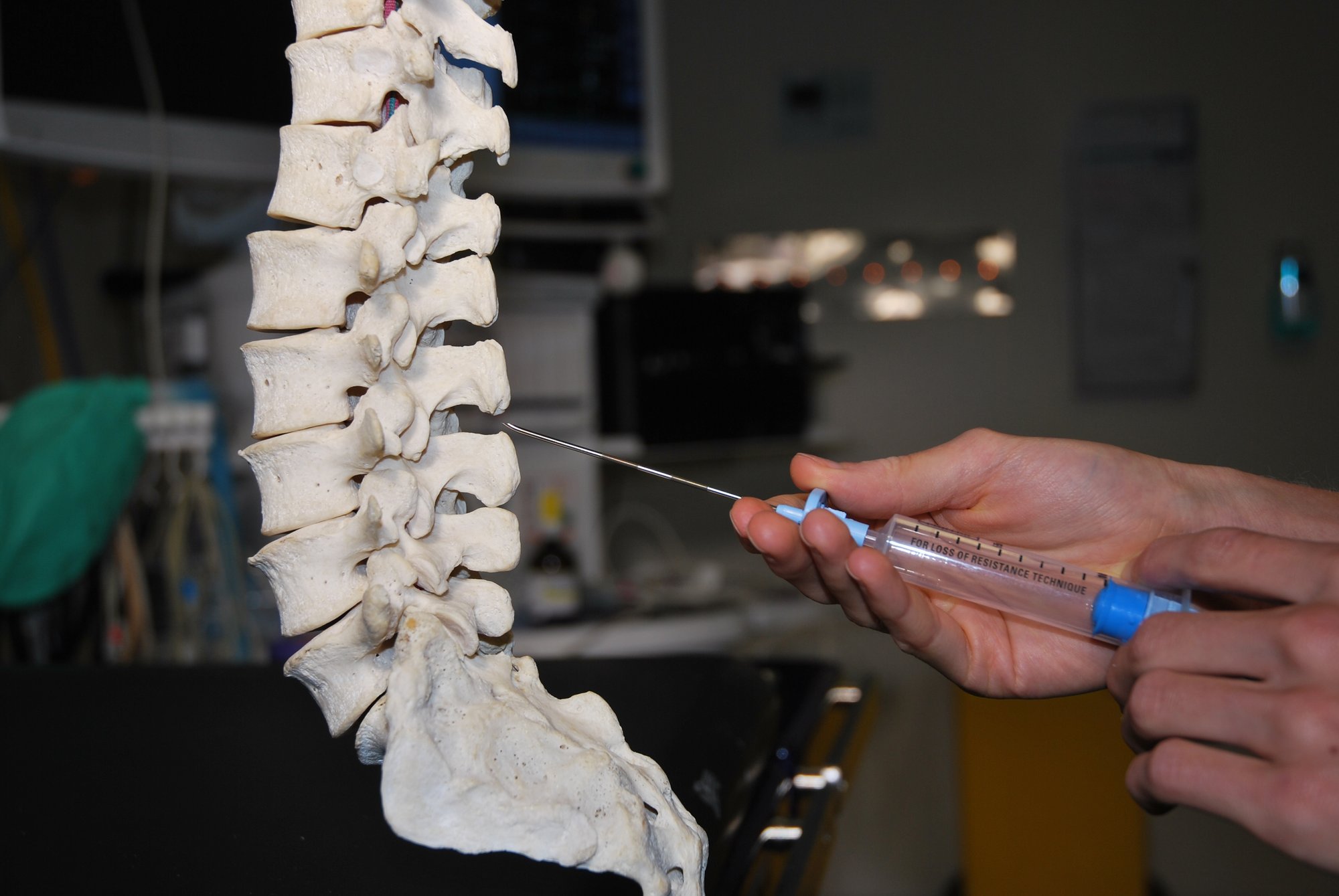
Technique soon followed curiosity. In 1933, Achile Dogliotti introduced the loss of resistance method to identify the epidural space; Alberto Gutiérrez later proposed the hanging drop technique. Both are still used today.
Romanian obstetrician Eugen Aburel pushed the concept further in 1931, describing continuous epidural catheter use for pain relief in childbirth—shifting the epidural from a short‑lived experiment to a sustained therapy.

Birth of the Modern Epidural
The 1940s saw key refinements. In 1941, Robert Hingson and Waldo Edwards reported continuous caudal anesthesia using an indwelling needle, then a flexible catheter in laboring women the following year. In 1947, Manuel Curbelo described lumbar epidural catheter placement, feeding the now‑familiar image of a catheter taped to the back of a woman in labor.
By 1979, Behar documented the first use of an epidural to deliver narcotics, expanding its role from pure anesthesia into nuanced pain management.
The Takeaway
What began as an accidental cocaine injection has evolved, over a century of trial and error, into a precisely controlled route for local anesthetics, opioids, and steroids. The epidural today is less a single invention than a layered history of small insights stacked along the spine.