When Precision Falters
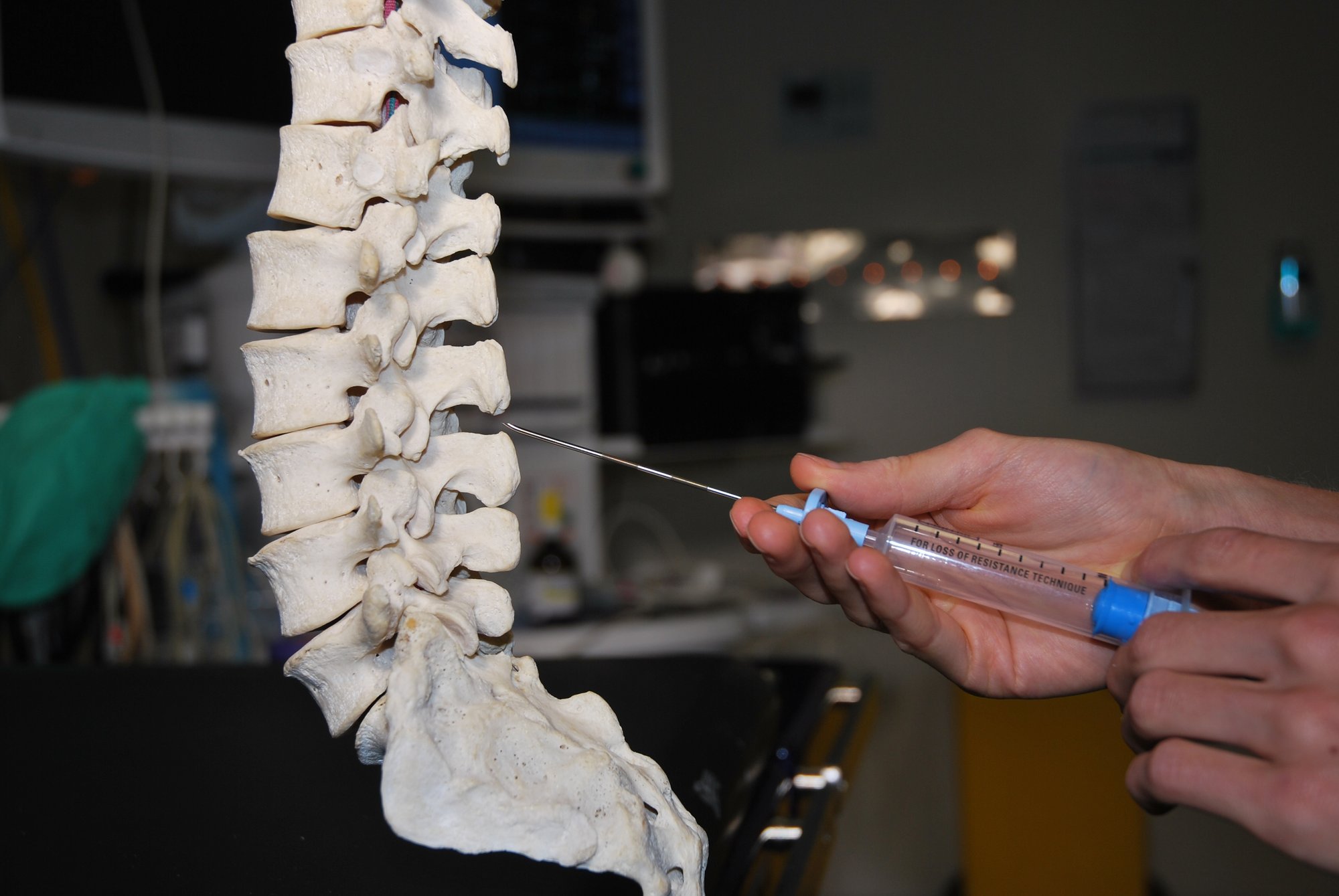
Hundreds of thousands of epidurals are performed safely every year. But when working millimeters from the spinal cord and major veins, small errors or unlucky anatomy can have outsized consequences.
From Numbness to Respiratory Arrest
Local anesthetics in the epidural space block more than just pain fibers. At higher doses they can silence motor nerves, causing weakness, or even paralyze the intercostal muscles and diaphragm that drive breathing. This can lead to respiratory depression or arrest, and loss of sympathetic nerve input may sharply drop heart rate and blood pressure.
Most epidurals avoid this by using the lowest effective dose, but larger doses increase side‑effect risk. Certain patients—those who are obese, have given birth before, use opioids chronically, or have advanced cervical dilation—are more prone to inadequate pain control, complicating dosing decisions.

The Spinal Headache
If the needle punctures the dura by accident, cerebrospinal fluid (CSF) can leak into the epidural space, lowering CSF pressure and triggering a post‑dural‑puncture headache. About 1 in 100 epidurals cause this. The headache can be severe and prolonged, though many resolve on their own. Mild cases respond to caffeine or gabapentin; severe ones may need an epidural blood patch.
Misplacement, Bleeding, and Infection
Rarely, the catheter ends up in the subarachnoid space—less than 1 in 1000 procedures. If unrecognized, standard epidural doses given directly into CSF can create a high block or even a total spinal, reaching the brainstem and causing unconsciousness and seizures.
Bleeding complications range from the common “bloody tap” (1 in 30–50), usually harmless in people with normal clotting, to extremely rare but devastating epidural hematoma. Infection is rarer still: epidural abscess occurs in about 1 in 145,000 cases.
Permanent neurological injury, paraplegia, or death remain extraordinarily uncommon—on the order of one in hundreds of thousands—but their very possibility shapes every consent conversation.
The Takeaway
The numbers are tiny, but the organ at stake is the spinal cord. The art of epidurals lies in making those already small odds smaller still.