Wiki Summaries · Epidural administration

Inside the Epidural: How Targeted Spine Anesthesia Works

Step into the narrow space around the spinal cord where a few millimeters decide between pain relief, paralysis, or nothing at all.

medicinescience
XFacebook

A Thin Space, A Big Difference

Just inside the bony tunnel of the spine lies a paper‑thin space that has transformed how humans experience pain: the epidural space. Slip a needle a few millimeters too shallow and nothing happens. A few millimeters too deep and you pierce the fluid‑filled sac that cushions the spinal cord. Land it just right, and you can silence pain from half the body.

The Epidural Space Explained

The spinal canal is layered like an onion. The outer shell is bone. Just inside is the epidural space—a narrow corridor of fat, blood vessels, and nerves. Beneath that sits the dura mater, a tough membrane, and then the arachnoid mater, which holds the cerebrospinal fluid (CSF) and the spinal cord or its nerve bundle, the cauda equina.

In adults, the spinal cord ends around the disc between the first and second lumbar vertebrae (L1–L2). Below that, only nerve roots travel downward, making lumbar epidurals relatively safe from direct cord injury.

How Blocking Pain Really Works

Drugs placed in the epidural space bathe nearby nerve roots. Local anesthetics stop those nerves from transmitting signals. Because pain fibers are more sensitive than motor fibers, doctors can often dial in a dose that blocks pain yet preserves muscle strength—crucial for a laboring woman who still needs to move or push.

Depending on the medication and dose, the effect can last minutes to hours. A catheter left in the epidural space allows repeated doses or continuous infusion, providing days of pain relief without putting the whole body under general anesthesia.

The Takeaway

Epidurals don’t numb the entire person; they strategically switch off the wiring from a chosen region. It’s precision pain control built on understanding a space barely thicker than a sheet of paper.
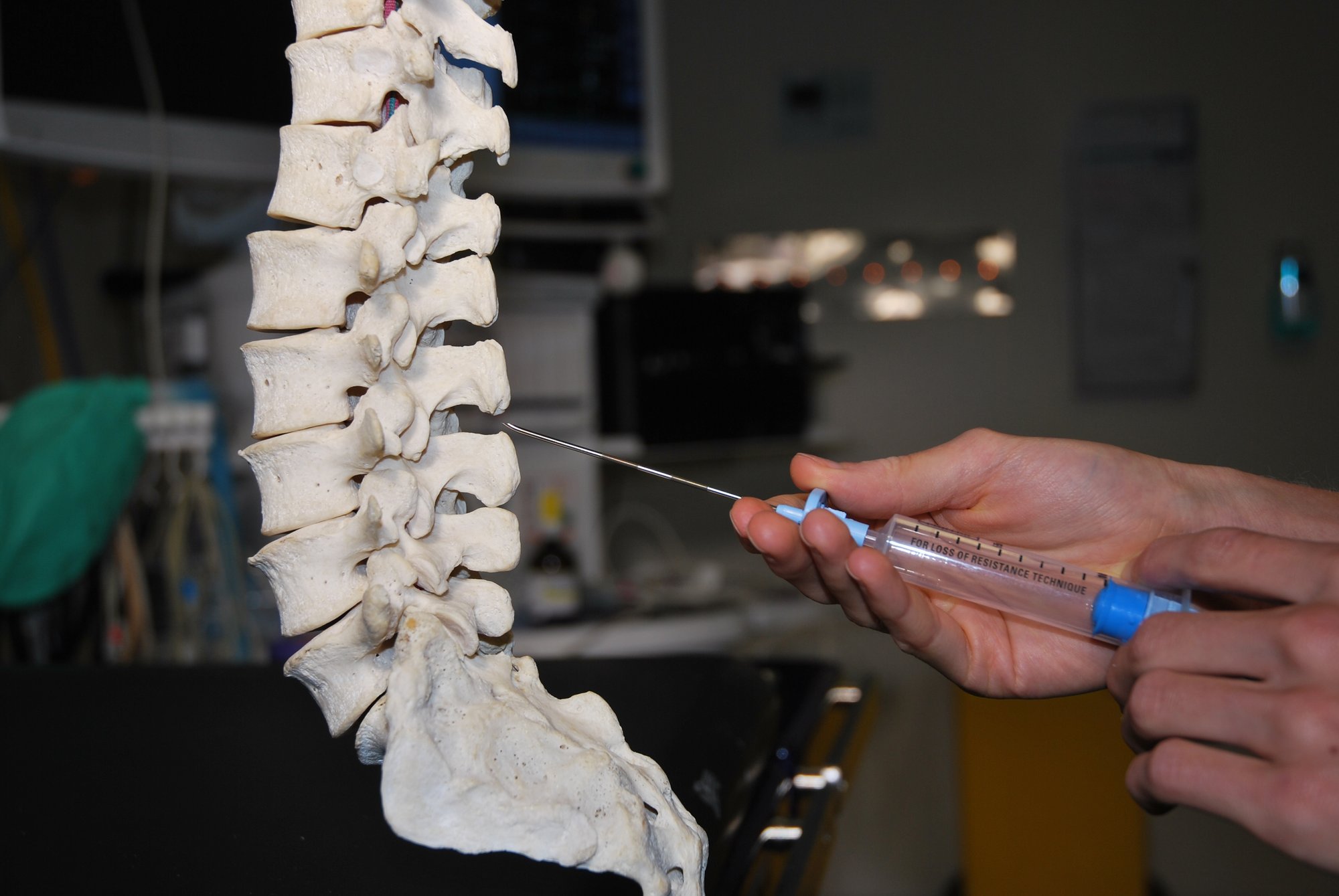
Based on Epidural administration on Wikipedia.

XFacebook

DeepSwipe Stories About Epidural administration

Childbirth Epidurals: What Changes and What Doesn't

Childbirth Epidurals: What Changes and What Doesn't

Summarize another article

More topics in Epidural administration

Epidural administration - 100 Word Summary

A concise overview of how epidurals work, what they’re used for, and their main benefits and risks in about 100 words.

medicinescience
Read →

Epidural administration - 250 Word Summary

A fuller, 250-word tour of how epidurals are given, when they’re used, and how they’ve shaped modern pain control.

medicinehistory
Read →

Epidurals in Childbirth: Power, Pain, and Trade‑Offs

Follow a woman in labor as an epidural transforms her experience, raising new questions about safety, timing, and control.

medicineculture
Read →

Beyond Birth: Epidurals in Major Surgery and Spine Pain

See how the same technique that eases labor pain quietly reshapes recovery after heart surgery and debilitating back disease.

medicinescience
Read →

When Not to Numb: Who Should Avoid an Epidural?

Enter the decision room where doctors weigh bleeding risks, heart disease, and brain pressure before ever opening an epidural kit.

medicine
Read →

Tiny Numbers, Big Stakes: Epidural Risks and Complications

Trace the rare but dramatic moments when an epidural goes wrong, from spinal headaches to total body numbness.

medicinescience
Read →

The Art of the Needle: How Clinicians Place an Epidural

Watch an anesthetist navigate bone, ligaments, and invisible spaces guided only by touch, pressure, and subtle clicks.

medicinescience
Read →

A Century of Innovation: The History of the Epidural

Travel from a risky cocaine injection in 1885 to the finely tuned labor epidurals of today.

historymedicine
Read →

Who Gets Pain Relief? Epidurals, Inequality, and Culture

Explore why a woman’s chances of getting an epidural can depend as much on her postcode and passport as on her pain.

culturemedicine
Read →

Enjoy bite-sized learning? Try DeepSwipe.