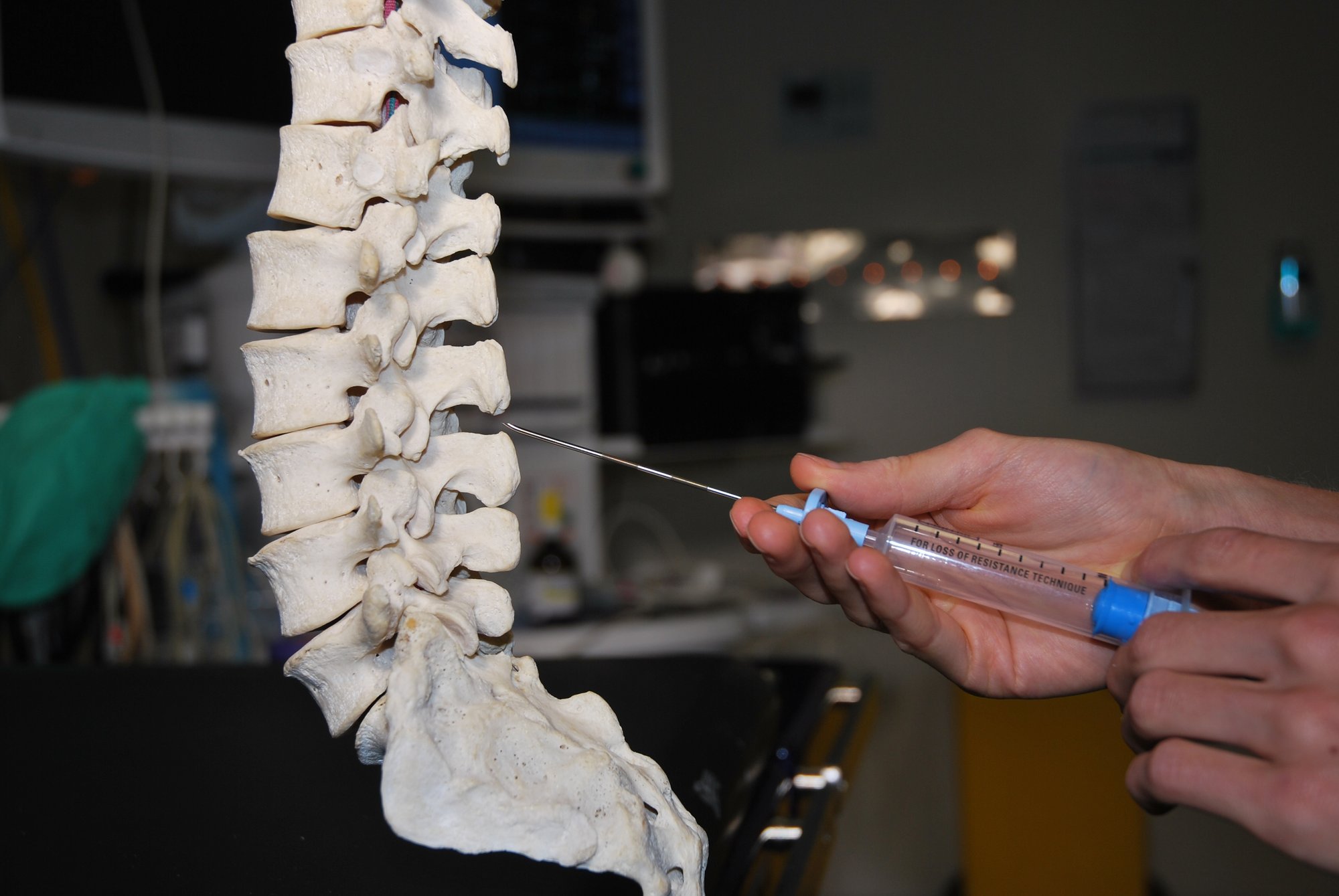
Epidural administration delivers medication into the epidural space around the spinal cord, most often via a catheter that can remain in place for days. It is widely used to provide anesthesia and analgesia for childbirth and many types of surgery, and to inject steroids for spinal pain. Epidurals block pain-carrying nerve signals while often preserving muscle strength and consciousness. They are generally safer and more effective than oral or intravenous pain medications but carry rare risks such as bleeding, infection, nerve damage, and accidental dural puncture. Contraindications include severe bleeding disorders, infection at the site, and certain heart and neurological conditions.
Wiki Summaries · Epidural administration
Epidural administration - 100 Word Summary
A concise overview of how epidurals work, what they’re used for, and their main benefits and risks in about 100 words.
medicinescience
DeepSwipe Stories About Epidural administration
Summarize another article
Enjoy bite-sized learning? Try DeepSwipe.