The Largest Car-Free City in Europe
Venice is an urban paradox: a functioning 21st‑century city that bans motorcars and trucks from its historic centre. Rail and road arrive via the 19th‑ and 20th‑century causeways to Piazzale Roma and the Santa Lucia railway station—but beyond those terminals, movement returns to two ancient modes: water and walking.
The city’s 118 islands are knitted together by roughly 400 bridges over 177 canals, forming Europe’s largest contiguous car‑free area. Deliveries come by boat; rubbish is hauled through narrow alleys by handcarts; even the ambulance is a watercraft.
Gondolas: Icons in Uniform
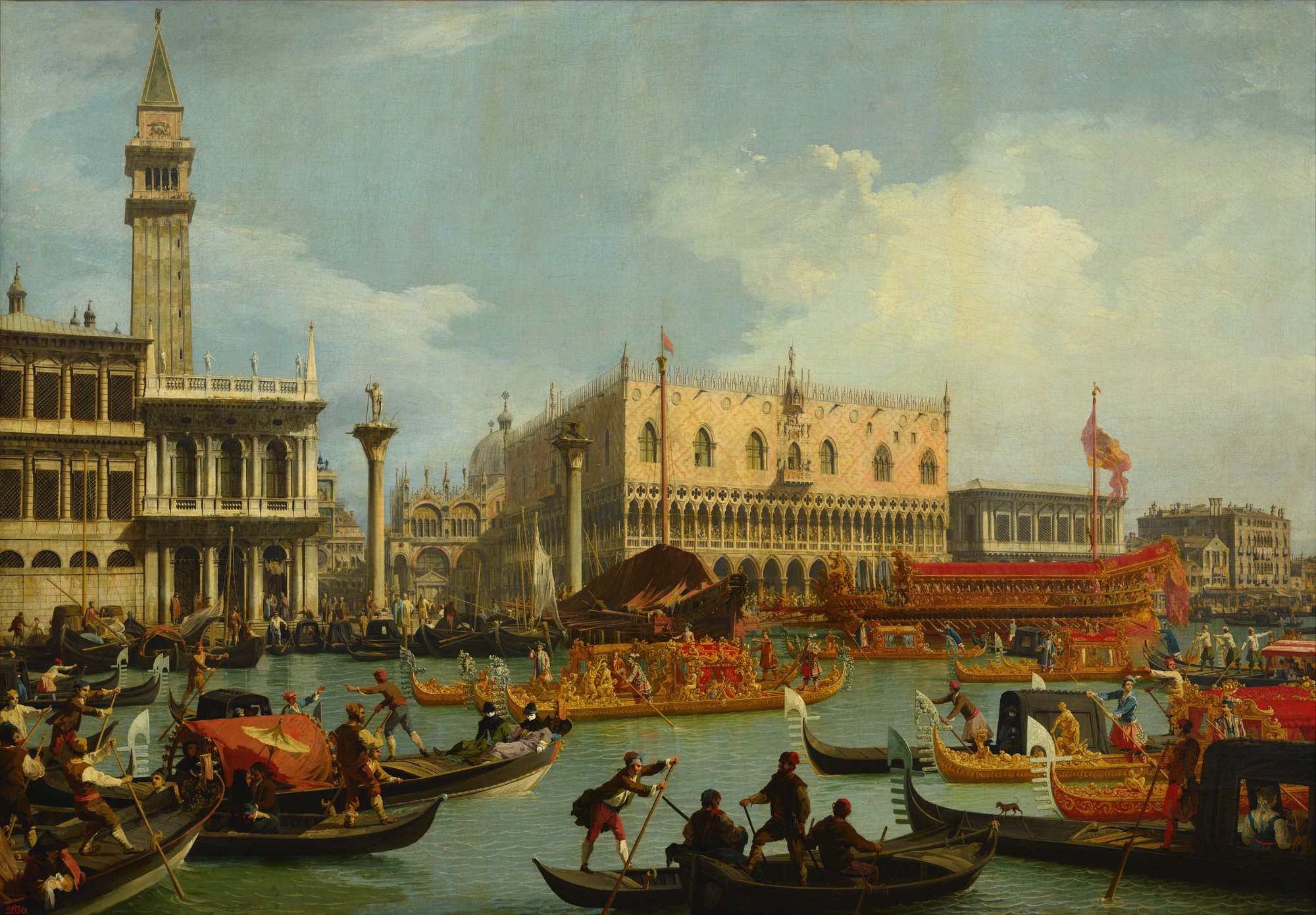
Once the everyday transport of Venetians, gondolas now mainly serve tourists and ceremonies—weddings, funerals, and the occasional formal crossing. Around 400 licensed gondoliers, in distinctive striped shirts, handle a similar number of boats, a far cry from the 10,000 that crowded the canals two centuries ago.
Each gondola carries a symbolic metal prow, the fèro. Its six forward prongs represent Venice’s six sestieri, or districts; a rearward curve evokes the island of Giudecca; and the overall profile echoes the doge’s cap. Even the boat’s ornament thus doubles as civic emblem.
Less famous but equally traditional is the sandolo, a smaller, simpler cousin to the gondola that locals still use.

Modern Mobility in a Medieval Grid
Public transport on the water is handled by ACTV’s vaporetti—motorized waterbuses that pulse along the Grand Canal and out to islands like Murano, Burano, and the Lido. Private water taxis speed visitors from Marco Polo Airport directly to hotel piers, while traghetti gondolas ferry foot passengers across the Grand Canal where bridges are sparse.
On the mainland boroughs of Mestre, Marghera, and others, buses and Translohr tram lines form a conventional urban network, linking to Venice via the Ponte della Libertà road bridge. From Tronchetto island’s car parks, the elevated Venice People Mover glides to Piazzale Roma, with a stop by the Marittima cruise terminal—a sleek cable-driven shuttle dovetailing with stone quays and centuries-old pilings.
Between Romance and Logistics
Behind every postcard of a gondola at sunset lies a choreography of schedules, public agencies, and engineering compromises holding this peculiar transport ecosystem together. Venice’s refusal to yield its streets to cars has preserved a quieter, more human-scale cityscape—but it has also forced the city to innovate vertically and nautically, proving that even in a world of highways, an archipelago of alleys and oars can still function as a modern metropolis.