Foundations in a Swamp
To outsiders, Venice seems to float. In reality, it stands on an improbable marriage of wood, stone, and mud. Early settlers fleeing invasions learned that to build on these sandy islands they had to reach down through the soft sediment to something firmer.
They drove dense alder trunks—chosen for their resistance to rot in water—closely together into the lagoon bed until they struck compressed clay. On this forest of submerged piles they laid thick plates of Istrian limestone, forming a stable platform on which churches, palaces, and houses could rise.
A Man-Made Deepening
Six centuries ago, Venetians made a monumental hydraulic gamble. To protect themselves from land-based attack and to keep the lagoon navigable, they diverted most major rivers away from it. Sediment that would have slowly filled the basin was sent elsewhere, leaving Venice ringed by ever-deeper water.
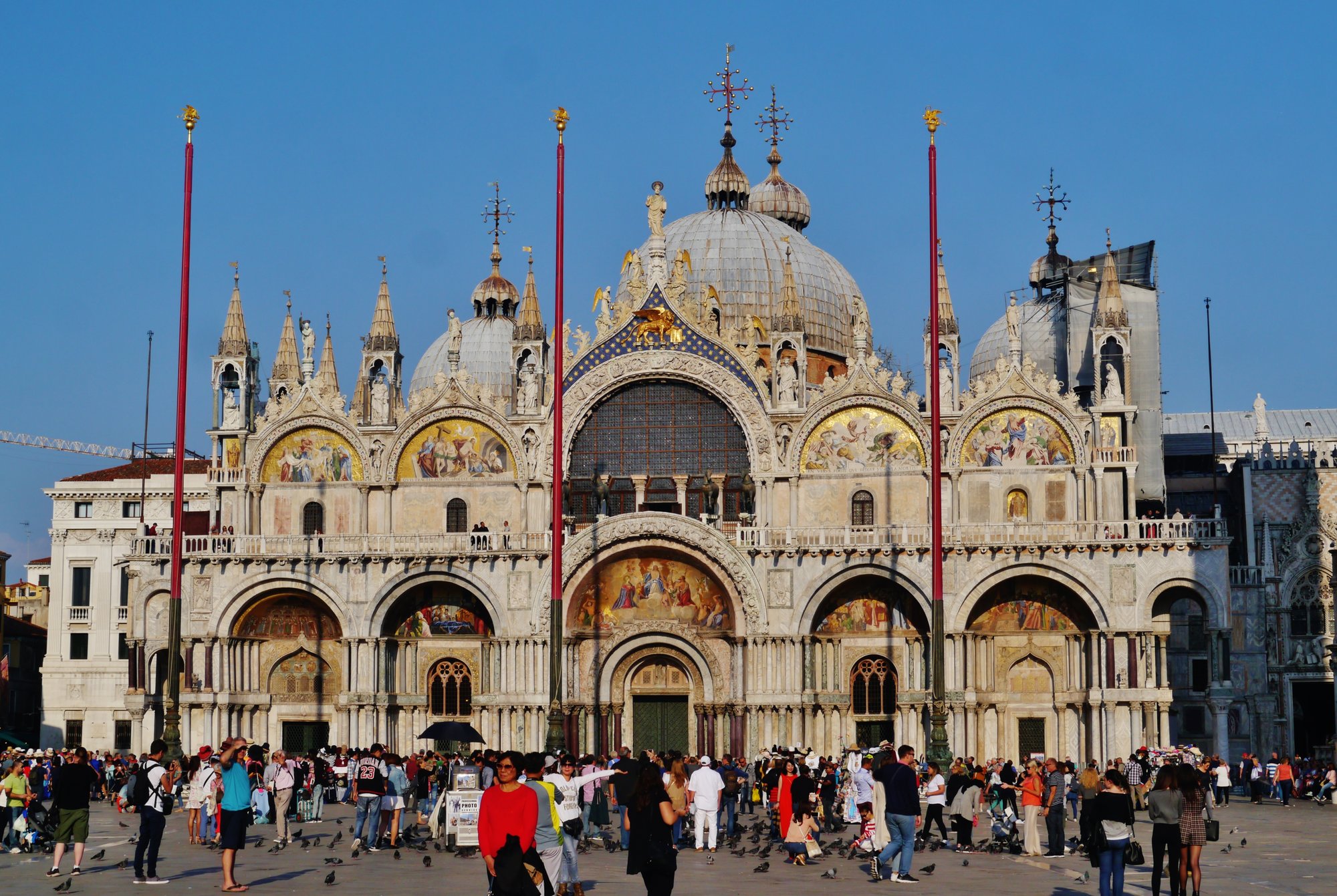
The strategy worked militarily—but it increased exposure to the sea. Today, the lowest part of the city, St. Mark’s Basilica, sits barely 64 centimetres above sea level, making it one of the most flood-prone sites in Venice.

Sinking and Rising
Subsidence—the slow lowering of the land—has long been part of Venice’s story. In the 20th century, local industry drilled artesian wells around the lagoon, drawing water from underground aquifers. The city began to sink measurably. Once authorities realized the link, they banned such wells in the 1960s, slowing but not stopping the descent. Modern studies suggest Venice continues to sink by 1–2 millimetres per year.
Meanwhile, global sea level is rising, and extreme weather events are more frequent. When high tides, storm surges, and low atmospheric pressure coincide, exceptional acqua alta—“high water”—can send brackish waves curling through centuries-old doorways.
MOSE: Barriers Against the Adriatic
To counter this threat, Italy launched the MOSE project: a series of 78 hollow steel pontoons fixed to the seabed across the lagoon’s three inlets. When tides are forecast to exceed 110 centimetres, the pontoons are filled with air and rotate upward, forming temporary barriers between the lagoon and the Adriatic.
Planned to cost under a billion euros and finish by 2018, MOSE swelled to at least €7 billion, mired in corruption scandals and delays. Critics warn that if the barriers close too often, ship traffic and lagoon ecology may suffer; if too seldom, places like St. Mark’s will still flood. Yet in October 2020, when activated for a major high tide, MOSE spared low-lying areas from inundation—a glimpse of what this vast mechanical reef might yet achieve.
Venice’s foundations were an act of inspired improvisation. Today, that same ingenuity is being tested again as the city tries to keep its stone forest standing above a restless sea.