A City Born from Flight
In late antiquity, when Germanic tribes and Huns tore through Roman towns like Padua, Aquileia, and Treviso, some survivors fled not to walled fortresses but to something stranger: a marsh. Fishermen already lived scattered among the muddy islands of a shallow lagoon, but now refugees joined them, seeking safety where armies and horses could not easily follow.
These incolae lacunae—“lagoon dwellers”—staked their future on water. Over time they drove alder-wood piles into the mud, capped them with stone, and began to build permanent foundations. Tradition dates Venice’s symbolic birth to the dedication of the church of San Giacomo on Rialto at noon on 25 March 421.
From Byzantine Outpost to Self-Government
Initially, this watery settlement remained tied to the Eastern Roman Empire. Venice sat within the Exarchate of Ravenna, ruled by an imperial viceroy. Yet physical separation by sea nurtured political distance. Local leaders emerged, first as tribuni maiores, then as dukes (duces), eventually called doges in the Venetian dialect.
Rebellions over Byzantine religious policies—especially the iconoclastic crisis—shook imperial control. When Ursus became one of the early doges, he both aided Emperor Leo III militarily and gained Venetian privileges in return, signaling a subtle shift: loyal subjects, but increasingly autonomous.

Charlemagne’s Failure and a New Status
On land, the Lombards seized much of Byzantine northern Italy, pushing more refugees into the lagoon. Charlemagne, master of the continent, tried to crush this island anomaly. His son Pepin besieged Venice for six disease-ridden months in 810, only to withdraw; Pepin soon died, reportedly from an illness caught in the swamps.
The result was diplomatic recognition: an 814 agreement between Charlemagne and the Byzantine emperor acknowledged Venice as Byzantine territory with special trading rights along the Adriatic. Venice had survived—and turned great-power rivalry into its own charter of privilege.
Autonomy with a Sacred Symbol
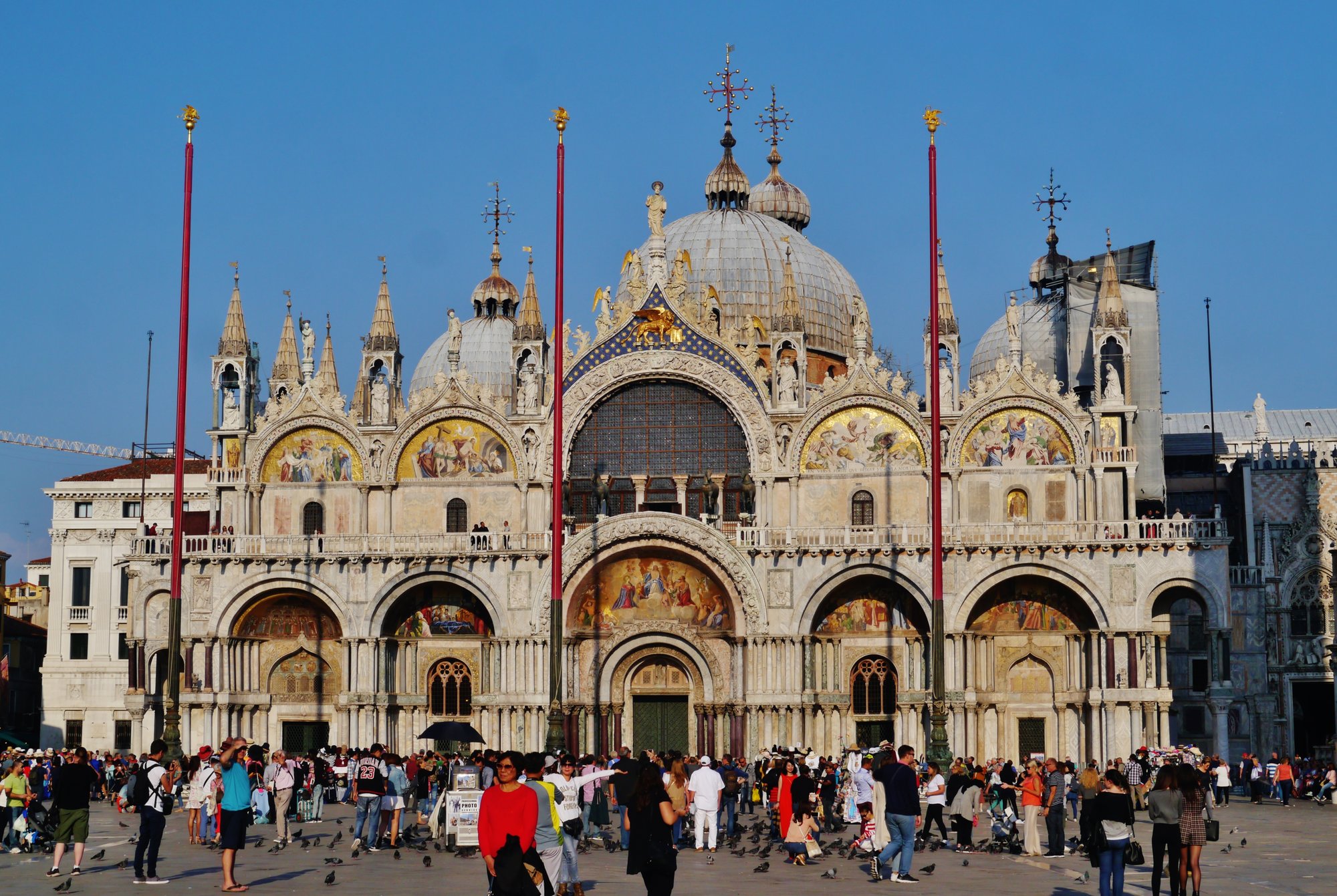
As Byzantine muscle waned, Venice’s confidence grew. In 828, merchants smuggled what they claimed were the relics of St. Mark the Evangelist from Alexandria, hiding them under pork to evade Muslim inspection. Housing such a relic in the new Basilica of St. Mark gave the city a potent spiritual badge. The winged lion of St. Mark became Venice’s emblem, roaring from flags and facades as the lagoon community transformed from a line of muddy islets into a self-assured republic facing the sea.
The refugees’ improvised haven had set itself on the path to becoming La Serenissima—“the Most Serene Republic”—a calm name for a power that would soon dominate the Mediterranean.