The Moon feels permanent, calm, and familiar. But its origin story is anything but gentle. One leading explanation says Earth’s only natural satellite was born from catastrophe: a collision between the young Earth and a Mars-size protoplanet called Theia. From that violent beginning came an object that still shapes life on Earth today.
The Moon does far more than light up the night sky. Its gravity raises tides, its presence may help stabilize Earth’s axial tilt, and its orbital behavior gives us one of the most spectacular sights in nature: solar eclipses. Even more astonishing, the Moon is still changing its relationship with Earth. It is slowly drifting farther away, and in the deep past that helped make Earth’s days shorter and its years longer in terms of number of sunrises.
Watch the story on DeepSwipe
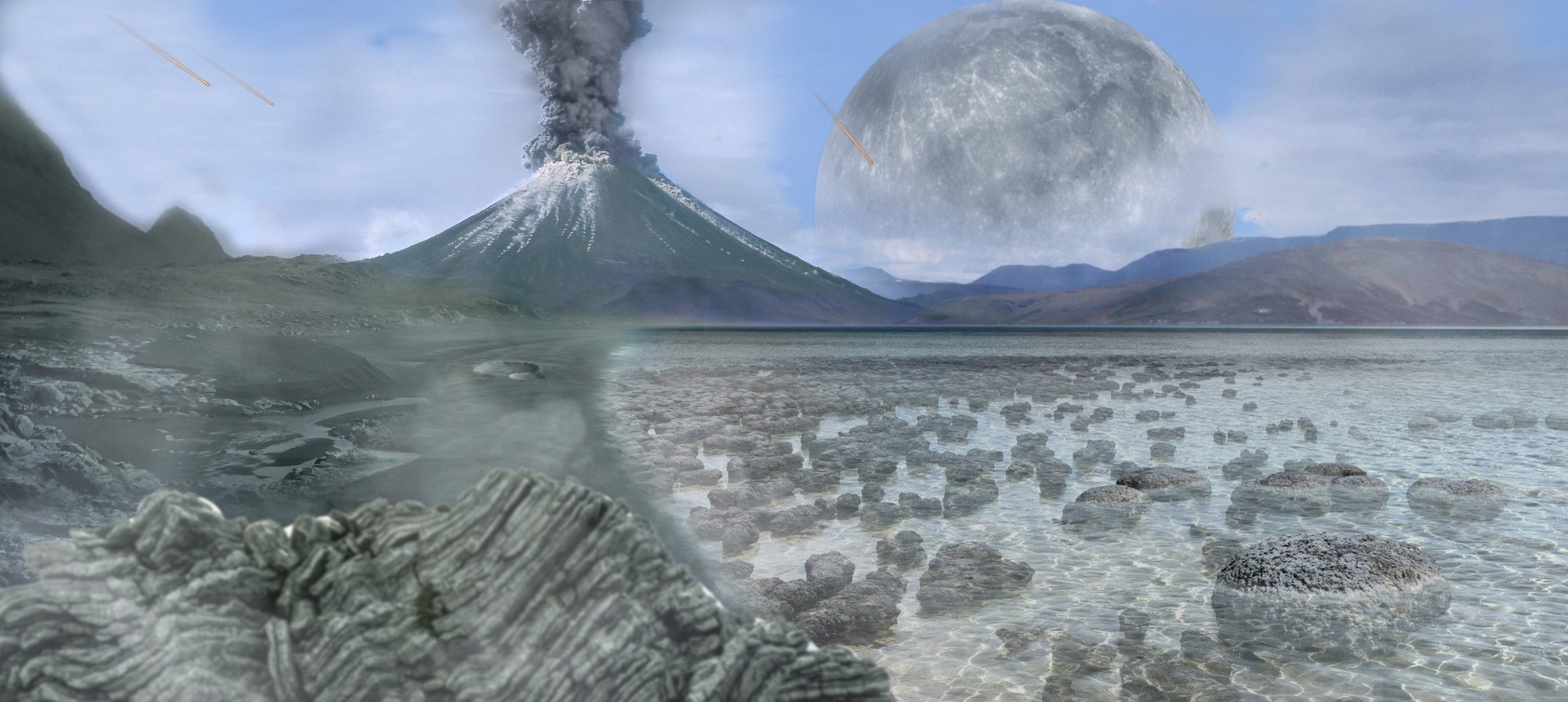
The giant-impact idea: the Moon born from disaster
The most widely accepted explanation for the Moon’s origin is the giant-impact hypothesis. In this scenario, a Mars-size protoplanet named Theia collided with the early Earth. A protoplanet is a developing planetary body from the early Solar System, before the planets fully took shape.
According to this idea, the impact blasted material loose from Earth. That debris later came together through accretion, meaning small bits gradually merged into a larger body, eventually forming the Moon. Estimates for the Moon’s age range from about 4.5 billion years ago to significantly younger, but the impact hypothesis remains the leading explanation for how it formed.
The collision is thought to have been a glancing blow rather than a direct head-on smash. Some of Theia’s mass merged with Earth itself, while other material was thrown out and later assembled into the Moon. The theory also helps explain why the Moon has a relative lack of iron and volatile elements, and why its composition is nearly identical to that of Earth’s crust.
There is even a remarkable suggestion from computer simulations: two blob-like remnants of Theia could still be inside Earth.
Why the Moon matters so much to Earth
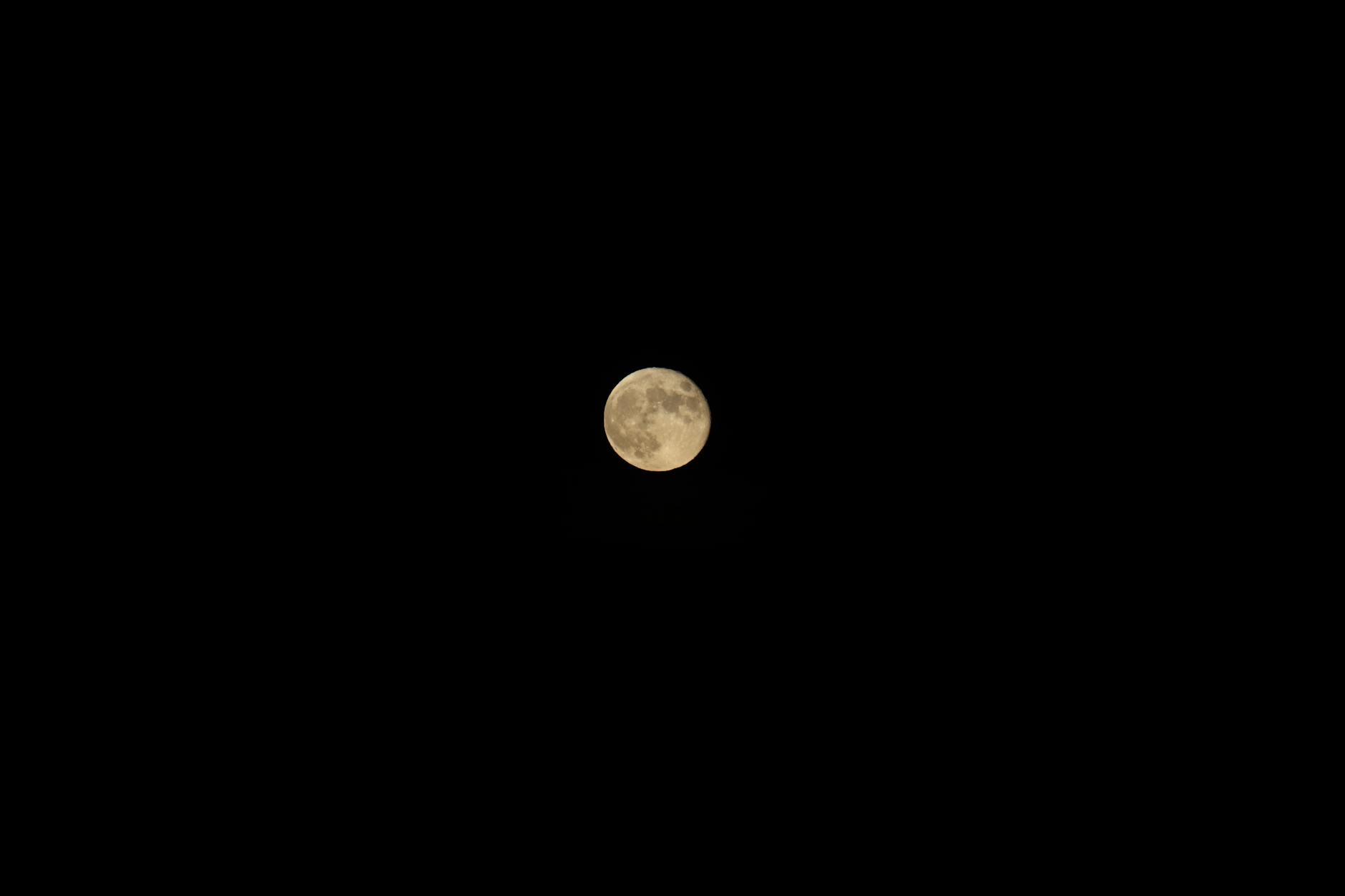
The Moon is not just an ornament in the sky. It is a relatively large, terrestrial, planet-like natural satellite with a diameter about one-quarter of Earth’s. In size relative to its planet, it is the largest moon in the Solar System compared with the world it circles, apart from Charon relative to Pluto.
That large size matters. The gravitational attraction between Earth and the Moon produces lunar tides on Earth. Tides are the regular rising and falling of ocean water driven by gravity. When the Moon’s gravity pulls on Earth, it slightly redistributes the oceans, helping create the familiar tidal rhythms along coastlines.
The Moon may also have played a major role in making Earth a more stable place for life. Paleontological evidence and computer simulations indicate that Earth’s axial tilt is stabilized by tidal interactions with the Moon. Axial tilt is the angle between Earth’s rotation axis and its orbit around the Sun. That tilt is what produces the seasons. If the tilt changed chaotically over long periods, climate patterns could shift dramatically. Some researchers think the Moon’s stabilizing effect may have moderated Earth’s climate over geological time.
Why the same side of the Moon always faces Earth
One of the Moon’s strangest-seeming features is also one of the easiest to overlook: we always see the same face.
This happens because the Moon is tidally locked to Earth. Tidal locking means an object’s rotation period matches its orbital period. In the Moon’s case, it rotates once in exactly the same amount of time that it takes to orbit Earth. As a result, the same hemisphere always faces our planet.
The Moon and Earth orbit a common barycenter every 27.32 days relative to the background stars. A barycenter is the shared center of mass around which two bodies orbit. Meanwhile, the cycle from new moon to new moon, called the synodic month, lasts 29.53 days.
As the Moon goes around Earth, sunlight illuminates different portions of the face we can see, producing the lunar phases. So even though the same side stays turned toward us, it does not always look the same.
The eclipse coincidence that makes Earth special to skywatchers
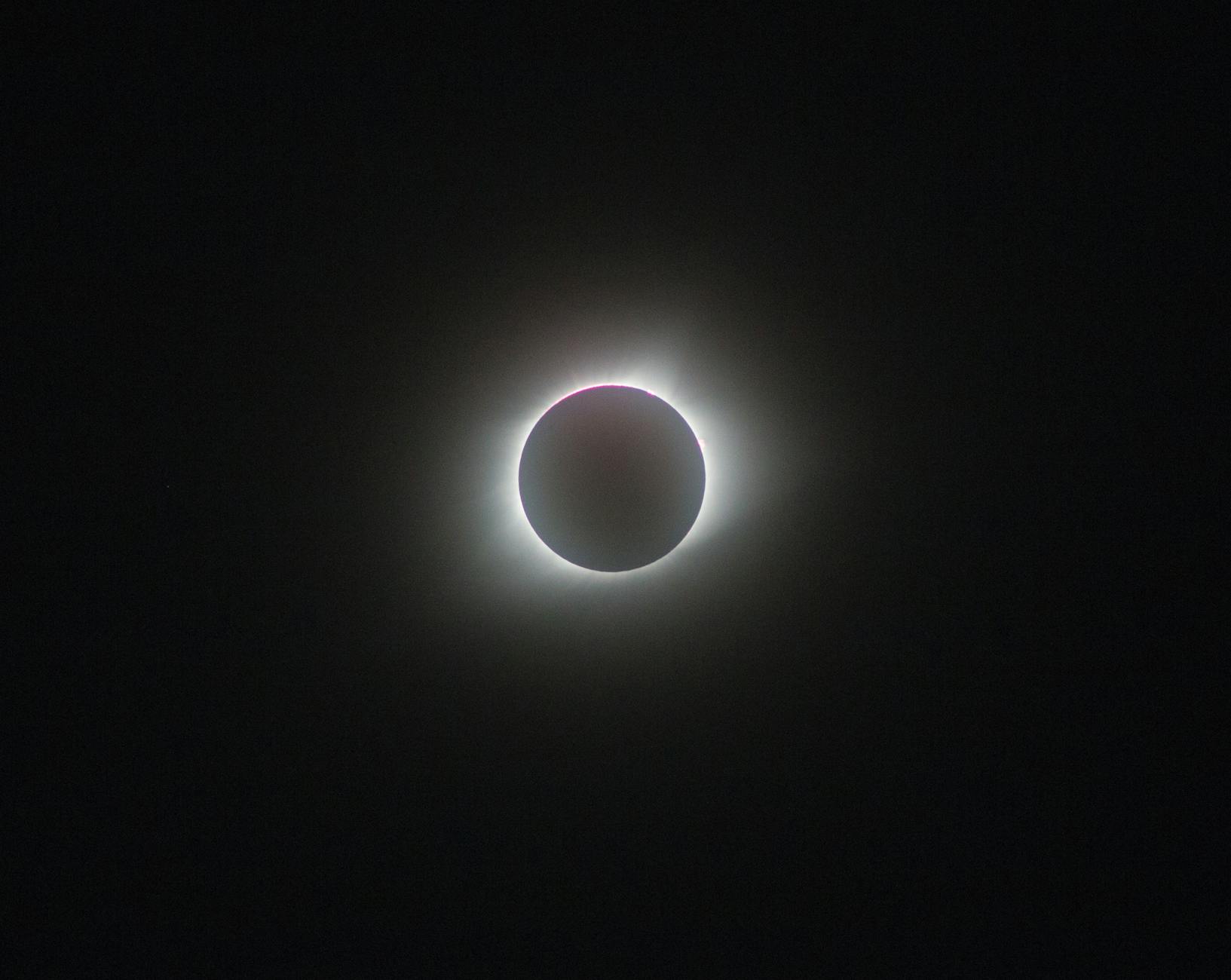
From Earth, the Moon and the Sun appear almost the same size in the sky. That sounds improbable because the Sun is vastly larger than the Moon. But the geometry works out because the Sun’s diameter is about 400 times as large as the Moon’s, and it is also about 400 times farther away.
This near-match in apparent size allows both total and annular solar eclipses.
A total solar eclipse happens when the Moon appears large enough to cover the Sun’s visible disk completely. An annular solar eclipse happens when the Moon looks slightly smaller, leaving a bright ring of sunlight around it.
These events are possible because of the precise-looking but natural size-and-distance relationship seen from Earth. The orbital planes are not perfectly lined up, though. The Earth–Moon plane is tilted up to plus or minus 5.1 degrees against the Earth–Sun plane. Without that tilt, eclipses would happen every two weeks, alternating between solar and lunar eclipses.
The Moon is moving away from Earth
The Earth–Moon relationship is not frozen in time. Because of tidal interaction, the Moon is receding from Earth at a rate of about 38 millimeters per year.
That is only a tiny amount annually, but over millions of years it adds up. The same tidal interaction also slows Earth’s rotation, lengthening the day by about 23 microseconds per year.
This means the distant past had a different rhythm from today. During the Ediacaran period, approximately 620 million years ago, there were about 400 days in a year, and each day lasted about 21.9 hours.
That detail is a wonderful reminder that “a day” and “a year” feel timeless to us, but the exact numbers have changed across Earth’s history.
Earth and Moon as a connected system
Earth and the Moon are best understood as a linked system rather than two separate worlds. Earth’s gravity has already tidally locked the Moon, while the Moon’s gravity keeps shaping Earth through tides and rotational effects.
The Moon orbits Earth at a distance of about 384,400 kilometers, or 238,855 miles. That distance is roughly 1.28 light-seconds, meaning light takes just over a second to travel from the Moon to Earth. Earth’s gravitational pull and the Moon’s orbital motion create a long-running partnership that affects both bodies.
Viewed from above Earth’s north pole, the motion of Earth, the Moon, and their axial rotations are all counterclockwise. This shared orbital dance also explains why the Moon’s phases, tides, eclipses, and long-term recession are all part of one bigger physical story.
A violent beginning with lasting consequences
The Moon’s story begins with impact, debris, and accretion, but it does not end there. Its gravity still moves Earth’s oceans. Its presence may help steady Earth’s tilt. Its synchronized rotation gives us a permanent near side and a hidden far side. Its size in our sky creates total and annular eclipses. And its slow outward drift is stretching Earth’s days across immense spans of time.
So when you look up at the Moon, you are not just seeing a passive companion. You are seeing the surviving product of an ancient collision, and a continuing force in Earth’s history.