The name “Mitochondrial Eve” sounds dramatic, almost mythic. It can easily make people imagine a single original mother, the first woman, or the only woman alive in some distant prehistoric world. But that is not what the term means.
Mitochondrial Eve is the most recent woman from whom all living humans descend through an unbroken maternal line. That means a line of mothers only: your mother, her mother, her mother, and so on. If you trace those mother-to-mother links backward for every person alive today, those lines eventually converge on one woman.
That woman is called Mitochondrial Eve.
What makes this idea so powerful is also what makes it easy to misunderstand. She was not the first human woman. She was not the only woman alive in her time. And she is not even a permanently fixed figure in prehistory.
Watch the story on DeepSwipe
What mitochondrial DNA actually is
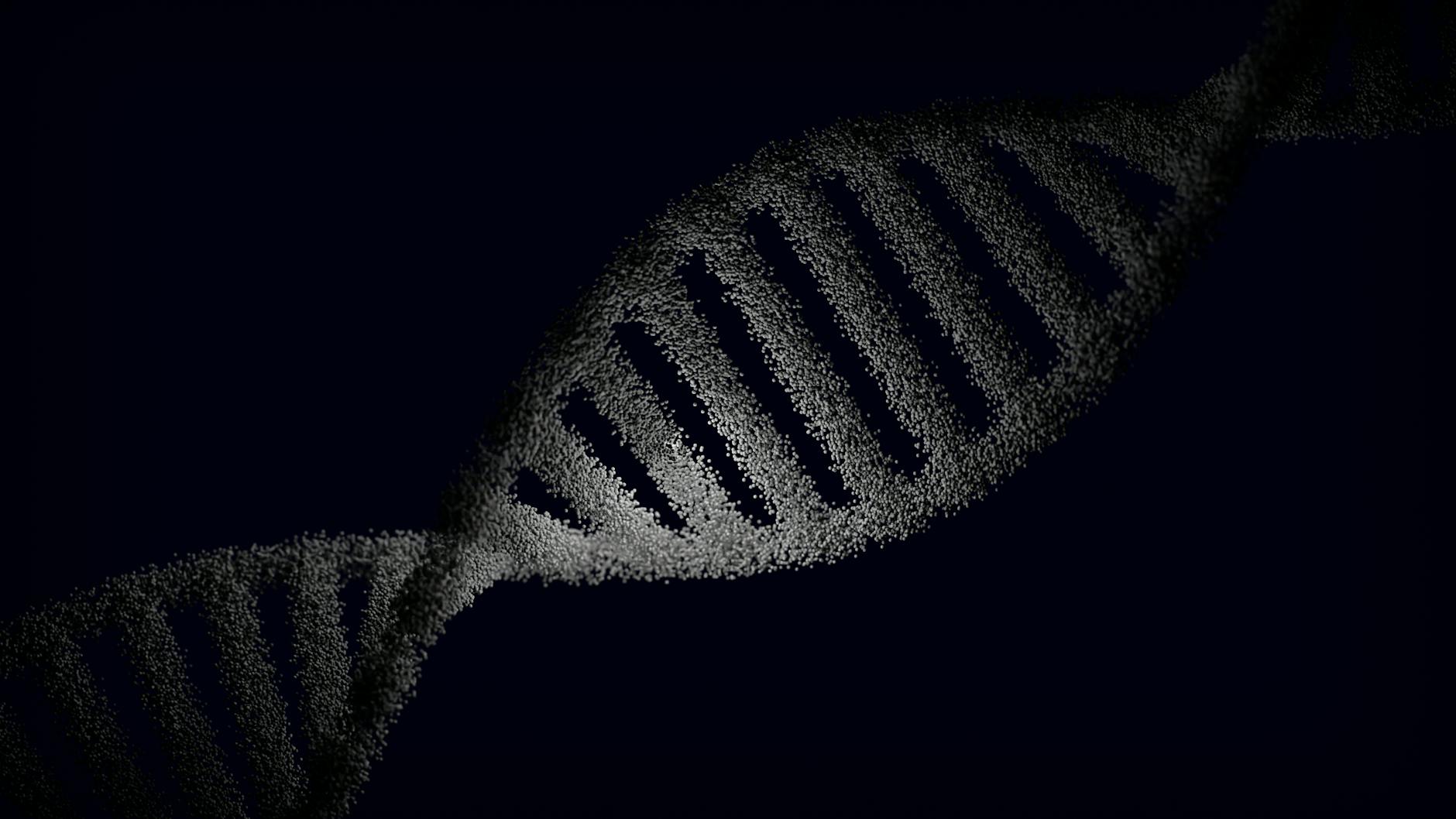
The key to the whole concept is mitochondrial DNA, often shortened to mtDNA. This is DNA found in mitochondria, which are separate from the cell nucleus. Unlike nuclear DNA, mitochondrial DNA is generally passed from mothers to children without mixing, along the maternal line.
Because of that, mtDNA gives scientists a relatively clean way to trace ancestry through mothers. Instead of dealing with the full complexity of the genome, they can follow one specific inheritance path backward through time.
Scientists compare small changes in mtDNA called mutations. Some of these mutations become markers that identify branches in the human maternal family tree. A particular pattern of markers is called a haplotype, and related sets of lineages are grouped into haplogroups. These branching patterns let researchers build a tree of maternal ancestry, with common ancestors sitting at the branching points.
Mitochondrial Eve sits at one of the deepest important branching points in the mtDNA tree of living humans.

She was not the first woman
This is the biggest misconception.
Mitochondrial Eve was not the first woman, not the first member of a new species, and not the only female alive in her era. The title describes a genealogical position, not a special status as humanity’s beginning.
Many other women lived at the same time. Some of them may still have descendants alive today. But if those descendants are not connected through an unbroken female-only line, then their mtDNA line does not continue into the present in the same way.
That distinction matters. A woman can have many descendants in general, yet still not be part of a surviving direct maternal chain. If at some point a woman has no daughters, or her daughters’ female lines later end, then that particular mtDNA lineage stops.
This is why Mitochondrial Eve should not be confused with the common idea of a universal mother of all human ancestry. She is the most recent common matrilineal ancestor, not the most recent common ancestor in every possible family sense.
Why only one maternal line leads back to her
At first glance, it may seem strange that among so many ancient women, only one maternal line would connect all living people today. But maternal lineages are fragile in a specific way.
Mitochondrial DNA is passed down through mothers. If a woman has no daughters, her mtDNA line ends immediately. Even if she does have daughters, those lines can still disappear later if, in some future generation, the chain of daughters ends.
So over long periods of time, maternal branches continually die out.
Meanwhile, mutations accumulate along surviving branches. Scientists can compare these accumulated differences to estimate how far back the common maternal ancestor lived. The article describes mitochondrial DNA as accumulating mutations at roughly one every 3,500 years along a particular line of descent. By comparing how branches differ, researchers can reconstruct a maternal family tree and estimate when branches split.
This process also helps explain why one ancestral woman can become the common point for all living humans’ maternal lines without having been uniquely important during her own lifetime. Her position is the outcome of many lineages surviving or disappearing across vast stretches of time.
Why Mitochondrial Eve can change
This is the twist most people miss: the definition stays the same, but the woman who fits it can change.
Mitochondrial Eve is defined as the most recent woman from whom all living humans descend through an unbroken maternal line. If one of the oldest surviving maternal branches dies out, then the common maternal ancestor for everyone alive can shift forward in time to a more recent woman.
In other words, “Mitochondrial Eve” is not a permanent crown placed on one immutable prehistoric individual.
For the title to apply, the woman must have had at least two daughters whose maternal descendants ultimately survived to the present. If one daughter’s entire maternal branch eventually disappears, then the title can move forward through the surviving branch until it reaches the first later woman whose daughters account for all living maternal lineages.
This means the identity of Mitochondrial Eve changes as lineages vanish. The position moves only forward in time, because once a maternal lineage disappears, it is lost.
There is another important consequence: incomplete mtDNA mapping could potentially reveal a living lineage older than those currently used to identify Mitochondrial Eve. In that case, the title could shift to an earlier woman.
What scientists have estimated about her age
Estimates have changed over time, but the broad picture has remained fairly consistent.
Early research in the late 1970s and early 1980s used molecular clock methods, which estimate time from the rate at which mutations accumulate. In 1980, Wesley Brown published an estimate placing the mt-MRCA at about 180,000 years ago.
A highly influential 1987 study by Rebecca L. Cann, Mark Stoneking, and Allan Wilson concluded that all current human mtDNA originated from a single population from Africa and dated this ancestor to between 140,000 and 200,000 years ago.
Later debate questioned parts of the methodology and some broader conclusions, but the age estimate itself remained surprisingly robust. More recent estimates cited in the article still fall in a similar range. A 2013 estimate placed Mitochondrial Eve at about 160,000 years ago, while another 2013 study gave a range between 99,000 and 148,000 years.
The mt-MRCA is also placed at the divergence of macro-haplogroup L into L0 and L1–6, with estimates for that split around 155,000 years ago.
Why Africa is central to the story
The maternal lineage evidence pointed strongly to Africa.
A statistical analysis published in 1982 was taken as evidence for recent African origin. The 1987 study also concluded that all current human mtDNA came from a single population from Africa. This result gave support to the recent out-of-Africa model and challenged the multiregional hypothesis being debated at the time.
Geography matters in another way too. When scientists compare branches in the mitochondrial family tree, they look not only at mutation counts but also at where the widest range of least-related branches are found. That helps identify the region where the common maternal ancestor likely lived.
The biblical-sounding name caused confusion
The label “Mitochondrial Eve” helped the concept spread, but it also created lasting confusion.
The original researchers did not use the term in their 1987 paper. Allan Wilson reportedly preferred the term “Lucky Mother” and considered the name “Eve” regrettable. But the biblical association was obvious and the public quickly embraced it.
Popular coverage amplified the misunderstanding. The name encouraged people to think of a literal first woman or a confirmation of religious creation narratives. Since the 1990s, popular science writers have repeatedly stressed that the name is just a convention and should not be interpreted literally.
That warning is still necessary because the misconception is built into the name itself.
She is not the same thing as “Y-chromosomal Adam”
Mitochondrial Eve has a male counterpart in popular discussion: Y-chromosomal Adam, the most recent man from whom all living males descend through an unbroken paternal line.
But these two ancestors do not have to have lived at the same time. Their identities depend on separate genealogical histories, and those histories can produce different dates.
The article notes that estimates for the age of Y-chromosomal Adam, as of 2015, ranged around 200,000 to 300,000 years ago. It also explains that while some studies suggested Eve lived much later than Adam, other research indicates it is not impossible that they lived around the same time.
What matters most is this: there is no reason to assume they were a couple, contemporaries, or the sole founding pair of humanity.
She is not the most recent ancestor shared by all humans
Another subtle but important point: Mitochondrial Eve is not the most recent common ancestor of all humans in the full family-tree sense.
She is only the most recent common ancestor along the maternal line traced through mitochondrial DNA.
That is a much narrower category. Human ancestry can be traced in many ways, and the most recent single ancestor shared by all living humans is a different concept entirely. The article distinguishes between the human MRCA, the identical ancestors point, Mitochondrial Eve, and Y-chromosomal Adam. These are related ideas, but they are not interchangeable.
So when people say “we all come from Mitochondrial Eve,” the precise meaning is: all living people’s maternal-only lines converge on her.
What Mitochondrial Eve really tells us
Mitochondrial Eve is best understood not as a legendary mother of all humanity, but as a snapshot of lineage survival.
She reveals how ancestry works when you follow one very specific path through time. Maternal lines persist, split, and vanish. Over many generations, enough branches disappear that all surviving maternal lines can point back to one woman.
That makes Mitochondrial Eve scientifically fascinating precisely because she is ordinary in the way genealogy can produce extraordinary results. Her importance comes from descent patterns, not from being the first, the only, or the origin of all human life.
In that sense, the most remarkable thing about Mitochondrial Eve is not who she “was” as an individual, but what her existence shows about how human history is written into the branching and pruning of family lines across deep time.