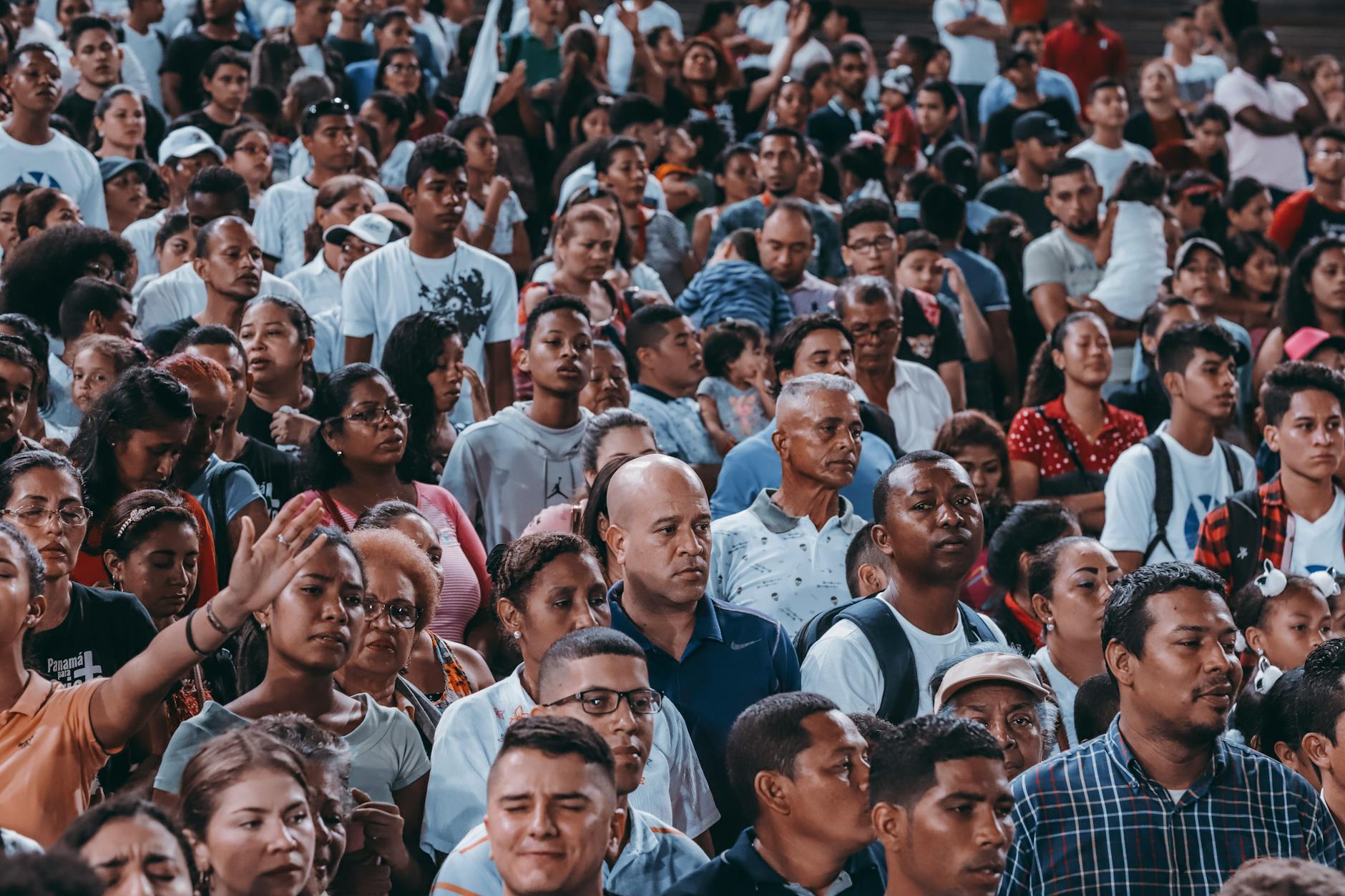
Humans are unusual in many ways, but a few traits stand out as especially striking: we cry emotional tears, we may be able to mentally revisit the past and imagine the future, and we have an unusually flexible range of facial expressions. Together, these features help explain why human communication is so rich, why our social lives are so complex, and why our inner world feels so vivid.
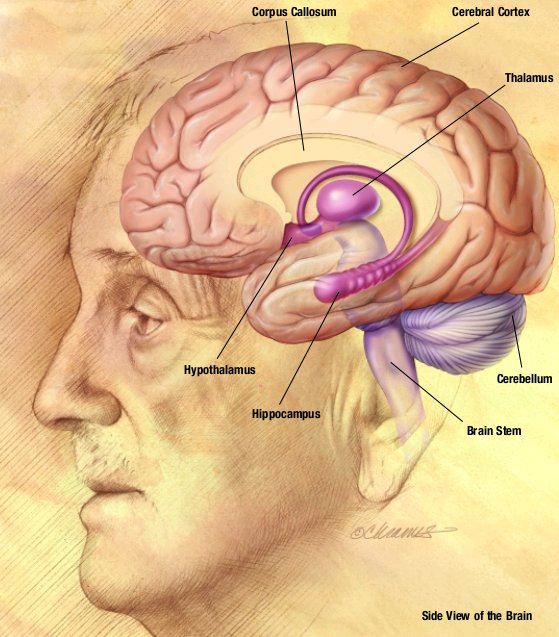
These abilities are tied to the human brain, especially its advanced higher-order functions. Humans have a larger and more developed prefrontal cortex than other primates, a region associated with higher cognition. That helps support thought, reasoning, abstraction, and many of the mental abilities that shape everyday life, from planning tomorrow’s schedule to reliving a childhood memory.
Watch the story on DeepSwipe

The rare power of emotional tears
Humans are the only animals known to cry emotional tears. That means tears caused by feelings such as sadness, joy, or other intense emotional states, rather than by eye irritation alone.
This detail may sound small, but it points to something larger about human emotional life. Emotions are biological states associated with the nervous system and are linked with thoughts, feelings, behavior, and experiences of pleasure or displeasure. In humans, emotion has a major influence on behavior and learning. Joy, interest, and contentment feel very different from anxiety, sadness, anger, and despair, yet all of them shape how people connect with one another.
Emotional tears fit into that broader emotional system. Humans are also highly social, living in layered networks that range from families and peer groups to states and institutions. In a species built around social interaction, visible signals of emotion can matter a great deal. Tears can make inner feelings outwardly visible in a direct, unmistakable way.

Faces built for expression
Humans also have an unusually high degree of flexibility in facial expressions, even compared with other social animals. Facial expression is one of the fastest ways humans communicate emotion, intention, discomfort, reassurance, and attention.
This matters because human society depends on constant interaction. Social life is not just about language; it also relies on subtle nonverbal signals. A face can show concern, uncertainty, delight, embarrassment, fear, or sympathy in moments. When paired with emotional tears, facial flexibility gives humans a remarkably expressive social toolkit.
That may help explain why human bonding can be so intense. Humans tend to live in complex groups and organize social relationships through kinship, friendship, shared culture, and institutions. In such a social species, the ability to read and display emotion clearly would be enormously useful.
What is “mental time travel”?
Humans may be the only animals who have episodic memory and who can engage in mental time travel. Episodic memory is the ability to recall personal experiences as events situated in time. Mental time travel is the ability to mentally move backward into remembered experience and forward into imagined possibilities.
In simple terms, it is what lets a person replay a conversation from last week, picture a future holiday, worry about an exam that has not happened yet, or imagine several possible outcomes before making a decision.
This ability is closely related to cognition, the process of acquiring knowledge and understanding through thought, experience, and the senses. The human brain perceives the world through the senses, but it also builds inner models of things not happening right now. That is a remarkable feature of human consciousness.
Language supports this too. Human language has the capacity for displacement, meaning it can represent things and events that are not presently or locally occurring. People can talk about yesterday, next year, a distant land, or an imagined world. In that sense, human language and mental time travel reinforce one another: the mind can wander across time, and language can share the journey.
Memory, imagination, and the human mind
Human consciousness remains difficult to define, but awareness, thought, imagination, and self-awareness are all central parts of it. The human mind is capable not only of reacting to the present, but also of reflecting on the past and projecting into the future.
This may be one reason humans have developed such elaborate cultures. The same species that remembers, imagines, and plans is also the species that creates myths, science, philosophy, religion, and art. Humans are deeply curious, and that desire to understand and influence phenomena has driven the creation of many frameworks of knowledge.
Imagination is not just entertainment. It is tied to problem solving, planning, and social life. Storytelling, for example, may have helped develop human communication and cooperation. Literature, art, and performance all depend on the ability to picture scenes beyond the immediate here and now. Even dreaming reflects the mind’s capacity to generate vivid inner experience. During sleep, humans dream sensory images and sounds, often in ways that are outside conscious control.
Why these traits matter for communication
The combination of emotional tears, expressive faces, and mental time travel gives humans a powerful communication advantage.
Emotional tears make feelings visible. Flexible facial expressions add nuance. Mental time travel allows people to connect present emotions with remembered experiences and future expectations. Together, these abilities deepen empathy, storytelling, planning, and social coordination.
Consider how often humans communicate about events that are absent in time: apologies for something that happened years ago, hopes about a child’s future, grief over a loss, nostalgia, fear of what may come, or excitement about a distant goal. These are not minor features of human life. They are central to relationships, politics, religion, art, and civilization itself.
Because humans are highly social, these abilities likely help maintain the institutions, norms, traditions, and relationships that organize society. A species that can vividly remember, anticipate, and signal emotion has a strong basis for cooperation and shared culture.
The brain behind the behavior
The human brain is the center of higher-order functioning such as thought, reasoning, and abstraction. Humans also have a disproportionately larger volume of white and gray matter in the prefrontal cortex than any other primate species, which has helped expand higher-order executive functions.
Executive functions are the brain processes involved in planning, decision-making, control of behavior, and managing complex goals. These are exactly the kinds of abilities that make mental time travel useful. Remembering the past is one thing; using those memories to guide future choices is another.
The prefrontal cortex is therefore an important clue in understanding why human cognition appears so distinctive. It supports the kind of reflective and flexible mental life that underlies planning, self-control, and abstract thought.
Emotion, bonding, and survival in a social species
Humans are among the most social animals on Earth. Individuals usually belong to overlapping groups, from families and peer circles to nations and institutions. Human children are also unusually helpless at birth, and both mother and father often provide care.
In a species so dependent on long-term care, cooperation, and complex social bonds, emotional communication matters. Signals such as tears and facial expressions may help communicate distress, reassurance, attachment, and need. Whether in families, friendships, or larger communities, these signals can strengthen social connection.
Emotions themselves are tightly tied to motivation and behavior. They influence how humans learn, how they respond to others, and how they organize social life. Happiness, sadness, anger, anxiety, and contentment are not just private feelings; they shape societies.
A species that studies itself
One of the most intriguing facts about humans is that they do not merely have these abilities; they also examine them. Humans study their own behavior and minds through psychology, anthropology, medicine, history, and the social sciences.
That self-reflective impulse is itself part of the story. A species capable of emotional tears and mental time travel is also a species that asks what those things mean. Humans do not just feel grief or joy; they turn those experiences into philosophy, literature, religion, science, and art.
That may be why these traits feel so important. They are not isolated curiosities. They sit near the center of what makes human life recognizably human: intense emotion, rich memory, future planning, expressive communication, and deep social connection.
The bigger picture
Humans are animals, primates, and great apes. Yet among animals, they stand apart in a few especially memorable ways. Emotional tears, unusually flexible facial expressions, and the ability to mentally travel through time reveal a species with an extraordinary inner life and an equally extraordinary social life.
These traits help humans bond, communicate, imagine, remember, and build worlds together. They may also help explain why humans have created civilizations, arts, sciences, and institutions on a scale unmatched by any other known species.
A tear, a glance, and a memory of tomorrow: in humans, that combination changed everything.