Athens is often remembered as one of the great city-states of ancient Greece, but during the second Persian invasion of Greece it suffered one of the most traumatic episodes in its history. In 480 and 479 BCE, the city was captured, emptied, burned, and then devastated again. This was not a single sack followed by recovery. Athens endured a two-stage destruction that scarred its religious centers, political heart, and collective memory.
The story begins during the wider war between the Greek city-states and the Achaemenid Empire under Xerxes the Great. After the Persian advance into Greece, Athens became exposed, and its fate would become one of the defining moments of the conflict.
Watch the story on DeepSwipe
Why Athens Was Left Open to Attack
In 480 BCE, after the Battle of Thermopylae, the Persian army pushed deeper into Greece. Boeotia fell, and the cities of Thespiae and Plataea, which had resisted Xerxes, were captured and razed. With Attica now open to invasion, the Athenians faced a brutal reality: they could not safely hold the city against the approaching Persian force.
Most of the population was evacuated to Salamis with the help of the Greek fleet. Salamis was an island near Athens, and it became a place of refuge at a moment when the mainland was no longer secure. At the same time, the Peloponnesians prepared a defensive line at the Isthmus of Corinth. An isthmus is a narrow strip of land connecting larger landmasses, and in military terms it was a natural choke point. By fortifying that line and even demolishing the road from Megara, they effectively chose to defend the Peloponnese rather than save Athens.
That decision left Athens abandoned to the Persians.

The First Burning of Athens in 480 BCE
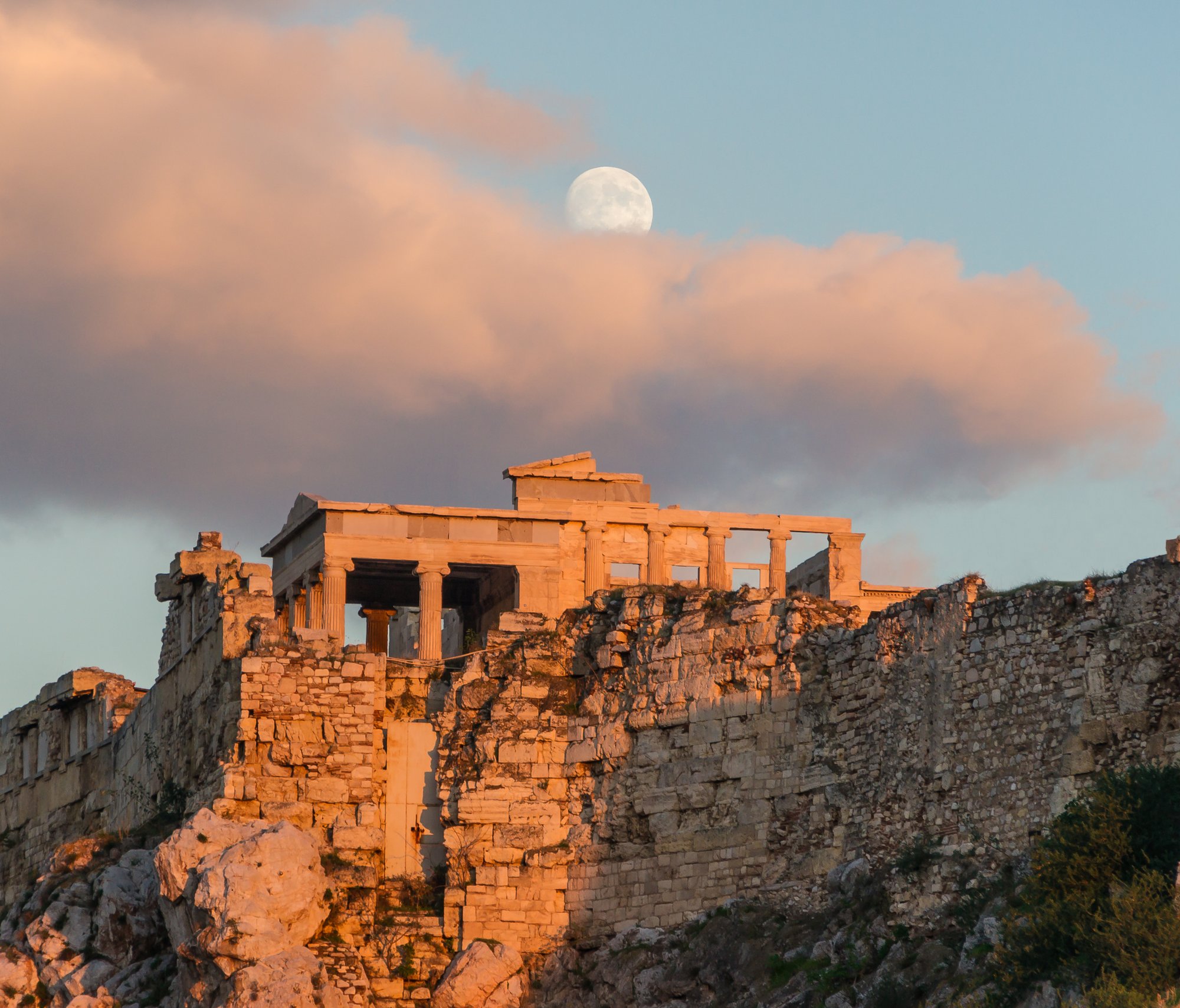
Athens fell for the first time in September 480 BCE. Although most residents had fled, a small number of Athenians remained behind on the Acropolis. The Acropolis was the high fortified hill at the center of the city, home to major temples and sacred buildings. It was both a defensive position and the symbolic core of Athenian identity.
The defenders barricaded themselves there, but they could not hold out. Persian troops broke through, killed those who had taken refuge, plundered the sacred area, and set it ablaze.
This first destruction was not just military occupation. It was a deliberate wrecking of places that mattered most. The Acropolis was razed, and major religious structures were destroyed, including the Old Temple of Athena and the Older Parthenon. Athena was the patron goddess of Athens, so the destruction of her temples struck at the center of the city’s spiritual life as well as its civic pride.
Soon after, the campaign shifted dramatically at sea.
Salamis Changed the War, but Not Athens’ Suffering
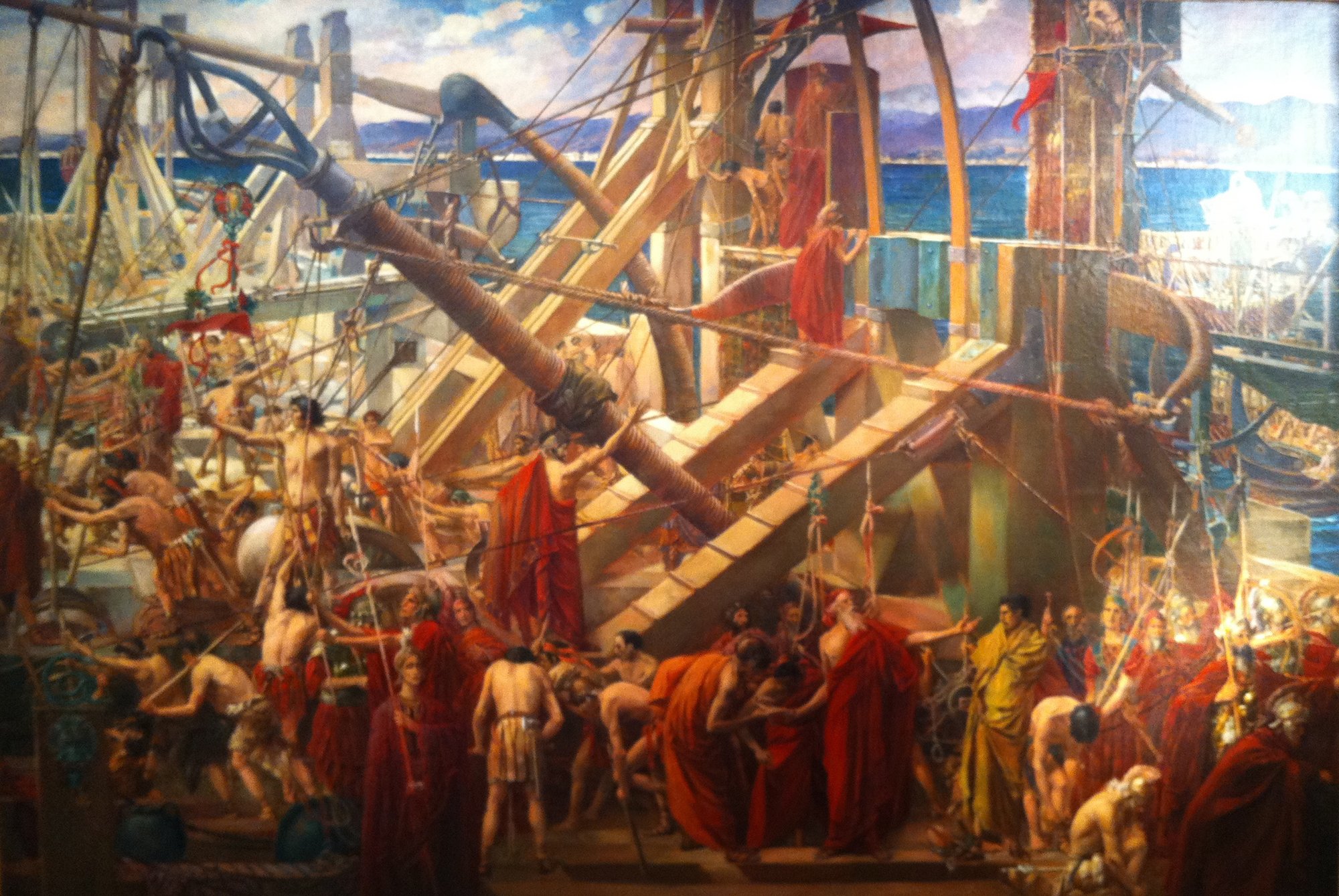
Not long after burning Athens, Xerxes lost a large part of his fleet at the Battle of Salamis. This was a major turning point because it removed Persian naval superiority. Without control of the sea, Xerxes feared that the Greeks might attack the Hellespont and destroy his pontoon bridges.
A pontoon bridge is a bridge built on floating supports, often boats, and in this case it was crucial to maintaining communication and retreat routes between Europe and Asia. According to Herodotus, Mardonius then volunteered to remain in Greece with a selected force to continue the campaign, while Xerxes withdrew to Asia with the bulk of the army.
As a result, Attica was temporarily abandoned by the Persians. Mardonius spent the winter in Boeotia and Thessaly, and some Athenians were able to return to their ruined city. But their return would be painfully short-lived.
The Second Destruction Under Mardonius
In 479 BCE, the Persians came back.
Mardonius remained in northern Greece with a powerful force. Herodotus describes this army as including elite Persian troops called the Immortals, along with cavalry and soldiers drawn from several peoples, including Medes, Sacae, Bactrians, and Indians. He says that with the horsemen, the force reached three hundred thousand men.
Rather than assault the Isthmus directly, Mardonius tried diplomacy. He offered the Athenians peace, self-government, and territorial expansion, using Alexander I of Macedon as an intermediary. The political aim was clear: if Athens could be detached from the Greek alliance, especially from its fleet, the Greek resistance would be weakened.
The Athenians refused.
That rejection sealed the city’s fate once again. The Persians marched south, forcing the inhabitants to evacuate a second time. Then Mardonius burned Athens again and demolished whatever walls, houses, and temples were still standing. Some later writers saw this second assault as the moment when Athens was truly leveled to the ground.
The image is devastating: a city already charred and broken from the first sack, briefly reoccupied by survivors, then revisited by an army determined to destroy even the remains.
How Athens Recovered After Plataea
The Persian destruction of Athens did not end the war. Soon afterward, the Persians were decisively defeated at the Battle of Plataea in 479 BCE. This was the major land battle in which the Greek coalition crushed the Persian army, Mardonius was killed, and the way was opened for the eventual expulsion of Persian forces from southern Greece.
With the city recovered, the Athenians faced the enormous task of rebuilding nearly everything.
Reconstruction began quickly. Themistocles led efforts in the autumn of 479 BCE, focusing first on defenses. Rather than immediately rebuilding temples, the priority was to secure the city against future attack. He reused remains from the destroyed Older Parthenon and Old Temple of Athena to strengthen the walls of the Acropolis. These reused materials are an example of spolia, meaning pieces taken from older damaged structures and built into new construction.
The northern wall of the Acropolis is especially associated with Themistocles, while Cimon is linked with the later southern wall. The urgency of defense also led to the construction of the Themistoclean Wall around Athens, built right after the destruction with the hope of preventing another invasion.
The famous Parthenon known today did not rise immediately from the ruins. It was rebuilt much later, after more than 30 years had passed, by Pericles.
The Long Memory of the Sack of Athens
The destruction of Athens did not fade quickly from Greek memory. It shaped how Athenians rebuilt their city, how they viewed Persia, and how later generations interpreted revenge and justice.
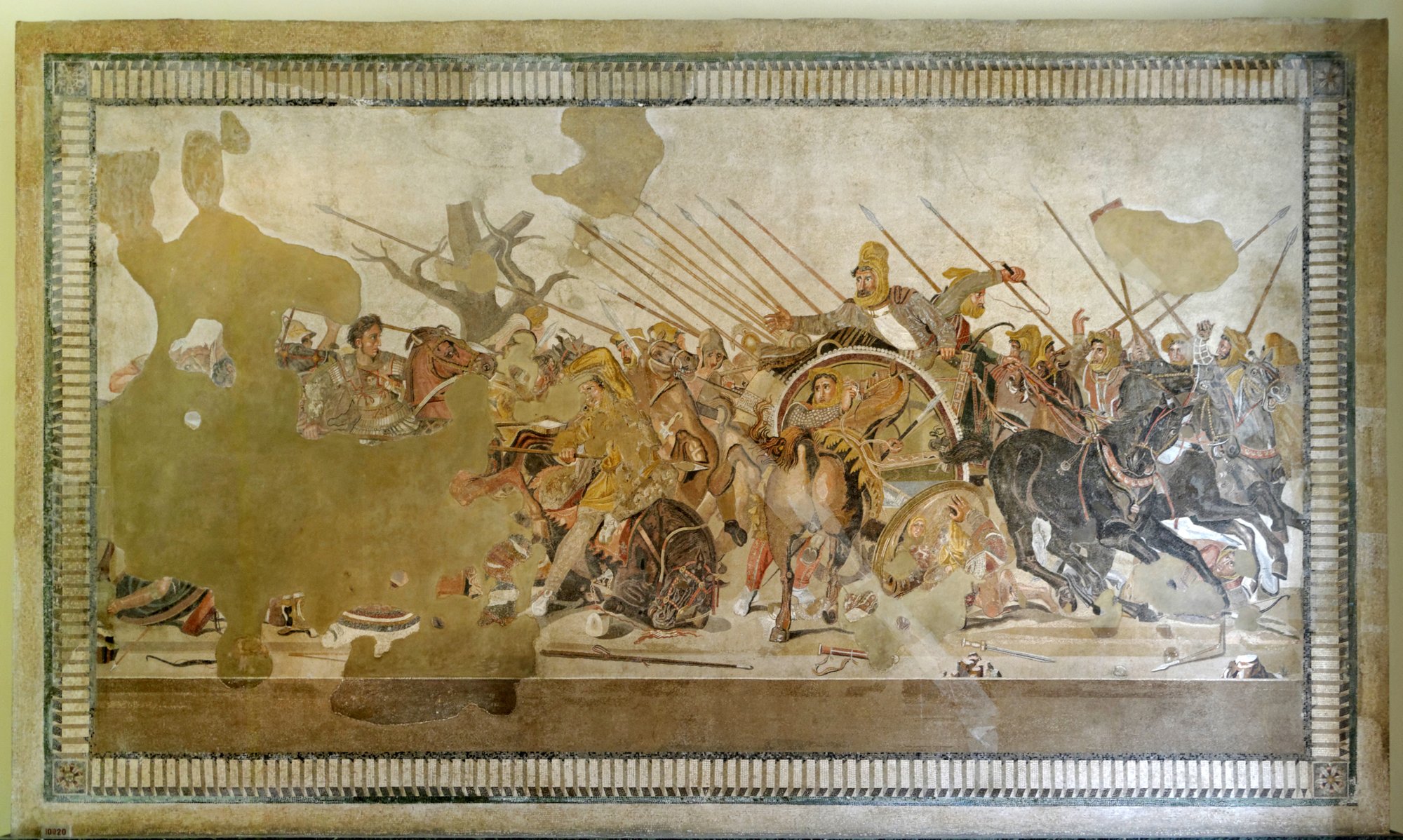
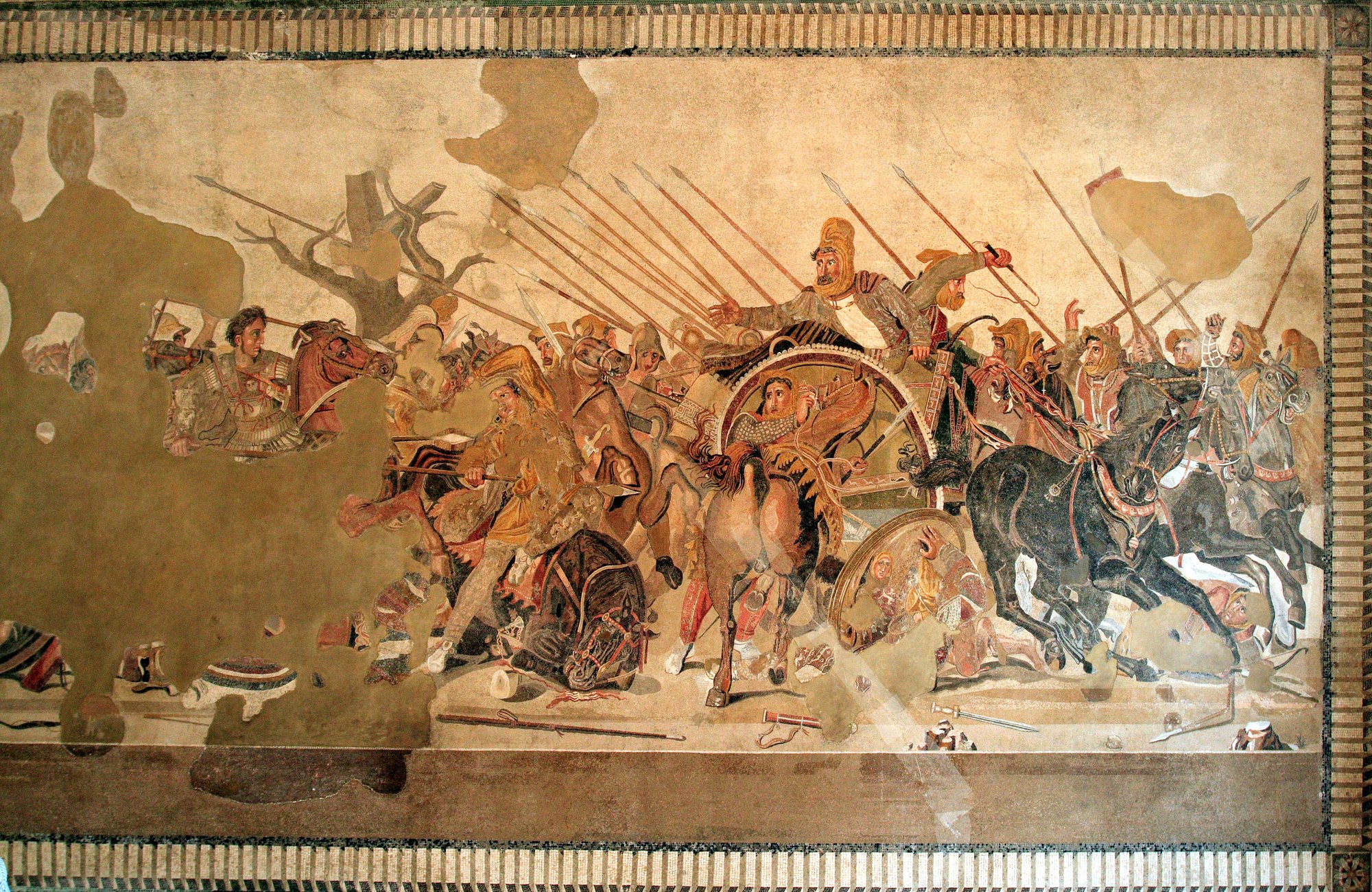
That memory even reached into the age of Alexander the Great. In 330 BCE, Alexander burned the Palace of Persepolis, the principal residence of the defeated Achaemenid dynasty. According to Plutarch and Diodorus, this act was intended as retribution for the destruction of Athens during the Greco-Persian Wars.
Whether seen as symbolic revenge or wartime spectacle, the link is striking. The fires set by Xerxes and Mardonius were remembered for roughly a century and a half, powerful enough to echo in one of antiquity’s most famous acts of destruction.
Ruins That Still Told the Story
Modern archaeological finds have preserved physical traces of the disaster. Many damaged statues discovered on the Acropolis are grouped under the name Perserschutt, meaning “Persian rubble” or “Persian debris.” These remains include works vandalized during the sack.
One notable example is the statue known as the Nike of Callimachus, erected next to the Older Parthenon in honor of Callimachus and the Greek victory at Marathon. Nike is the personification of victory, represented here as a winged woman atop an inscribed column. The statue, made of Parian marble and standing 4.68 meters tall, was badly damaged by the Persian army. Its head and parts of its torso and hands were never recovered.
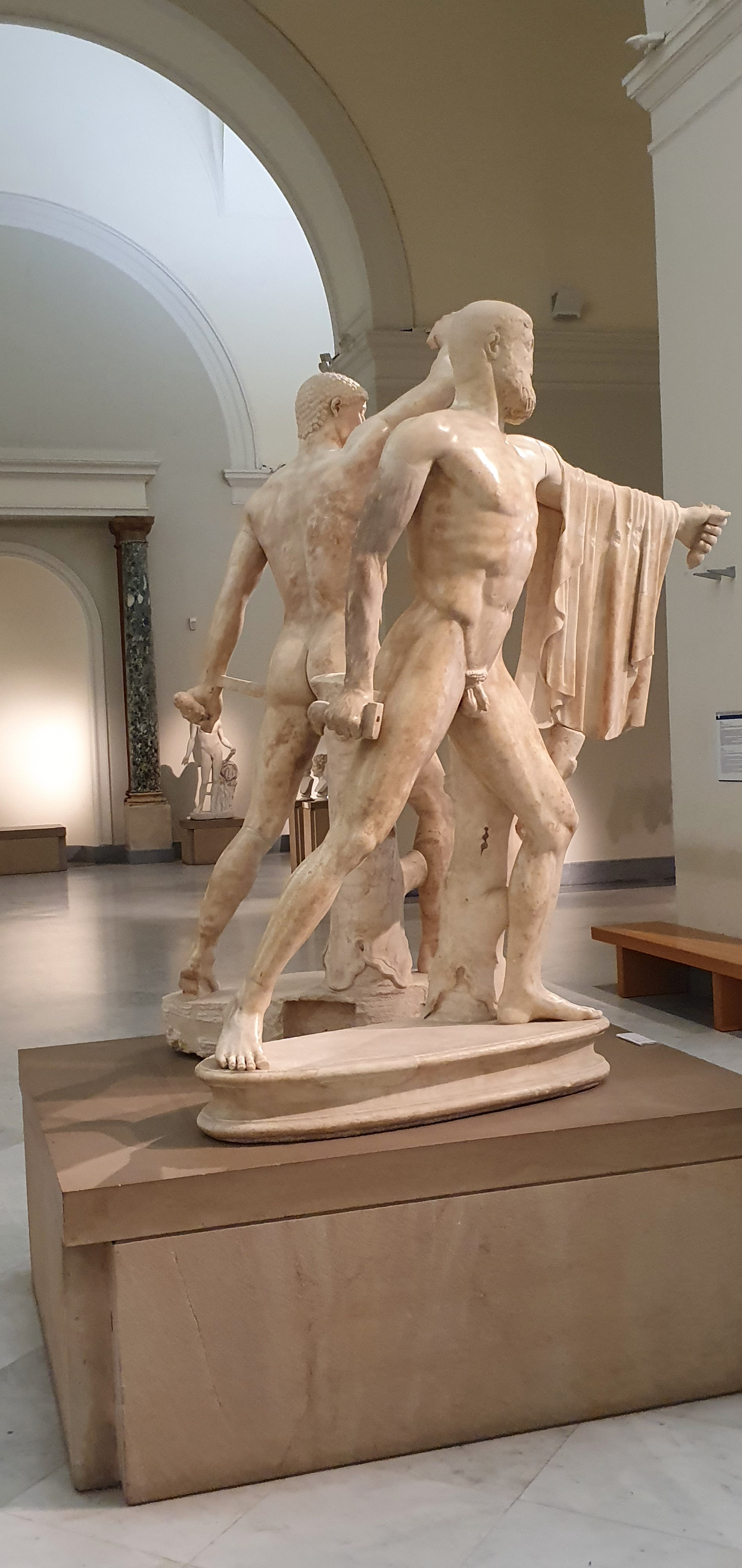
Some objects taken away by Xerxes also had a remarkable afterlife. A bronze statue of Harmodius and Haristogiton was recovered at Susa during the Wars of Alexander the Great and eventually returned to Greece after nearly two centuries.
Athens was burned twice, but it was not erased. Its ruins became walls, its losses became memory, and its destruction became one of the most enduring symbols of the Greco-Persian Wars.