Few moments in ancient history are as dramatic as Julius Caesar crossing the Rubicon in 49 BC. One river, one decision, and the entire Roman political order lurched toward collapse. What made this act so explosive was not just the movement of troops. It was what the crossing meant: Caesar was no longer negotiating within Rome’s republican system. He was bringing military force directly into the struggle for power.
That choice helped end the Roman Republic’s already fragile balance and opened the road to one-man rule. Caesar’s rise, his defeat of his enemies, and his assassination on the Ides of March became some of the most famous events in Roman history. Yet the story is even more gripping when placed in the wider crisis of the late Republic.
Watch the story on DeepSwipe
A Republic already under strain
By the mid-1st century BC, Rome was politically restless and deeply divided. Roman politics had increasingly split between two camps. The populares sought support from the people, while the optimates, often described as “the best,” aimed to preserve the traditional control of the aristocracy.
This was not a healthy, stable republic quietly functioning in the background. Social and economic tensions had been building for generations. Rome had become a metropolis with a super-rich aristocracy, debt-ridden political aspirants, and a large proletariat, many of them impoverished farmers. The Senate, although technically an advisory body, carried enormous influence and often blocked major reforms. Rival senators used violent gangs to intimidate voters, and earlier reform attempts, such as those associated with the Gracchi brothers, had ended in bloodshed.
The Republic had already been shaken by powerful generals using armies for political ends. Gaius Marius reshaped military recruitment by levying the very poor, bringing many landless men into the army. Later, Lucius Cornelius Sulla marched on Rome with his legions in a shocking and illegal seizure of power. Sulla’s example mattered enormously: it showed that a Roman commander could use military force against Rome itself.
By the time Caesar emerged, the old republican system of annually elected magistrates, checks and balances, and shared authority was still standing in name, but it had been battered by decades of factional conflict, violence, and personal ambition.

The First Triumvirate and Caesar’s rise
Caesar’s path to supremacy began through political alliance. He reconciled two of Rome’s most powerful men: Marcus Licinius Crassus, who had financed much of Caesar’s earlier career, and Crassus’ rival Pompey. Together with Caesar, they formed an informal alliance known as the First Triumvirate, meaning “three men.”
This alliance gave Caesar a platform from which to build his power. But it did not last. Caesar’s daughter, who had been married to Pompey, died in childbirth in 54 BC. Then Crassus was killed in 53 BC at the Battle of Carrhae during his invasion of Parthia. With the bond weakened and one partner gone, the Triumvirate disintegrated.
Meanwhile, Caesar conquered Gaul. These campaigns made him immensely wealthy, highly respected in Rome, and—perhaps most importantly—beloved by battle-hardened legions loyal to him personally. That combination made him a threat in the eyes of Pompey and many of the optimates.
Why crossing the Rubicon mattered
Caesar’s enemies believed he could be stopped through legal means. Pompey’s party tried to strip him of his legions. For Caesar, this was not a procedural setback. It was a direct danger. Without his army and protection, he faced trial, impoverishment, and exile.
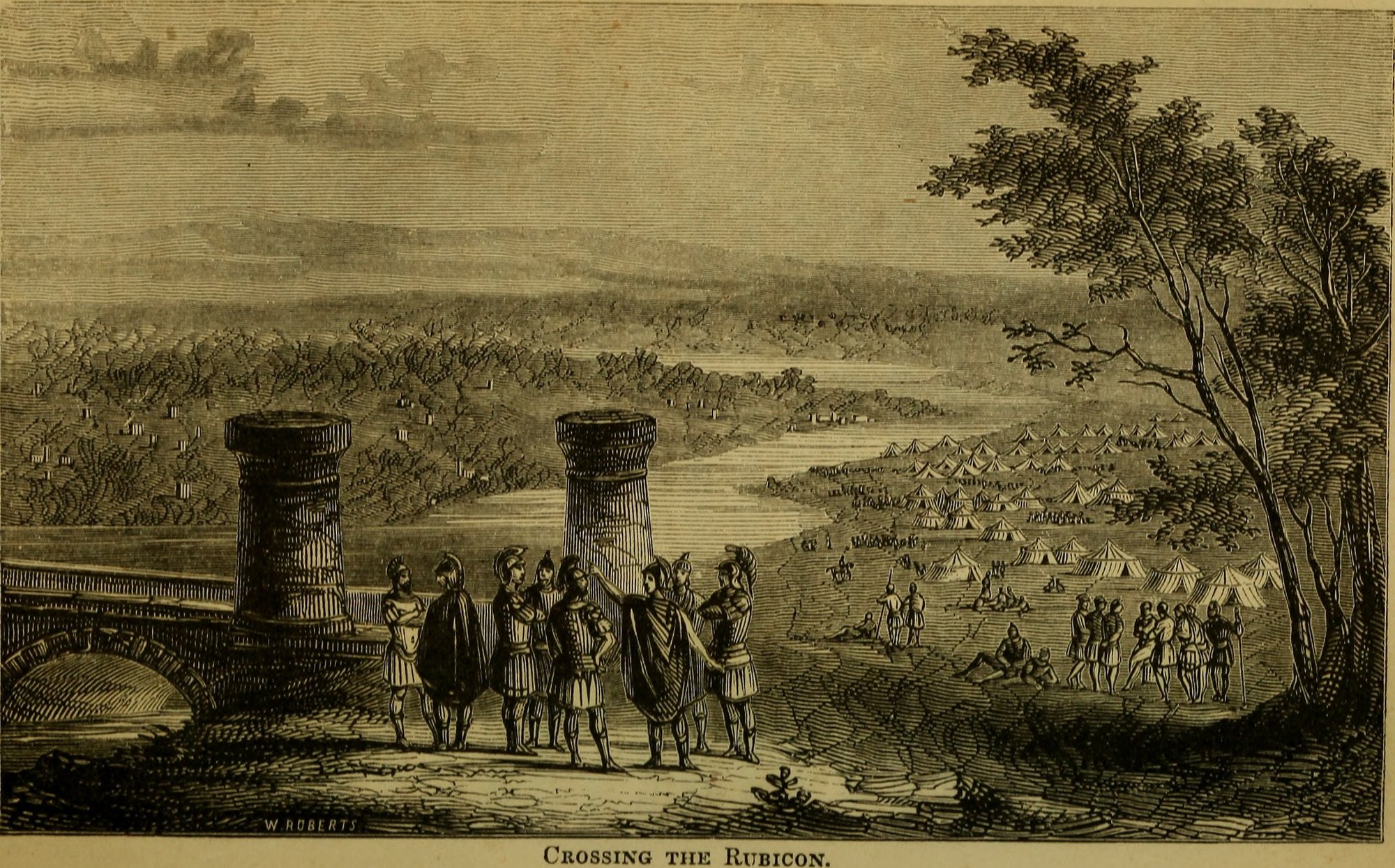
That is why the Rubicon mattered so much. To cross it with an army and invade Italy was not just bold—it was a declaration that the conflict would no longer be settled inside ordinary republican rules. In 49 BC, Caesar crossed the Rubicon River and marched into Rome’s political crisis with military force behind him.
This was the point of no easy return. The Republic still had its old institutions, titles, and legal language, but the contest for power had become a civil war.
Pharsalus and the destruction of the optimates
Caesar’s gamble worked. In the civil war that followed, he defeated Pompey’s side decisively. The Battle of Pharsalus was described as a brilliant victory for Caesar. In this and other campaigns, he destroyed the leadership of the optimates, including Metellus Scipio, Cato the Younger, and Pompey’s son, Gnaeus Pompeius Magnus.
Pompey himself was murdered in Egypt in 48 BC. With his greatest rival gone and the senatorial opposition broken, Caesar became pre-eminent over Rome.
To understand why this mattered, it helps to remember what the Republic was supposed to be. The Roman system had long depended on shared office, annual elections, and the idea that no single man should dominate the state. Consuls held office in pairs. Magistracies were limited in time. Authority was distributed. Caesar’s victories did not formally erase these traditions overnight, but in practice they made one man tower above the entire political system.
Power without real limit
In just five years, Caesar held four consulships, two ordinary dictatorships, and two special dictatorships, one of them for perpetuity. A consul was one of the highest annually elected magistrates in the Republic. A dictator, by contrast, was an extraordinary office used in emergencies and normally expected to be temporary. A dictatorship “for perpetuity” shattered that expectation.
This was the heart of the constitutional crisis. Republican forms still existed. Offices still had familiar names. But Caesar’s concentration of power showed how far Rome had drifted from the old balance of the res publica, the “public business” from which the word republic is derived.
Many Romans had already seen the Republic bent by violence and ambition, but Caesar’s position made the danger unmistakable. He was not merely influential. He was the dominant power in the Roman state.
The Liberatores and the Ides of March
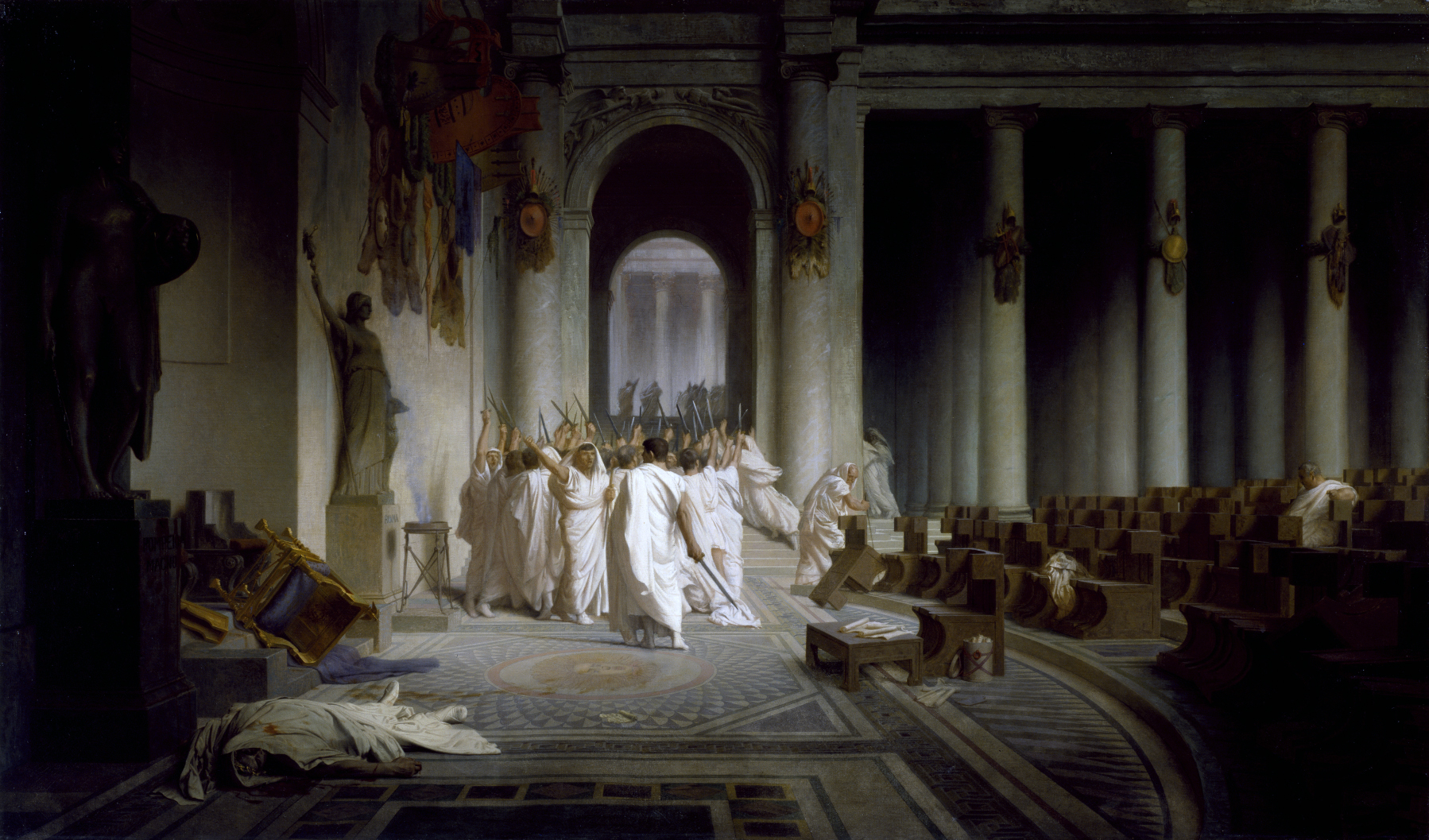
On the Ides of March in 44 BC, Caesar was murdered by the Liberatores. This group of senators claimed they were saving the Republic. Their name itself reflects that self-image: they presented themselves as liberators, men freeing Rome from tyranny.
But the assassination did not restore the old order. Instead, it unleashed further political and social turmoil. Caesar’s death left a power vacuum that others rushed to fill, especially Mark Antony and Octavian, the adopted heir named in Caesar’s will.
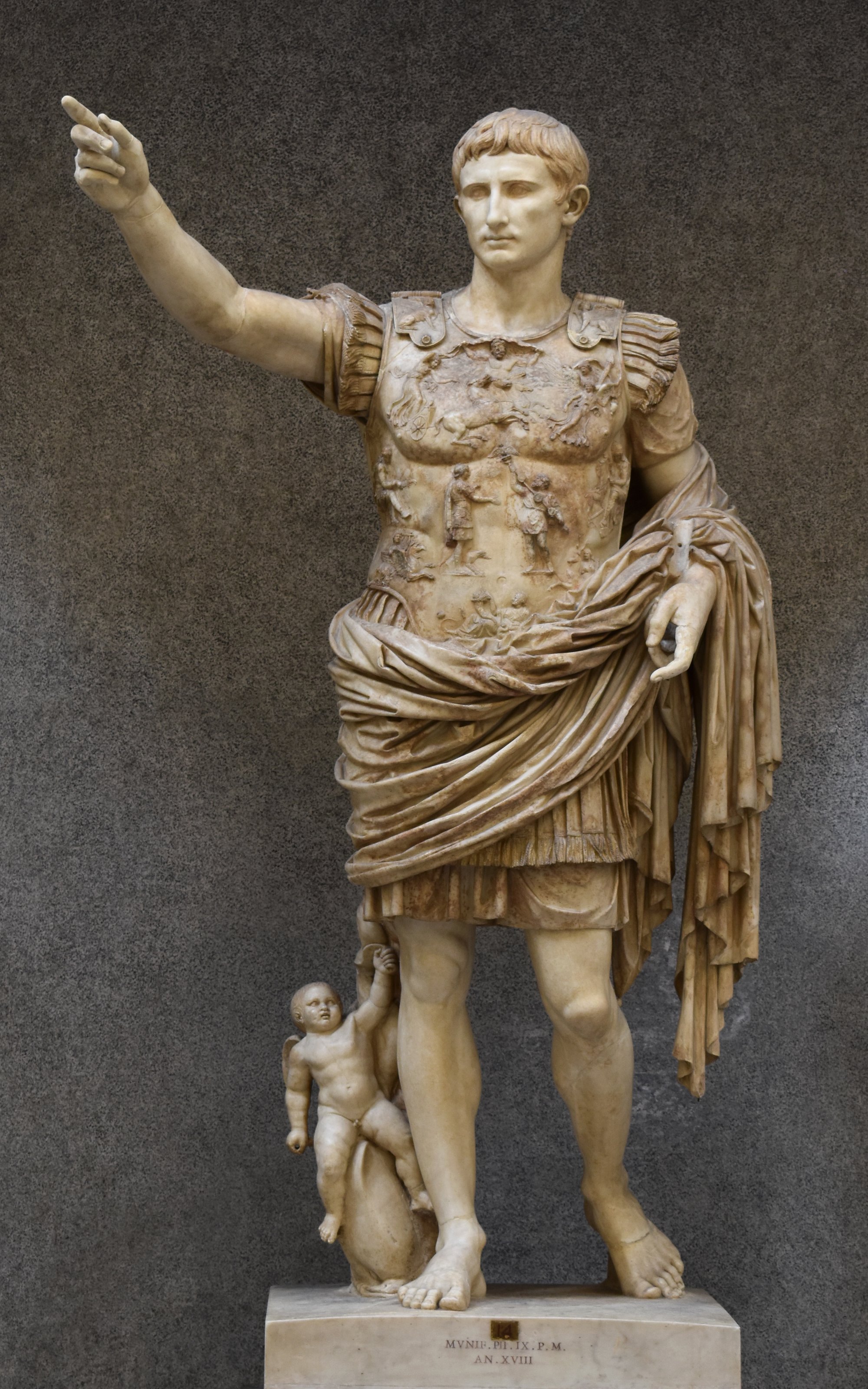
The result was not republican renewal but another wave of civil conflict. The Second Triumvirate was formed by Octavian, Antony, and Lepidus. It was marked by proscriptions and executions on a massive scale. Eventually Octavian defeated Antony and Cleopatra, and in 27 BC he became Augustus, the sole Roman leader. Historians generally mark that moment as the beginning of the Roman Empire.
Why Caesar’s story marks the end of the Republic
Caesar did not single-handedly invent Rome’s political crisis. The Republic had long been weakened by class conflict, senatorial rivalry, military strongmen, and civil war. But his crossing of the Rubicon became the clearest symbol of the point at which republican politics gave way to armed supremacy.
His victories proved that military power could overwhelm the old constitutional framework. His dictatorship for perpetuity showed that republican offices could survive as names while their spirit was emptied out. And his murder proved that removing one man could not easily repair institutions already broken by decades of violence.
That is why the Rubicon still echoes through history. It marks more than a daring march. It represents the moment when Rome’s Republic, already wounded, crossed into a struggle from which it could not truly return.