Most people imagine an ant queen founding her own colony from scratch. But in parts of the genus Lasius, some queens take a very different path. Instead of building a kingdom the usual way, they infiltrate an existing colony and use deception to take control.
This strategy is one of the most striking examples of social parasitism in ants. In simple terms, social parasitism means one species exploits the social system of another. For some Lasius ants, that means using the labor, protection, and organization of another colony rather than starting fresh with their own workers.
Watch the story on DeepSwipe
A genus with many lifestyles
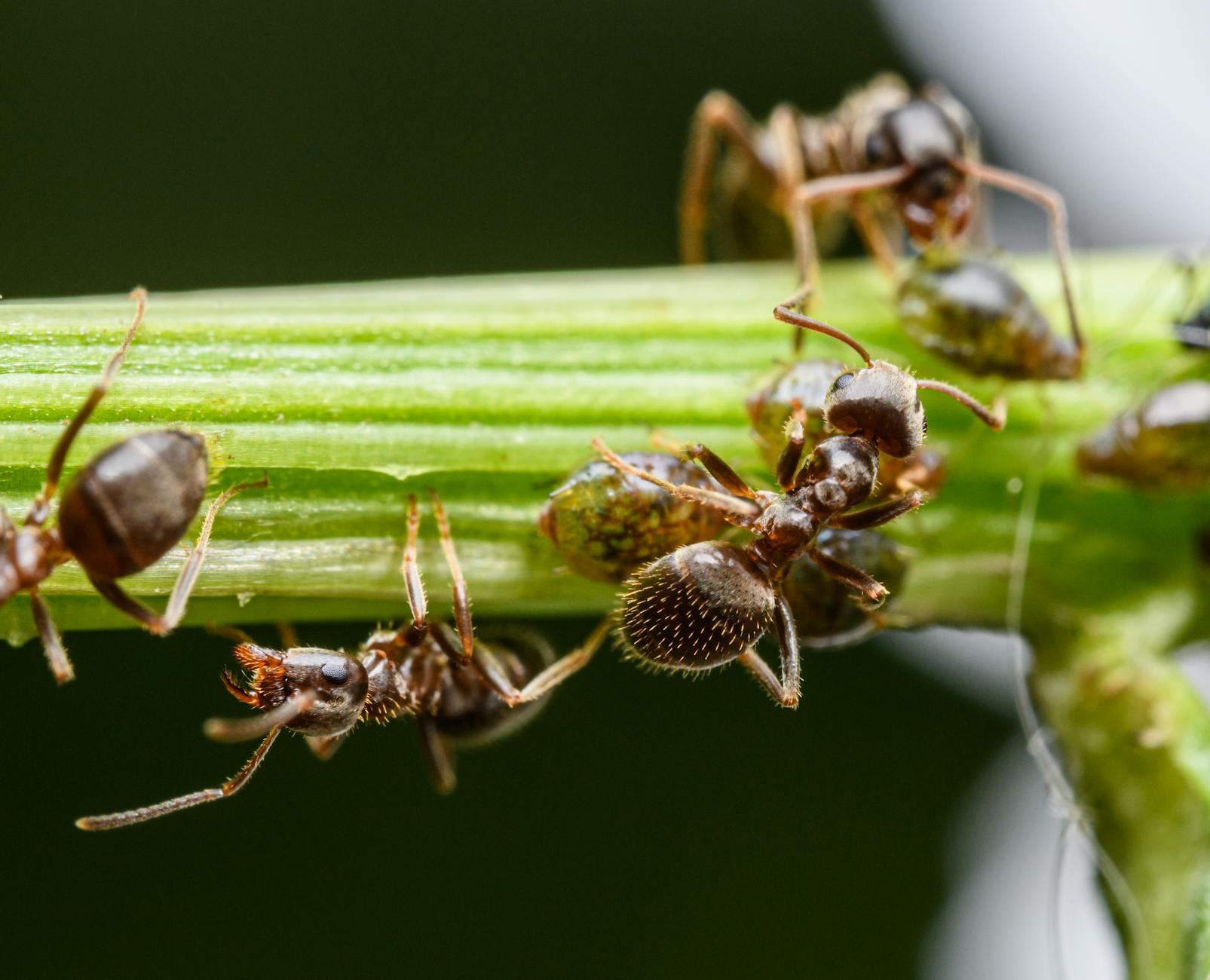
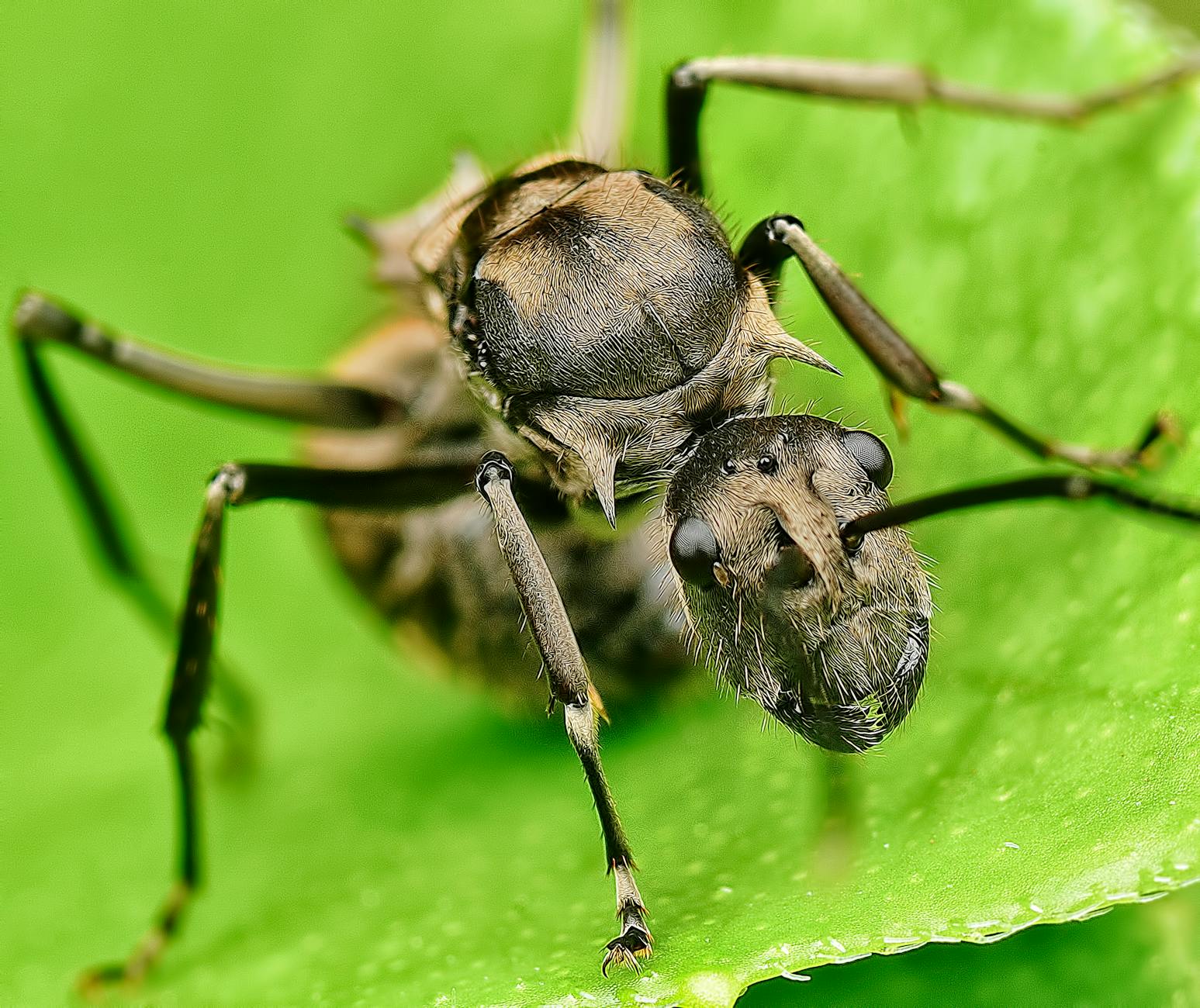
Lasius is a genus of formicine ants, with the black garden ant, Lasius niger, as its type species. Different members of this group live in different habitats and show very different ways of life. Some, like the cornfield ant Lasius neoniger and Lasius alienus, are associated with drier heathland. Lasius flavus is also commonly seen, especially because it builds grassy hillocks in undisturbed pasture.
These grassy mounds are notable enough that in the Alps they have traditionally been used by goatherds as natural compasses. The mounds are aligned east, which lets them catch the first rays of the rising sun. It is a remarkable reminder that ants are not just tiny insects underfoot; their nesting habits can become part of a landscape and even part of human tradition.
But among the many Lasius species, some stand out for a far darker-sounding talent: they exploit other ant societies from the inside.

What social parasitism looks like in Lasius
Several species in Lasius are noted to be social parasites. Rather than founding a colony independently, these ants target colonies of other Lasius species.
The basic idea is simple, but the execution is extraordinary. An invading queen enters another colony and somehow overcomes the most important barrier in ant life: colony identity. Ant colonies depend heavily on chemical communication. Workers recognize nestmates, queens, brood, and outsiders through scents and body chemicals. If an invader can manipulate that chemical system, she can turn the colony’s own social order to her advantage.
That is exactly what has been observed in some Lasius ants.
The chemical coup
Queens of Lasius orientalis and Lasius umbratus have been observed using chemical signals to invade other Lasius colonies. Chemical signals are scents or body-produced chemicals that ants use to communicate and identify one another. In ant societies, these signals are essential. They help organize work, defend the colony, and maintain loyalty to the resident queen.
In these species, the invading queen uses those signals to trick the workers. Instead of treating her as an enemy, the workers are manipulated into killing the colony’s original queen. After that, they accept the intruder as their own queen.
It is hard to imagine a more dramatic takeover. There is no large-scale battlefield clash and no obvious siege. The colony is conquered through recognition systems being hijacked from within. The workers, which normally defend their queen and nest, become agents of the invader.
This is what makes the story so compelling: the conquest is based less on brute force than on chemistry and social confusion.
Timing matters: when parasitic queens attack
Not all socially parasitic Lasius queens invade at the same moment. Timing appears to be part of the strategy.
Some species, such as Lasius latipes and Lasius murphyi, have mating flights in mid- to late summer and invade other Lasius colonies, primarily Lasius neoniger. A mating flight is a short period when winged reproductive ants leave the nest to mate and begin the process of founding or acquiring a colony. In these parasitic species, that seasonal window is linked to invasion.
Other species use a different schedule. Lasius claviger is known to overwinter and invade colonies in the spring. To overwinter means to survive through the winter before beginning the next stage of its life cycle. This means the queen delays her takeover attempt until the season changes.
These differences show that parasitic colony takeover is not one fixed behavior across the genus. Some queens move soon after mating flights in late summer, while others survive winter first and attack later. In either case, success depends not only on entering another colony, but on doing so at the right time.
Why this strategy is so effective
An ant colony is more than a nest. It is a highly organized society with workers, brood, food pathways, and defensive behavior already in place. For a queen able to take over such a system, the benefits are obvious. She does not have to begin alone in the same way as a typical founding queen.
The especially fascinating point in Lasius is that this takeover can happen through deception. Ants are famous for cooperation and collective behavior, yet these same social strengths create vulnerabilities. If colony recognition depends on chemical identity, then a queen that can manipulate that identity can subvert the whole structure.
In Lasius orientalis and Lasius umbratus, the workers are not physically overpowered into obedience. They are chemically misled into removing their own queen and supporting the invader. The colony changes rulers, but the machinery of the colony remains intact.
Not all unusual Lasius are social parasites
The genus also includes other notable specialists. The L. mixtus group contains temporary social parasites, and L. fuliginosus is described as a hyper-social parasite. Even within one ant genus, there is a wide spectrum of social and ecological strategies.
Other Lasius species are better known for features that have nothing to do with royal coups. Species in the subgenus Acanthomyops, especially Lasius interjectus and Lasius claviger, are commonly called citronella ants because of their citronella-like smell. In the United States, many Lasius species are grouped under the name “moisture ants” because they nest in and around moist, rotting wood and under rocks.
These moisture ants can infest buildings, especially foundation forms in contact with soil, but they are considered only a minor nuisance. They are not seen as a structural threat because they make their galleries only in wood that is already decayed. Some species even build cartonlike nests in moist places from decayed wood fragments cemented together with honeydew and secretions from the ants’ mandibular glands.
The workers of these moisture ants are monomorphic, meaning the workers are all of one general form rather than divided into clearly different worker sizes. They are 2 to 3 mm long, range from yellow to dark brown, and are secretive. They usually forage at night for honeydew and other sweet substances, though they may also prey on small insects.
This broader picture helps show how diverse Lasius really is. The same genus contains familiar garden ants, mound-builders used as natural compasses, moisture-loving nesters, citronella-scented species, and queens capable of seizing control of another colony through chemical trickery.
A takeover by scent, not strength
The most unforgettable lesson from these ants is that power in insect societies does not always belong to the strongest attacker. In Lasius, a queen may win by manipulating communication itself.
That makes these ants a striking example of how evolution can shape behavior in unexpected ways. A colony that seems stable and tightly organized can be undone not by a frontal assault, but by a perfectly timed intrusion and the right chemical message.
In the world of Lasius, smell and deception can be enough to topple a queen and rewrite the fate of a colony.