In The Odyssey, battles and monsters may grab attention first, but one of the poem’s deepest ideas is much quieter: hospitality. The ancient Greek concept of xenia, often translated as guest-friendship, shapes how characters are judged throughout the story. In this world, welcoming a stranger is not just good manners. It is a moral test.
Odysseus spends years wandering after the Trojan War, moving from one shore to another, dependent on the behavior of the people he meets. Again and again, the poem asks the same question: when a vulnerable outsider arrives, what kind of host will receive him?
That question reveals character more clearly than speeches or appearances ever could.
Watch the story on DeepSwipe
What xenia means in The Odyssey
Xenia refers to a bond between host and guest. In practical terms, it involves a set of expected actions: receiving the stranger, offering food and drink, providing a place to rest, and helping the guest continue the journey safely. It can also include bathing the guest, giving fresh clothes, offering entertainment, exchanging gifts, and making sure the visitor is not kept longer than desired.
This pattern matters because travel in The Odyssey is dangerous. A traveler often arrives hungry, tired, and unsure whether the next household will offer safety or violence. Hospitality becomes a social rule that protects human beings from chaos.
The poem treats this custom as a serious measure of civilization. A host with generosity shows order, self-control, and respect. A host who abuses guests exposes something darker.

Polyphemus: the shocking anti-host
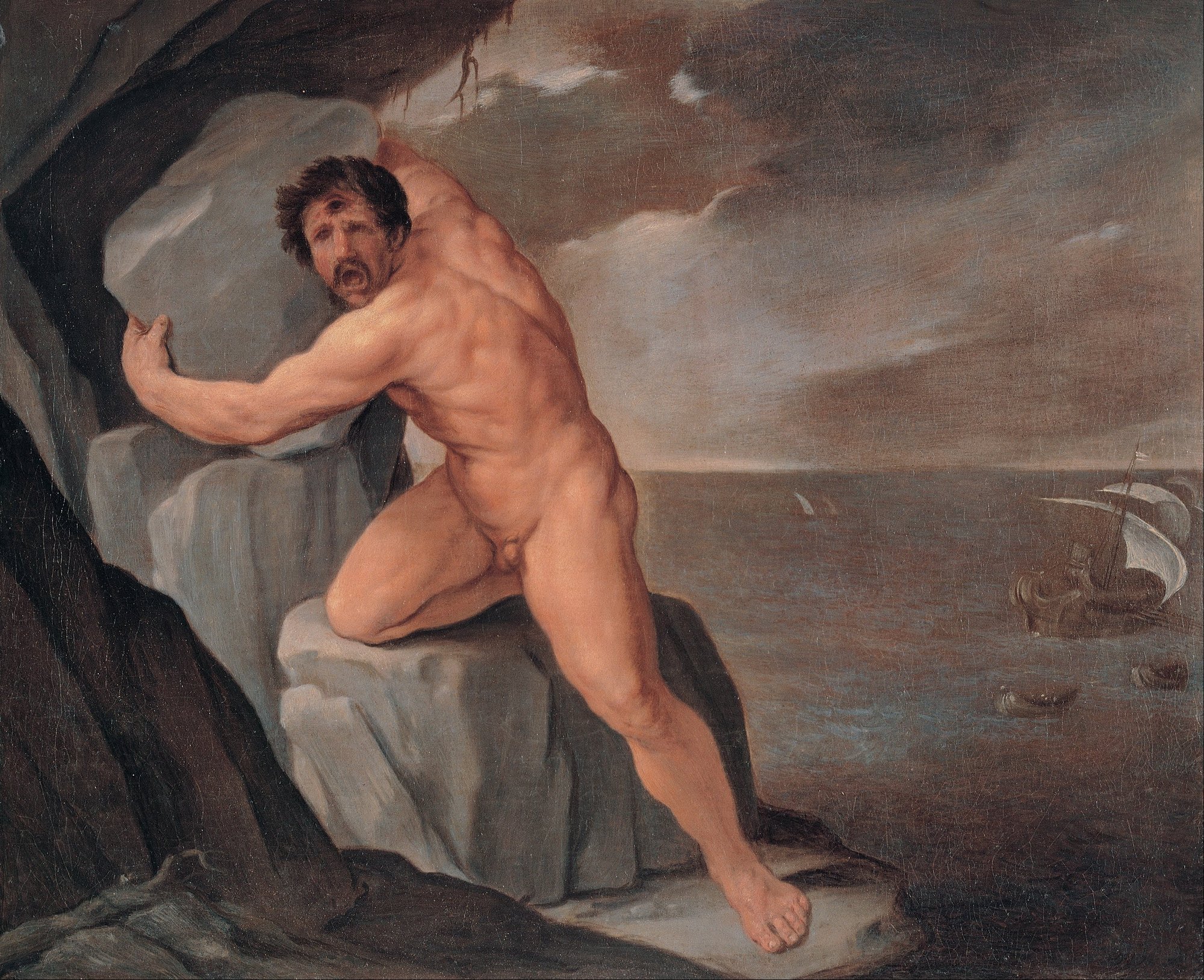
The encounter with Polyphemus, the Cyclops, is one of the clearest examples of failed hospitality in all of The Odyssey. A Cyclops is a one-eyed giant from Greek myth, and Polyphemus turns out to be far more than a physical threat. He is a moral one.
When Odysseus and his men enter his cave, they are in the position of guests. According to the standards of xenia, they should be welcomed, fed, and protected. Instead, Polyphemus traps them. His horrifying version of a “gift” is that he will eat Odysseus last.
That detail is memorable because it twists the language of hospitality into mockery. In a culture where a host is supposed to offer food, Polyphemus offers the guest as food. The scene is not simply scary; it is upside down. It presents a world where one of the most basic social laws has been broken.
This is why the episode feels bigger than a monster story. Polyphemus is not just dangerous because he is strong. He represents a collapse of proper human behavior.
Why the poem cares so much about hosts
The Odyssey repeatedly shows that the way people treat strangers is a clue to their moral worth. Hospitality is never random background decoration. It is one of the poem’s main systems for judging characters.
This matters especially because Odysseus often appears in a vulnerable position. He is shipwrecked, isolated, disguised, or dependent on others. The poem puts him in situations where people reveal themselves through action rather than reputation.
A meal, a bed, or safe passage home can become a kind of moral language. Generosity means one thing. Cruelty means another. Refusing hospitality says something essential about whether a person belongs to the world of order or to the world of disorder.
The Phaeacians as model hosts
If Polyphemus is a nightmare host, the Phaeacians are the opposite. They welcome Odysseus, feed him, provide him a place to sleep, give him gifts, and most importantly send him safely home. In the logic of xenia, they do nearly everything a good host should do.
Their treatment of Odysseus shows what ideal hospitality looks like in The Odyssey. They do not just satisfy his immediate needs. They restore his dignity and help bring his long wandering toward its end.
This is one reason the Phaeacians matter so much in the story. Odysseus’s journey is not only about storms and monsters. It is also about moving from places of concealment and danger toward places where social order still exists. The Phaeacians help mark that transition.
Their behavior proves that hospitality is not a minor courtesy. It is a force that can literally carry a person home.
The suitors fail the same test in a different way
The poem’s concern with hospitality does not end with exotic islands and supernatural creatures. It also appears inside Odysseus’s own household.
While Odysseus is absent, 108 suitors crowd his home, competing to marry Penelope. They consume the household’s resources and behave in unruly ways. Later, when Odysseus returns disguised as an elderly beggar, their conduct becomes another test.
Antinous, one of the suitors, refuses food to the disguised Odysseus. This matters because kingship in the poem is linked with generosity. Someone may look grand, but if he cannot act as a proper host, that appearance means little. Odysseus effectively points out that Antinous may seem kingly, but his lack of generosity proves otherwise.
The suitors fail hospitality from within the home itself. Polyphemus violates xenia through open savagery. The suitors violate it through arrogance, waste, and contempt. Both forms are serious offenses.
Hospitality as a test of civilization
One of the most striking ideas in The Odyssey is that hospitality separates the civilized from the monstrous. This does not simply mean “kind people” versus “unkind people.” It means that treatment of strangers shows whether a person respects the social bonds that make human life possible.
The poem is full of wandering, uncertainty, and testing. Odysseus tests the loyalty of those around him when he returns in disguise. Others test his identity. Omens and signs appear. Homecoming remains the central goal. But within all of that, hospitality keeps returning as a practical and moral checkpoint.
Who feeds the hungry? Who gives shelter? Who protects the weak? Who helps the traveler onward?
The answers define the world of the poem.
Why this theme still feels powerful
The Odyssey remains compelling partly because its idea of hospitality is so simple and so sharp. You do not need to fight a Cyclops to understand what the poem is asking. When someone vulnerable stands before you, do you exploit them or help them?
That is why the contrast between Polyphemus and the Phaeacians is so memorable. One turns the guest-host relationship into a nightmare. The other fulfills it with generosity. Between them, the poem makes a larger argument: civilization is revealed in ordinary acts of welcome.
In The Odyssey, a feast is never just a feast, and a refusal is never just a refusal. Food, shelter, and safe passage become signs of justice, order, and character.
That is the strange power of guest-friendship. It turns everyday hospitality into a measure of who people really are.