Full article · 8 min read
Small Continent, Giant Footprint: How Europe Shaped the Modern World
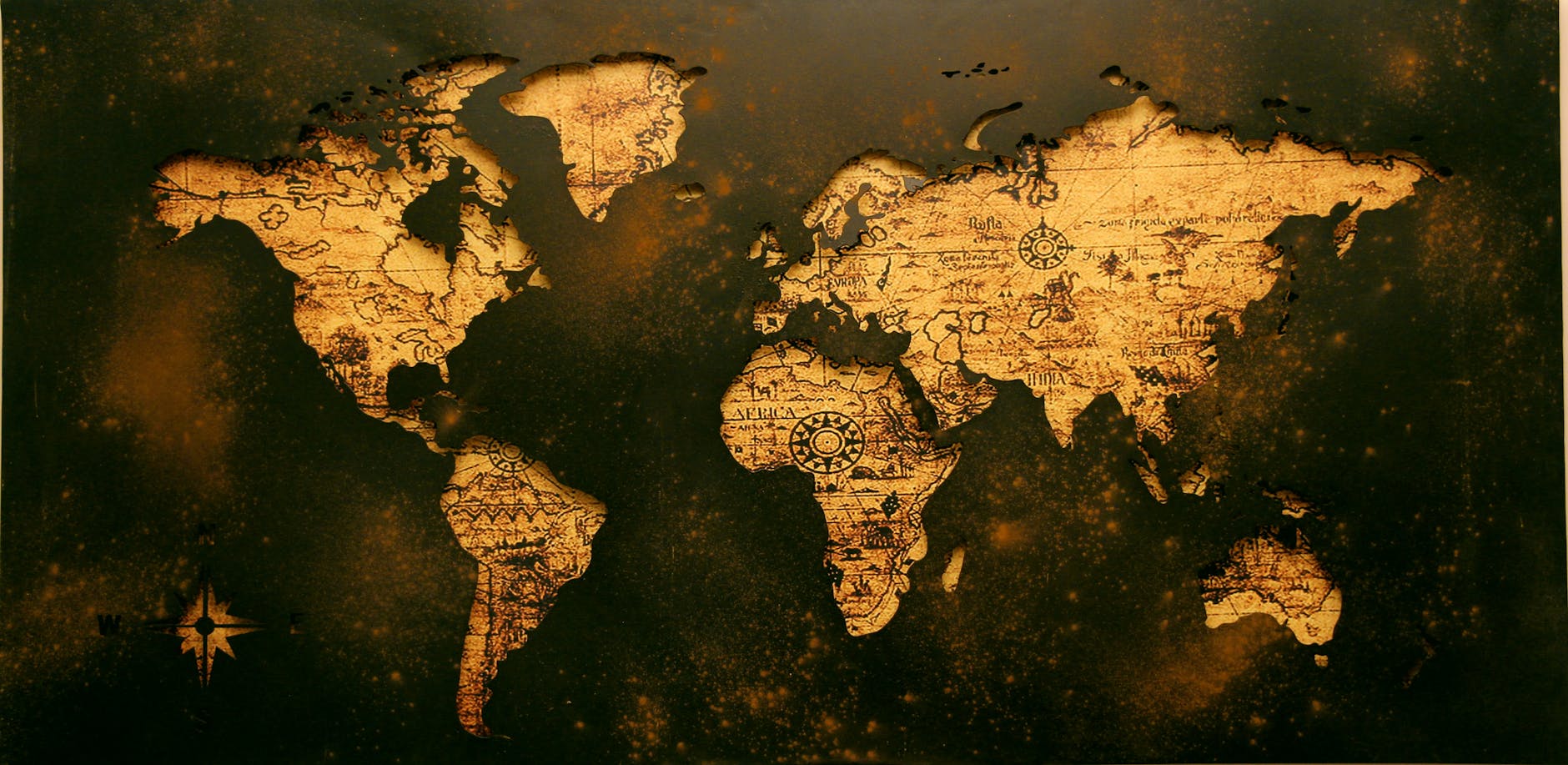
Europe is physically small. It covers about 10.186 million square kilometres, roughly 2% of Earth’s surface and 6.8% of its land area, making it the second-smallest continent in the seven-continent model. Yet for centuries, this relatively compact continent had an influence on world affairs far larger than its size suggests.
That contrast is one of the most striking themes in world history: how did a small continent leave such a huge global footprint? The answer lies in a combination of cultural development, ocean-going expansion, industrial change, and the fact that many of the biggest political shocks of the modern age began in Europe and spread outward.
Europe’s size makes its impact more surprising
Europe is the western part of the Eurasian landmass, bordered by the Arctic Ocean to the north, the Atlantic Ocean to the west, the Mediterranean Sea to the south, and Asia to the east. Despite its modest size, it contains about fifty sovereign states and had a population of about 745 million in 2021.
Geographically, Europe is often described as a continent, though its eastern boundary with Asia is partly defined by features such as the Ural Mountains, the Ural River, the Caspian Sea, the Greater Caucasus, the Black Sea, and the Turkish straits. That means Europe is not a giant isolated landmass like some people imagine a continent to be. In physical terms, it is part of the much larger Eurasian landmass.
This makes Europe’s historical reach even more remarkable. A region that takes up only a sliver of the planet’s surface became a major force in exploration, conquest, trade, industrialisation, and international politics.
Deep cultural roots before global expansion
Europe’s influence did not appear overnight. Its culture drew heavily on ancient Greece and ancient Rome, which are often seen as central roots of wider Western civilisation. Ancient Greece is associated with philosophy, rationalism, drama, science, and early democracy, especially in Athens under Cleisthenes. Rome left a lasting mark on law, government, engineering, architecture, language, and politics.
Later, after the fall of the Western Roman Empire in 476 CE, Europe’s cultural development continued through the Christian Middle Ages. Over time, Latin Christian culture became a major part of how Europe understood itself. The Roman Catholic Church played a central role in education during the Middle Ages through monasteries and cathedral schools.
Then came the Renaissance, which began in Florence and spread across Europe between the 14th and 16th centuries. This period revived classical knowledge and gave renewed emphasis to art, philosophy, music, and science. Humanism, a movement that placed new value on human learning and creativity, helped drive the transition toward the modern era.
These long cultural developments mattered because they helped create the intellectual and political environment from which later exploration, empire-building, and scientific change emerged.
The Age of Discovery: when Europe went global
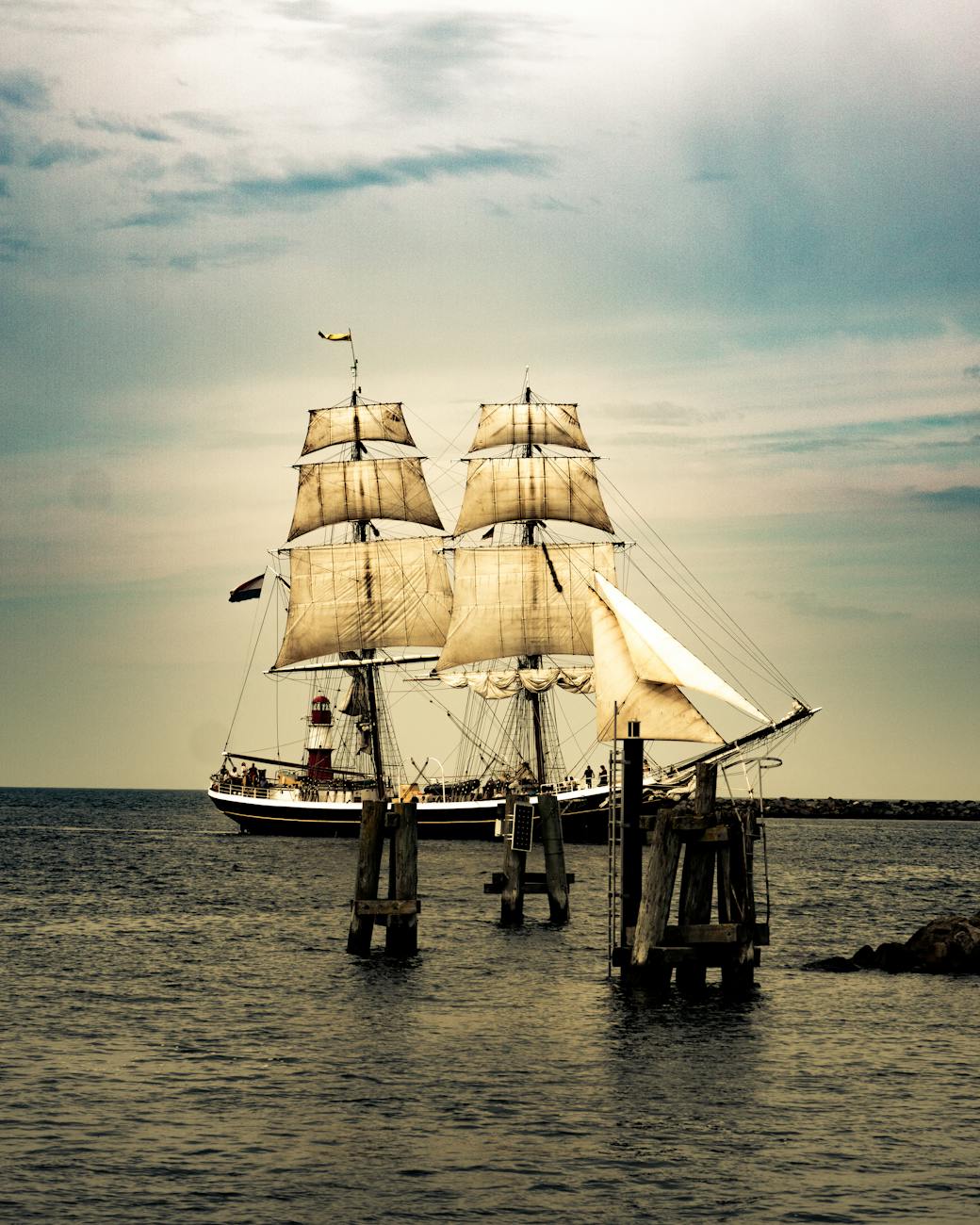
One of the biggest reasons Europe’s footprint became so large was the Age of Discovery. Led first by Spain and Portugal, European states pushed beyond the continent’s own shores and began exploring much of the world.
This period saw dramatic maritime expansion. Christopher Columbus reached the New World in 1492. Vasco da Gama opened an ocean route to the East in 1498 by linking the Atlantic and Indian Oceans. Ferdinand Magellan’s Spanish expedition achieved the first circumnavigation of the globe, completed by Juan Sebastián Elcano between 1519 and 1522.
These voyages were not just adventures. They opened the way for global empires. From the 16th to the 20th centuries, European powers colonised at various times the Americas, almost all of Africa and Oceania, and the majority of Asia. Spain and Portugal began this process, and France, the Netherlands, and England later built large colonial empires with vast holdings in Africa, the Americas, and Asia.
This is the point where Europe’s small physical size mattered less than its maritime reach. Naval power allowed European states to project force and influence far beyond their own coastlines.
Why oceans mattered so much
Europe’s geography helped make overseas expansion possible. It has a higher ratio of coast to landmass than any other continent or subcontinent. In simple terms, a great deal of Europe lies relatively close to the sea. Maritime routes along the Atlantic and Mediterranean connected European societies to trade, travel, and eventually long-distance exploration.
Commercial development in the Middle Ages also helped prepare the ground. During the High Middle Ages, major trade routes developed along the coasts of the Mediterranean and Baltic Seas, and wealthy coastal cities became powerful actors in European life. Later, these maritime traditions fed into the great overseas ventures of the early modern period.
Empire, conquest, and global dominance
Once European states established overseas routes, they did not simply trade. They also conquered. Colonisation gave European powers political control over large territories and linked Europe directly to the resources, populations, and economies of distant regions.
For centuries, Europe played a predominant role in global affairs. That meant the decisions of relatively small European kingdoms and empires often had consequences on other continents. A war, commercial rivalry, or religious struggle in Europe could ripple outward across colonial possessions around the world.
This helps explain why Europe’s global footprint was not just cultural but geopolitical. Its influence became embedded in borders, trade networks, institutions, and imperial competition far beyond Europe itself.
The Industrial Revolution changed everything again
Europe’s influence expanded even further with the Industrial Revolution, which began in Great Britain at the end of the 18th century. The Industrial Revolution was the shift toward machine-based production, factories, and large-scale manufacturing. It brought radical economic, cultural, and social change first to Western Europe and then to the wider world.
This transformation was not merely about new tools. It changed how goods were made, how people worked, where they lived, and how economies functioned. The article describes rapid urban growth, mass employment, and the rise of a new working class. It also notes that reforms followed in social and economic life, including laws on child labour, the legalisation of trade unions, and the abolition of slavery in some contexts.
Because the Industrial Revolution began in Europe, the continent once again became the launch point for a global transformation. Industrial methods spread beyond Britain and beyond Europe, but the initial shift gave Europe enormous economic and political weight.
Europe was also the stage for world-shaping ideas
Europe’s footprint was not only built on ships and factories. It was also shaped by ideas. The Age of Enlightenment promoted scientific and reason-based thought. The French Revolution and the Napoleonic Wars transformed politics across the continent and beyond.
The French Revolution challenged aristocratic and clerical monopoly on power and led to the establishment of the First Republic. Napoleon then spread many of the revolution’s ideas across Europe. According to the article, Napoleonic rule further disseminated ideals such as the nation state and encouraged the widespread adoption of French models of administration, law, and education.
That matters because political ideas developed in Europe often travelled globally, just as European armies and empires did.
The world wars: Europe’s central role in global catastrophe
Europe’s influence was so great that when it convulsed, the whole world felt it. Both world wars began in Europe and were fought to a great extent there.
The First World War started in 1914 after the assassination of Archduke Franz Ferdinand of Austria by Gavrilo Princip. Most European nations were drawn in, and more than 16 million civilians and military personnel died. More than 60 million European soldiers were mobilised.
The Second World War began in Europe in 1939 when Germany invaded Poland, prompting France and the United Kingdom to declare war. The war in Europe became part of the largest and most destructive conflict in human history. More than 40 million people in Europe died as a result of the Second World War, including between 11 and 17 million people who perished during the Holocaust.
These wars reshaped global power. By the mid-20th century, Western European dominance in world affairs had declined, while the Soviet Union and the United States rose to prominence.
From divided continent to integration
After 1945, Europe was split by the Cold War. The continent was divided along the Iron Curtain, with NATO in the West and the Warsaw Pact in the East. This division lasted until the revolutions of 1989, the fall of the Berlin Wall, and the dissolution of the Soviet Union.
At the same time, another story was unfolding: European integration. The Council of Europe was founded in 1949, and the process moved further through institutions that eventually became the European Union. The EU now represents the majority of Europe and is described as a supranational political entity based on European treaties.
A supranational entity is an organisation in which member states share some decision-making beyond the purely national level. The EU also includes major features such as the euro for many member states, the European single market, a customs union, and, for a large bloc of countries, the Schengen Area, where internal border controls have been abolished.
This means Europe’s footprint today is different from the era of empires. It is less about colonisation and more about economic scale, political coordination, and institutional influence.
A small landmass with a colossal legacy
Europe’s story is full of contrasts. It is a small continent by area, yet for centuries it played a predominant role in global affairs. It produced the Renaissance, the Age of Discovery, the Industrial Revolution, and many of the political upheavals that shaped the modern world. It also experienced catastrophic wars that transformed international power.
Its legacy can be seen in global trade routes, political ideas, legal traditions, industrial systems, and the map of world history itself. Europe may occupy only 2% of Earth’s surface, but its imprint on the modern world has been immense.
Sources
Based on information from Europe.
More like this
From tiny continent to massive impact—keep exploring outsized ideas with DeepSwipe. Download the app and swipe through history daily.