Full article · 6 min read
Earth’s Real Shape: Why Everest Isn’t the Farthest Point Into Space
Most people picture Earth as a perfect ball. It’s a useful mental image, but it’s not quite true. Earth is closer to an ellipsoid, meaning it is rounded overall but slightly bulges at the equator. That subtle difference completely changes a fun geography question: which point on Earth is actually farthest from the planet’s center?
The answer is not Mount Everest.
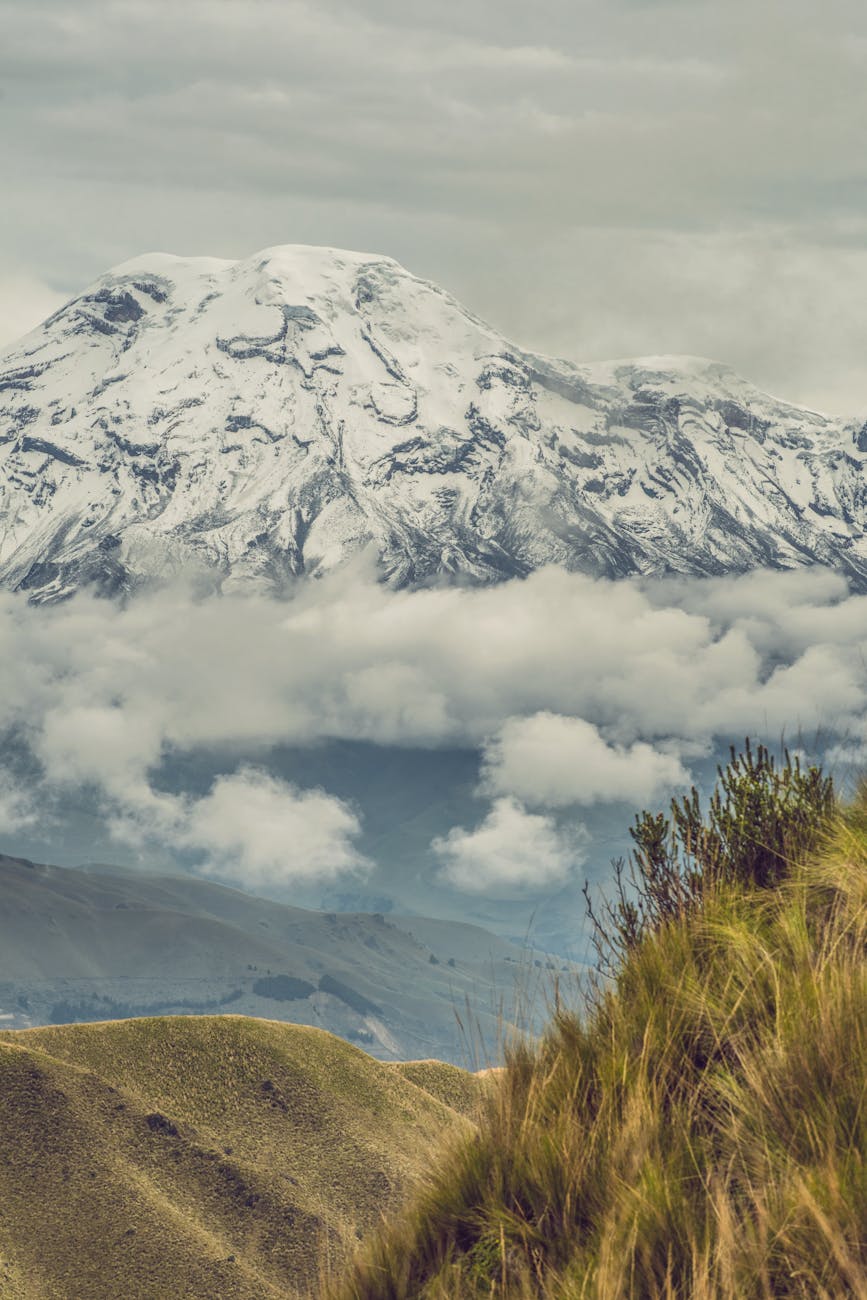
Instead, that title goes to Chimborazo, a volcano in Ecuador. Everest is still the highest mountain above sea level, but Earth’s shape gives equatorial peaks a surprising advantage. Once you understand the equatorial bulge and the idea of the geoid, the result makes perfect sense.
Earth is not a perfect sphere
Earth has a rounded shape maintained by hydrostatic equilibrium, but its rotation slightly reshapes it. As Earth spins, it bulges outward around the equator. Because of that, Earth’s diameter at the equator is about 43 kilometers longer than its diameter from pole to pole.
That may sound tiny compared with Earth’s average diameter of 12,742 kilometers, but it is large enough to matter when measuring distance from Earth’s center. The equator sits a little farther out into space than the poles do. So locations near the equator begin with a head start.
This is why the question “What is the highest point on Earth?” actually depends on what you mean by highest.
Everest versus Chimborazo
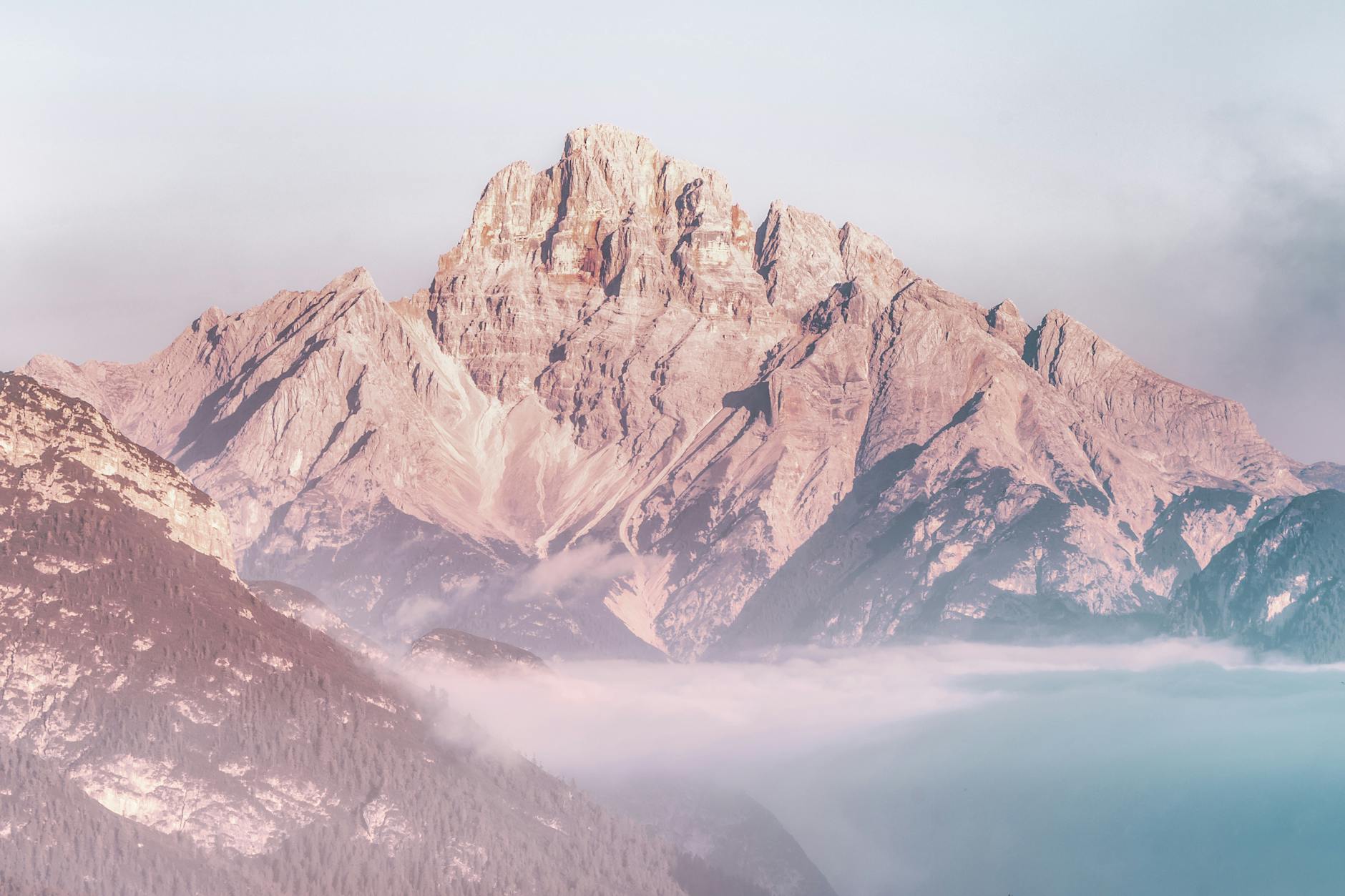
Mount Everest reaches 8,848 meters above local sea level, making it the maximum altitude on Earth’s land surface. If your definition of “highest” is tallest above sea level, Everest wins.
But if your definition is “farthest from Earth’s center,” Chimborazo takes the prize. Because Chimborazo lies near the equator, it sits on the outward bulge of the planet. That extra distance from Earth’s center is enough to put its summit farther out than Everest’s, even though Everest rises higher above sea level.
This is one of those facts that feels wrong at first, but only because “above sea level” and “distance from the center of Earth” are different measurements. They are related, but they are not the same thing.
Sea level is not the same as the center of Earth
When we talk about a mountain’s elevation, we usually mean its height above sea level. That is a practical standard, because sea level provides a common reference point for maps, surveying, and navigation.
But sea level does not measure how far a place is from Earth’s center. On a planet that bulges at the equator, two mountains with different elevations can still end up at different radial distances from the center in unexpected ways.
That is exactly what happens with Everest and Chimborazo. Everest is taller relative to sea level, but Chimborazo is positioned where the planet itself sticks out farther.
The geoid: Earth’s “smooth but lumpy” reference shape
To describe Earth more accurately, geodesy uses idealized shapes. Geodesy is the science of measuring Earth’s size, shape, and surface features.
One important concept is the geoid. The geoid is the shape Earth would have if the ocean covered the whole planet completely and settled under gravity and Earth’s rotation alone, without disturbances such as tides and winds. The result is not a perfect sphere and not even a perfectly regular ellipsoid. It is smooth overall, but irregular.
That sounds abstract, but it matters a lot. The geoid provides a mean sea level reference for topographic measurements. In other words, it helps define what “sea level” really means across the planet.
So when people say Everest is the tallest above sea level, that statement depends on a carefully defined reference surface. And when people say Chimborazo is farthest from Earth’s center, that uses a different reference entirely.
Why Earth bulges at the equator
Earth’s rotation is the key. Spinning causes the planet to bulge slightly around its middle, creating an ellipsoidal shape. This makes the equatorial radius larger than the polar radius.
The same section of Earth also includes local topographic variation. Mountains, trenches, and other landforms add smaller-scale differences on top of the planet’s overall ellipsoid form. The article notes that local extremes such as Mount Everest and the Mariana Trench affect Earth’s average radius only slightly, but they are still important for understanding the detailed shape of the planet.
So Earth’s form works on multiple levels at once:
- globally, it is rounded
- more precisely, it is an ellipsoid with an equatorial bulge
- even more precisely, it has local topographic highs and lows
- for measurement, scientists also use the geoid as a sea-level reference surface
That layered picture is much more interesting than “Earth is a sphere.”
Measuring the planet is harder than it looks
At first glance, measuring Earth might seem simple: find the center, measure outward, and you’re done. In reality, Earth’s shape is complex enough that different kinds of measurements answer different questions.
If you want the tallest mountain above sea level, you use topographic elevation.
If you want the farthest point from Earth’s center, you use radial distance.
If you want a global reference for heights, you use a geoid-based mean sea level.
This is why a trivia question about the tallest point on Earth can turn into a lesson in planetary physics, geography, and measurement science.
Earth’s shape is dynamic, not frozen
Earth’s surface is not static. Internal plate tectonic processes such as earthquakes and volcanism, along with weathering and erosion driven by ice, water, wind, and temperature, continually reshape the surface.
That means Earth’s topography is always being adjusted over time. Mountain ranges rise, erosion wears them down, ocean floors are recycled, and volcanic features build new land. Even the ocean has a dynamic topography.
The geoid itself is an idealized reference, while the real world includes tides, winds, ocean movement, and uneven terrain. So the simple question of Earth’s shape opens onto a much bigger truth: our planet is active and constantly changing.
The bigger takeaway
The reason Chimborazo beats Everest in distance from Earth’s center is not that Everest was measured incorrectly. It’s that Earth is more interesting than a smooth globe.
Our planet is an ellipsoid, wider at the equator by about 43 kilometers. That equatorial bulge gives mountains near the equator a built-in advantage when measuring from Earth’s center. Everest remains the highest point above sea level, while Chimborazo is the farthest point out from the center of the planet.
And beneath that fact sits an even cooler idea: Earth is measured using multiple reference shapes, including the ellipsoid and the geoid, because the real planet is too rich and irregular to be captured by the word “sphere” alone.
So the next time someone says Earth is round, the best answer might be: yes, but not that round.
Sources
Based on information from Earth.
More like this
Give your curiosity an equatorial bulge — download DeepSwipe and reach a little farther into knowledge every day.