
Full article · 7 min read
Economics: How Supply and Demand Move Prices
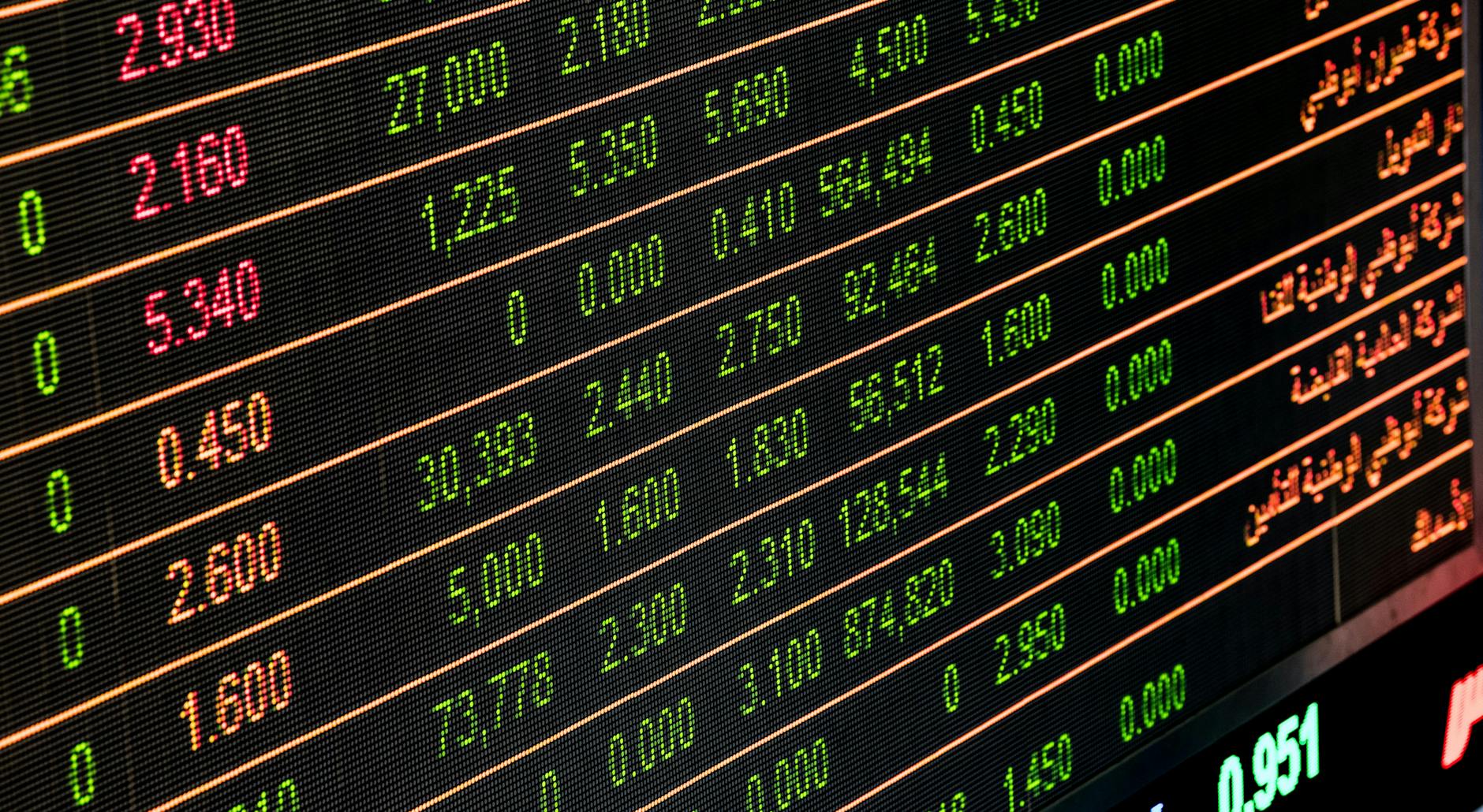
Markets can look chaotic from the outside. Prices rise, fall, and sometimes seem to change for no obvious reason. But one of the central ideas in economics is that prices are not just numbers stuck on goods and services. They act like signals. Through the interaction of buyers and sellers, prices help coordinate what gets produced, what gets consumed, and in what amounts.
That basic idea sits at the heart of supply and demand, one of economics’ main organizing principles. It offers a simple way to understand how a market can settle on both a price and a quantity sold without any single person directing the whole system.
What supply and demand actually mean
For a given market, demand describes the quantity that buyers would be prepared to purchase at each possible price of a good. Supply describes the quantity that sellers would be willing to offer for sale at each possible price.
Economists often present these relationships as curves or tables, but the intuition is straightforward. Demand captures the buyer side of the market. Supply captures the producer side.
In standard economic theory, consumers are treated as choosing the quantity they most prefer given their income, prices, and tastes. This is sometimes called constrained utility maximisation. In plainer language, people want as much satisfaction as possible, but they are limited by what they can afford.
On the seller side, producers are usually treated as profit maximisers. That means they try to choose the amount to produce and sell that brings them the highest profit, given their costs and the market price.
Why higher prices usually reduce demand
A key idea is the law of demand: in general, price and quantity demanded are inversely related. If the price of a product rises, people are usually prepared to buy less of it. If the price falls, they are usually prepared to buy more.
Why? Economics gives two main reasons.
First is the substitution effect. When one good becomes more expensive, buyers tend to shift toward relatively cheaper alternatives.
Second is the income effect. When the price of something falls, a consumer’s purchasing power effectively rises, because the same money can now buy more.
These two effects help explain why buyers usually pull back when prices rise.
Why higher prices usually increase supply
On the other side is the law of supply: in general, a higher price leads producers to supply more, while a lower price leads them to supply less.
The reason is simple. If a good can be sold at a higher price, producing more of it may become more profitable. That gives firms an incentive to step forward and expand output.
Supply is not determined by price alone. It can also shift because of changes in production costs, technology, or the prices of substitute goods. But for a given moment, economists often hold those other influences constant to focus on the basic price-quantity relationship.
Equilibrium: the market’s balance point
The most famous point in the supply-and-demand model is market equilibrium. This is the price at which quantity supplied equals quantity demanded.
Equilibrium does not mean perfection or fairness. It means balance. At that price, the amount buyers want matches the amount sellers are prepared to offer.
This is why equilibrium is such an important idea. It identifies the price-quantity combination where the market can settle.
If the price is too low, the market experiences a shortage. Buyers want more than sellers are offering. If the price is too high, the market experiences a surplus. Sellers are offering more than buyers want to purchase.
Those mismatches put pressure on price.
What happens when price is below equilibrium
When price sits below equilibrium, quantity demanded exceeds quantity supplied. In everyday language, more people want the product than there is product available.
That shortage tends to push the price upward. The model predicts that the gap between what buyers want and what sellers offer creates pressure that moves the market back toward balance.
This is one of the most elegant parts of the theory: no central commander is required. The shortage itself creates the pressure for adjustment.
What happens when price is above equilibrium
When price sits above equilibrium, quantity supplied exceeds quantity demanded. Too much of the good is being offered relative to what buyers are willing to purchase.
That creates a surplus. Goods pile up. The model predicts that this excess supply pushes the price downward.
Again, the adjustment is built into the system. A surplus sends a different signal than a shortage, but it also nudges the market toward equilibrium.
Price as a signal in the economy
This is why it makes sense to think of price as a kind of traffic system for economic life. Price communicates information.
A higher price tells buyers to economise and sellers that the good may be worth producing in greater quantity. A lower price tells buyers the good is more affordable and sellers that production may be less attractive.
In this way, price helps coordinate production and consumption. It links the decisions of households, firms, buyers, and sellers even when those people do not know each other and are not acting under a shared command.
Economics is often defined as the study of how people use scarce means that have alternative uses to achieve desired ends. Scarcity matters here because resources are limited. If more labour, capital, or materials are directed toward making one thing, less is available for making something else. Prices help navigate those trade-offs.
Why this idea matters so much in economics
Supply and demand is not just a classroom diagram. It is one of the core tools of microeconomics, the branch of economics that studies individual agents and markets, their interactions, and the outcomes of those interactions.
Microeconomics examines how market entities interact to create a market system. These entities may include private and public players, and the things traded can be physical goods or services. The supply-and-demand model helps explain price and output determination in such markets.
This matters because prices and quantities are among the most directly observable features of a market economy. If you want to understand why goods sell at a certain price, why shortages emerge, or why surpluses disappear, supply and demand provides a starting framework.
The assumptions behind the simple model
The basic model is often introduced using perfect competition. In that setting, no buyer or seller is large enough to influence the market price. Everyone is a price taker.
That is a very clean and useful benchmark, but real markets often involve imperfect competition. Economics also studies monopoly, duopoly, oligopoly, monopolistic competition, monopsony, and oligopsony.
These terms describe situations where there may be only one seller, two sellers, a few sellers, many sellers with differentiated goods, one buyer, or a few buyers. In such markets, firms or buyers can influence prices rather than simply accept them.
Even so, the basic logic of shortages, surpluses, and price signals remains a foundational way of thinking about markets.
Supply and demand does not mean every market works perfectly
The supply-and-demand framework is powerful, but economics also recognises market failure. In some situations, standard assumptions break down.
Information asymmetries can distort markets when one side knows more than the other. Public goods may be under-supplied because people can consume them without paying. Externalities arise when costs or benefits spill onto others and are not reflected in market prices, such as air pollution or the social benefits of education.
Economists also study price stickiness, where prices do not adjust quickly, and the effects of imperfect competition. So while supply and demand explains a lot, it is not a claim that every real-world market smoothly reaches the best possible outcome.
A simple framework with enormous reach
Part of the appeal of supply and demand is that it reduces a complicated world to a manageable pattern. Buyers respond to price. Sellers respond to price. When the two sides do not match, shortages or surpluses create pressure for adjustment.
That simple framework helps explain how markets can coordinate activity across an economy. It connects the behavior of individuals and firms to the broader pattern of production and consumption. And it does so without requiring a single authority to decide exactly how much of everything should be made or bought.
That is why supply and demand remains one of economics’ most important ideas: it shows how a market can move toward a price and a quantity sold through the reactions of ordinary participants responding to signals.
Sources
Based on information from Economics.
More like this
Catch more ideas at equilibrium with your curiosity — download DeepSwipe and let knowledge find its price in your daily scroll.


