Full article · 7 min read
Biology, Homeostasis, and How Cells Keep Life in Balance
Life does not simply happen. Every living thing must constantly hold itself together against change. Temperatures shift, chemicals move around, nutrients run low, and waste products build up. Yet cells and organisms continue functioning because they maintain internal stability, a core biological theme known as homeostasis.
Homeostasis helps explain why life can persist in a changing world. It is the ongoing maintenance of internal conditions that allow the chemistry of life to keep working. This stability does not mean stillness. In fact, living systems are always active, always exchanging matter and energy, and always adjusting.
At the center of that balancing act is the cell.
The cell: the basic unit of controlled life
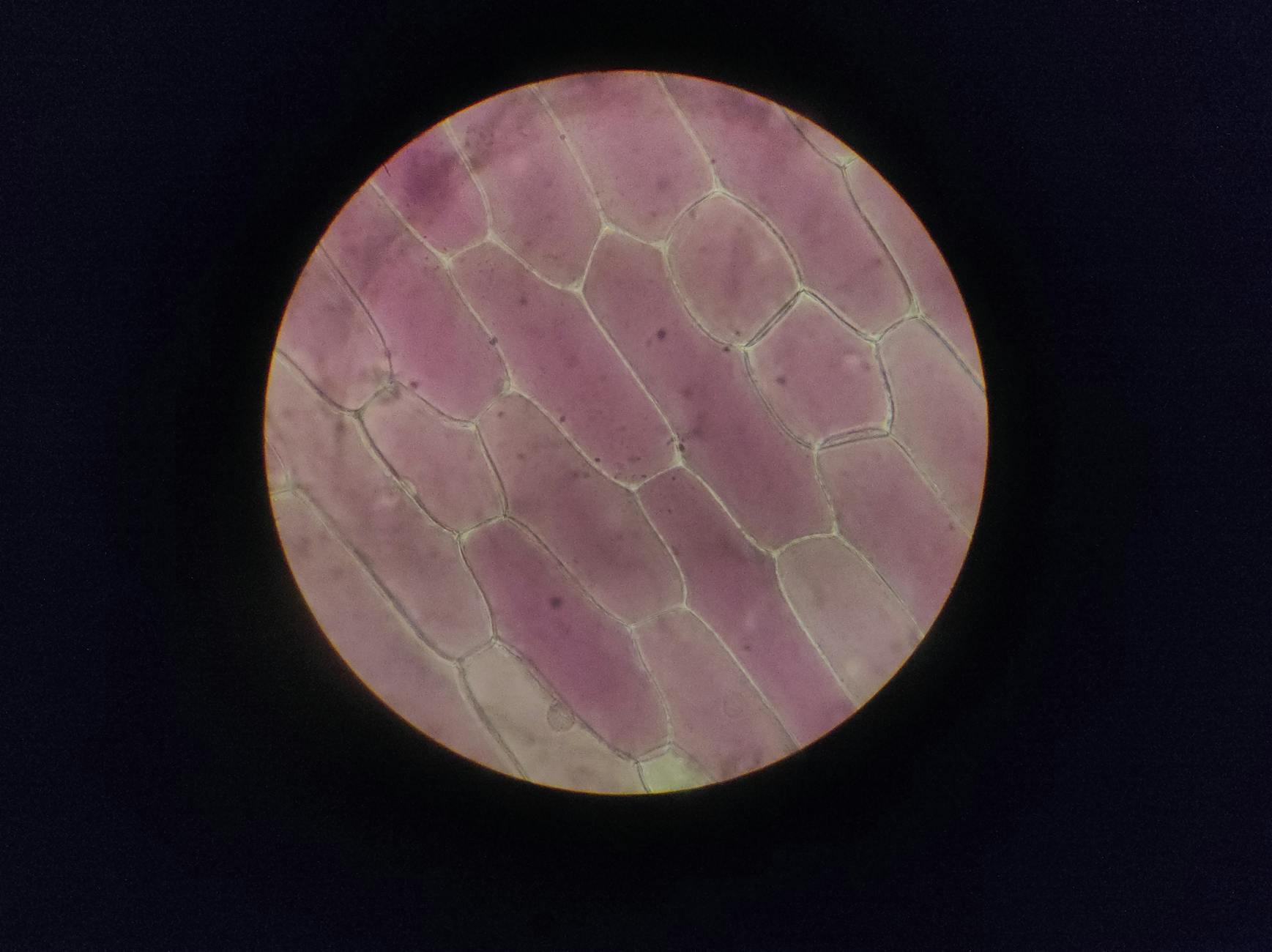
Biology recognizes the cell as the fundamental unit of life. All living things are made of one or more cells, and all cells come from preexisting cells through cell division. Some organisms consist of only a single cell, while multicellular organisms develop from a single fertilized egg.
Cells are tiny, usually only 1 to 100 micrometers across, which is why they are visible only with light or electron microscopes. Despite their small size, they are highly organized. That organization is what makes control possible.
There are two broad cell types. Eukaryotic cells contain a nucleus, while prokaryotic cells do not. Bacteria are prokaryotes, whereas animals, plants, fungi, and protists are eukaryotes. In both kinds, survival depends on regulating what enters, what leaves, and what happens inside.
Why cell membranes matter so much
A cell is not just a blob of chemicals. Every cell is enclosed by a cell membrane that separates the cytoplasm from the extracellular space, the area outside the cell. This membrane is essential for homeostasis because it creates a boundary between internal conditions and the external environment.
Cell membranes are made of a lipid bilayer. They also include cholesterols between phospholipids, which help maintain membrane fluidity at different temperatures. This matters because a membrane has to stay functional even when conditions change.
Most importantly, the membrane is semipermeable. That means some substances can pass through it more easily than others. Small molecules such as oxygen, carbon dioxide, and water can pass through, while larger molecules and charged particles such as ions are more restricted. This selective movement is a basic form of cellular control.
Membranes also contain proteins. Some, called integral membrane proteins, extend across the membrane and can act as transporters. Others, called peripheral proteins, attach loosely and can act as enzymes shaping the cell. The membrane is also involved in cell adhesion, electrical energy storage, and cell signalling.
Without this selective barrier, a cell could not preserve the internal environment needed for life.
Water makes balance possible
Homeostasis depends heavily on water, the most abundant molecule in every organism. Water is fundamental to life because it is an effective solvent, meaning it can dissolve many substances. Once dissolved, these substances are more likely to come into contact and participate in the chemical reactions that sustain life.
Water’s structure helps explain why it is so useful. It is a small polar molecule with a bent shape. Because its oxygen atom has a slight negative charge and its hydrogen atoms have slight positive charges, water molecules attract one another through hydrogen bonds. This gives water several important properties.
Water is cohesive, meaning water molecules stick to each other. This leads to surface tension. Water is also adhesive, meaning it can stick to polar or charged non-water molecules. It has a high specific heat capacity, so it can absorb a large amount of energy before changing temperature. That makes it especially helpful in resisting sudden thermal changes.
Water also continuously dissociates into hydrogen and hydroxyl ions and then reforms. In pure water, these are balanced, giving it a neutral pH. This matters because internal chemistry depends on stable chemical conditions.
In short, water is not just present in living systems. It helps make stable internal conditions possible.
Metabolism needs careful regulation
All cells require energy to sustain cellular processes. Metabolism is the total set of chemical reactions in an organism, and it has three main purposes: converting food to energy, converting food into building blocks such as monomers, and eliminating metabolic wastes.
These reactions allow organisms to grow, reproduce, maintain their structures, and respond to their environments. But metabolism only works when reactions happen in the right place, at the right speed, and in the right sequence.
That is where enzymes come in. Enzymes are catalysts, which means they speed up reactions without being consumed by them. They reduce the activation energy needed for reactants to become products. Enzymes also allow regulation of the rate of metabolic reactions in response to changes in the environment or signals from other cells.
Metabolism includes catabolic reactions, which break down compounds and release energy, and anabolic reactions, which build compounds and consume energy. These pathways are deeply connected to homeostasis because cells must keep energy flowing while preventing harmful imbalances.
Cellular respiration: controlled energy release
One of the key ways cells obtain usable energy is cellular respiration. This process converts chemical energy from nutrients into adenosine triphosphate, or ATP, while releasing waste products. ATP is the molecule that powers many cellular processes.
Respiration is catabolic, meaning it breaks large molecules into smaller ones and releases energy. Although it is technically a combustion reaction, it does not resemble fire because the energy is released slowly and in controlled steps.
In aerobic respiration, glucose is the main nutrient used by animal and plant cells. The process has four stages: glycolysis, the citric acid cycle, the electron transport chain, and oxidative phosphorylation. In eukaryotes, later stages occur in mitochondria, organelles that generate ATP.
If oxygen is not present, cells may switch to fermentation instead. In this case, pyruvate remains in the cytoplasm and is converted to waste products. Fermentation helps regenerate NAD+ so glycolysis can continue. In skeletal muscles, this can produce lactic acid. In yeast, it produces ethanol and carbon dioxide.
This flexibility helps cells continue functioning when conditions change, which is another example of life defending its internal balance.
Signals keep cells coordinated
Cells do not maintain stability by isolation alone. They also need communication. Cell signaling is the ability of cells to receive, process, and transmit signals from the environment and from themselves.
Signals can be non-chemical, such as light, heat, and electrical impulses, or chemical. Chemical signals, also called ligands, interact with receptors either embedded in the cell membrane or located inside the cell. A ligand is a signaling molecule. A receptor is the structure that detects that signal and helps trigger a response.
There are several kinds of chemical signaling. In autocrine signaling, a cell affects itself. In paracrine signaling, a signal diffuses to nearby cells. In juxtacrine signaling, cells communicate through direct contact. Hormones travel through circulatory systems in animals or vascular systems in plants to reach target cells farther away.
Once a ligand binds to a receptor, the target cell may change its behavior. Some receptors alter the excitability of a cell. Others can begin second messenger cascades. The chain of molecular events that carries a signal through the cell is called signal transduction.
This constant communication helps cells adjust to changing conditions and coordinate responses that preserve function.
Homeostasis depends on many systems working together
No single mechanism keeps life stable on its own. Membranes control exchange. Water provides the chemical medium. Metabolism releases and uses energy. Enzymes regulate reaction speed. Signaling systems detect changes and organize responses.
Even the broader structure of eukaryotic cells supports internal control. Organelles divide labor inside the cell. The nucleus contains most of the DNA. Mitochondria generate ATP. The endoplasmic reticulum and Golgi apparatus help synthesize and package proteins. Lysosomes engulf biomolecules. In plant cells, chloroplasts harvest sunlight energy to produce sugar, vacuoles provide storage and structural support, and cell walls provide support.
The cytoskeleton also contributes by supporting the cell and helping move the cell and its organelles. It is made of microtubules, intermediate filaments, and microfilaments.
All of this adds up to a central truth: life survives by organized control, not by chance.
Why homeostasis is one of biology’s biggest ideas
Biology studies life across many levels, from molecules and cells to organisms and ecosystems. Across all of these levels, maintaining functional balance is essential. Cells must preserve their internal chemistry, organisms must keep key processes operating, and ecosystems depend on linked cycles of matter and energy.
Homeostasis is one of the clearest examples of what makes living systems different from nonliving matter. Life is active, regulated, and constantly adjusting. The outside world may change from moment to moment, but living systems persist because they keep their internal conditions within workable limits.
That quiet, relentless balancing act is one of the great achievements of biology.
Sources
Based on information from Biology.
More like this
Keep your neurons in balance — download DeepSwipe and give your brain a steady stream of bite-sized biology.