Full article · 6 min read
Inside Plant Cells: the Tiny Design Choices Behind the Green World
Plant cells may look simple at first glance, but they are built with features that help explain how plants stand upright, move water, make sugar from sunlight, and grow into everything from mosses to towering trees. Their internal design is not just a biological detail. It helps power much of life on Earth.
Plants are predominantly photosynthetic, meaning they use sunlight as their energy source. Using chlorophyll, the green pigment inside chloroplasts, they produce sugars from carbon dioxide and water. Those sugars supply energy for most of Earth’s ecosystems, and green plants provide a substantial proportion of the world’s molecular oxygen. To understand how that happens, it helps to start at the level of the plant cell.
A plant cell is built to swell
One of the most distinctive features of a plant cell is its large central vacuole. A vacuole is a water-filled compartment inside the cell. In plant cells, this compartment can become very large, taking up much of the cell’s interior.
This matters because water puts pressure on the inside of the cell. In many kinds of cells, too much water would be a problem. Plant cells, however, have another special feature: a strong but flexible cell wall outside the cell membrane. This wall is made mostly of cellulose.
Cellulose is a structural material that helps the cell keep its shape. Because of the cell wall, plant cells can swell with water without bursting. The vacuole allows the cell to change in size while the amount of cytoplasm stays the same, making the whole arrangement an efficient way to maintain structure.
This simple combination of vacuole plus cell wall helps explain why plants can stay firm and upright even though they do not have skeletons. Their strength begins with cell-level architecture.
Chloroplasts: ancient solar machinery
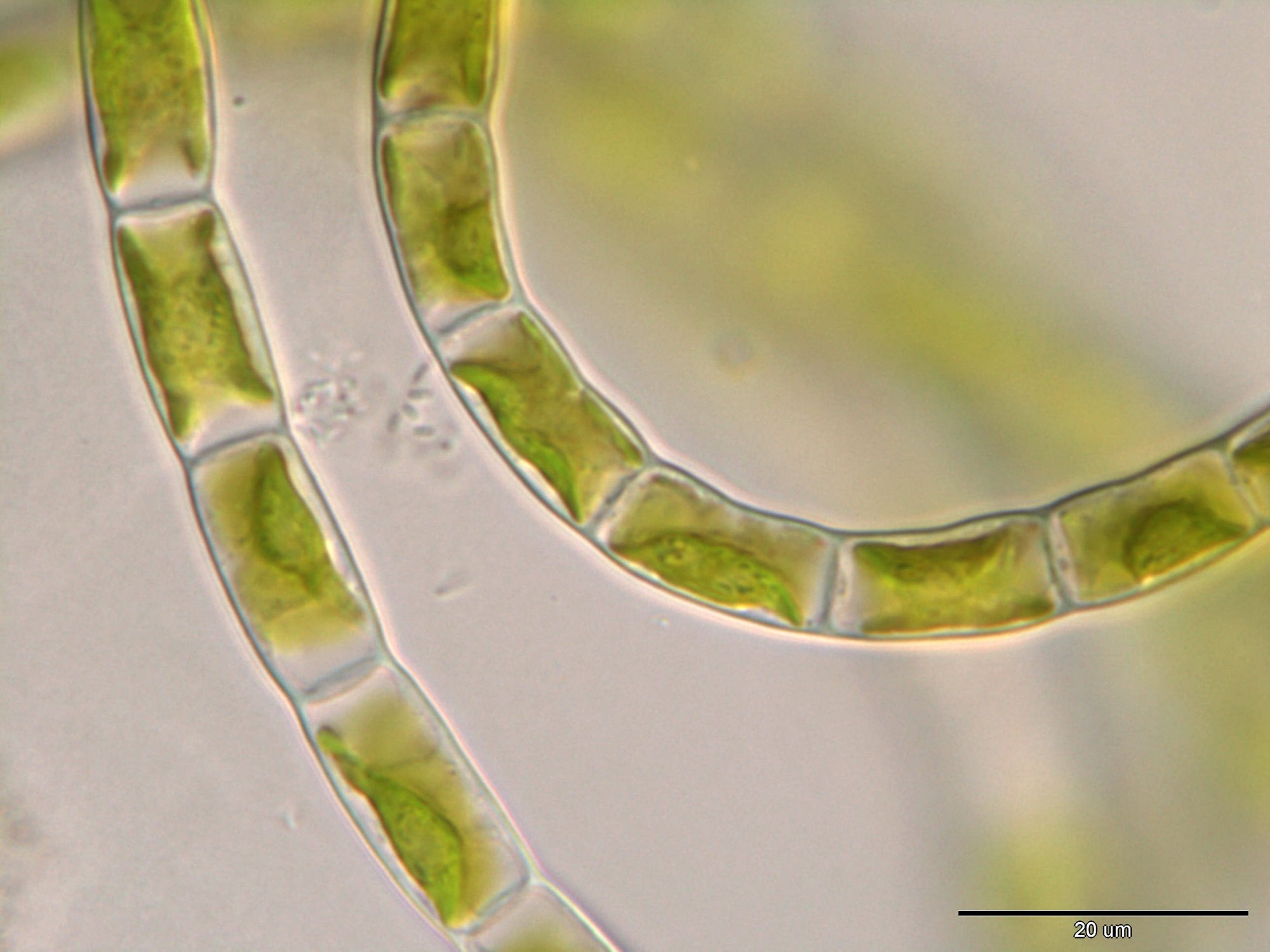
Another defining part of plant cells is the chloroplast. Chloroplasts are the structures where photosynthesis happens. They contain chlorophylls, green pigments that capture light energy.
Photosynthesis is the process by which plants manufacture food molecules, specifically sugars, using light. The overall chemical equation is:
6CO2 + 6H2O → C6H12O6 + 6O2
In plain language, plants take in carbon dioxide and water, use light energy, make sugar, and release oxygen.
That is why plant cells can be thought of as tiny solar-powered factories. Their chloroplasts let them turn sunlight into stored chemical energy. The oxygen released during this process enters the atmosphere, and green plants contribute a substantial share of the world’s molecular oxygen.
The origin of chloroplasts is especially striking. Chloroplasts are derived from what was once a symbiosis between a non-photosynthetic cell and photosynthetic cyanobacteria. Symbiosis means a close relationship between different organisms living together. Cyanobacteria are bacteria that can use sunlight to make food. In this case, an ancient partnership became permanent, leaving modern plants with built-in photosynthetic machinery.
That long-ago biological alliance helped shape the green world we know.
From cell parts to plant tissues
Plant cells do not all stay identical. In most plants, they differentiate into multiple cell types. That means cells become specialized for different jobs.
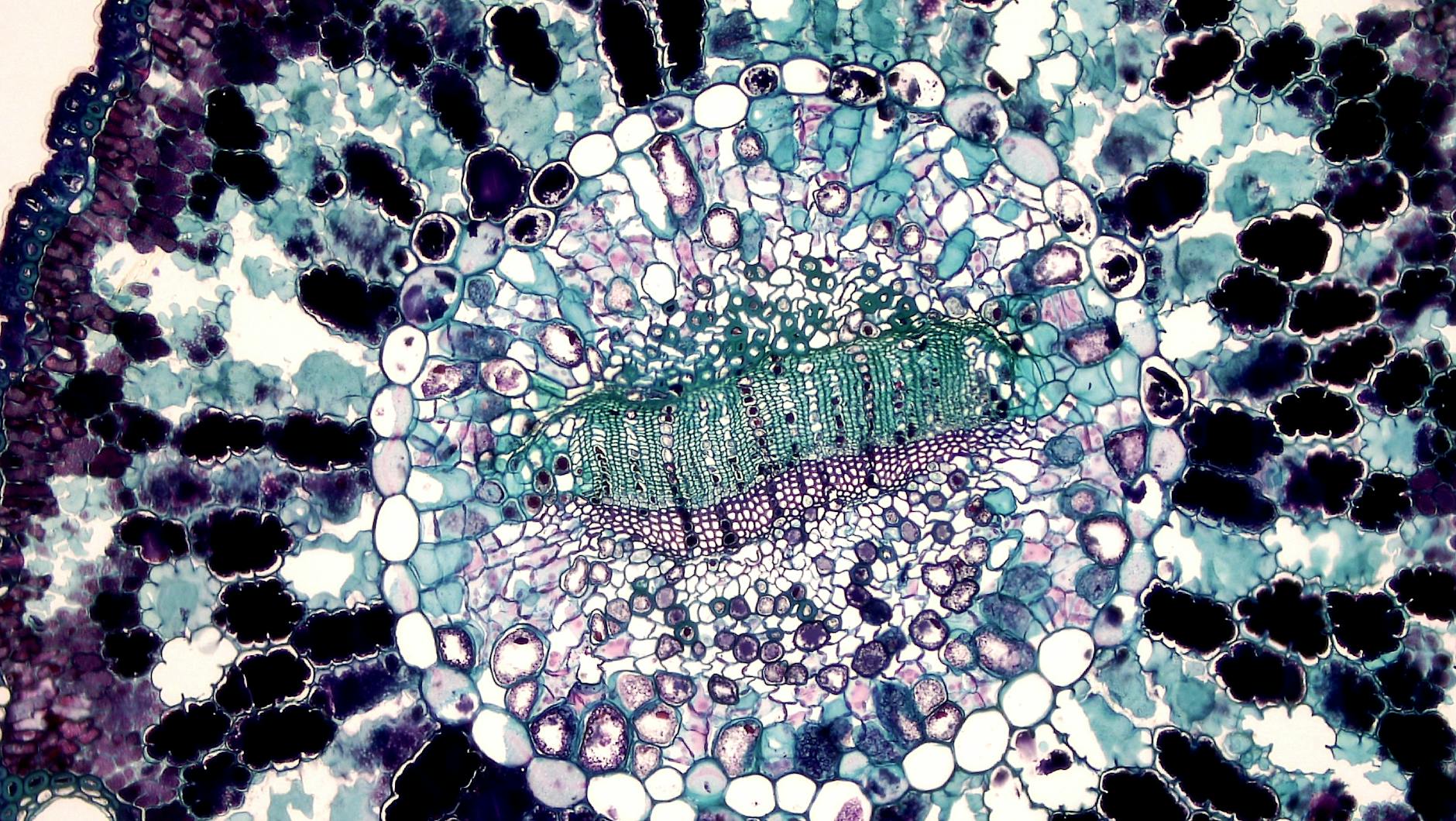
These specialized cells form tissues, including vascular tissue. Vascular tissue is the transport system of the plant, and two of its most important components are xylem and phloem.
Xylem carries water and mineral nutrients through the plant. Phloem transports synthesized molecules, including sugars produced by photosynthesis. Together, they function as an internal distribution network, allowing different parts of the plant to share resources.
These tissues are found in organs such as roots, stems, and leaves. Roots absorb water and minerals. Stems provide support and help transport materials. Leaves are major sites of photosynthesis. Flowers are involved in reproduction.
So the plant body is built from repeated cellular themes: water management, structural support, light capture, and transport. From those basics, plants assemble increasingly complex tissues and organs.
Why plant cell structure matters so much
The special features of plant cells are not random quirks. They support nearly everything plants do.
The vacuole and cellulose wall help with firmness and expansion. Chloroplasts make photosynthesis possible. Specialized cell types create tissues for transport and support. Because of this organization, plants can absorb water from soil, move it upward, manufacture sugars in leaves, and distribute those sugars where they are needed.
This cell-based design also helps explain the enormous range of plant forms. Plants range from single-celled organisms to the largest trees. Among green plants are green algae and land plants such as mosses, ferns, conifers, and flowering plants. Even across this diversity, the core cellular features of plant life remain central.
The cell plan behind life on land
The ancestors of land plants evolved in water, and the first land plants appeared around 450 million years ago. Over time, plants diversified, and by the end of the Devonian most of the basic features seen in plants today were present, including roots, leaves, and secondary wood in trees such as Archaeopteris.
Seen from that perspective, the plant cell was a powerful foundation for a major evolutionary expansion. Cell walls, vacuoles, chloroplasts, and specialized tissues helped plants build bodies suited for life on land. Later came forests in swampy environments, early seed plants, and eventually flowering plants.
A single cell type did not stay simple for long. It became the basis for leaves that capture light, stems that hold plants upright, roots that gather water, and reproductive structures that spread offspring across landscapes.
Photosynthesis and the wider world
Plant cell design does not just matter to plants. It matters to ecosystems and to people.
Plants are the primary producers in most terrestrial ecosystems, meaning they form the base of the food web on land. The sugars created by photosynthesis provide energy directly or indirectly for countless other organisms. Animals either eat plants or depend on organisms that do.
Photosynthesis also radically changed the atmosphere of Earth over time. Today, animals and most other organisms rely on oxygen. Plant cells, through chloroplast-driven photosynthesis, are part of the reason oxygen is so abundant.
In practical human terms, plants are also the source of grain, fruit, and vegetables, and they are used for medicines, building materials, writing materials, ornaments, and many industrial products. All of that depends on the success of plant bodies, and those bodies depend on the specialized structures inside plant cells.
Not every plant cell follows the usual pattern
While photosynthesis is the rule, there are exceptions. Some parasitic plants have lost the genes involved in photosynthesis and the production of chlorophyll. Instead of making their own food in the usual way, they obtain energy from other plants or fungi.
That exception helps highlight how important chloroplasts and chlorophyll normally are. Most plants rely on them, but a few have abandoned that strategy in favor of parasitism.
The hidden brilliance of the green cell
It is easy to think of leaves, stems, and flowers as the main story of plants. But the deeper story begins in the cell.
A plant cell is engineered to hold water without bursting. It carries the legacy of an ancient symbiosis in every chloroplast. It can become part of transport tissues such as xylem and phloem. And when many such cells work together, they create the roots, stems, leaves, and flowers that define plant life.
From tiny internal compartments to planet-scale oxygen production, plant cells connect microscopic structure with global impact. The green world outside is, in a very real sense, built from cells designed to swell, harvest light, and cooperate.
Sources
Based on information from Plant.
More like this
Power up your brain like a chloroplast — download DeepSwipe and let curiosity do the photosynthesizing.