Full article · 7 min read
Molecules, Compounds, and Why Many Solids Aren’t Molecules at All
Chemistry often starts with a simple picture: tiny particles join together to make everything around us. But that picture gets more interesting very quickly. Some substances exist as neat, discrete molecules. Others do not. And one of the most surprising ideas in chemistry is that a compound can behave nothing like the elements that make it up.
Understanding that difference helps explain why water, table salt, diamond, quartz, granite, and metals cannot all be described in the same way. They are all matter, and many are compounds, but they are not built from matter in identical patterns.
A compound is more than a blend of elements
A chemical element is a pure substance made of one type of atom. A compound, by contrast, is a pure chemical substance composed of more than one element. That sounds straightforward, but the important point is what comes next: the properties of a compound may bear little similarity to the properties of its elements.
That is one of the core themes of chemistry. When atoms combine, they do not merely sit side by side like ingredients in a bowl. Their electrons are rearranged through chemical bonding, and the resulting substance can have a very different structure, behavior, and set of properties.
This is why chemistry feels so full of transformation. A compound is not just a mixture of ingredients. It is a new chemical substance with its own identity.
What a molecule actually is
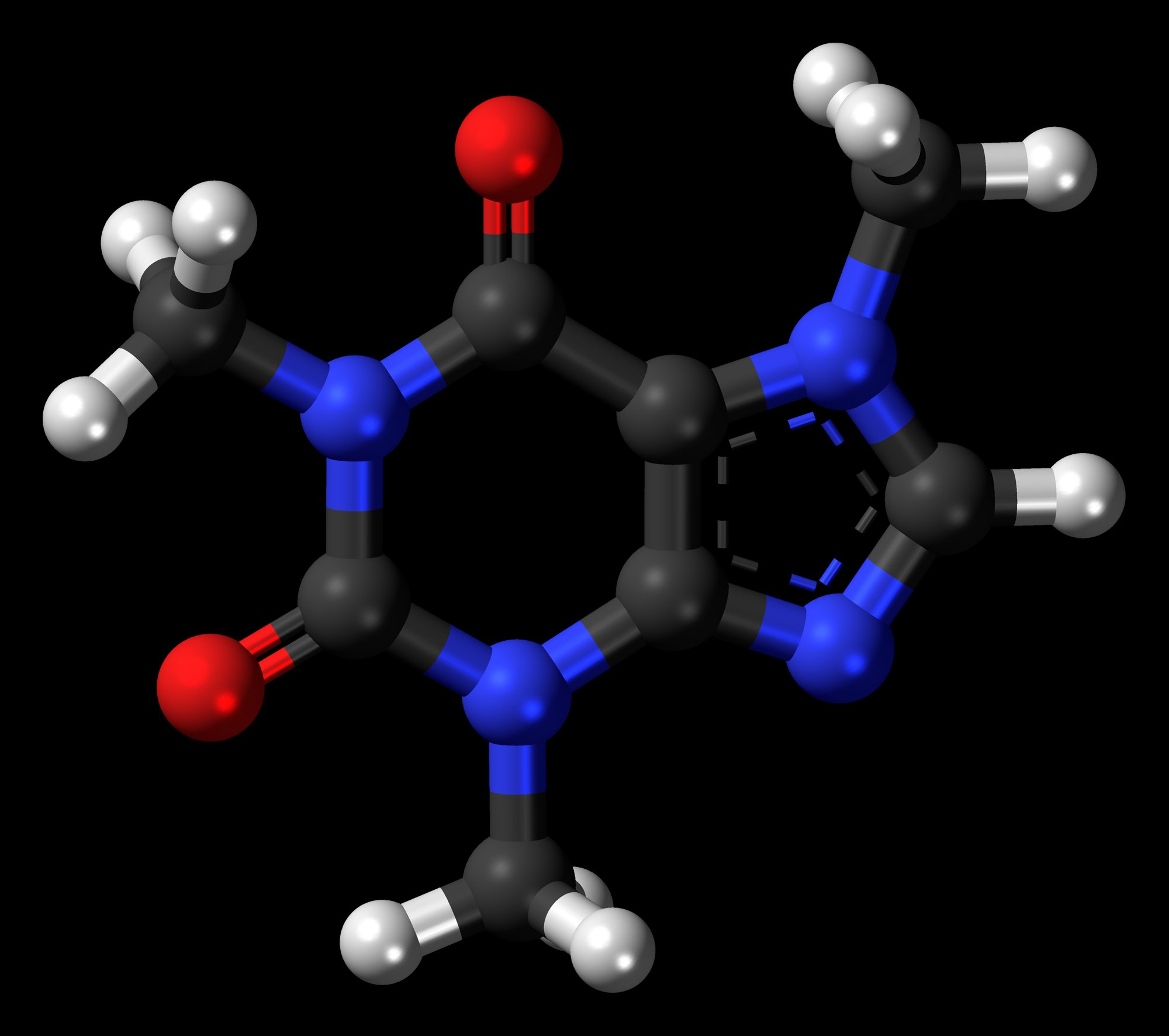
A molecule is the smallest indivisible portion of a pure chemical substance that has its own unique chemical properties. In many familiar substances, molecules are small groups of atoms bound together by covalent bonds.
A covalent bond forms when atoms share one or more pairs of valence electrons. Valence electrons are the electrons in an atom’s outermost shell, the ones most involved in bonding. In these substances, the bonded group is usually electrically neutral, meaning its positive and negative charges balance overall.
Water is a classic example of a substance made of identifiable molecules. Many organic compounds are as well. Organic compounds are compounds based on a carbon skeleton, and the article identifies alcohol, sugar, gasoline, and various pharmaceuticals as familiar examples of substances composed of molecules.
Molecular structure matters enormously. Even when the formula is known, the geometry of a molecule—its three-dimensional arrangement of atoms—can be crucial to its chemical nature.
Why “everything is made of molecules” is wrong
It is tempting to think that all matter comes packaged as individual molecules. But chemistry is broader than that.
Not all substances or chemical compounds consist of discrete molecules. In fact, most of the solid substances that make up the solid crust, mantle, and core of the Earth are chemical compounds without molecules.
That means many real-world solids are not best described as separate little clusters of atoms floating independently from one another. Instead, they are organized as extended structures.
This matters because it changes the language chemists use. If a substance does not have identifiable molecules, chemists discuss it in terms of formula units or unit cells rather than molecules.
A formula unit is the simplest ratio of atoms in a substance, especially useful for ionic compounds. A unit cell is the smallest repeating structural pattern in a solid.
Table salt: a famous non-molecular substance
Table salt is one of the clearest examples. Sodium chloride, written as NaCl, forms when sodium loses an electron and becomes a positively charged ion, Na+, while chlorine gains that electron and becomes a negatively charged ion, Cl−. These oppositely charged ions attract one another through electrostatic force, creating an ionic bond.
An ionic bond is not the same as a covalent bond. In a covalent bond, atoms share electrons. In an ionic bond, charged ions attract one another.
Because of that, sodium chloride is not treated as a collection of separate NaCl molecules in the usual chemical sense. Instead, it is understood as a crystalline lattice of ions. A lattice is a repeating three-dimensional arrangement. So when chemists refer to NaCl for table salt, they are expressing the simplest ratio of sodium to chlorine in the solid, not pointing to a tiny standalone molecule.
Diamond, quartz, granite, and metals are different again
Table salt is not the only familiar substance that breaks the “everything is a molecule” intuition.
The article also names diamond, quartz, granite, and metals as examples of solids that are not discussed as collections of discrete molecules. These belong to broader classes of non-molecular substances, including network solids and metallic solids.
In such materials, atoms are bonded into large repeating arrangements rather than isolated molecular units. The smallest useful way to describe them is not as one separate molecule, but as a repeating structure.
Quartz and granite are mentioned alongside silica and silicate minerals, showing how common these non-molecular solids are in the natural world. This is one reason the molecular picture, while useful, is incomplete if applied to all matter.
Earth’s deep interior is not a world of tidy molecules
One especially striking point is geological: most of the solid substances making up Earth’s crust, mantle, and core are chemical compounds without identifiable molecules.
That means the bulk of the solid Earth is built from extended solids rather than neat, separate molecular packets. For anyone who learned chemistry mainly through small molecular examples like water or carbon dioxide, this is a major perspective shift.
The molecular world is real and important, but so is the world of crystal structures, lattices, and repeating atomic networks.
Molecules, ions, and neutrality
Part of the confusion comes from charge. Molecules are typically electrically neutral. Ions are charged species—atoms or molecules that have lost or gained electrons.
If an atom loses electrons, it becomes a positively charged ion called a cation. If it gains electrons, it becomes a negatively charged ion called an anion. In solids like sodium chloride, cations and anions assemble into neutral salts through their overall charge balance.
This is why ionic solids are often treated differently from molecular substances. Their basic building blocks are ions in a repeating crystal lattice, not neutral molecules sitting apart from one another.
The article also notes that some charged polyatomic collections in solids, such as sulfate or nitrate ions, are generally not considered molecules in chemistry when they exist as part of larger solid structures.
Substance, mixture, and structure
Another useful distinction is the difference between a substance and a mixture. A chemical substance has a definite composition and set of properties. A mixture is a collection of substances.
Air and alloys are examples of mixtures. Table salt, water, and diamond are substances. That distinction matters because a substance has its own defined chemical identity, while a mixture retains multiple substances together.
But even among pure substances, the internal structure can vary enormously. Some are molecular. Some are ionic. Some are network solids. Some are metals. Chemistry is not just about what elements are present, but how their atoms are organized and bonded.
Bonding explains the difference
The idea tying all this together is chemical bonding. Atoms stick together because of interactions involving the positive charges in nuclei and the negative charges of electrons. Different bonding patterns create very different kinds of matter.
The article highlights several kinds of bonding and interactions, including covalent bonds, ionic bonds, hydrogen bonds, and Van der Waals force. These help explain why some substances form neutral molecules, while others form crystals or extended solids.
Even phase and energy matter too. A substance’s structure depends on how particles are arranged and how strongly they interact. Chemistry therefore connects composition, bonding, energy, and structure into one bigger picture.
Why this matters for understanding chemistry
Learning the difference between compounds and molecules clears up a common misconception:
- A compound is a pure substance made of more than one element.
- A molecule is one possible kind of chemical unit, usually a neutral group of atoms held together by covalent bonds.
- Not every compound is made of molecules.
- Many important solids, including table salt, diamond, quartz, granite, and metals, are better described as repeating structures.
Once that clicks, chemistry becomes richer and more accurate. The world is not divided into “elements” and “molecules.” It includes ionic lattices, network solids, metals, and many other forms of organized matter.
That is part of what makes chemistry the study of both properties and behavior of matter: the same atoms can produce dramatically different substances depending on how they are bonded and arranged.
Sources
Based on information from Chemistry.
More like this
Think beyond tiny molecules and into giant crystal worlds — download DeepSwipe and keep building your chemistry brain, one swipe at a time.