Full article · 7 min read
The Axial Age: When Human Thought Changed Course
Between 800 and 200 BCE, a remarkable shift unfolded across Eurasia. In places separated by vast distances, new philosophies and religions appeared that would shape how people thought about morality, society, politics, and the meaning of life for centuries to come. This era is often called the Axial Age.
What makes the period so striking is not just the importance of the ideas themselves, but the fact that many of them emerged mostly independently of one another. In China, India, Persia, the eastern Mediterranean, and the Jewish world, thinkers and traditions developed frameworks that continued to influence huge parts of the globe long after the age itself had ended.
What was the Axial Age?
The Axial Age refers to the period from 800 to 200 BCE when transformative philosophical and religious ideas emerged in many different places. “Transformative” is the key word here: these were not minor local trends, but belief systems and schools of thought that deeply affected later intellectual and religious history.
Among the most important developments of the era were Chinese Confucianism, Indian Buddhism and Jainism, Jewish monotheism, Persian Zoroastrianism, and the rise of new philosophies in Greece during the 5th century BCE, represented by thinkers such as Plato and Aristotle.
These ideas did not stay confined to their place of origin. Over time, they spread, mixed with political institutions, influenced rulers, and shaped education, ethics, law, and culture.
Parallel breakthroughs across Eurasia
One of the most fascinating features of the Axial Age is the near-simultaneous appearance of major systems of thought.
In China, Confucianism emerged as one of the traditions that would come to dominate Chinese thinking, alongside Taoism and Legalism. Confucianism looked for political morality not in the force of law, but in the power and example of tradition. In simple terms, this means it emphasized proper behavior, moral leadership, and the importance of inherited social values rather than relying only on punishment or coercion.
In India, Buddhism and Jainism arose during the same broad period. These became part of a larger landscape of influential religious and philosophical developments on the subcontinent. Buddhism in particular would later become one of the most widespread religions in Asia.
In the Jewish world, monotheism took shape as a major force. Monotheism means belief in a single god, in contrast to polytheism, the worship of many gods, which had been common in many earlier civilizations.
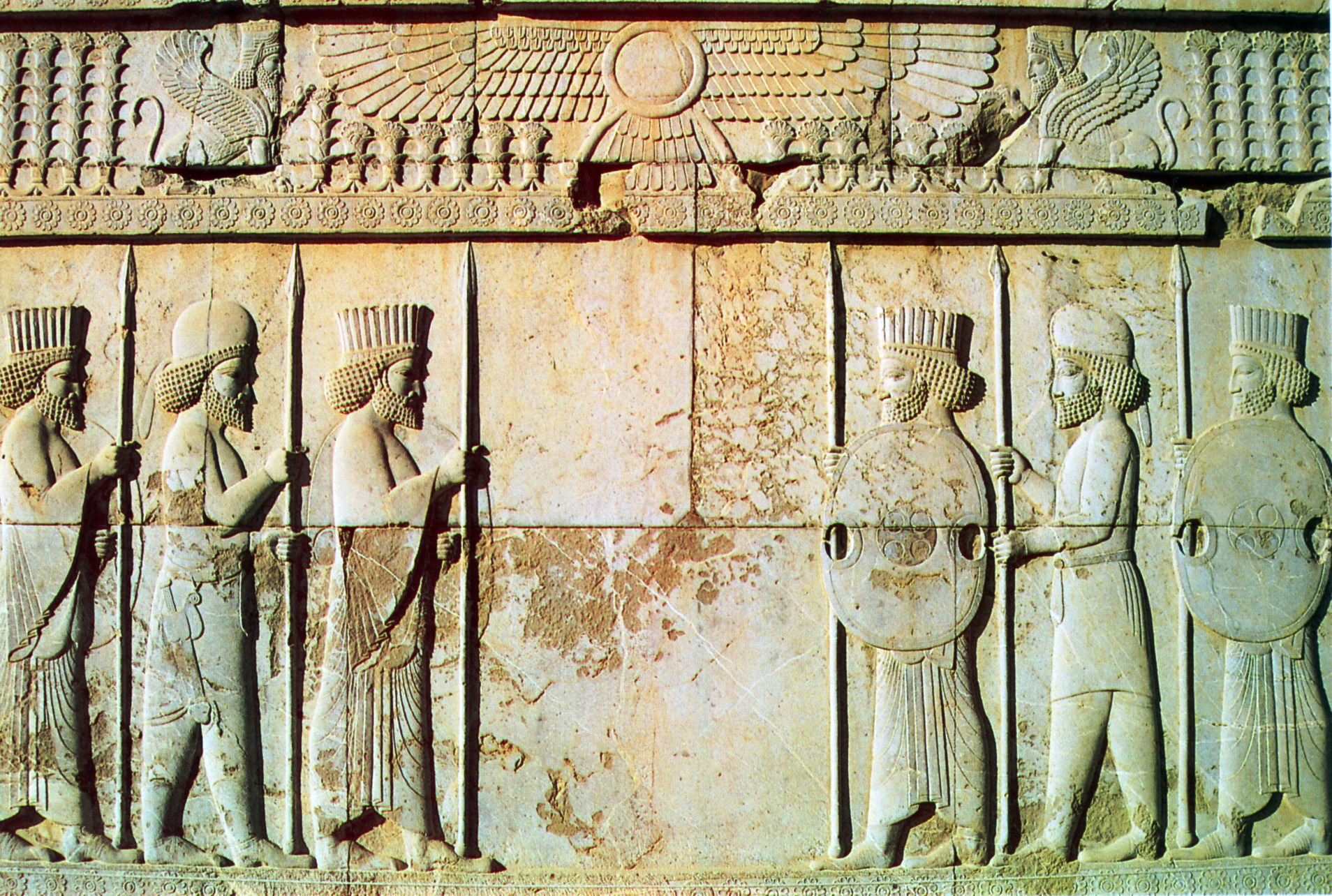
In Persia, Zoroastrianism had begun earlier, perhaps around 1000 BCE, but it was institutionalized during the Axial Age by the Achaemenid Empire. To institutionalize a religion means to organize and support it through political power and social structures, giving it a more formal and durable place in society.
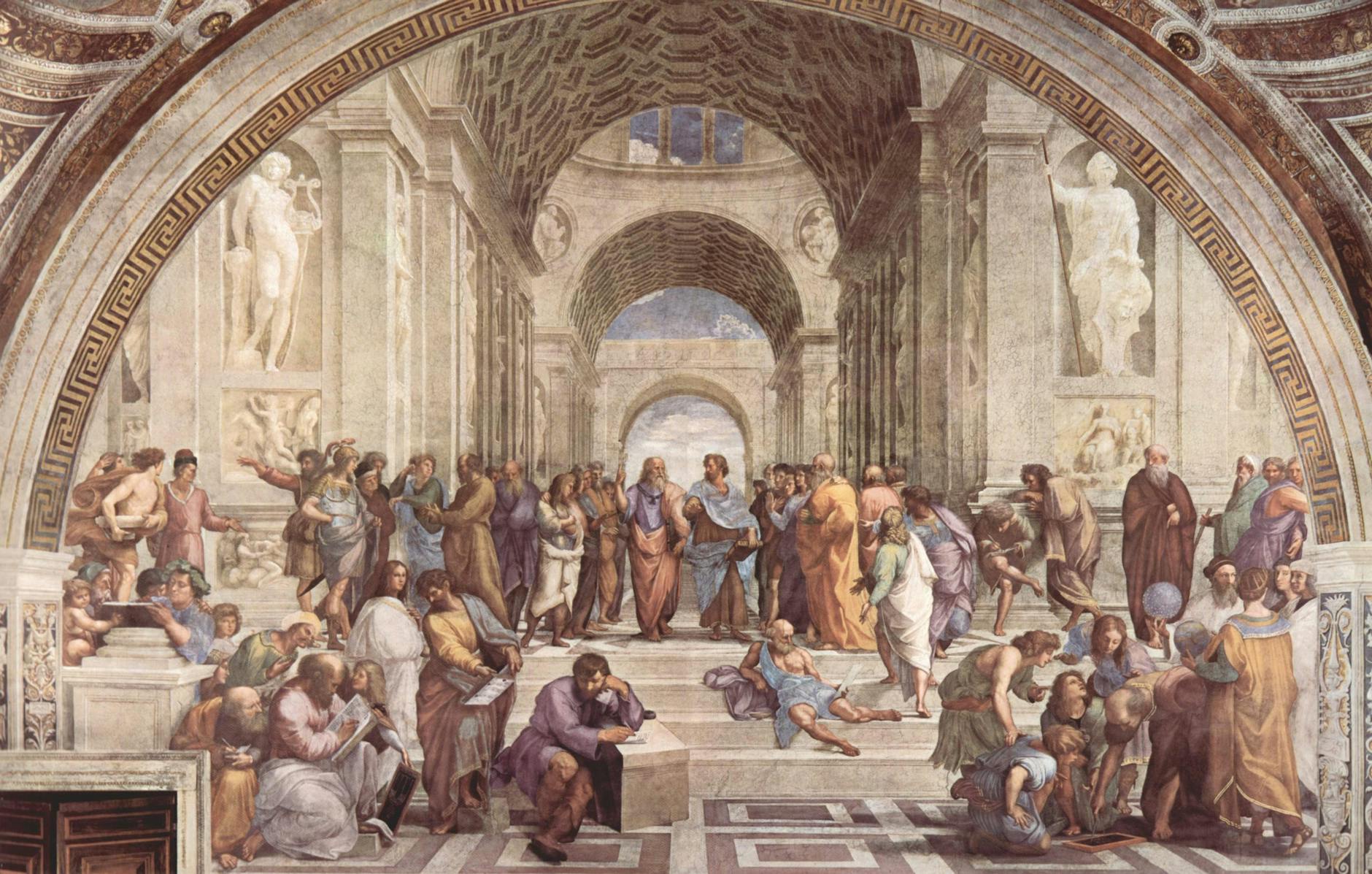
In Greece, the 5th century BCE saw the rise of philosophical traditions associated with figures such as Plato and Aristotle. Greek philosophy would later spread far beyond Greece itself.
Why the Achaemenids matter
The Achaemenid Empire, which lasted from 550 to 330 BCE, played an important role in strengthening Zoroastrianism during the Axial Age. It was one of the major Iranian states that followed the Median Empire.
This matters because ideas often endure when they are supported by large political structures. Empires can help beliefs spread by tying them to administration, official culture, and elite institutions. In the case of Zoroastrianism, the Achaemenids helped turn an important religious tradition into one with wider historical reach.
The same broader pattern appears elsewhere in world history: ideas become especially powerful when they connect with states, trade networks, and education.
Confucianism and the art of governing
Confucianism became especially influential because it was not just a philosophical school in the abstract. It offered a practical vision of how society and government should work.
Rather than focusing on political morality through the force of law alone, the Confucian tradition emphasized the power of example and the authority of tradition. That made it deeply relevant to rulers, officials, and educators.
Its influence did not stop in China. Confucianism later spread to Korea and Japan, becoming one of the most important cultural exports in East Asian history. This is a vivid example of how Axial Age thought outlived the period itself and became embedded in enduring institutions.
The article’s episode slide points to this legacy well: Confucian ideals shaped governance in China. Governance simply means the way a state or society is ruled and administered. In this case, the influence was not fleeting. Confucian ideas helped define how political morality was understood for generations.
Buddhism’s vast spread across Asia
Buddhism also became one of the Axial Age’s most far-reaching legacies. It reached China in about the 1st century CE and then spread widely. By the 7th century CE, there were 30,000 Buddhist temples in northern China alone.
That figure gives a sense of just how thoroughly Buddhist belief and practice had taken root. A temple is not just a place of worship; it can also serve as a center of community life, ritual, learning, and cultural transmission. The presence of so many temples shows that Buddhism had become woven into the social and religious fabric of the region.
From there, Buddhism became the main religion in much of South, Southeast, and East Asia. This makes it one of the clearest examples of an Axial Age tradition growing into a civilizational force across multiple regions.
Greek philosophy and a wider intellectual world
Greek philosophy was another lasting current of the Axial Age. The philosophical tradition associated with thinkers such as Plato and Aristotle did not remain limited to the Greek homeland.
Beginning in the 4th century BCE after the conquests of Alexander the Great of Macedon, Greek philosophy diffused throughout the Mediterranean world and as far as India. “Diffused” here means spread gradually across different societies through contact, exchange, and political expansion.
This spread was part of a larger process often called Hellenization, the spread of Greek culture throughout conquered regions after Alexander’s empire broke into successor states. The Hellenistic period, lasting from 323 BCE until 31 BCE, became an important bridge through which Greek ideas traveled and took on new life in diverse settings.
From Axial Age foundations to later world religions
The Axial Age did not include every major religion in world history, but it laid foundations that reached far into the future.
Christianity began later as an offshoot of Judaism. That means it grew out of Jewish religious beliefs and traditions, even as it developed its own identity.
Islam arose later still, in the 7th century, when Muhammad initiated the early Muslim conquests. The resulting Islamic civilization would expand through both conquest and merchant activity. Merchants carried not only goods but also their faith to China, India, Southeast Asia, and Africa.
So while Christianity and Islam belong to later periods, their roots or historical connections tie them back to Axial Age developments, especially Judaism’s role in shaping subsequent religious history.
Why this period still matters
The Axial Age matters because it produced systems of thought that continued to guide civilizations long after ancient empires rose and fell. Confucianism shaped governance and political morality. Buddhism spread across Asia on a massive scale. Greek philosophy influenced intellectual life across the Mediterranean and beyond. Jewish monotheism helped shape later religious traditions, including Christianity and Islam. Zoroastrianism gained institutional strength under the Achaemenids.
These were not isolated sparks. They were durable frameworks for understanding the world.
Even when later eras introduced new empires, new technologies, and new forms of globalization, the moral and philosophical inheritance of the Axial Age remained alive. Its ideas traveled through temples, schools, bureaucracies, trade routes, and expanding states. They helped define what societies considered sacred, just, rational, and ethical.
In that sense, the Axial Age was more than a chapter in ancient history. It was a turning point in the history of human thought, a few centuries that truly rewired civilization.
Sources
Based on information from Human history.
More like this
Rewire your brain the Axial Age way — download DeepSwipe and discover world-changing ideas one swipe at a time.