Full article · 8 min read
Visual Arts: How Computers Changed Art
For centuries, visual art was often sorted into familiar categories: painting, drawing, sculpture, printmaking, photography, filmmaking, design, and architecture. Those labels helped people describe what artists made and how they made it. Then computers arrived in the visual arts, and those old boundaries began to loosen.
Since the 1960s, computers have been used in the visual arts to capture or create images and forms, edit those images, explore multiple compositions, and produce final renderings or prints, including 3D printing. That shift did more than add a new machine to the studio. It changed how artworks are made, who makes them, and even what counts as the artwork.
From traditional media to digital creation
Visual arts have long included physical media such as paint, paper, canvas, clay, metal, wood, and film. Drawing involves making marks on a surface using tools such as graphite pencils, pen and ink, brushes, crayons, charcoal, pastels, and markers. Sculpture is three-dimensional work created by shaping or combining materials such as stone, clay, metal, glass, or wood. Printmaking uses a matrix, such as a carved woodblock or engraved surface, to transfer an image to a flat surface. Photography records light onto a sensitive medium or storage chip through exposure.
Computer art entered this much older world without staying neatly inside a single category. A computer can help create an image from scratch, modify a photograph, simulate drawing tools, assemble animation, generate a three-dimensional form, or prepare a piece for printing. Because of that, digital technology does not fit only one traditional art form. It can overlap with many of them at once.
That is one reason computers changed visual art so deeply: they act both as a medium and as a bridge between media.
What computer art actually includes
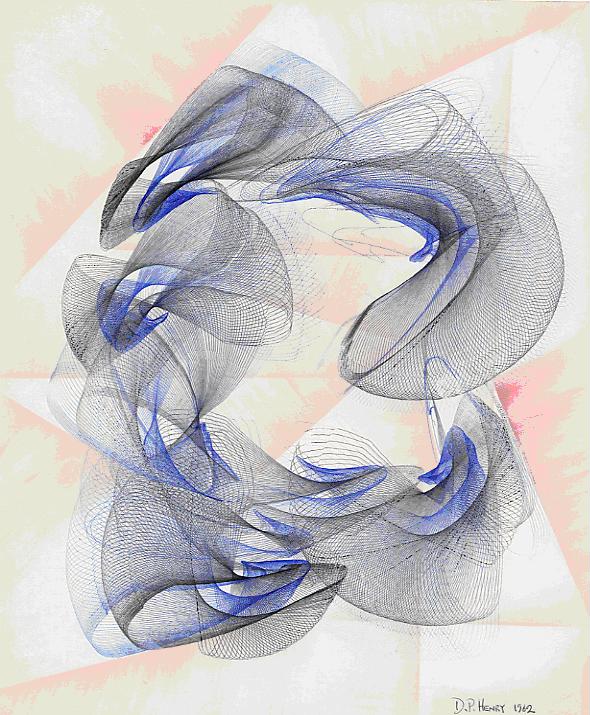
Computer art is any art in which computers play a role in production or display. That definition is broad on purpose, because the results can vary enormously. Computer-based art can be an image, sound, animation, video, CD-ROM, DVD, video game, website, algorithm, performance, or gallery installation.
An algorithm, in this context, is a set of instructions a computer follows. That matters in art because the instructions themselves can shape the final visual result. A gallery installation is an artwork arranged in a space so that the viewer experiences it as an environment rather than as a single framed object.
This wide range makes computer art hard to define by the final object alone. If one work appears as a moving image, another as a website, and another as a printed object generated digitally, they may all still belong to computer art. The computer is not limited to producing one recognizable style or format.
Why the old categories started to blur
Many traditional disciplines now integrate digital technologies. Because of that, the line between a traditional artwork and a new media work created using computers has become blurred.
A painting may involve algorithmic art and other digital techniques. A photograph may be captured electronically, edited with software, and presented in a way that moves beyond the traditional idea of a photograph. An illustrator may also work in animation. A craftsperson may use computer-generated imagery as a template. A final piece might begin in one category and end in several.
This blurring matters because visual arts were historically defined by medium. Painting meant pigment on a surface. Sculpture meant shaped three-dimensional material. Photography meant drawing with light. Printmaking meant transferring an inked image from a matrix. Computers complicated all of that by allowing one workflow to borrow from many practices at the same time.
In simple terms, digital technology made it much easier for art forms to mix.
One person can now do the work of many specialists
One of the biggest changes brought by computers is the rise of the multi-skilled image developer. Computer usage has blurred the distinctions between illustrators, photographers, photo editors, 3-D modelers, and handicraft artists.
A 3-D modeler is someone who builds digital three-dimensional objects on a computer. That role might once have felt completely separate from drawing, photography, or sculpture. But sophisticated rendering and editing software brought these areas closer together.
Rendering is the process of producing a finished visual result from digital data. For example, a 3-D model can be rendered into a polished image that appears realistic or stylized. Editing software allows artists to revise images, test variations, and combine elements from different sources.
As a result, photographers may become digital artists. Illustrators may become animators. Handicraft may become computer-aided. Tasks that once belonged to different specialists can now be handled within one digital workflow.
That does not mean older skills disappeared. It means computers made it easier for one artist to move across roles that used to be more sharply divided.
The computer as tool, and the computer as artwork
Computers changed art not only by helping artists work faster or differently, but also by raising a deeper question: is the computer simply a tool, or is it part of the artwork itself?
In some cases, computer-based art appears more as a tool than as a distinct form in the way painting is often treated as a form. An artist might use software the way a painter uses brushes or a printmaker uses a matrix. The digital system helps produce the result, but the finished work may still be discussed mainly as an image, video, or object.
In other cases, the computer-based nature of the work is central. There are computer-based artworks connected to a conceptual and postdigital strand that take the technologies themselves, and their social impact, as an object of inquiry. In other words, the artwork is not just made with digital technology; it is also about digital technology.
This distinction helps explain why computer art can be so difficult to pin down. Sometimes the computer disappears into the process. Sometimes it becomes the subject.
How digital tools reshaped image-making
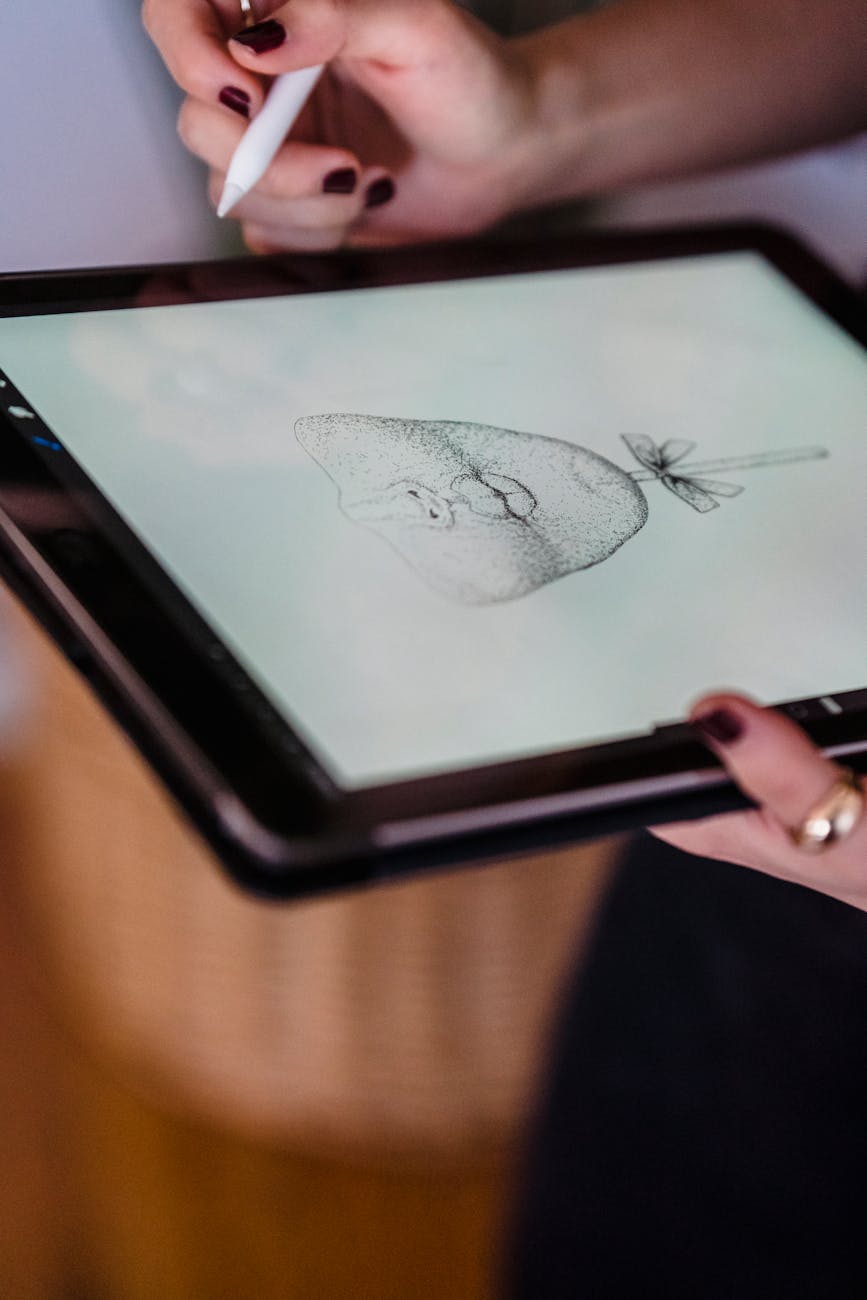
Digital tools also changed how artists manipulate images. In drawing, physical tools such as pencils, pens, brushes, charcoal, and pastels once defined the act of making marks. But digital pens and styluses can simulate the effects of these tools. In photography, images can be captured electronically and transformed through digital editing. In printmaking, digital techniques now join older methods such as woodcut, engraving, etching, lithography, and screen printing.
Even page design became harder to separate from visual art because of computer clip art usage and the easy access and editing of visual material during document layout. Clip art refers to ready-made images that can be inserted and adjusted within a page or composition.
This shift did not erase traditional media. Instead, it made the relationship between making, editing, and presenting art much more fluid.
3D printing and the return of the physical object
One especially striking development is 3D printing. The visual arts article notes that computers can be involved in final rendering or printing, including 3D printing, and that sculptures can also be made with 3-d printing technology.
That matters because it shows that computer art is not limited to screens. A digitally created form can become a physical object. This links computer processes back to sculpture, one of the oldest visual arts.
Sculpture has traditionally involved shaping or combining hard or plastic material such as stone, clay, metal, glass, or wood. With digital methods, an artist can design a form on a computer and produce it through fabrication or 3D printing. So even a very physical artwork may emerge from a digital process.
This is another way computers blur categories: they move easily between virtual design and material form.
Why this changed the meaning of visual art
The term “visual arts” already includes a wide range of practices, from painting and sculpture to photography, filmmaking, design, crafts, and architecture. Over time, the meaning of the term expanded beyond the fine arts to include applied and decorative arts as well. Computers accelerated a similar expansion inside the digital realm.
Because computer-based works can appear as images, animations, videos, websites, games, performances, installations, or printed objects, digital technology pushed visual art away from rigid category thinking. It became harder to ask only, “What kind of object is this?” and more important to ask, “How was this made, displayed, and experienced?”
That is the real transformation. Computers did not simply add one more medium to the list. They altered the relationships among media.
The lasting impact of computers on art
The biggest surprise about computer art is that it changed visual arts at every level. It expanded production, merged creative roles, connected traditional and digital practices, and made categories less stable than before.
An artist can now combine painting with algorithmic techniques, photography with digital editing, or sculpture with 3D printing. A work may exist as a screen-based experience, a printed image, a website, or an installation. The same technology can function as a studio tool, a display platform, or the heart of the concept itself.
That is why computers changed art so profoundly. They did not replace the older visual arts. They threaded through them, linked them, and made the borders between them far less clear.
In the digital age, visual art is no longer just about mastering one medium. It is increasingly about navigating a whole network of them.
Sources
Based on information from Visual arts.
More like this
Blur the boundaries of boredom — download DeepSwipe and turn your screen into an art gallery of ideas.