Full article · 7 min read
The Arts: When “Not Art” Becomes Art
Why do some works get mocked at first, only to end up in museums, textbooks, and the cultural canon later? The history of art is full of arguments over what “counts” as art. Those debates are not side issues. They are part of how the arts evolve.
Across cultures and history, the arts have never been a fixed list of acceptable objects and practices. They include visual arts, literature, and performing arts, but they are also continually redefined. That openness helps explain why styles, media, and experiments that once seemed outrageous can later become celebrated.
Why art is so hard to pin down
Art is usually understood as human activity shaped by skill, creativity, and imagination. That broad idea covers painting, sculpture, music, theatre, literature, and much more. But the moment people try to draw a sharp line around art, disputes begin.
These are often called classificatory disputes: disagreements about whether something should be recognized as a work of art at all. In the 20th century, these disputes surrounded Cubist and Impressionist paintings, Marcel Duchamp’s Fountain, movies, J. S. G. Boggs’ imitations of banknotes, conceptual art, and video games.
That list alone shows how varied the conflict can be. Sometimes the controversy is about style. Sometimes it is about materials. Sometimes it is about whether an idea, an object, or an interactive experience deserves the same respect as painting or sculpture.
From rejected style to accepted movement
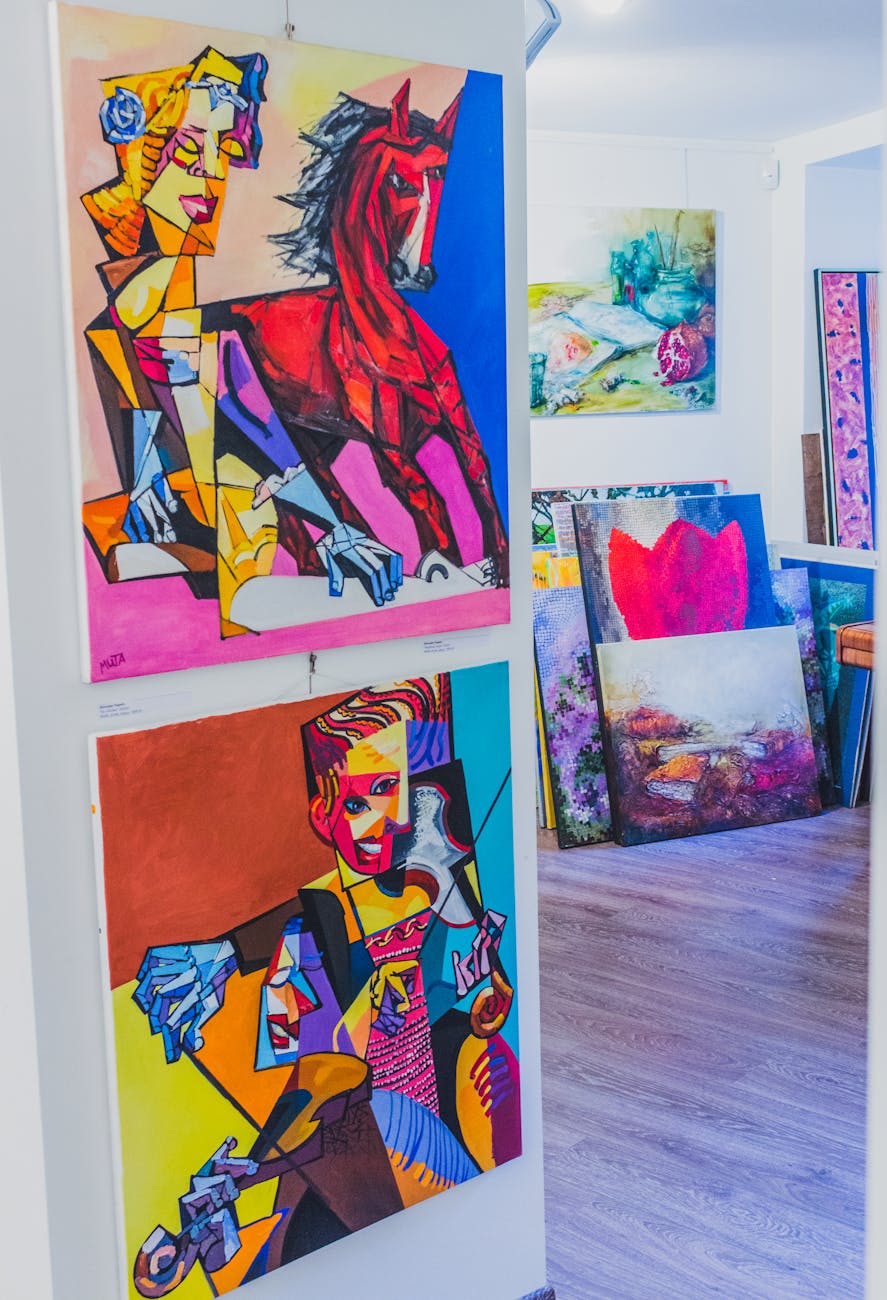
Two famous examples are Impressionism and Cubism. Both became major artistic labels, but both were also named disparagingly by critics. In other words, the names began as insults.
Over time, those same labels were adopted by the artists and turned into badges of honour. That reversal reveals something important about art criticism and public taste: judgments are not always stable. What looks misguided, unfinished, strange, or offensive in one period may later be seen as innovative.
Critics of the past can end up looking short-sighted for dismissing artists who later become venerated. Art history is full of these reversals. So when people argue that a new style is ridiculous or not really art, they are participating in a long tradition of getting surprised.
Duchamp’s Fountain and the shock of redefinition
Few examples capture this better than Duchamp’s Fountain, a 1917 urinal presented as art. The shock was not just about the object itself. It was about the challenge it posed to older expectations.
Many people expect art to display visible technical skill, beauty, or craftsmanship. Fountain disrupted that expectation. It fed directly into a broader question: is art defined by the object, by the maker’s intention, by the setting in which it appears, or by the idea behind it?
That question became even more central with conceptual art.
What conceptual art means
Conceptual art is art in which the concepts or ideas involved in the work take precedence over traditional aesthetic and material concerns. Put simply, the idea matters more than the object.
When the term emerged in the 1960s, it referred to a focused practice of idea-based art that defied traditional visual criteria, sometimes presenting itself as text rather than a conventionally visual artwork. Later, the popular use of the term broadened, especially in the United Kingdom, where it became associated with contemporary art that does not practice the traditional skills of painting and sculpture.
This helps explain why conceptual art often becomes a flashpoint in arguments about what art should be. If someone thinks art must primarily be a finely made object, idea-based work can feel like a provocation. But if art is also a way of expressing judgments, visions, and interpretations of the world, then a concept can be the artistic core.
Movies, comics, and other expanding categories
Disputes about art are not limited to gallery objects. Film also had to earn its place. The arts have often been classified into seven forms: painting, architecture, sculpture, literature, music, theatre, and filmmaking. That inclusion shows how categories grow.
Other forms stretch the boundaries further. Television is sometimes called the “eighth” art, while comics are called the “ninth art” in Francophone scholarship. Comics are especially interesting because they combine visual art with literature. They show that art forms do not need to stay separate. The arts can combine, interweave, and develop into more complex forms.
This matters because many “is it art?” arguments are really arguments about unfamiliar combinations. When a medium blends image, story, performance, or interactivity in a new way, old categories can start to feel too small.
Why video games became part of the debate
Video games are one of the clearest modern examples of classificatory dispute. They are multidisciplinary works that include artistic elements such as visuals and sound, while also creating an emergent experience through interactivity.
That word, interactivity, is key. Unlike a painting or a film, a video game changes in part through the player’s actions. That has led to debate over whether games should be classified as art and whether game developers should be considered artists.
The disagreement has been public and serious. Hideo Kojima argued in 2006 that video games are a type of service rather than an art form. Yet institutions and public bodies have moved in the opposite direction too. In 2011, the National Endowment for the Arts included video games in its definition of a “work of art,” and in 2012 the Smithsonian American Art Museum presented an exhibit titled The Art of the Video Game.
That tension makes video games a perfect example of art moving its own goalposts. A form can contain obvious artistic elements and still face resistance because it does not fit older assumptions.
Modern art and shifting boundaries
One reason these debates keep happening is that the arts are open to being continually redefined. Modern art especially demonstrates shifting boundaries, improvisation, experimentation, reflexive questioning, and self-criticism.
Self-criticism here means that art can question not only society, politics, or morality, but also its own rules. It can ask what counts as an artwork, what the role of an artist is, what audiences expect, and whether those expectations deserve to survive.
That makes modern art less like a stable territory and more like an argument in progress. New works do not simply add to an existing tradition. They can challenge the tradition’s assumptions and conditions of production, reception, and possibility.
Critics, taste, and the risk of being wrong
Art criticism tries to create a rational basis for art appreciation, often using ideas from aesthetics, the theory of beauty. But criticism does not happen in a vacuum. Judgments can be shaped by social and political context, and they can change over time.
The variety of art movements has produced many different critical approaches. Historical criticism and contemporary criticism may use different criteria, and personal preference can influence both appreciation and rejection. Art criticism and appreciation can be subjective, shaped by aesthetics, form, design principles, and social and cultural acceptance.
This is why today’s rejection can become tomorrow’s consensus. A work may first appear too odd, too political, too simple, too impersonal, or too playful. Later, the very same qualities may be seen as daring or visionary.
The canon grows by argument
The canon is the collection of works widely accepted as important. It can feel fixed when encountered in museums, courses, and “greatest works” lists. But in practice, the canon grows through conflict.
Works and movements do not glide smoothly into acceptance. They are debated, defended, mocked, reconsidered, and sometimes transformed from scandal into attraction. What one generation dismisses as “not art,” another may celebrate as essential.
That pattern is not an accident or a glitch in culture. It reflects something fundamental about the arts themselves. Art is a medium for expressing values, judgments, ideas, visions, and experiences across time and space. Because human societies keep changing, the forms that carry those meanings also keep changing.
Why “not art” keeps becoming art
The arts are both deeply rooted and constantly in motion. They preserve traditions, but they also test them. They can produce beautiful objects, challenge habits of perception, combine multiple media, and force people to rethink what creative expression can be.
So when people scoff at a new form, movement, or experiment, they may be witnessing the early phase of a familiar cycle. The next classic often arrives looking suspicious, awkward, or illegitimate. Then the arguments begin. And sometimes, that argument is exactly how art makes room for something new.
Sources
Based on information from The arts.
More like this
Still arguing with the canon? Download DeepSwipe and turn every swipe into your next “wait, that is art” moment.


