Full article · 8 min read
What War Is: More Than Battles Between Countries
War is often imagined as one country’s army facing another on a battlefield. But that picture is only part of the story. War is a form of armed conflict that can happen not only between states, but also between governmental forces and organized armed groups that operate under a command structure and can sustain military operations over time.
That distinction matters. It means war is not limited to classic state-versus-state combat. A conflict can also count as war when a government fights a structured armed movement that has leadership, organization, and the ability to keep fighting rather than carrying out isolated attacks. In other words, war is not just about uniforms and borders. It is also about scale, organization, and sustained violence.
War Requires More Than Violence
Not every outbreak of violence becomes a war. What sets war apart is its breadth and intensity. It is generally marked by widespread violence, destruction, and mortality. These are not brief or scattered incidents, but large-scale conflicts that disrupt societies and leave lasting damage.
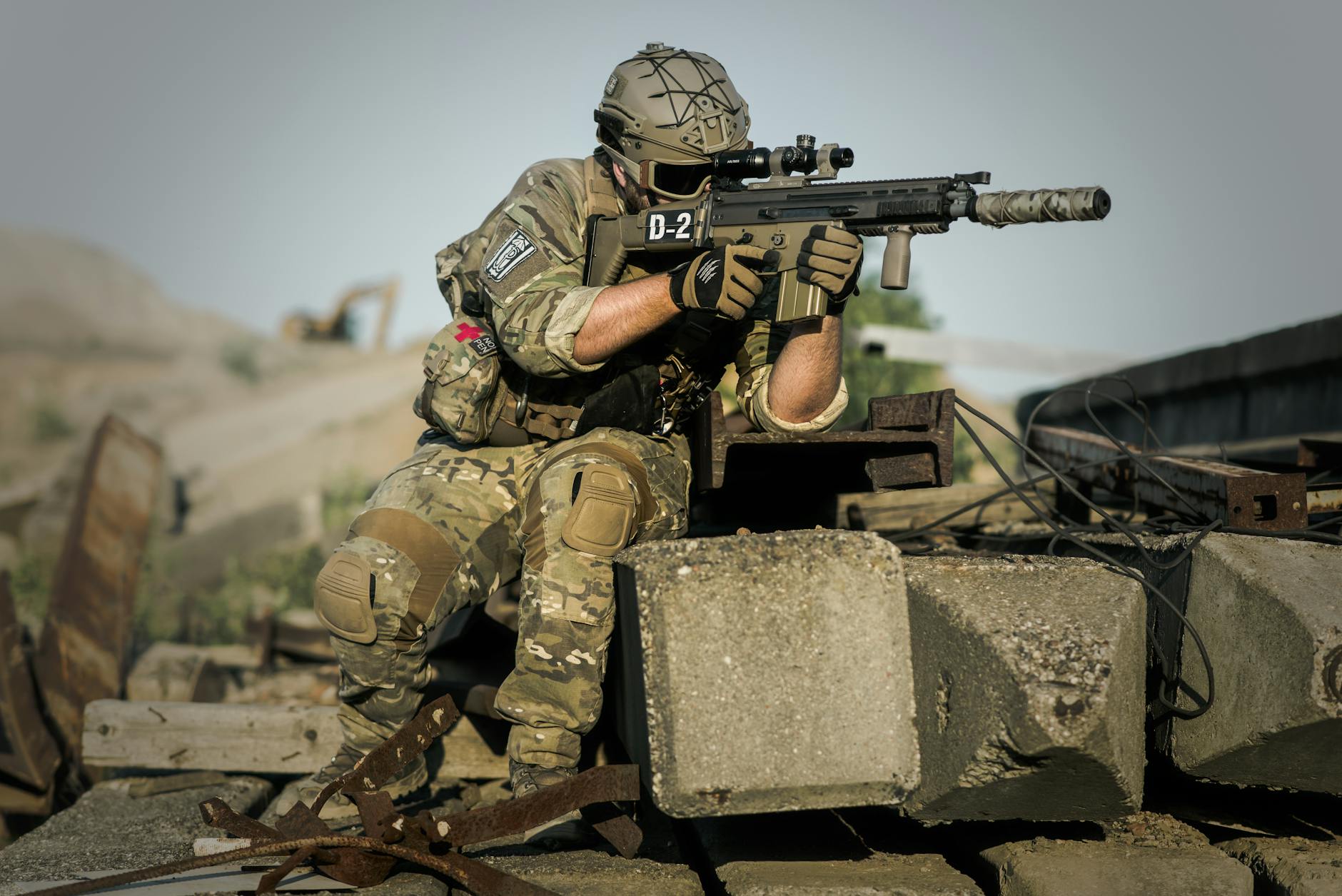
War can be fought by regular military forces, such as national armies, or by irregular forces. Irregular forces include fighters who do not operate like a standard state military. The episode mentions militias and guerrilla groups, and this fits the broader idea that warfare can involve many kinds of organized armed actors.
The goals of war also help explain what it is. War aims are usually political, economic, or territorial.
Political objectives involve power, authority, or control over how a place is governed. Economic objectives involve wealth, resources, or concessions. Territorial objectives focus on land itself, whether through conquest, control, or defense.
Scholars have described war aims as the benefits expected after a successful conflict. Some aims are tangible, such as acquiring territory or gaining economic concessions. Others are intangible, such as improving reputation, credibility, or prestige. Some war aims are explicit and publicly stated, while others remain implicit in private discussions and instructions. They can even change during the course of a conflict.
States, Governments, and Organized Armed Groups
One of the most important ideas in understanding war is that the participants do not have to be two states. War can happen between:
- the armed forces of states
- governmental forces and organized armed groups
- organized groups fighting each other under a command structure
The key phrase is organized under a certain command structure and able to sustain military operations. That means the group is more than a loose crowd. It has leadership, coordination, and enough capacity to continue fighting over time.
This helps separate war from isolated unrest, criminal violence, or one-off attacks. Organization gives conflict continuity. Sustained military operations mean the violence is ongoing and structured rather than random.
This broader definition also helps explain why modern war is often not a simple clash between major powers. Since 1945, great power wars, territorial conquests, and formal war declarations have declined in frequency. But war itself has not necessarily declined. Civil wars have increased in absolute terms since 1945, and combat has largely become a matter of civil wars and insurgencies.
An insurgency is a rebellion against authority in which irregular forces take up arms to change an existing political order. That makes it one of the clearest examples of war extending beyond traditional country-versus-country fighting.
Regular and Irregular Forces
The phrase regular or irregular military forces tells us something important about how wars are fought.
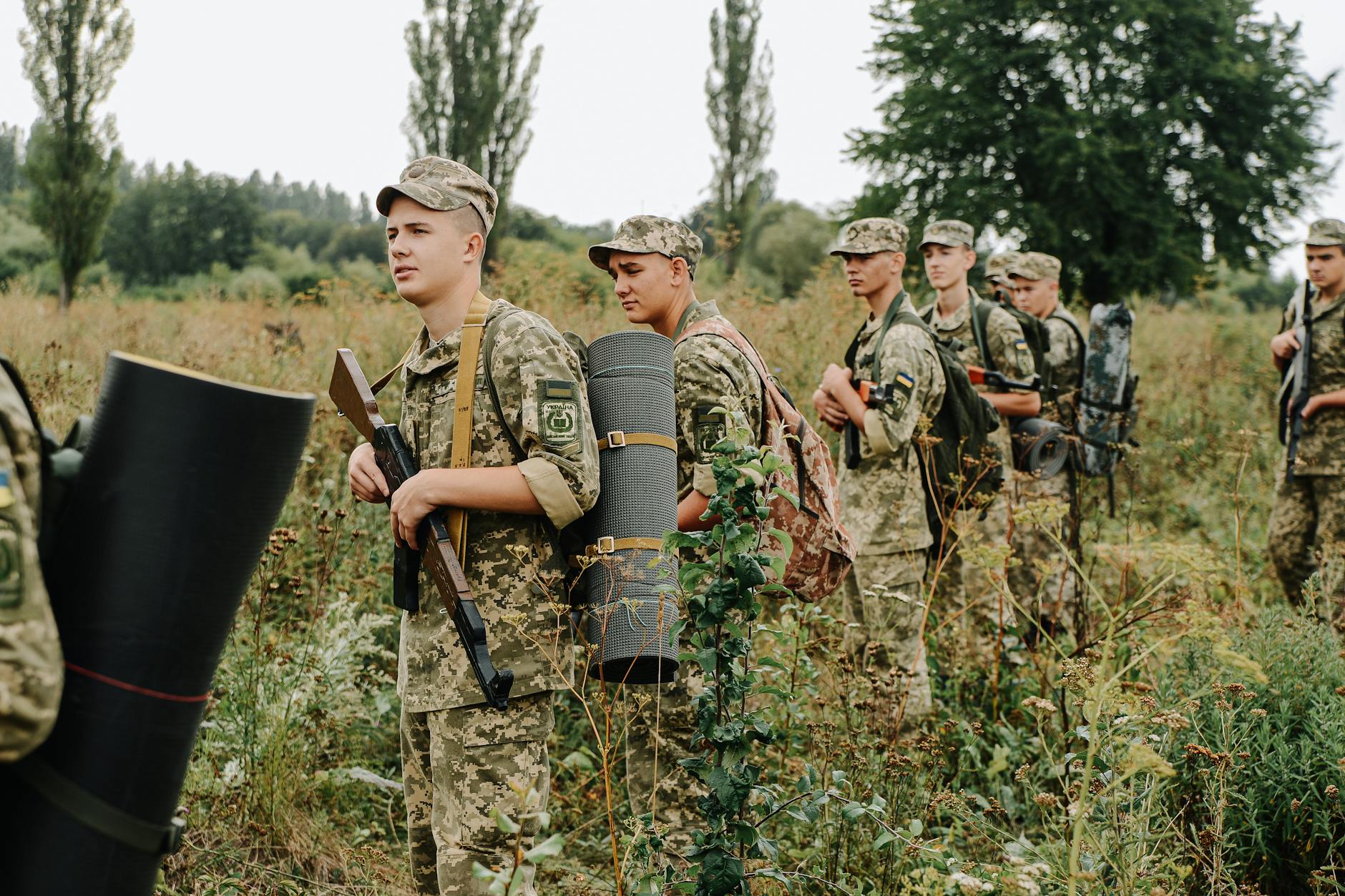
Regular forces are the standard armed forces of a state. They are typically formal institutions with established command systems and recognized military roles.
Irregular forces operate differently. They may not look like a conventional army, but they can still play a major role in war. They may fight as militias, guerrilla groups, or insurgents. What matters is not whether they match the image of a formal army, but whether they are organized and capable of sustained military action.
This is one reason warfare is such a broad term. Warfare refers to the common activities and characteristics of war in general or of particular types of war. It includes the methods, strategies, and patterns seen across many conflicts.
There are many types of warfare. These include asymmetric warfare, which describes conflicts between opponents with drastically different military capabilities or size, and unconventional warfare, which includes military and quasi-military operations outside standard conventional fighting. The variety of forms shows that war is not one fixed template.
Why Wars Are Fought
Although wars differ in style and scale, their aims are typically political, economic, or territorial.
Political aims can include changing authority, resisting a regime, or shaping power relationships. Economic aims can include access to wealth, resources, or favorable terms. Territorial aims involve holding, gaining, or defending land.
These motives can overlap. A territorial struggle may also be economic. A political conflict may be tied to control of resources. And a war that begins with one objective may evolve into something else as conditions change.
War aims can also be divided into positive and negative goals. Positive aims seek something tangible, such as territory or concessions. Negative aims try to prevent an unwanted outcome. In some cases, states or other actors continue fighting until minimal peace conditions are met.
This helps explain why wars can become prolonged. If one side believes it has not secured its political, economic, or territorial objective, ending the conflict becomes harder.
When War Has No Limits: Total War
One of the most devastating forms of warfare is total war. In total war, warfare is not restricted to purely legitimate military targets. It can result in massive civilian and other non-combatant suffering and casualties.
This is what makes total war so alarming. The fighting does not stay limited to armies or battlefields. The war effort can draw in almost the whole society, and the effects spread far beyond combatants.
The definition emphasizes that attacks may not be limited to military targets and that the consequences for civilians can be enormous. Civilians are people who are not combatants, meaning they are not taking part in the fighting as military personnel. Non-combatants include civilians and others who are not legitimate military targets.
The costs are often catastrophic. War in general can cause major infrastructure damage, ecosystem deterioration, famine, large-scale emigration, and mistreatment of prisoners of war or civilians. In conflict zones, daily life is interrupted, travel becomes difficult, and entire populations may be forced into crisis.
When war expands beyond military targets, the suffering multiplies. That is why the idea of limits in war matters so much in ethics and law.
The Human Cost of War
Even outside total war, the human consequences are severe. War is defined not only by organized violence, but by destruction and death on a broad scale.
Military personnel can suffer physical injury, disease, mental trauma, and death. Civilians often endure destruction of infrastructure and resources, worse health outcomes, famine, disease, and reduced access to basic needs such as drinking water. War zones can become places where ordinary life is shattered.
The scale of death in war has varied enormously across history. Estimates differ widely, but there is no doubt that war has claimed staggering numbers of lives. World War II is identified as the deadliest war in history in cumulative deaths since its start, with 70–85 million deaths.
At the same time, some long-term trends are complex. Since 1945, battle deaths and casualties have declined in part because of advances in military medicine, even though weapons have advanced as well. Yet war has not disappeared. Instead, many conflicts have shifted in form, with civil wars and insurgencies becoming especially prominent.
War Has Changed, But It Has Not Gone Away
War has changed repeatedly over history. The rise of the state, the development of metal weapons, the invention of gunpowder, and accelerating technological change all transformed warfare.
One of the clearest modern shifts is that war is now less often centered on formal great-power clashes and more often on internal or irregular conflict. Since 1945, the pattern of war has included fewer great power wars and fewer formal declarations, but more civil wars in absolute terms.
So while the image of war as one state attacking another still matters, it no longer captures the whole reality. Modern war often involves governments, insurgencies, organized armed groups, and prolonged internal conflict.
Understanding War Means Looking Beyond the Battlefield
To understand what war is, it helps to strip the idea down to its essentials. War is organized armed conflict carried out on a sustained scale. It brings widespread violence, destruction, and mortality. It may involve states, governments, insurgents, militias, or other organized armed groups. And it is usually fought for political, economic, or territorial objectives.
The most chilling version of this is total war, where limits break down and civilians suffer on a massive scale. But even when war is more narrowly fought, its effects reach far beyond combatants.
War is not just a clash of armies. It is a structured form of conflict that reshapes lives, societies, and history.
Sources
Based on information from War.
More like this
Don’t wage war on your attention span — download DeepSwipe and win a smarter kind of campaign, one swipe at a time.