
Full article · 7 min read
Sun Color: Why the Sun Isn’t Really Yellow
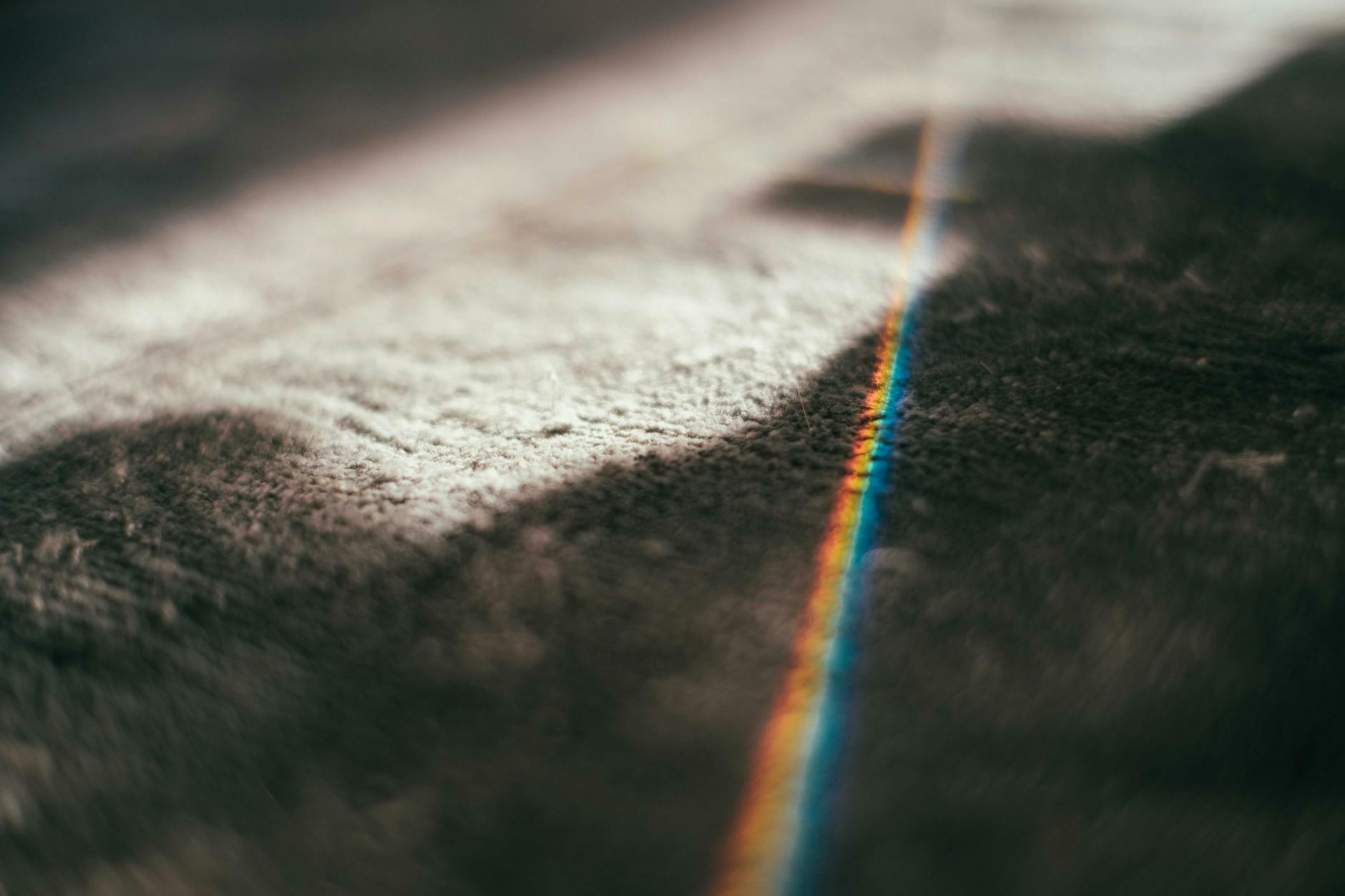
Many people grow up drawing the Sun as a bright yellow circle. It feels obvious. Look up on a clear day and the Sun often does seem yellow, and near sunrise or sunset it can turn orange, red, or even more unusual shades. But the Sun’s true color is not yellow at all.
When viewed from space, or when it is high in the sky, the Sun is white. That simple fact opens the door to a fascinating story about light, Earth’s atmosphere, and one of the strangest visual effects in the sky: the green flash.
The Sun’s real color in space
The Sun is a massive sphere of hot plasma that radiates energy mainly as visible light and infrared radiation, with 10% at ultraviolet energies. In everyday life, we focus on the visible part because that is the light our eyes detect directly.
From space, the Sun’s color is white, with a CIE colour-space index near (0.3, 0.3). In plain terms, that means its light blends together in a way that appears white to human vision. This is why astronauts and spacecraft observations do not see a permanently yellow Sun hanging in black space.
The idea of a yellow Sun is mostly an Earthbound experience.
Why sunlight looks white even though it peaks in green
One especially surprising detail is that the Sun’s radiance per wavelength peaks in the green portion of the spectrum when viewed from space. That can sound contradictory. If the peak is in green, why does the Sun not look green?
The key is that the Sun emits light across a broad spread of visible wavelengths, not just one narrow band. Human vision combines this mix into the perception of white light. So even though the strongest output per wavelength is in the green region, the full blend does not register as green overall.
This is similar to how a balanced mixture of many visible wavelengths can appear white rather than a single spectral color. Sunlight is not a monochrome beam. It is a rich combination.
Why the Sun looks yellow from Earth
When the Sun is high in the sky, it can still appear close to white. But often, especially in ordinary daylight viewing, people describe it as yellow. That shift comes from Earth’s atmosphere.
As sunlight passes through the atmosphere, scattering changes what reaches your eyes. The effect becomes much stronger when the Sun is low in the sky, because the light has to travel through a much longer path of air.
This is why the Sun can appear yellow, orange, red, or magenta near the horizon. In rare cases, it can even appear green or blue. The atmosphere is not acting like a simple tinted window. It is selectively affecting the light through scattering and bending, changing the balance of colors that finally reaches an observer.
Sunrise and sunset: when color gets dramatic
During sunrise and sunset, sunlight is attenuated because of Rayleigh scattering and Mie scattering from a particularly long passage through Earth’s atmosphere.
Rayleigh scattering is the scattering of light by very small particles in the atmosphere, and it affects shorter wavelengths more strongly. Mie scattering involves larger particles, such as dust or droplets. Together, these effects can strip away or weaken some colors more than others.
That is why low Sun colors become so vivid. Instead of seeing the Sun’s more balanced white light, you see a version altered by a long atmospheric journey.
Hazy conditions, atmospheric dust, and high humidity can increase this attenuation even further. So the exact color of a sunrise or sunset is not fixed. It depends on how much atmosphere the light passes through and what is suspended in that atmosphere.
The green flash: a real sky trick
One of the most famous color effects linked to the setting or rising Sun is the green flash. This optical phenomenon can sometimes be seen shortly after sunset or just before sunrise.
It happens when light from the Sun just below the horizon is bent toward the observer, usually through a temperature inversion. A temperature inversion is a layer of air in which temperature changes in a way that alters how light travels. This bending is a form of atmospheric refraction.
Shorter wavelengths such as violet, blue, and green are bent more than longer wavelengths such as yellow, orange, and red. But there is an extra twist: violet and blue light are scattered more strongly, so they are removed from the final view more effectively. What remains can be light perceived as green.
That is why the final visible glint can sometimes look emerald rather than blue or violet. It is not fantasy, and it is not a camera artifact. Under the right conditions, it is a genuine optical event.
Why the Sun can look stranger than yellow
The atmosphere can produce a surprisingly wide palette. The Sun may appear yellow, red, orange, or magenta when low in the sky, and in rare cases even green or blue. This alone shows how unreliable casual color impressions can be.
If the Sun’s actual color changed that dramatically on its own, it would be a very different kind of object. Instead, the changing appearances mostly reflect how Earth’s atmosphere filters, scatters, and bends the light.
This is also why cultural images of the Sun vary. Some people mentally picture the Sun as yellow, others as red. The common yellow Sun of children’s drawings is visually familiar from daily life, but it is not the best description of the Sun seen without atmospheric distortion.
The Sun’s light is more than just visible color
Visible light is only part of what the Sun emits. At the top of Earth’s atmosphere, sunlight is composed by total energy of about 50% infrared light, 40% visible light, and 10% ultraviolet light.
That matters because when we talk about the Sun’s “color,” we are talking only about the visible slice of a much broader output. The atmosphere filters out over 70% of solar ultraviolet, especially at shorter wavelengths. So what reaches the ground is already a modified version of the Sun’s radiation.
This helps explain why direct visual impressions are not a perfect guide to the Sun’s true appearance.
The photosphere: the visible surface we see
The light we call sunlight escapes from the Sun’s photosphere, the visible surface of the Sun. This is the layer below which the Sun becomes opaque to visible light. Photons produced there escape through the atmosphere above the Sun and travel into space as solar radiation.
The spectrum of sunlight is approximately that of a black-body radiating at 5,772 K, with atomic absorption lines from the tenuous layers above the photosphere. You do not need to memorize black-body physics to get the main point: the photosphere emits a broad, intense spread of visible light that appears white overall.
The Sun is therefore not a yellow flame in the ordinary sense. It is a hot stellar surface producing a wide spectrum of light.
A note on looking at the Sun
Because the Sun can seem softer in color at sunrise or sunset, people sometimes assume that direct viewing is harmless. But the Sun’s brightness can cause pain from looking at it with the naked eye, and viewing the direct Sun can cause visual artefacts and temporary partial blindness. Viewing it through light-concentrating optics such as binoculars without an appropriate filter may result in permanent retinal damage.
During sunrise and sunset, the atmosphere can attenuate sunlight enough that it is sometimes faint enough to be viewed comfortably with the naked eye, but this depends on conditions and can change suddenly.
So what color is the Sun really?
The most accurate short answer is this: the Sun is white.
It may look yellow from Earth because of atmospheric scattering. It may turn orange or red when low on the horizon because its light has crossed a longer stretch of air. And in special conditions, the very last edge can flash green.
But stripped of those atmospheric tricks, the Sun’s own visible light appears white.
That makes the Sun more interesting than the simple yellow circle in a sketchbook. It is not just a bright object in the sky, but a natural light source whose apparent color changes with viewing conditions, atmospheric physics, and the geometry of the horizon. The next time you see a golden sunset, you are not watching the Sun change identity. You are watching Earth’s atmosphere repaint a white star.
Sources
Based on information from Sun.
More like this
See past the yellow-circle myth and catch more mind-bending facts with DeepSwipe — download the app and give your curiosity a solar upgrade.


