Full article · 7 min read
Ancient Homes and Early Cities
Ancient housing was far more sophisticated than many people imagine. Long before modern plumbing, air conditioning, and apartment towers, early cities were already designing homes around comfort, climate, sanitation, and social life. In some places, people lived in houses with private wells, indoor bathrooms, drainage systems, courtyards, and carefully planned streets. In others, the gap between rich and poor was built directly into the city itself.
Looking at ancient homes reveals something bigger than architecture. It shows how early urban societies organized everyday life: where people cooked, slept, worked, gathered water, found privacy, and escaped heat. Homes were not just shelters. They were part of the machinery of the city.
Mesopotamia: homes inside some of the earliest cities
By the Bronze Age, communities in Mesopotamia were building permanent dwellings out of mudbrick. Mesopotamia was an ancient region where some of the world’s earliest cities developed, and its homes already show signs of organized urban life.
Excavations at places such as Uruk and Ubaid reveal both single-room and multi-room houses. That variety matters. It suggests that even in very early cities, people did not all live in identical conditions. Some homes were compact and simple, while others offered more internal space and possibly more specialized rooms.
These houses were often arranged around small courtyards. A courtyard is an open space enclosed by the building, and in ancient homes it was much more than decoration. It could bring light and air into the house, create a semi-private outdoor area, and support everyday domestic tasks. In hot environments especially, a courtyard could make a home more livable.
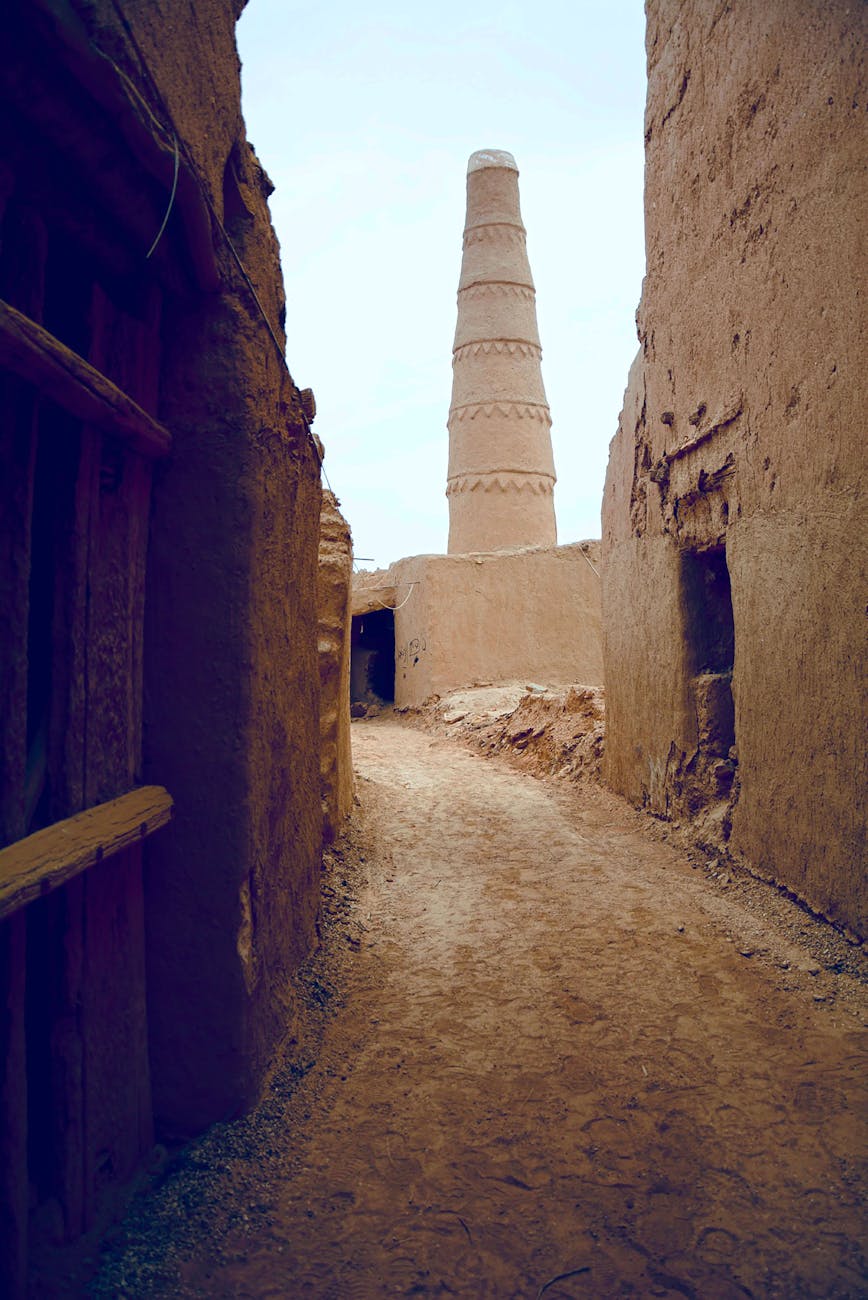
Mesopotamian homes were built with uniform bricks and bitumen mortar. They also often clustered along straight streets and shared common wells and ovens. This is one of the clearest signs that early cities were being shaped around daily routines. Water and food preparation were not random afterthoughts. They were built into the urban layout.
A shared well meant access to water was part of neighborhood life. Shared ovens suggest cooking could also have a communal dimension. Instead of imagining ancient cities as chaotic masses of buildings, it makes more sense to see them as places where the practical needs of residents were being planned in physical space.
The Indus Valley: surprisingly advanced urban housing
Among the most striking ancient homes were those of the Indus Valley Civilisation. In cities such as Mohenjo-daro and Harappa, houses were built with standardized fired bricks and formed part of a sophisticated urban plan.
What makes these homes so remarkable is how many features feel unexpectedly modern. Two-story houses existed. Some included private wells, which meant water could be accessed directly from the home rather than only from a shared public source. Even more astonishing, houses could have indoor bathrooms with drainage.
That drainage is especially important. A bathroom is one thing; a bathroom connected to a system for removing wastewater is another. It shows that sanitation was not merely a household issue but part of city planning. These were homes designed with infrastructure in mind.
The use of standardized fired bricks also hints at a high degree of organization. Standardization means builders were not improvising each structure from scratch. It suggests shared methods, repeated forms, and coordinated construction practices across the city.
This kind of planning changes how we think about ancient urban life. The Indus Valley was not simply building shelters close together. It was creating a built environment where water supply, cleanliness, and durable materials were part of how the city functioned.
Climate-conscious design was already shaping homes
Ancient builders were also deeply aware of climate. In the Indus Valley, south-facing courtyards were engineered for ventilation in the hot climate.
Ventilation means the movement of air through a space. In hot regions, good airflow can make rooms feel cooler and more comfortable. A south-facing courtyard, in this context, was not just a design preference. It was a practical environmental solution.
This detail reveals something important about ancient housing: homes were often shaped by local conditions. Builders paid attention to heat, light, and air. Rather than trying to overpower the environment with machinery, they used orientation and layout to work with it.
That makes ancient houses feel surprisingly intelligent. Their design responded to the realities of daily life, especially in places where the climate could make enclosed spaces unbearable. Courtyards, open areas, and carefully oriented rooms helped regulate comfort long before modern climate control.
Egypt and the logic of dense urban neighborhoods
In Ancient Egypt, from the Old Kingdom onward, town layouts at Amarna and Deir el-Medina show mudbrick houses with flat roofs built in dense rows off narrow lanes.
A typical house included a reception room, private chambers, and a small courtyard used for food preparation and work activities. This combination of spaces shows that homes were already divided according to function. A reception room suggests a place for receiving others, while private chambers indicate a more secluded domestic zone. The courtyard again appears as a flexible working space.
Dense rows of houses along narrow lanes also tell us something about city form. Ancient urban neighborhoods were not always spacious or open. They could be compact and tightly organized, with houses closely connected to one another. That density likely shaped social life, movement, and the boundary between public and private space.
Rome: luxury for some, crowding for many
Ancient Rome offers one of the clearest examples of unequal housing. By the 1st century BC, affluent Romans lived in domus, while the majority lived in insulae.
A domus was a multiroom urban house for the wealthy. These homes were built around an atrium and a peristyle garden. An atrium was a central open area inside the house, a kind of interior focal point that organized surrounding rooms. A peristyle garden was a garden space framed by columns. Together, these features created a home centered on light, openness, and display.
This was a very different experience from that of most city residents. The majority lived in insulae, which were multi-story apartment blocks. These buildings were often cramped and prone to fire hazards.
That contrast is striking. In the same city, one class lived in expansive multiroom homes with garden-centered layouts, while many others were packed into vertical buildings with dangerous conditions. Roman housing makes visible the social divisions of urban life. Where you lived shaped not only your comfort, but your safety.
The insulae also show that apartment living is not a modern invention. Large cities have long pushed people into shared, stacked housing. The ancient version, however, could be precarious, with overcrowding and fire risk built into the experience.
Homes as systems, not just buildings
One of the most fascinating things about ancient homes is that they make the city visible. A private well only makes sense within a broader water culture. Indoor drainage points to systems beyond the bathroom itself. Shared wells and ovens reveal neighborhood infrastructure. Straight streets, dense rows, courtyards, and multi-story buildings all show that housing was tied to urban planning.
This is why ancient homes are so revealing. They capture the intersection of architecture and everyday life. A house was where people slept, prepared food, worked, and managed hygiene. But it was also where a city’s values became concrete.
Did a society prioritize ventilation in a hot climate? You can see it in a courtyard. Did it support organized sanitation? You can see it in drainage. Did wealth transform domestic life? You can see it in the difference between a domus and an insula.
What ancient homes still tell us
Ancient housing challenges the idea that the past was uniformly primitive. Some of the earliest cities already understood that homes needed to do more than keep people under a roof. They had to support routines, respond to climate, and fit into a larger urban system.
Mesopotamian houses show neighborhoods shaped around shared resources and small courtyards. Indus Valley homes reveal impressive planning, with private wells, indoor bathrooms, drainage, and ventilation-conscious design. Roman housing exposes dramatic differences between elite comfort and ordinary urban crowding.
Taken together, these homes show that early cities were already wrestling with issues that still matter today: water access, sanitation, density, heat, privacy, and inequality. Ancient people may have used different materials and technologies, but they were asking familiar questions about how a home should work.
And in some cases, their answers were shockingly advanced.
Sources
Based on information from Home.
More like this
From Roman insulae to Indus plumbing, home design has always told a story — download DeepSwipe and keep exploring history one smart swipe at a time.