Full article · 8 min read
Literature: When Memory Became Writing
Human beings told stories long before they wrote them down. For much of early history, memory, performance, and oral tradition carried law, belief, history, and practical knowledge across generations. But at some point, memory was no longer enough for every task. In parts of the ancient world, growing complexity pushed societies toward a new solution: writing.
This shift did not simply create records. It changed how people could store information, organize society, preserve belief, and share knowledge over time. The story of literature begins here—not only with poems and tales, but with a basic human problem: how do you keep important information from being lost?
When trade and government became too complex
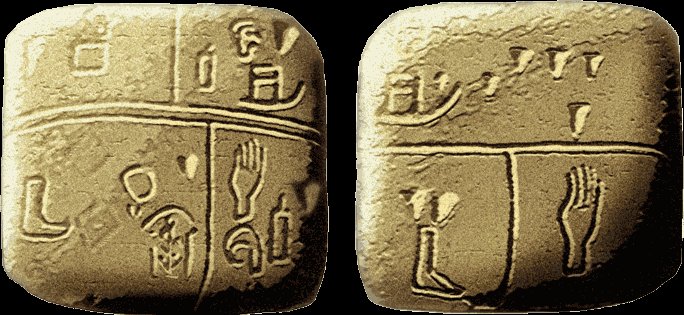
One of the clearest explanations for the rise of writing comes from ancient Mesopotamia. Around the 4th millennium BC, trade and administration had become so complex that they outgrew human memory. Deals, inventories, obligations, and other transactions needed a more dependable system than recall alone. Writing emerged as a permanent way to record and present this information.
That phrase matters: a permanent form. Memory is flexible, powerful, and human, but it is also vulnerable. Writing allows information to be fixed outside the mind. Once something is written, it can be checked, stored, copied, and referred to later. For systems like trade and administration, that reliability is transformative.
Mesopotamia shows that writing was not just an artistic invention. It was practical technology. It helped people keep track of the increasingly complicated structures of economic and political life.
Writing did more than keep accounts
Once writing existed, its uses expanded far beyond transactions. Portable and reproducible forms of writing helped make possible more uniform and predictable legal systems, sacred texts, and the origins of modern practices of scientific inquiry and knowledge-consolidation.
Portable means a text can be carried from place to place instead of being tied to a speaker’s memory or a single performance. Reproducible means it can be copied and shared. Those two features gave writing enormous power.
A law preserved in writing can remain stable across time and distance. A sacred teaching can be passed on with less risk of change. A body of knowledge can be collected, organized, compared, and built upon. In that sense, writing was not only a storage device. It was a system for preserving continuity.
This helps explain why literature, in its broadest meaning, includes much more than artistic writing. Literature can be any collection of written work, and historically it has served as a method of recording, preserving, and transmitting both knowledge and entertainment.
Was writing born from bookkeeping alone?
Not necessarily. Although Mesopotamia offers a powerful example of writing emerging from the needs of trade and administration, that was not the only possible path.
In both ancient Egypt and Mesoamerica, writing may have already emerged because of the need to record historical and environmental events. That suggests a different kind of pressure: not just the management of goods and bureaucracy, but the desire to document what happened in the world.
Mesoamerica refers to a region stretching from central Mexico through Central America, home to ancient civilizations such as the Maya. In this context, the important idea is that writing may have developed there, as in Egypt, partly to preserve records of events that mattered to a society’s history and surroundings.
Environmental events are changes or occurrences in the natural world. Historical events are significant happenings in human affairs. If writing was used to track such events, then from its earliest stages it was already deeply tied to memory, identity, and survival.
Before writing, oral tradition ruled
To understand why writing was so revolutionary, it helps to remember what came before it. Oral literature is an ancient human tradition found in all corners of the world. It includes stories, poems, laws, genealogies, myths, and teachings that are recited or sung rather than written down.
The earliest poetry is believed to have been recited or sung, and it served as a way of remembering history, genealogy, and law. Genealogy means a record of family descent or ancestry. In societies without writing, structured language, rhythm, and repetition made information easier to remember and transmit.
Oral tradition was not a weak substitute for writing. It was, for much of human history, the dominant communicative technology of our species. Complex bodies of knowledge could be preserved and handed down with remarkable precision. In ancient India, for example, folklore, mythologies, and scriptures were transmitted orally with the help of elaborate mnemonic techniques—methods designed to improve memory.
Ancient Greek literature was also deeply oral in nature, especially in its earliest forms. Homer’s epic poems, the Iliad and the Odyssey, are generally understood to have been composed, performed, and transmitted orally before being written down.
Among Native North Americans north of Mesoamerica, oral storytelling traditions flourished in the absence of writing systems before contact with Europeans. These stories were not just entertainment. They often taught moral, social, psychological, and environmental lessons.
So writing did not replace an empty void. It entered a world already rich with memory systems.
What writing changed
Even so, writing changed the scale and style of preservation.
Oral tradition depends on living performance. It requires people to remember, repeat, and pass on material. Writing allows information to survive in a form less dependent on any one person. That does not make it automatically better in every way, but it makes it different in a way that matters enormously for institutions.
A kingdom can maintain records. A religious tradition can establish authoritative texts. Scholars can compare documents. Administrators can preserve transactions. Legal systems can become more uniform and predictable.
This is one reason literature matters beyond art. Written works can carry social, psychological, spiritual, and political roles. They do not only express ideas; they help structure communities.
Early literature was not always what modern readers expect
Today, people often think of literature as novels, poems, and plays. But early written literature was frequently practical, sacred, commemorative, or instructional.
Ancient Egyptian literature, considered alongside Sumerian literature as among the world’s oldest, included didactic texts, hymns, prayers, tales, funerary texts, epistles, letters, poems, and autobiographical texts about the careers of officials. Didactic means intended to teach. In other words, some of the earliest literature was meant to instruct as much as to delight.
The earliest known Greek writings, by contrast, were Mycenaean texts written in the Linear B syllabary on clay tablets. A syllabary is a writing system where symbols represent syllables rather than single sounds. These surviving records were largely concerned with trade: lists, inventories, and receipts. No real literature has been discovered among them.
That contrast is revealing. Some of the earliest writing that survives is administrative. Literature in the narrower artistic sense often appears later in the record, even though oral poetic or narrative traditions may have existed long before.
Writing, religion, and the preservation of belief
Writing also transformed religion. Sacred teachings preserved in text can travel farther and endure longer. Religious works such as the Vedas, the Torah, the Bible, and the Quran have had major influence on literature and culture.
The Quran, dated from 610 AD to 632 AD, had a significant influence on the Arab language and marked the beginning of Islamic literature. As Islam spread, the Quran helped unify and standardize Arabic.
The Torah is widely seen as a major source for Christianity’s Bible, which has had major influence on Western literature. More broadly, societies in which preaching, religious authority, and control of reading and writing played central roles often gave much of their literature a religious gloss.
This is another example of how writing does more than preserve words. It stabilizes traditions and helps define the language in which those traditions live.
From writing to publishing
The power of writing increased dramatically with printing. Publishing became possible once writing existed, but it became much more practical after the invention of printing. Before that, distributed works had to be copied manually by scribes.
Movable type changed the economics of reproduction. In Europe, Johannes Gutenberg invented movable type around 1450. This made books less expensive to produce and therefore more widely available.
That matters because reproducibility is one of writing’s great advantages. The more easily a text can be copied, the more effectively it can preserve law, doctrine, education, and literature itself. Printing did not invent writing, but it amplified its ability to spread knowledge.
Eventually, printing also enabled forms of publishing beyond books, including newspapers and magazines.
Literature as the record of human thought
In the broadest sense, literature includes non-fictional books, articles, and written information on particular subjects, not only imaginative works. That broad definition makes sense when looking at the history of writing. The earliest written records were often about trade, law, ritual, administration, and history.
Only later do modern categories feel natural: fiction versus non-fiction, poetry versus prose, artistic writing versus practical writing. Historically, all of these grew out of the same fundamental breakthrough: the ability to record language in lasting form.
That is why the move from memory to writing was so important. It gave human beings a new way to preserve what they knew, believed, feared, bought, counted, taught, and imagined.
The real turning point
The rise of writing was not a simple moment when humanity became “civilized.” Oral tradition remained powerful, and in many cases continued alongside writing. But writing created a new kind of memory—external, stable, portable, and increasingly reproducible.
In Mesopotamia, that new memory answered the needs of trade and administration. In Egypt and Mesoamerica, it may also have responded to the desire to record historical and environmental events. From there, writing opened the door to law, sacred texts, scholarship, and the many forms of literature that would follow.
What began as a practical solution became one of humanity’s greatest cultural tools.
Sources
Based on information from Literature.
More like this
Outgrow your memory like ancient Mesopotamia—download DeepSwipe and turn quick swipes into lasting knowledge.