Full article · 8 min read
Life’s Family Tree: Why Classification Keeps Changing
For much of human history, sorting living things seemed simple: plants in one group, animals in another. But the deeper scientists looked, the stranger life became. Fungi turned out not to be plants. Tiny organisms invisible to the naked eye reshaped the entire map of life. And viruses still sit awkwardly near the boundary of what many people even count as alive.
Modern classification is not just a tidy filing system. It is an attempt to reflect evolutionary relationships: who shares a common origin with whom, and how the enormous diversity of life is connected.
The old picture: plants and animals
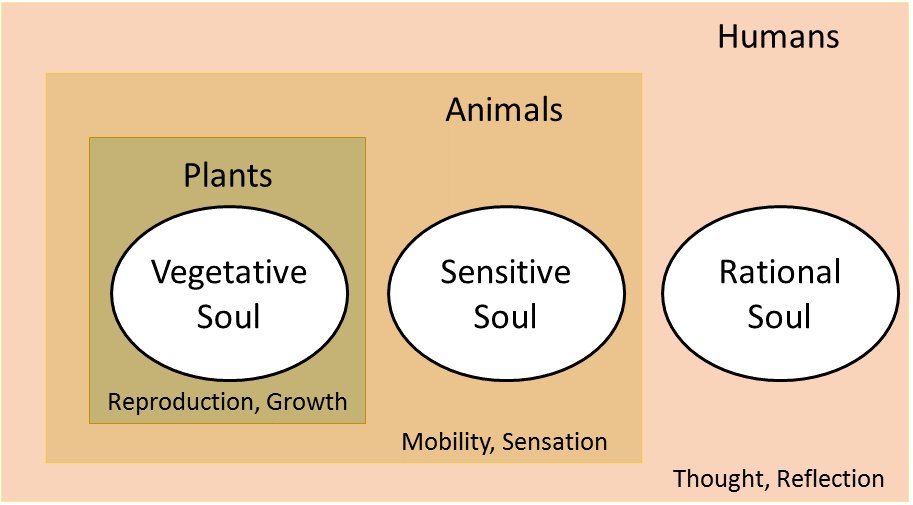
The first classification of organisms is credited to Aristotle, who grouped living things mainly as plants or animals, based largely on whether they could move. He also divided animals with blood from animals without blood, and then split those categories into smaller groups.
That system was influential for more than a thousand years. It worked reasonably well for the large, obvious forms of life people could see directly. But it left out a major problem: life is far more varied than what can be sorted by appearance or movement alone.
As scientific tools improved, especially microscopy, entirely new kinds of organisms came into view. Cells and microorganisms revealed a world that did not fit neatly into the old two-kingdom model.
Why fungi changed the story
One of the biggest surprises in classification is that fungi are more closely related to animals than to plants.
That sounds odd at first because fungi often seem plant-like. They do not move around in the obvious way animals do, and many grow from the ground. For a long time, they were treated as plants. Even Carl Linnaeus, whose naming system helped transform classification in the 1740s, placed fungi within Plantae after briefly classifying them elsewhere.
Later systems struggled with where fungi belonged. Herbert Copeland grouped them in Protoctista for a time, partly to acknowledge that they did not fit comfortably with plants. Eventually, Whittaker gave fungi their own kingdom in a five-kingdom system.
The reason this matters is that classification today aims to reflect evolutionary history, not just superficial resemblance. Two organisms can look similar because they share a lifestyle or habitat, while actually being more distantly related than expected. In the case of fungi, evolutionary history places them nearer to animals than to plants.
Linnaeus and the naming revolution
Before modern classification, names for organisms could be long and unwieldy. Carl Linnaeus introduced binomial nomenclature, the system of giving each species a two-part name. His goal was to make naming shorter, clearer, and more precise.
This was a huge step forward. A standardized naming system made it easier to compare organisms and communicate about them. But Linnaeus was still working before DNA evidence and before the modern understanding of evolution. His system helped organize life, yet the deeper evolutionary structure of life would only become clearer later.
From kingdoms to the three-domain system
As biology advanced, classification became more complicated, not less.
Detailed study of cells and microorganisms led to the recognition of new major groups. Organisms that had once been awkwardly treated as either plant-like or animal-like were reorganized. Ernst Haeckel united some of these microscopic life forms in Protista. Later, prokaryotes were separated into the kingdom Monera, which was eventually split into two groups: Bacteria and Archaea.
This helped lead to the current three-domain system: Bacteria, Archaea, and Eukarya.
A domain is a very broad level of classification, above kingdom. The three-domain system is based on evolutionary relationships. In other words, it tries to group organisms according to deep ancestry rather than outward appearance.
Eukarya includes organisms whose cells have a distinct nucleus and membrane-bound organelles. Animals, plants, fungi, and many protists are eukaryotes. Bacteria and Archaea consist of prokaryotes, whose cells lack a nucleus.
This shift was a major rethink of life’s family tree. Instead of starting from what creatures look like, classification increasingly came to depend on cellular structure and, later, genetic evidence.
DNA changed the map of life
DNA is the molecule that carries most of the genetic instructions used in the growth, development, functioning, and reproduction of all known living organisms and many viruses. Because DNA preserves biological information, it is also a powerful tool for comparing organisms.
When classification is built on DNA evidence, it can reveal relationships that are invisible from anatomy alone. That is one reason the three-domain system became so important: it is grounded in evolutionary relationships rather than simple visual similarity.
This also explains why classification remains a work in progress. As more genomes are sequenced and compared, the family tree of life can be revised. Some familiar groupings turn out not to be natural groupings at all.
For example, the attempt to organize eukaryotes into a small number of kingdoms has been challenged. Protists in particular remain controversial in classification. So even with modern tools, not every branch of the tree is settled.
Metagenomics and the hidden majority
One of the most dramatic changes in our understanding of life came from metagenomics.
Metagenomics is the study of genetic material taken directly from the environment. Instead of growing organisms in the lab first, scientists read DNA from environmental samples. This matters because many organisms, especially microbes, are difficult to grow under laboratory conditions.
By sequencing large numbers of complete genomes and taking this metagenomic view, biologists realized something profound: the majority of living things are bacteria, and all living things share a common origin.
That means the living world we see every day—trees, birds, mushrooms, insects, mammals—is only a fraction of life’s full diversity. For most of Earth’s history, microorganisms dominated the habitable environment. Their metabolism and evolution even changed the planet itself. One striking example is cyanobacteria releasing molecular oxygen as a by-product of photosynthesis, causing global environmental changes and creating new evolutionary challenges.
In that sense, the visible world of large organisms sits on top of a much deeper microbial foundation.
Why microbes forced classification to evolve
The more scientists learned about cells, the clearer it became that all life does not share the same basic cellular layout.
Cells are the structural and functional unit of life. All cells arise from pre-existing cells by division. But there are two primary types: prokaryote cells and eukaryote cells.
Prokaryotes lack a nucleus and other membrane-bound organelles. Bacteria and Archaea belong here. Eukaryotes have a distinct nucleus and organelles such as mitochondria and, in some cases, chloroplasts. Animals, plants, fungi, and many microorganisms are eukaryotes.
These distinctions are not minor technicalities. They represent deep differences in evolutionary history. Once scientists could compare cells and genetic material in detail, older classifications based mainly on form or behavior became too limited.
Viruses: the loose end in life’s filing cabinet
Viruses are one of the biggest troublemakers in classification.
They have genes, evolve by natural selection, and replicate by making multiple copies of themselves through self-assembly. For that reason, they have been described as organisms at the edge of life.
But viruses also lack several features commonly used to define life. They do not have cells. They do not metabolize. They require a host cell to make new products.
That is why whether viruses should be considered alive remains controversial. They have been classed into species based on genetics, but many aspects of that classification are disputed.
This is more than a technical argument. It gets to the heart of what classification is trying to do. Is the goal to sort anything that evolves? Anything with genes? Anything cellular? Anything capable of metabolism? Viruses expose the difficulty of drawing a clean line between the living and the non-living.
Classification is really about ancestry
Modern biological classification is best understood as a map of shared origin. Life on Earth is thought to descend from a universal common ancestor. Over immense spans of time, evolution produced biodiversity at every level of biological organization.
That is why classification keeps being revised. If new evidence shows that a familiar group does not reflect real ancestry, the map must change.
Fungi being closer to animals than plants is one example. The split between Bacteria, Archaea, and Eukarya is another. Metagenomics revealing a bacterial majority is yet another. Each discovery reminds us that life’s family tree is not organized around what feels intuitive to humans. It is organized around descent, divergence, and deep evolutionary history.
The family tree is still unfinished
Even now, some parts of classification remain unsettled. The classification of eukaryotes, especially protists, is still controversial. Viruses remain difficult to place. And as genome sequencing expands, the tree of life may continue to be redrawn.
What has changed most is not just the labels, but the perspective. Classification is no longer mainly about arranging living things by outward similarity. It is about reconstructing the history of life itself.
And the closer we look, the more that history reveals a world dominated by microbes, full of unexpected relatives, and connected by a common origin that links every organism on Earth.
Sources
Based on information from Life.
More like this
Branch out on life’s family tree—download DeepSwipe and discover surprising connections every day.