Full article · 7 min read
How Democracy Works
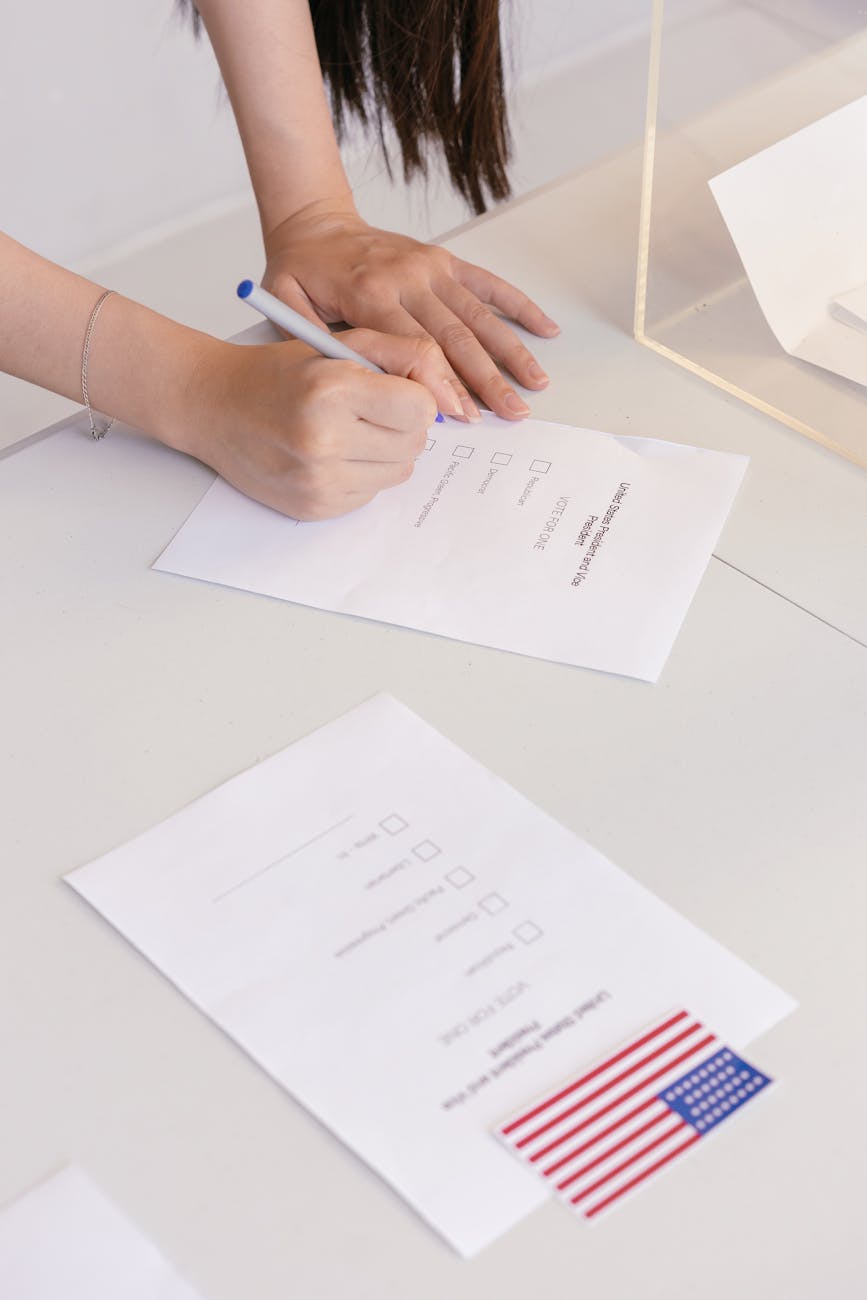
Democracy is often summed up as rule by the people, but that short phrase hides a lot of important detail. At its core, democracy is a system of government in which citizens exercise power by voting and deliberation. Voting is familiar to most people. Deliberation is just as important: it means discussing public issues, weighing options, and thinking through decisions before choosing a course of action.
This combination of participation and discussion is what makes democracy more than just counting ballots. It is a way for citizens to shape public life, either by acting directly on issues themselves or indirectly by choosing representatives to act on their behalf.
Democracy can be direct, indirect, or both
One of the clearest ways to understand democracy is to look at how citizens take part.
In a direct democracy, the citizenry as a whole directly forms a participatory governing body and votes on each issue itself. In this model, people do not simply select leaders and step back. They take part in decision-making directly.
In an indirect democracy, citizens govern through representatives or delegates chosen from among themselves. These representatives are usually selected by election. Once chosen, they meet in governing bodies such as legislatures and make many of the day-to-day political decisions.
Many democracies do not fit neatly into only one category. Some combine both direct and indirect democratic governance. In these mixed systems, citizens elect representatives to handle routine governing, while also keeping certain powers for themselves.
The special tools citizens may keep
When democracies blend direct and indirect participation, people may retain several important political tools.
A referendum, also called a plebiscite, is a direct public vote on a specific issue. Instead of leaving a question entirely to elected officials, the public votes on it directly.
An initiative lets citizens propose a law or policy for a vote. This gives the public a way to place issues on the political agenda rather than waiting for officeholders to act first.
Recall is the right to remove an elected official before that official's term ends. It gives voters a way to respond when they believe a representative should no longer remain in office.
These tools matter because they show that democracy is not always just a once-in-a-while election. In some systems, citizens have ongoing ways to intervene in government decisions.
Why deliberation matters
Democracy is not described only as voting. It is also about deliberation. That means public discussion, argument, and reflection before decisions are made.
This idea is important because political choices affect the whole community. Questions about laws, taxes, services, and rights usually involve competing priorities. Deliberation gives citizens a way to hear arguments, test ideas, and consider consequences.
A democracy therefore depends not only on formal procedures, but also on civic participation. The public must do more than show up at the ballot box. Citizens also need spaces, institutions, and habits that allow issues to be debated.
Majority rule does not mean unlimited power
A common misunderstanding is that democracy simply means whatever the majority wants, the majority gets. In practice, many democracies place limits on majority power.
In a constitutional democracy, the powers of the majority are exercised within the framework of representative democracy, but a constitution limits majority rule. A constitution is a statement of governing principles and philosophy. It sets out the structure of government and can define what government may and may not do.
These limits are often designed to protect universal rights. Examples include freedom of speech and freedom of association. Freedom of speech protects the ability to express opinions and ideas. Freedom of association protects the ability to join with others in groups, movements, and organizations.
This means a constitutional democracy tries to balance two powerful ideas at once: public rule by citizens, and legal protection for basic rights.
How democracy fits among other forms of government
Democracy is one of several major political systems. Modern political systems are often grouped into democracies, totalitarian regimes, and authoritarian regimes, with hybrid regimes sitting between them. This matters because democracy is often easiest to understand when contrasted with systems where power is much more tightly concentrated.
For example, an autocracy is a system in which supreme power is concentrated in the hands of one person. In that kind of system, decisions are not controlled through regularized mechanisms of popular control in the way they are in a democracy.
By contrast, democracy is defined by citizen participation. Rather than one ruler or a small elite alone exercising power, citizens take part through voting and deliberation.
Political thinkers have also classified governments in different ways over time. Plato listed democracy as one of five basic types of government. Aristotle discussed forms of rule in terms of whether authority rested with one person, a few, or the many. In this broad tradition, democracy is associated with rule by the people as a whole.
Democracy and the idea of representation
Indirect democracy depends on representation. This means citizens choose other people to act in public office on their behalf. Those representatives may sit in institutions such as a legislature, one of the common branches of government.
Governments are often organized into branches, especially a legislature, an executive, and a judiciary. The exact distribution of powers differs between governments. In some systems, these branches are more separate. In others, especially parliamentary and semi-presidential systems, they may overlap.
For democracy, this institutional structure matters because elected representatives usually work through these branches. Citizens do not govern only in the abstract. Their political power is translated into laws, administration, and legal decisions through organized institutions.
Democracy and republics
Many democracies are also republics, though the two words are not exactly the same. A republic is a form of government in which the country is treated as a public matter rather than the private property of rulers. Offices of state are elected or appointed rather than inherited.
A simplified way to think about a republic is that the head of state is not a monarch. The key democratic overlap is that the people, or a significant portion of them, have supreme control over the government.
That is why terms such as democratic republic, parliamentary republic, presidential republic, and federal republic are used. They describe different institutional arrangements, while democracy points to the broader principle of citizen power.
Why defining democracy can be tricky
Even though democracy has a clear basic idea, classifying real governments is not always simple. In political science, the boundaries between forms of government can be fluid or ill-defined. Governments may have an official form on paper but operate differently in practice.
There are also many shades of gray. Even liberal democracies may limit rival political activity to some degree. Meanwhile, some governments that are not democratic still try to organize broad support. Because of this, people often debate whether a country is fully democratic, partly democratic, or moving away from democracy.
This helps explain why democracy is both a principle and a practical system. The principle is citizen rule through participation. The practice depends on institutions, elections, rights, and the real distribution of power.
Democracy in the modern world
Democracy is described as the most popular form of government. More than half of the nations in the world were democracies as of 2021, with 97 of 167 counted that way. At the same time, the world has also been described as becoming more authoritarian, with a quarter of the world’s population under democratically backsliding governments.
That reminder is important. Democracy is not just something a country either has forever or never has at all. It can strengthen, weaken, or change over time.
The big picture
So how does democracy work? It works by giving citizens political power through voting and deliberation. It may operate directly, indirectly through representatives, or through a combination of both. It often includes tools such as referendums, initiatives, and recall. And in a constitutional democracy, majority rule is limited by a constitution that protects rights such as freedom of speech and freedom of association.
Democracy is therefore not just a method for picking leaders. It is a whole approach to governing public life: one that depends on participation, discussion, representation, and legal limits on power. Its central promise is simple, even if its institutions are complex: the people are not merely ruled. They are part of the ruling process itself.
Sources
Based on information from Government.
More like this
Vote yes on smarter scrolling — download DeepSwipe and let your daily swipes deliberate on something worth learning.