A World Full of Spirits
Early Romans lived in a landscape crowded with invisible presences. Instead of richly personified gods, they spoke of numina—vague sacred forces attached to places, acts, and things. Every person, place, or object had a genius, a kind of guardian spirit.
Religion was less about belief than about doing the right rituals. Priesthoods were state offices, held by elite men. The College of Pontifices oversaw rites; the pontifex maximus—later an imperial title—headed the system. Flamines tended individual cults; augurs read omens; a “sacred king” preserved monarchical religious roles after kings were abolished.
Adopting the Gods of Others
As Rome met Greeks and others, its gods took on familiar faces. Jupiter merged with Zeus, Venus with Aphrodite. Conquered peoples’ cults were added to the religious mosaic rather than replaced. Traditional Italian deities could share a cityscape with imported gods.
Under the Empire, successful emperors themselves could be deified after death, worshipped in a formal imperial cult. Honouring the emperor’s genius became both religious duty and political loyalty test.

Christians: From Criminals to Favourites
Into this religious marketplace stepped Christianity. At first, imperial policy was hostile. Nonparticipation in public cults marked Christians as subversive; under several emperors, especially Diocletian, they faced serious persecution. Churches were destroyed, scriptures burned, worship banned.
Then, the tide turned. Constantine, emerging victorious from civil wars among the tetrarchs, issued the Edict of Milan in 313, legalising Christian worship. Personally converted, he actively supported the faith and began the Christianisation of the empire and, eventually, of Europe.
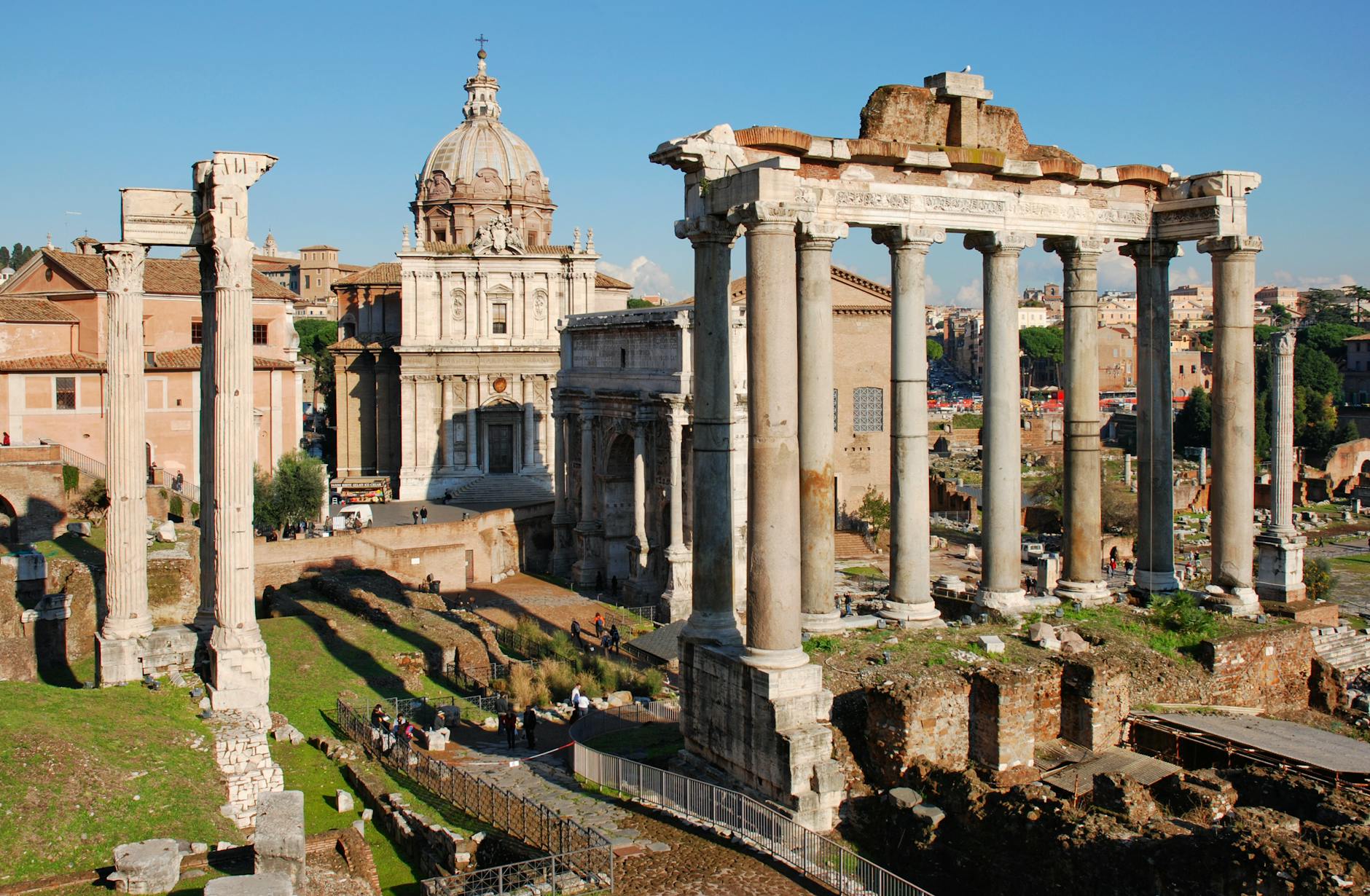
By Theodosius I’s reign in the late 4th century, the transformation was complete: Christianity was not just tolerated but favoured, and in 391 all other religions were formally prohibited. Temples fell quiet; bishops rose in influence.
The Eastern Empire and a Christian Millennium
When the Western Empire collapsed politically in 476, the Eastern, or Byzantine, Empire endured as a Christian state for nearly a thousand more years. From Justinian’s reconquests to struggles with Islamic powers and the trauma of the Crusaders’ sack of Constantinople, its rulers and theologians helped define Christian orthodoxy and practice.
In 1453, Constantine’s city finally fell to Mehmed the Conqueror, but by then Rome’s religious revolution—from many gods and civic cults to a single, universal church—had already reshaped Europe.
The Takeaway
Rome’s religious journey reveals an empire capable of both radical inclusion and ruthless exclusivity: a state that began by absorbing foreign gods and ended by outlawing all but one faith, leaving a spiritual legacy that would outlast its political power.