When the Wheels Came Off
After the age of the “Five Good Emperors”, cracks widened. Commodus’ erratic rule ushered in the Year of the Five Emperors, as Praetorians literally auctioned the empire to the highest bidder. Septimius Severus seized power backed by frontier legions, but his regime’s coinage debasement and mounting military costs sowed seeds of financial crisis.
His successors blended brutality and generosity to keep soldiers loyal. Caracalla, who murdered his brother Geta and massacred Alexandrians, granted Roman citizenship to nearly all free men in 212. It was a turning point: the city-state of Rome had become a vast, more uniform empire—but one increasingly hard to control.
The Third-Century Maelstrom
After Severus Alexander’s murder in 235, the empire spiralled. In just 49 years, 26 emperors claimed the purple. Most were soldier-emperors, elevated by legions and toppled by rivals. Civil war consumed attention while borders frayed.
Hyperinflation raged as coinage was repeatedly debased to fund armies. The Plague of Cyprian ravaged populations. External enemies struck hard: Goths, other “barbarians”, and a resurgent Persia under the Sassanids. Emperor Valerian was captured alive by the Persians—an unthinkable humiliation.
Rome itself fractured. In 260, Postumus carved out the Gallic Empire in Gaul and Britain; Zenobia’s Palmyrene Empire seized Syria, Egypt, and Asia Minor. For a moment, it looked as though the Roman world might shatter permanently.

A Last Rally and a Slow Decline
Claudius Gothicus and Aurelian clawed back survival, defeating Goths and reconquering the Gallic and Palmyrene breakaways. Diocletian imposed radical reforms: the Tetrarchy split rule among four emperors, new capitals sprang up, and taxes were overhauled.
Constantine reunified the empire after years of tetrarchic wars, legalised Christianity with the Edict of Milan, and founded a new capital at Constantinople. Yet the structural problems remained. The Western half, battered by defeats like Adrianople, hollowed finances, and reliance on barbarian federate troops, shrank steadily.
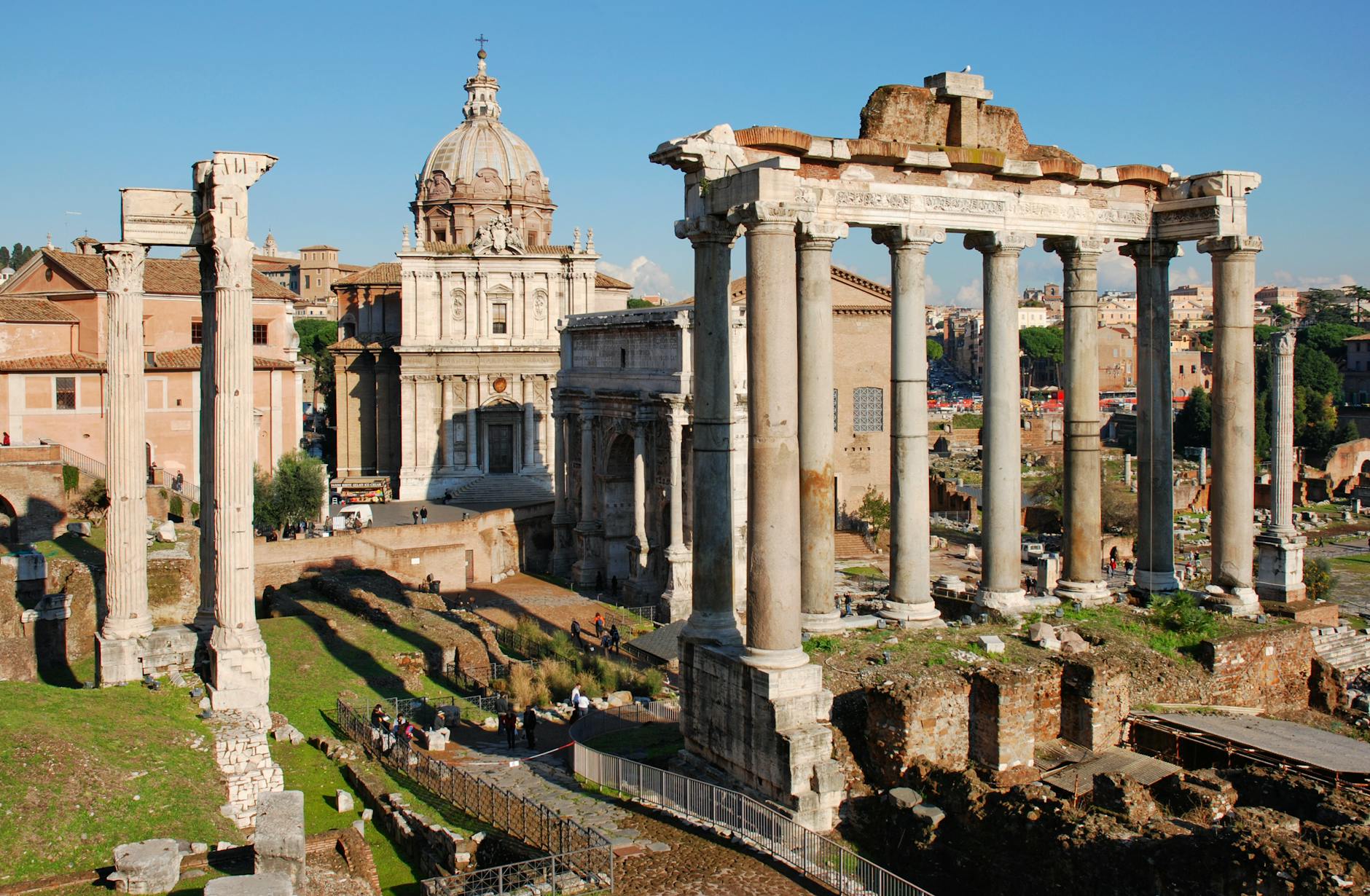
In the 5th century, Visigoths sacked Rome, Vandals seized North Africa, Huns rampaged, and central authority withered. In 476, the Germanic leader Odoacer deposed the boy emperor Romulus Augustulus. Some regard Julius Nepos in Dalmatia as the last Western emperor, but either way, the Western court disappeared.
The Eastern, or Byzantine, Empire persisted for nearly a thousand years—surviving Persian wars, the rise of Islam, the Crusades, and its own civil conflicts until the fall of Constantinople in 1453.
The Takeaway
Rome did not fall in a single cataclysm. It eroded under the combined weight of political instability, economic distortion, disease, external pressure, and the sheer difficulty of holding an overextended empire together.