A City Rises from Marsh and Myth
Imagine a landscape of low hills and swampy valleys beside the Tiber River. Around 1000 BC, scattered huts begin to appear. By the 8th century BC, earth walls and graves on the Esquiline and Palatine Hills hint at a community that has learned to organise and defend itself. This is the embryo of Rome.
Romans later refused to see their beginnings as ordinary. They told of Romulus and Remus—twins of divine father Mars, condemned to death, suckled by a she‑wolf, returning to found a city. They told of Aeneas, a Trojan prince whose wandering fleet, marooned on the Tiber by the burning of their ships, created a “new Troy” named for a woman, Roma. These legends stitched Rome into the grand drama of the Mediterranean, long before its power was real.
Kings, Drains, and the First Expansion
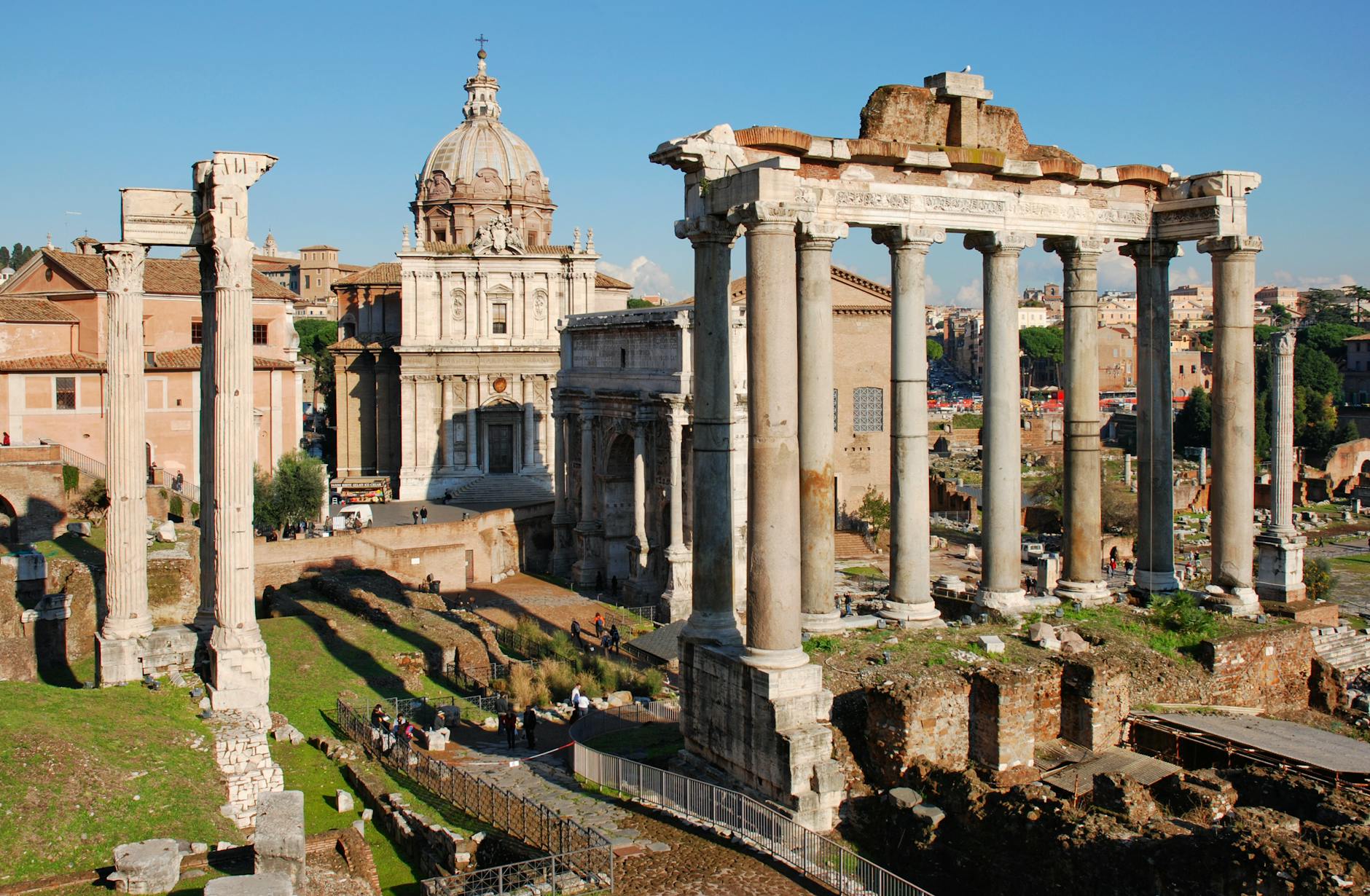
Behind the myths lay stubborn practicalities. By about 650 BC, Romans were draining the valley between the Capitoline and Palatine Hills, creating the space that would become the Forum, their civic heart. In the regal age, kings built temples such as Jupiter Optimus Maximus on the Capitoline and raised the Regia, a palace of rule and ritual.
Rome’s monarchy was remembered as elective, its kings as lawgivers and conquerors. By the end of this era, the city controlled some 780 square kilometres and perhaps 35,000 people, bound together by roads, treaties, and shared Latin culture. Religious festivals and reciprocal rights of marriage and citizenship spread a common identity across the region.

From City-State to Mediterranean Master
The expulsion of the last king and the birth of the Republic did not halt expansion. Rome crushed Latin neighbours, tamed Etruscans, and faced down Greek cities like Tarentum. Colonial foundations cemented control.
Then came Carthage. Over three Punic Wars, Romans fought sea battles for which they’d had to learn shipping from scratch, endured Hannibal’s sixteen-year rampage across Italy, and finally obliterated Carthage itself—its people enslaved, its land seized as the province of Africa.
By the time Rome subdued the Hellenistic powers of Macedon and the Seleucids, it had moved from regional bully to imperial arbiter. Around AD 117 its empire stretched from Britain to Mesopotamia, ruling perhaps a fifth of the world’s population.
The Takeaway
Rome’s ascent was not inevitable. It was built on marsh-draining, road‑laying, relentless campaigning, and a genius for absorbing neighbours’ cultures. From modest huts above the Tiber, it crafted a power that would define “empire” for millennia.