Most people learn early on that matter comes in three familiar forms: solid, liquid, and gas. Chemistry quickly reveals that this picture is only the beginning. A chemical can exist in different phases depending on conditions such as temperature and pressure, and those phases are not just labels—they reflect real changes in structure and behavior.
A phase is a set of states of a chemical system that share similar large-scale structural properties over a range of conditions. That means a phase is not defined only by what a substance is made of, but also by how its particles are arranged and how the material behaves as a whole. Physical properties such as density and refractive index often fall within ranges characteristic of a given phase.
Understanding phases matters because chemistry is all about the properties and behavior of matter. The same substance can behave very differently when its phase changes, and those changes shape everything from laboratory experiments to industrial processes.
Watch the story on DeepSwipe
What a phase really means
In chemistry, matter includes anything that has rest mass and volume and is made up of particles. That matter may be a pure chemical substance or a mixture. No matter what the substance is, its phase describes its bulk structural state under particular conditions.
The key idea is that phase is different from chemical identity. A substance may remain chemically the same while changing phase. What changes is the organization of its particles and the way the system behaves on a larger scale. Chemistry treats this as fundamental because structure and properties are deeply connected.
A phase is also linked to conditions. Temperature and pressure are especially important. Change those conditions enough, and the same material may move from one phase to another. This is called a phase transition.
Phase transitions: when energy changes structure

One of the most important ideas in the chemistry of phases is that energy added to or removed from a system does not always simply change temperature or pressure. During a phase transition, that energy can instead go into rearranging the structure of the system.
That point helps explain why a phase change is so significant. It is not just a substance getting “hotter” or “colder.” It is a reorganization of matter itself. Chemistry pays close attention to this because structure influences physical behavior and can also affect how substances interact.
Energy is central to chemistry in general. Chemical transformations are accompanied by increases or decreases in energy, and phase is also tied to energy. The phase of a substance is determined by its own energy and the energy of its surroundings. In other words, whether something exists as a liquid, solid, gas, or a more exotic phase depends on the balance between particle interactions and available energy.
The familiar phases: solids, liquids, and gases
The best-known phases are solids, liquids, and gases. These are the classic examples because they are encountered constantly in daily life and in introductory science.
Chemistry distinguishes them by their bulk structural properties. A solid has an organized structure that differs from a liquid, while a gas differs from both. These differences show up in measurable properties such as density and refractive index.
Another especially important phase in chemistry is the aqueous phase. This refers to substances dissolved in water, or in aqueous solution. Because so much chemistry happens in water, the aqueous phase is a major practical concept in chemical study.
Plasma and the less familiar side of matter

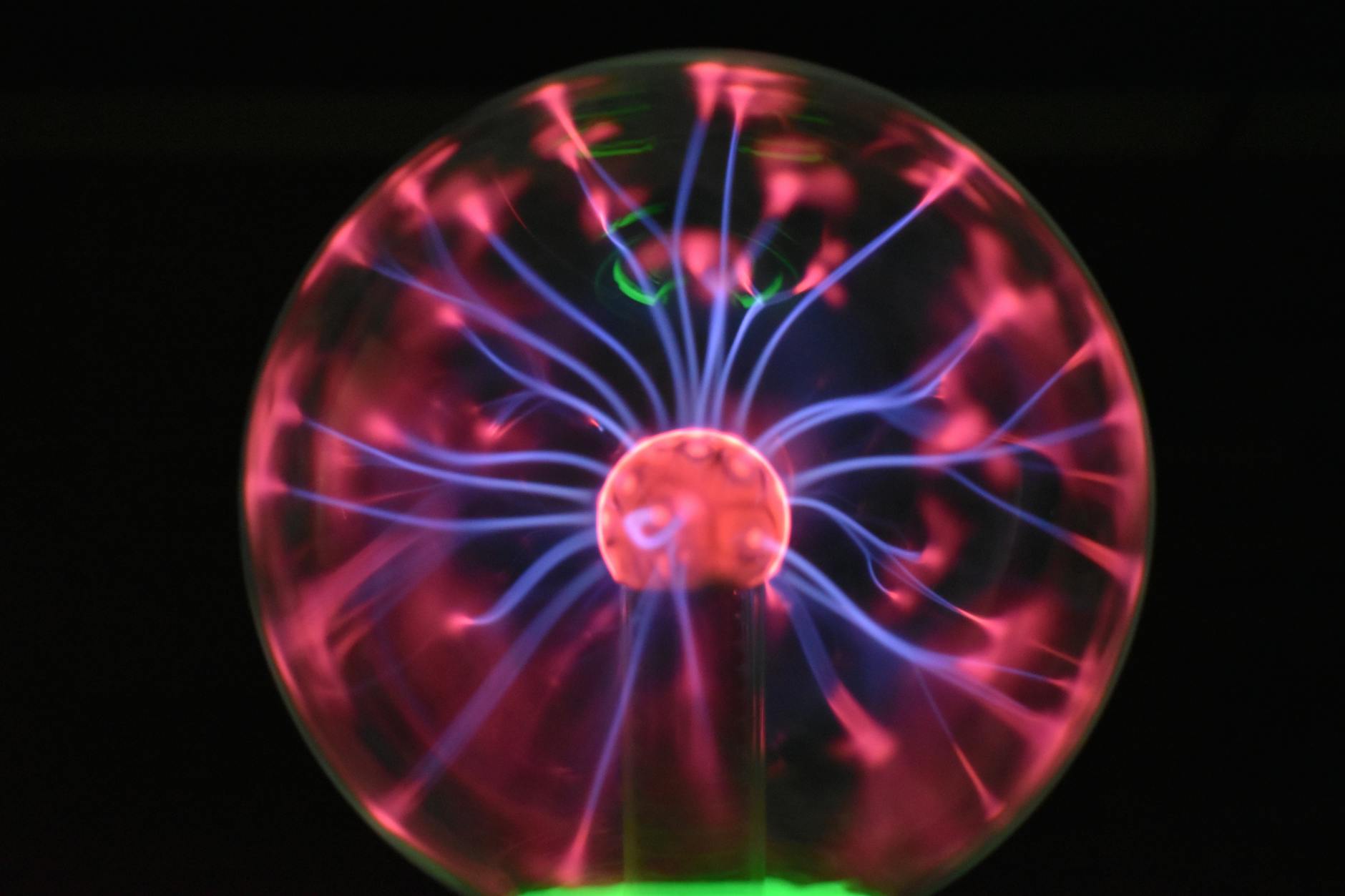
Beyond the classroom trio lies plasma, a phase made of gaseous matter that has been completely ionized, usually through high temperature. “Ionized” means atoms or molecules have lost or gained electrons, producing charged particles called ions. A positively charged ion is a cation, and a negatively charged ion is an anion.
Plasma shows that a phase can differ dramatically from the forms of matter people first learn about. It is still matter, but its particles are electrically charged, giving it behavior unlike an ordinary gas.
Chemistry also recognizes much less familiar phases, including Bose–Einstein condensates and fermionic condensates, as well as paramagnetic and ferromagnetic phases of magnetic materials. These are reminders that the phase concept is broad. It applies not just to ordinary materials in ordinary conditions, but to systems with unusual physical properties as well.
Supercritical matter: when boundaries blur
Not every phase change has a sharp dividing line. Sometimes the distinction between phases can become continuous instead of separated by a clear boundary. In that case, matter is said to be in a supercritical state.
This is one of the most intriguing ideas in phase chemistry because it challenges the neat categories people expect. A supercritical state shows that under some conditions, matter does not fit cleanly into the usual boxes. The phase concept remains useful, but nature becomes more subtle than a simple solid-liquid-gas chart suggests.
One substance, many solid phases
A particularly surprising fact in chemistry is that even a single substance can have multiple solid phases. Many substances do, in fact, exhibit more than one solid phase.
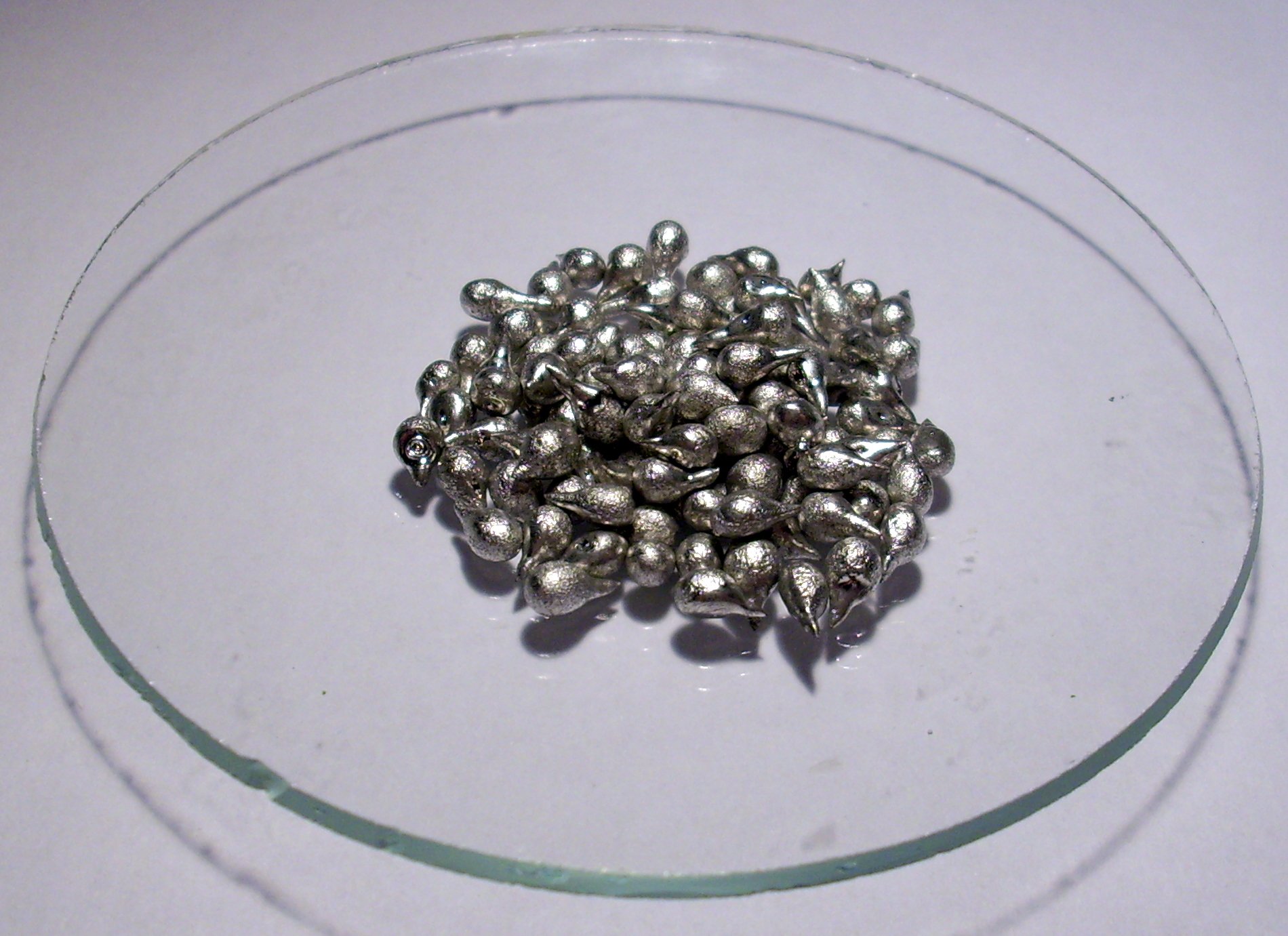
Iron is a classic example. It has three solid phases—alpha, gamma, and delta—and which one appears depends on temperature and pressure. The main difference between these solid phases is the crystal structure, meaning the arrangement of the atoms.
This is a powerful lesson: even when a material remains solid and remains the same element, its internal arrangement can still change. In chemistry, arrangement matters enormously. Atoms bonded or packed differently can produce different physical behavior even without changing the substance’s basic chemical identity.
Crystal structure and why arrangement matters
When chemistry talks about crystal structure, it means the ordered arrangement of atoms in a solid. This arrangement is one of the defining features of many solid phases.
The importance of structure appears across chemistry. Molecules have geometry, often called structure, and for larger or more complex molecules that structure can be crucial for chemical nature. Likewise, in solids, the arrangement of atoms affects the bulk properties of the material.
This is why phase is not a superficial category. It reflects how matter is built on a larger scale. In one solid phase, atoms may be arranged one way; in another, differently. That structural difference is enough to define a distinct phase.
The triple point: three states at once
One of the most memorable ideas in phase chemistry is the triple point. This is the set of conditions at which three states meet.
A triple point is important because it highlights how strongly matter depends on its environment. A shift in conditions can push a substance toward different behavior, and at the triple point, three possibilities coincide. In chemistry, this is especially useful because the triple point is invariant, making it a convenient way to define a set of conditions.
It also serves as a vivid reminder that phases are not fixed identities attached permanently to a substance. They are condition-dependent states. Change the surroundings, and matter may reorganize.
Chemistry’s wider view of phases
Although phases are often introduced with ordinary materials, the concept reaches much further. Chemistry notes that even two-dimensional analogs of phases can be defined, and these have drawn attention because of their relevance to systems in biology.
This broader perspective fits chemistry’s role as a central science. Chemistry sits between physics and biology and helps explain matter and change across many fields. Studying phases is a perfect example of that middle-ground power: it connects particle-level structure, bulk properties, energy, and real-world behavior.
Why phases are so important in chemistry
Phases help chemists describe matter clearly and predict how it will behave. They connect visible properties with invisible structure. They also show how energy shapes matter, since adding or removing energy can trigger reorganization rather than just a simple temperature change.
From the familiar solidity of a crystal to the charged nature of plasma, from multiple solid forms of iron to the unusual supercritical state, phases reveal that matter is far richer than the schoolbook basics suggest. Chemistry’s view of matter is not flat or simplistic. It is dynamic, structural, and deeply dependent on conditions.
So the next time you hear “solid, liquid, gas,” remember: that is only the opening chapter. In chemistry, matter has many ways to exist—and each phase tells a different story about how particles are arranged, how energy is distributed, and how the material will behave.