Dating apps are often sold as a clean, efficient way to meet people. With a few taps, users can sort through huge numbers of potential matches, connect across neighborhoods and social circles, and supposedly let compatibility rise to the top. But online dating has not erased older social patterns. In many cases, it has made them easier to track.
A major 2021 analysis from the University of California argued that online dating in the United States may actually intensify underlying racial bias in dating. That idea matters because apps create a setting where people make rapid decisions again and again. When users are given endless options, those choices can start to reflect social habits, stereotypes, and preferences that already existed offline.
Watch the story on DeepSwipe
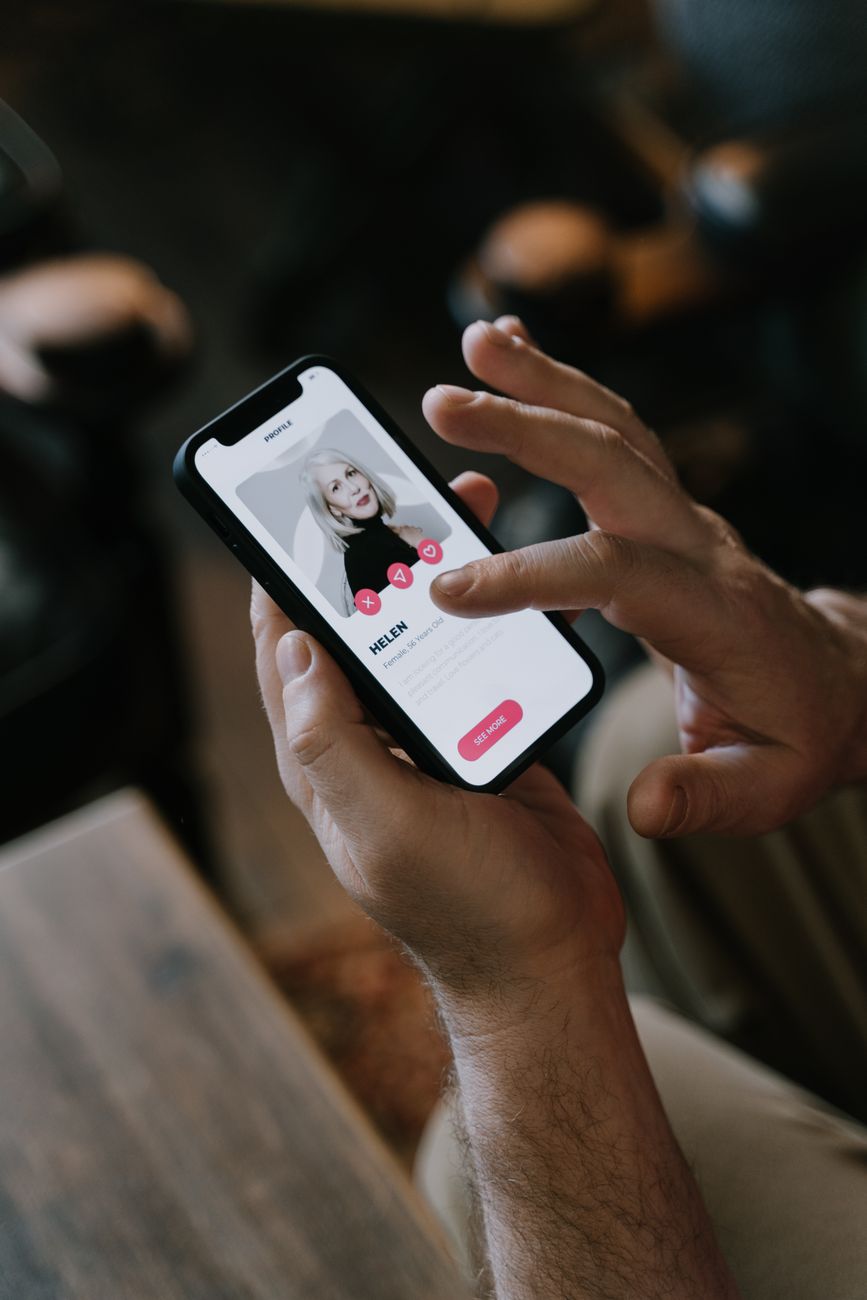
Why online dating can amplify bias
Online dating gives people more access to one another, but more access does not automatically mean more fairness. Digital platforms let users filter, browse, compare, and reject at scale. In that environment, race can become one of the quick signals people use when deciding whom to message, whom to ignore, and whom to imagine as attractive.
The 2021 research argued that the growth of online dating has worsened existing racial biases. That does not mean every user is consciously trying to discriminate. It means that when dating is organized around large pools of strangers and fast judgments, racial patterns can show up very clearly in who gets attention and who does not.
This also connects to a larger point: race is treated by scientists as a social construct rather than a biological reality. In everyday life, though, it still shapes assumptions, expectations, and status. Dating apps do not sit outside society. They reflect it.
The disadvantage was not shared equally
One of the clearest findings is that bias does not fall evenly across all groups. The 2021 study found that Black daters, and especially Black women, were particularly disadvantaged in online dating.
Other research in the same area has found a similar imbalance. In heterosexual online dating, Asian men and Black women often face more obstacles than their opposite-sex counterparts. That is important because it shows that racial bias in dating is not just about race alone. It can also be shaped by gender.
In other words, belonging to the same broad racial category does not guarantee the same experience for men and women. Dating outcomes can split sharply by sex, with one group being favored and another penalized.
When race becomes gendered
Researchers have repeatedly found that race in dating can be “gendered.” That means racial patterns of attraction do not operate the same way for men and women.
In the United States, several studies found that East Asian women were considered the most desired group of women, while East Asian men were less desired. The same racial category could therefore be associated with an advantage for women and a disadvantage for men.
This pattern has been discussed in different ways. Some have linked the higher desirability of Asian women to hypersexualization in popular media. Others have suggested that some people simply report a preference for certain physical features. Whatever explanation a person favors, the pattern itself appears repeatedly in dating research: race and gender interact.
That interaction also appears in messaging behavior. The 2021 study found that heterosexual White men were more likely to be messaged by Black, Asian, and Hispanic women than men of those women’s own race. Yet when looking at men responding to women, White women did not enjoy the same advantage. The researchers attributed this difference to the idea that socioeconomic status is more important to women, while physical attractiveness is more important to men.
Same-race preference and exclusion
Online dating research has also found that same-race preference is more common among White people than among non-White people, regardless of gender or sexual orientation. A same-race preference means people are more inclined to seek partners from their own racial group.
Some studies have looked more closely at who gets excluded. A 2009 study of white men and white women in online dating found that Black and Asian men faced high rates of exclusion from White women. White men were more likely than White women to exclude Black people, but were otherwise more willing to date interracially.
Another striking finding from 2009 was that a subset of White male online daters said they were open to dating women of every race except Black women. That kind of pattern helps explain why broad statements like “everyone has preferences” do not fully capture what is happening. Preferences are not floating in a vacuum. They often follow recognizable social lines.
Black women and Asian men: a recurring pattern
Across studies, Black women and Asian men appear again and again as groups facing particular barriers in heterosexual online dating.
Research cited here found Black women and Asian men among the least desired demographics in heterosexual online dating, while their opposite-gender counterparts were more likely to date interracially. One study also noted that the dating disadvantage for Asian men persisted even when they had advanced education and significantly higher incomes.
That matters because it suggests these outcomes cannot be explained only by class or achievement. Even when education and income rise, racialized dating patterns may remain.
Black women also faced a distinct burden. Research found that White men were especially likely to exclude Black women compared with women of other races. The disadvantage is not just lower popularity in a vague sense; it appears in concrete decisions about who is contacted, who is responded to, and who is filtered out.
More exposure, more openness?
Not all findings point in the same direction. Some research suggests that racial preferences can weaken under certain conditions.
High levels of prior exposure to a variety of racial groups are associated with decreased racial preferences in dating. Put simply, people who grow up or live around more diversity may become more open to interracial relationships.
Geography also matters. People living in the southeastern United States were found to be less likely to have been in an interracial relationship and less likely to expect to interracially date in the future. Religious background showed patterns as well: those who engaged in regular religious customs at age 12 were less likely to interracially date, while people from a Jewish background were significantly more likely to enter interracial relationships than those from a Protestant background.
These findings suggest that app behavior is not created by the apps alone. It is shaped by region, upbringing, social exposure, and group norms.
Why the “just a preference” debate is so controversial
Online dating services have generated controversy over profile statements such as “no Asians” or “not attracted to Asians.” The debate centers on whether such statements are merely expressions of personal preference or whether they are racist.
That argument continues because dating sits at the intersection of private desire and public inequality. People often experience attraction as deeply personal. But when millions of personal choices produce the same exclusions again and again, those choices begin to look less individual and more structural.
A 2015 study on sexual racism among gay and bisexual men found a strong correlation between racist attitudes and stated racial preferences. Philosopher Amia Srinivasan also argued that racial bias can shape sexual desire. Together, these ideas challenge the notion that attraction is always untouched by culture.
The modern app, the old pattern
Dating apps feel new. Swiping, matching, and algorithmic sorting seem far removed from older forms of courtship. But the evidence shows that new technology does not automatically undo older bias. Sometimes it gives bias a cleaner interface and a faster rhythm.
That is what makes online dating so revealing. It does not just help people meet. It also exposes how race, gender, and social assumptions continue to shape who is seen as desirable, who is ignored, and who must work harder to be noticed.
In a world of endless profiles, more choice can sometimes mean more sorting. And more sorting can mean old inequalities showing up in a very modern form.