If you ask a simple question like “How long is a day on Saturn?”, the answer turns out to be surprisingly slippery. Unlike Earth, Saturn does not offer a solid surface with fixed landmarks to track. It is a gas giant made mostly of hydrogen and helium, with no definite surface, and different parts of the planet can rotate at different rates. That makes Saturn’s “day” one of the Solar System’s most intriguing timing problems.
The challenge is not just that Saturn spins quickly. It is also flattened by that rotation, bulging at the equator and squashed at the poles. Its equatorial radius is more than 10% longer than its polar radius, a sign of how strongly rotation shapes the planet. Saturn is also visually deceptive: from far away it can look calm and pale yellow, yet its atmosphere hosts powerful winds and shifting cloud systems that complicate attempts to pin down a single rotation period.
Watch the story on DeepSwipe
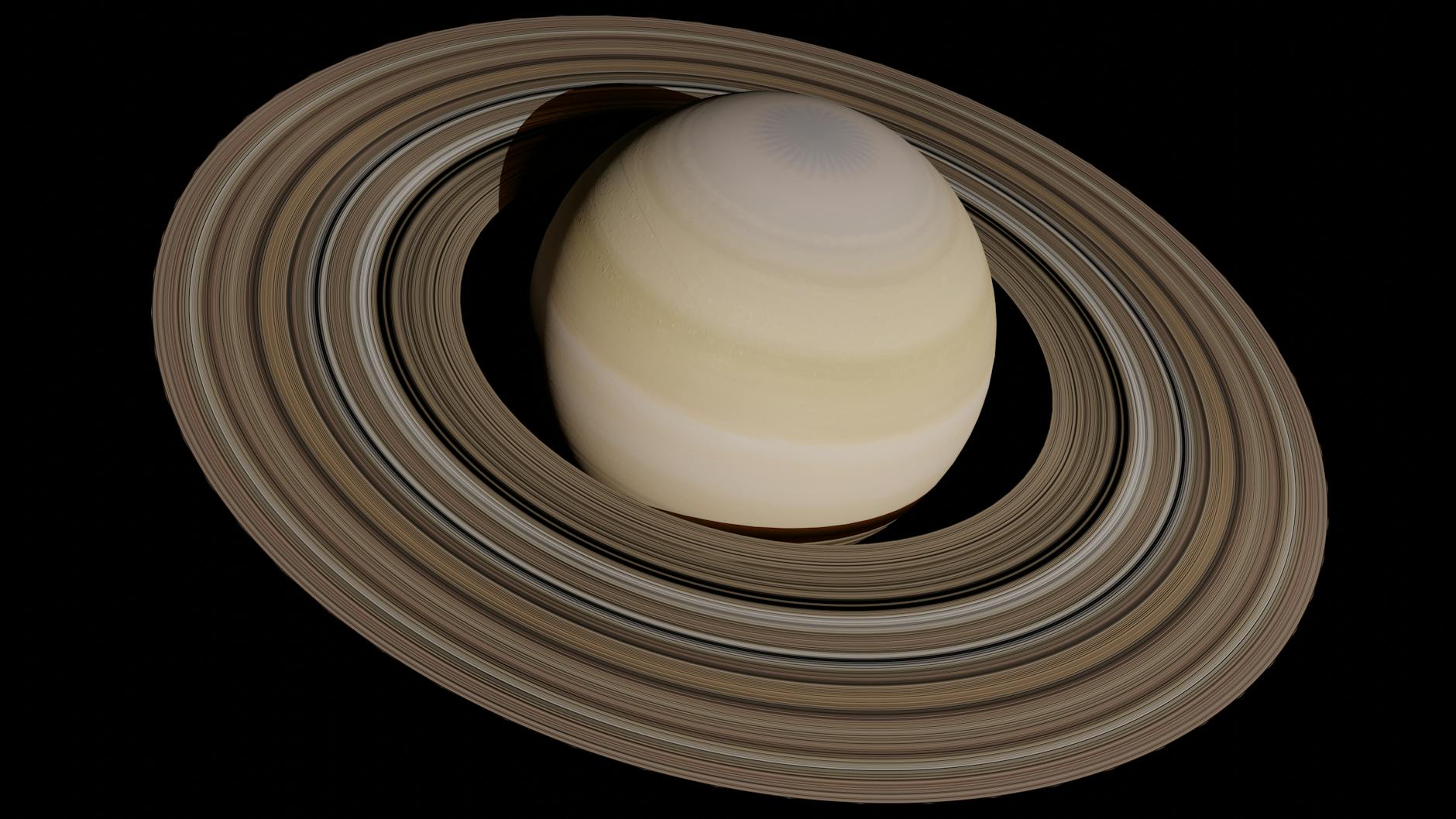
Why Saturn doesn’t have one obvious day length
On a rocky planet, a day is easy to imagine: the ground turns once, and that is that. Saturn is different. Its visible features rotate at different rates depending on latitude, meaning the clouds you see are not all locked to a single planetary clock.
Astronomers therefore use multiple systems to describe Saturn’s rotation. System I applies to the Equatorial Zone, the South Equatorial Belt, and the North Equatorial Belt, and gives a rotation period of 10 hours 14 minutes 00 seconds. System II is used for most other latitudes outside the polar regions and has a rotation period of 10 hours 38 minutes 25.4 seconds. The polar regions are considered to rotate similarly to System I.
That alone shows the problem: Saturn’s upper atmosphere does not behave like a single rigid shell. Different bands move differently, much as weather systems on Earth can move independently of the ground below them—except on Saturn, those differences are built into the way the atmosphere itself circulates.
The “radio clock” that seemed promising
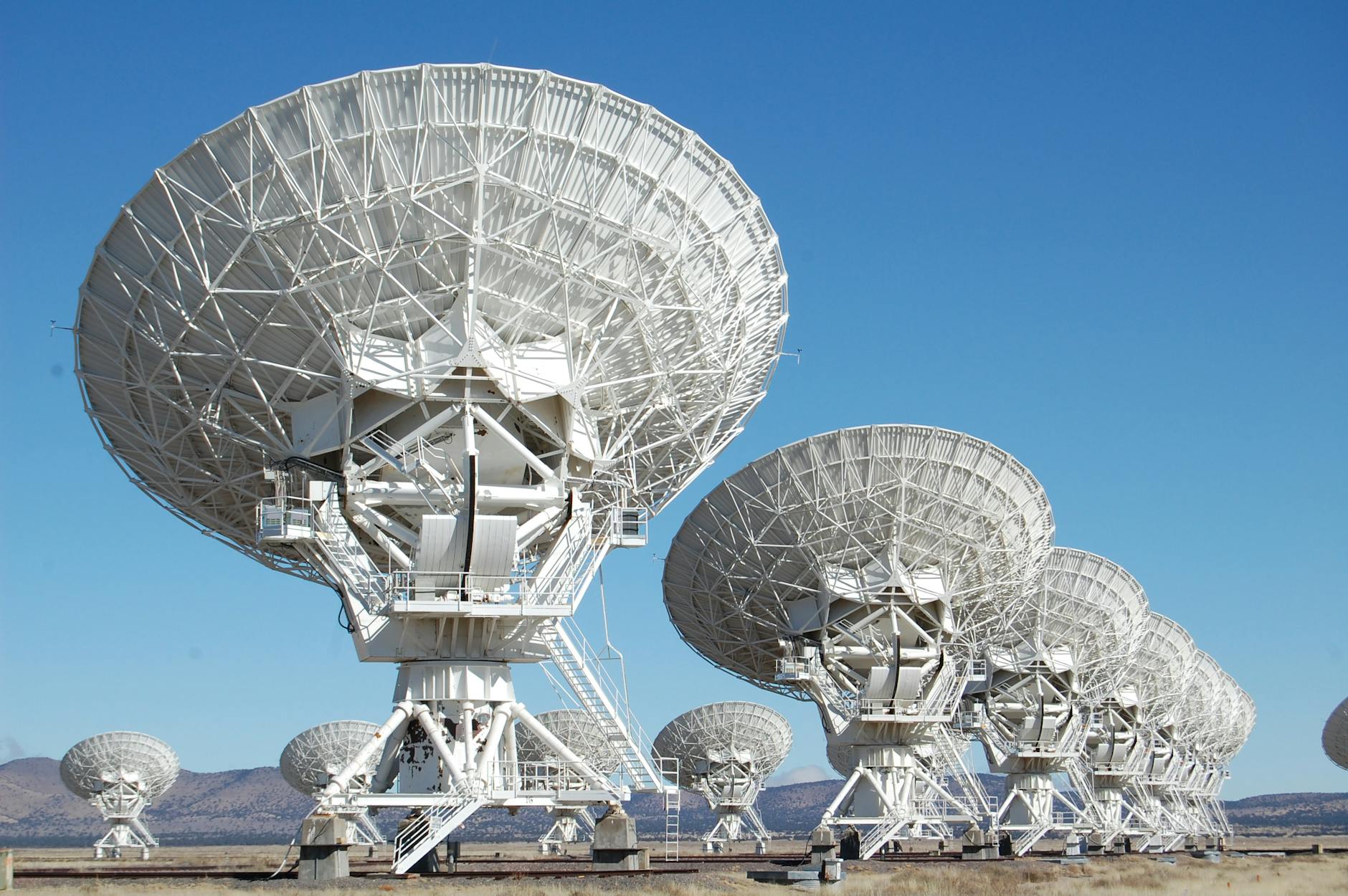
Because clouds drift and vary by latitude, astronomers looked for something deeper and more stable. That led to System III, which is meant to represent Saturn’s internal rotation rate.
System III was based on radio emissions detected by Voyager 1 and Voyager 2. These radio signals were associated with Saturn’s magnetic field and gave a rotation period of 10 hours 39 minutes 22.4 seconds. For a time, this seemed like the best answer. It appeared to offer a clock tied not just to the clouds, but to the planet’s interior.
This method made sense because Saturn has an intrinsic magnetic field, generated by currents in its liquid metallic-hydrogen layer. Metallic hydrogen is hydrogen under such extreme pressure and density that it behaves in ways associated with metals, including conducting electricity. That electrical activity is thought to create Saturn’s magnetic field.
But the apparent solution did not hold.
When the clock started drifting

As the Cassini spacecraft approached Saturn in 2004, it found that the radio rotation period had changed appreciably. Instead of matching the earlier Voyager-era value, the period was approximately 10 hours 45 minutes 45 seconds, with an uncertainty of 36 seconds.
That was a major surprise. A true interior rotation rate should not drift around so noticeably. If the radio pulse timing changed, then the radio signal was not acting like a perfect stopwatch for Saturn’s deep interior after all.
This is why Saturn’s day became such a famous mystery. The old assumption—that radio emissions cleanly track the planet’s internal spin—was broken. The “clock” did not keep steady time.
Enceladus may be interfering with the timing
One of the most interesting clues came in March 2007, when researchers found that the variation in Saturn’s radio emissions did not match the planet’s rotation rate. A possible reason lies far from Saturn’s cloud tops: its moon Enceladus.
Enceladus is famous for erupting geysers that send water vapor into space. That water vapor becomes charged, forming plasma, which is a gas of electrically charged particles. Because Saturn’s magnetic field interacts with charged particles, this material can affect the magnetic environment around the planet.
The proposed idea is that plasma from Enceladus creates drag on Saturn’s magnetic field, slightly slowing the apparent radio timing relative to the planet’s actual rotation. In other words, the radio signal may be telling us something about the behavior of Saturn’s magnetosphere—the region dominated by its magnetic field—rather than giving a pure readout of the deep interior.
That makes the mystery more understandable. The radio clock was not necessarily “wrong,” but it may have been influenced by activity in the Saturn system itself.
Looking to the rings for answers
If clouds are unreliable and radio emissions can drift, where else can astronomers look? One clever answer is Saturn’s rings.
Saturn’s rings are composed mainly of water ice, with smaller amounts of rocky debris and dust. They are incredibly broad yet astonishingly thin on average, and they do not just sit there passively. Waves and patterns in the rings can be linked to motions and vibrations associated with Saturn itself.
Studies of Saturn’s C Ring have yielded a rotation period of 10 hours 33 minutes 38 seconds, with an uncertainty of a little over a minute in either direction. This is one of the most intriguing estimates because it comes from analyzing how the planet influences its rings, rather than relying on cloud motion or a variable radio signal.
Ring studies effectively use the rings as a kind of detector. Subtle disturbances in the ring material can reveal how Saturn is vibrating internally. That does not mean the mystery is fully solved, but it provides a valuable clue to the deep rotation that has remained difficult to measure directly.
Why Saturn is especially hard to measure
Several physical features of Saturn help explain why this problem is so stubborn.
First, Saturn is mostly hydrogen and helium and lacks a definite surface. There is no solid crust to track. Second, its atmosphere is dynamic, with winds that can reach 1,800 kilometers per hour. Third, the visible atmosphere is banded and rotates differently at different latitudes. And fourth, the magnetic signal once hoped to provide a clean interior clock appears to be influenced by conditions in the surrounding magnetosphere.
Even Saturn’s interior is layered in complicated ways. Models suggest a rocky core, a deep layer of metallic hydrogen, an intermediate layer of liquid hydrogen and liquid helium, and an outer layer of gas. Measurements of the rings even suggest that the core may be diffuse rather than sharply defined. When a planet’s interior is so unlike a solid spinning ball, it is no surprise that defining one exact day becomes difficult.
Fast spin, fuzzy answer
Despite the uncertainty, Saturn clearly rotates rapidly. It is flattened into an oblate shape by that spin, and the hexagonal wave pattern around its north polar vortex rotates with a period of 10 hours 39 minutes 24 seconds, the same period as the planet’s radio emissions was once assumed to indicate. Yet even striking patterns like this do not fully settle the question of the deep interior.
Scientists have also compiled measurements from Cassini, Voyager, and Pioneer to estimate a whole-planet rotation rate of 10 hours 32 minutes 35 seconds. That is another contender in the ongoing effort to define Saturn’s day.
So what is the answer? Saturn’s day is somewhere around ten and a half hours long, but the exact value depends on what, exactly, you mean by “Saturn.” The equatorial clouds, the mid-latitude atmosphere, the radio-emitting magnetic environment, and the deep interior do not all offer the same number.
A mystery that makes Saturn more fascinating
This uncertainty is not a failure of astronomy. It is a sign of how complex giant planets really are. Saturn may seem serene through a telescope, glowing as a bright yellowish point of light, but underneath that calm appearance is a world of shifting bands, intense winds, metallic hydrogen, magnetic fields, ring waves, and moon-driven interference.
That is what makes Saturn’s elusive day so compelling. A basic question—how long is one rotation?—opens the door to nearly everything interesting about the planet: its atmosphere, interior, magnetosphere, rings, and even the influence of Enceladus.
For a planet best known for its rings, one of its greatest wonders may be its inability to keep a simple clock.