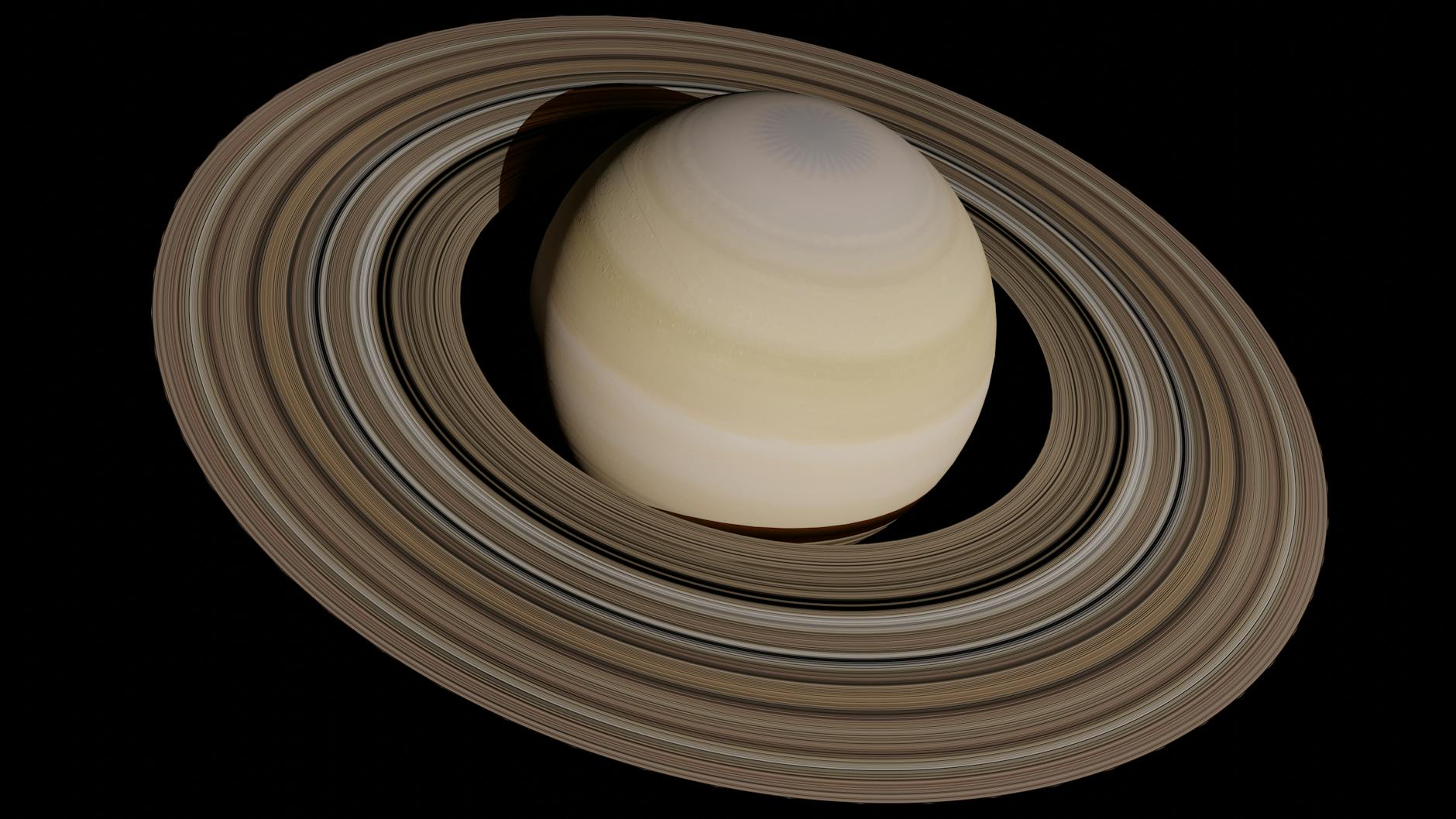
Saturn is famous for its bright rings, but some of its strangest weather may be happening far below the clouds, in a realm no telescope can directly see. Deep inside this giant planet, scientists think helium may separate from hydrogen and fall inward like rain. That hidden downpour could help explain one of Saturn’s biggest mysteries: why it gives off far more energy than it receives from the Sun.
And the story may get even wilder. Alongside this helium rain, scientists have also suggested that diamonds could form and fall within Saturn’s deep interior.
Watch the story on DeepSwipe
Why Saturn’s interior is so unusual
Saturn is a gas giant made predominantly of hydrogen and helium. It does not have a definite surface like Earth. Instead, as you move downward, the temperature, pressure, and density steadily rise. In the deeper layers, hydrogen behaves in unusual ways. Rather than remaining a normal gas, it can become a liquid, and deeper still it can become metallic hydrogen.
Metallic hydrogen is hydrogen under such extreme pressure that it behaves somewhat like a metal. This deep layer is thought to play a major role in Saturn’s magnetic field. Above and around it are layers of liquid hydrogen and helium, gradually transitioning upward into gas.
At the center, Saturn is thought to have a rocky core. Measurements and models suggest this core is surrounded by a thick liquid metallic hydrogen layer and then a liquid layer of helium-saturated molecular hydrogen. The outermost layer, about 1,000 km thick, consists of gas.
All of this matters because Saturn’s interior is not static. It is a place where materials can separate, sink, release heat, and possibly even form entirely new structures.
The mystery of Saturn’s extra heat
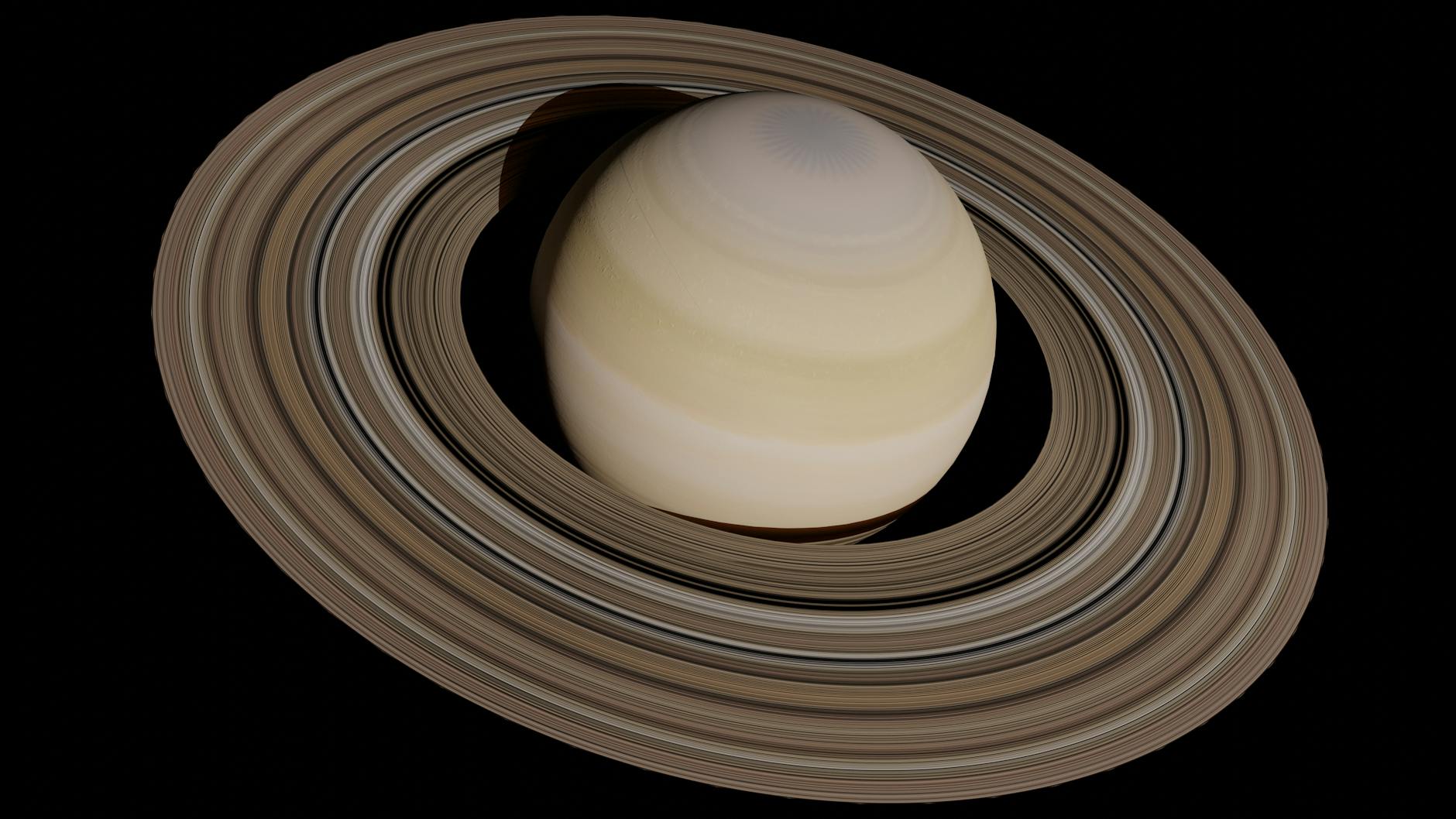
Saturn has a hot interior, with temperatures at the core reaching about 11,700 °C. Even more striking, the planet radiates 2.5 times more energy into space than it receives from the Sun.
That means Saturn has an internal power source.
A process called slow gravitational compression can generate heat in giant planets, but this alone may not fully explain Saturn’s heat output. That is where helium rain comes in as a major idea.
What is helium rain?
Helium rain is the name given to a process in which droplets of helium separate out deep inside Saturn and descend through lower-density hydrogen.
To picture it simply, imagine a mixture no longer staying perfectly mixed. In Saturn’s deep interior, helium may begin to separate from the surrounding hydrogen. Once that happens, the helium forms droplets and starts to sink downward.
As those droplets fall, they release heat through friction. This helps warm Saturn from the inside and may explain why the planet shines with more energy than sunlight alone would provide.
This process also has another consequence: it may leave Saturn’s outer layers depleted of helium. In other words, some of the helium that was once mixed higher up may have gradually drained deeper into the planet.
A helium shell around the core
The story may not end with falling droplets. Scientists have suggested that the descending helium could accumulate into a helium shell surrounding Saturn’s core.
That would mean Saturn’s interior is not just layered by pressure and temperature, but also by a kind of long-term planetary sorting process. Over immense spans of time, heavier helium may be settling downward and reshaping the deep interior.
This idea helps make Saturn feel less like a simple ball of gas and more like an active world with deep internal weather and structure.
Could it also rain diamonds?
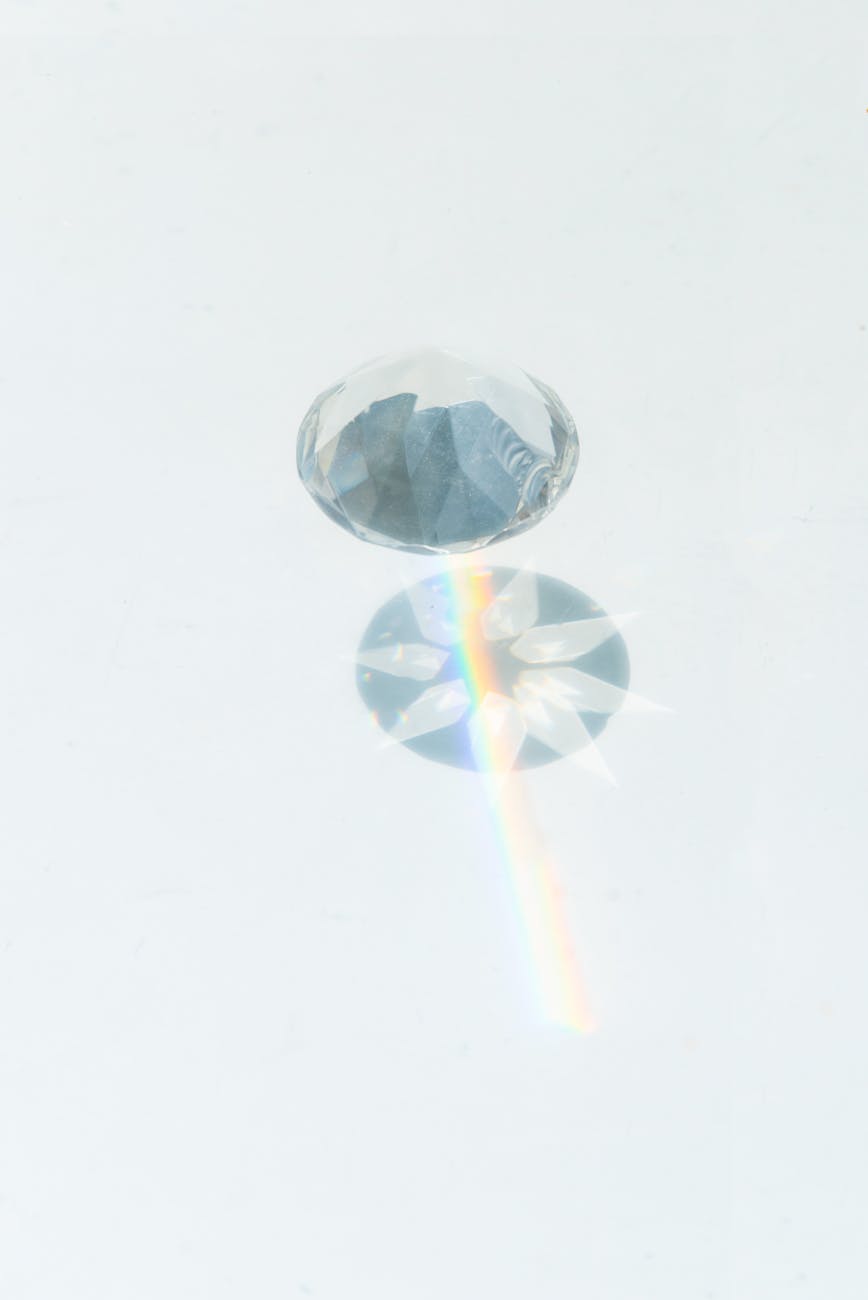
Scientists have also suggested that rainfalls of diamonds may occur within Saturn. The same possibility has been suggested for Jupiter, Uranus, and Neptune.
Diamond rain sounds like science fiction, but in this context it refers to diamonds forming under extreme pressure and heat inside a giant planet and then falling deeper downward. The article does not describe the full chemistry in detail, but the basic idea is that Saturn’s interior conditions may be intense enough for this exotic process to happen.
If so, Saturn’s hidden weather would include not just helium droplets sinking through hydrogen, but also solid diamond material falling through the depths.
Saturn’s atmosphere versus its deep interior
At the top of Saturn, the planet looks pale yellow because of ammonia crystals in its upper atmosphere. Its visible atmosphere is often described as bland compared with Jupiter’s, though it can still produce long-lived features and giant storms. Winds can reach 1,800 km/h, making Saturn one of the windiest planets in the Solar System.
The upper atmosphere contains mostly molecular hydrogen, along with helium, and trace amounts of ammonia, acetylene, ethane, propane, phosphine, and methane. Its clouds change with depth. Upper clouds are made of ammonia ice, while lower layers may contain ammonium hydrosulfide or water.
But the weather we see from the outside is only part of Saturn’s story. Beneath those cloud bands lies an entirely different world of liquid layers, metallic hydrogen, rising temperatures, and possible helium and diamond rain.
A planet built for extremes
Saturn is the second-largest planet in the Solar System after Jupiter. It has an average radius about nine times that of Earth and is more than 95 times as massive, yet it has a remarkably low average density. In fact, Saturn is the only planet in the Solar System with a density lower than water.
Its rapid rotation also gives it a noticeably flattened shape. Saturn bulges at the equator and is flattened at the poles, making it an oblate spheroid.
These facts help underline just how different Saturn is from rocky planets. It is a world where familiar categories start to break down. There is no solid surface to stand on, the deepest hydrogen behaves like a metal, and the heat budget may be driven in part by helium literally raining downward.
Why this hidden rain matters
Helium rain is more than a fun planetary oddity. It may be one of the key processes shaping Saturn’s evolution. If it truly helps generate internal heat, then it affects how Saturn cools, glows, and changes over time.
It also helps explain why Saturn cannot be understood just by looking at its clouds or rings. Some of the most important action is happening deep below the visible atmosphere, in regions where pressure transforms matter into unfamiliar states.
Even Saturn’s beauty on the outside may owe something to this hidden interior engine. The planet’s glow is not just borrowed sunlight. Part of it may come from the slow settling of helium in the darkness below.
Saturn: more than rings
Saturn’s rings make it iconic, and its moons add even more intrigue, from giant Titan to icy Enceladus. But the planet itself is a marvel of hidden physics. It is a giant ball of hydrogen and helium with a hot core, a metallic interior, enormous winds, and possibly a deep weather system made of falling helium and even diamonds.
That makes Saturn one of the most dramatic worlds in the Solar System—not only for what we can see, but for what may be happening far beneath the clouds.