Many people treat childbirth like a finish line. The baby is born, the delivery is over, and the crisis must be past. But the postpartum period tells a very different story. This stretch of time begins immediately after birth, and it is one of the most important phases for both mother and baby.
The World Health Organization describes the postnatal period as the most critical and yet the most neglected phase in the lives of mothers and babies. That is a striking combination: the time when careful support matters most is also the time that often gets overlooked.
A big reason is perception. People often imagine postpartum recovery as a few tired days in the hospital or a few weeks of rest at home. In reality, postpartum recovery unfolds in stages, and some of the biggest health concerns do not end when labor ends.
What the postpartum period actually is
The postpartum, or postnatal, period begins after childbirth and is typically considered to last six to eight weeks. But that headline number does not tell the whole story. Recovery is often described in three phases:
- the acute phase, lasting about 6 to 12 hours after birth
- the subacute phase, lasting about 2 to 6 weeks
- the delayed phase, which can last up to 6 months
That third phase is the eye-opener. It means postpartum is not just a short recovery window. For some systems in the body, especially the genitourinary system, recovery can take much longer, and some problems may linger or fail to fully resolve.
In medical writing, postpartum days are sometimes abbreviated with a P followed by a number. For example, day P5 means the fifth day after birth.
The first hours: the acute postpartum phase

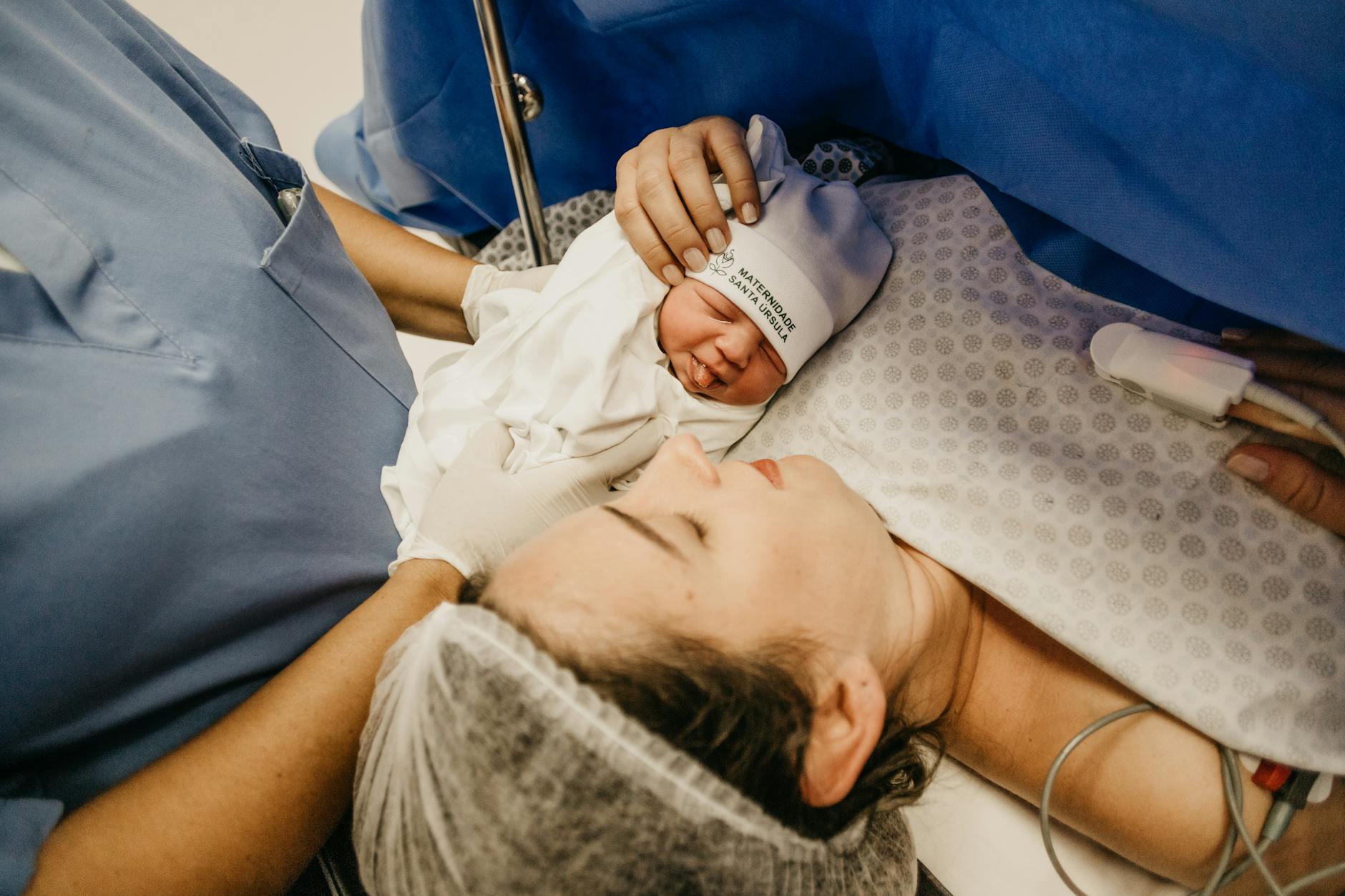
The first 6 to 12 hours after childbirth are considered the acute phase. During this time, mothers are typically monitored closely by nurses or midwives because serious complications can arise quickly.
The greatest immediate risk is postpartum bleeding. After delivery, the place where the placenta was attached to the uterine wall bleeds. To limit blood loss, the uterus must contract firmly. Healthcare workers often check the fundus, which is the top of the uterus, by feeling the abdomen. A firm uterus is a reassuring sign. If needed, uterine massage is commonly used to help the uterus contract.
If there was tearing at the vaginal opening or an episiotomy, stitches may be needed. An episiotomy is a cut made at the opening of the vagina during birth. It used to be routine, but research has shown that routinely doing episiotomy in a normal delivery without complications or instruments does not reduce perineal or vaginal trauma. Selective use leads to less perineal trauma.
This is also the period when the newborn is first assessed. Within about 10 seconds after birth, the infant takes a first breath. A caregiver evaluates the baby using the Apgar scale, which scores five signs summarized by the acronym Appearance, Pulse, Grimace, Activity, and Respiration.
An important modern shift in care is early skin-to-skin contact, sometimes called kangaroo care. This means placing the naked baby on the mother’s chest soon after birth. Major infant health organizations endorse this practice. It supports bonding, helps breastfeeding get started, and the World Health Organization encourages skin-to-skin contact during the first 24 hours to help regulate the baby’s temperature.
Why the danger does not end after delivery

One of the most important facts about postpartum health is that the risk does not disappear once birth is over. Most maternal and newborn deaths occur during the postnatal period.
Even beyond life-threatening emergencies, health problems are extremely common. During the subacute postpartum period, 87% to 94% of women report at least one health problem. Long-term problems that persist even after the delayed postpartum period are reported by 31% of women.
Those numbers make one point very clear: postpartum recovery is not a simple bounce-back period. It is a medically significant phase with real physical and psychological consequences.
The subacute phase: weeks of major adjustment

The subacute postpartum period begins after the acute phase and lasts roughly two to six weeks. This is often when a mother is back home and expected to be recovering, caring for a newborn, and adjusting to a major life change all at once.
Physically, several important changes are still underway.
Blood clot risk and circulation changes
In the first few days after childbirth, the risk of deep vein thrombosis, or DVT, is relatively high. A DVT is a blood clot that forms in a deep vein, often in the leg. Pregnancy increases hypercoagulability, which means the blood is more likely to clot, and this tendency is strongest in the postpartum period.
The risk can be especially important after a caesarean section, particularly if mobility is reduced. Depending on risk factors such as obesity, prolonged immobility, recent C-section, or a family history of thrombotic episodes, hospitals may use anticoagulants or physical methods such as compression.
Ongoing healing of the reproductive tract
The increased blood flow and swelling in the vagina gradually resolve over about three weeks. The cervix also gradually narrows and lengthens over a period of weeks.
At the same time, postpartum infections remain a serious concern. If untreated, they can lead to sepsis, a dangerous body-wide response to infection that can be fatal.
Lochia: normal postpartum discharge
After childbirth, the uterus sheds blood and tissue in a discharge called lochia. This discharge gradually decreases over time and changes color from bright red to brownish to yellow, usually stopping around five or six weeks.
During this period, women are advised to use products such as maternity pads or sanitary napkins. Tampons and menstrual cups are contraindicated because they may introduce bacteria and increase the risk of infection. If lochia increases between 7 and 14 days postpartum, it may be a sign of delayed postpartum hemorrhage.
Constipation, hemorrhoids, and afterpains
Hemorrhoids and constipation are common after birth, and stool softeners are routinely given. If stitches were needed for a tear or episiotomy, sitting can be painful, and a donut pillow may reduce discomfort.
Many women also feel uterine contractions in the days after delivery. These are called afterpains. They are often compared to menstrual cramps and are more common during breastfeeding because breastfeeding triggers the release of oxytocin. These contractions help compress blood vessels in the uterus to prevent bleeding.
Pelvic floor recovery can be slow
One of the most important long-tail effects of childbirth involves the pelvic floor. The pelvic floor is the group of muscles and tissues that support the bladder, bowel, and reproductive organs.
Postpartum urinary incontinence affects about 33% of women. Women who deliver vaginally are about twice as likely to have urinary incontinence as women who give birth by cesarean. Incontinence in the postpartum period also raises the risk of long-term incontinence.
Kegel exercises are recommended to strengthen the pelvic floor muscles and help control urinary incontinence.
In the delayed postpartum period, recovery of muscles and connective tissue continues. Problems such as urinary incontinence, fecal incontinence, painful intercourse, and pelvic prolapse can improve very slowly, and in some cases may not fully resolve. Other possible conditions after childbirth include uterine prolapse, cystocele, and rectocele.
This is why it is misleading to think of birth as a single event with a short recovery. Childbirth can reshape health for months.
Feeding a newborn while recovering
Around two to four days after birth, breastmilk will generally come in. This can be a major transition point, and breastfeeding difficulties may arise during this period.
Newborn life also has a direct effect on maternal recovery. Sleep is often heavily disrupted because night waking is normal in newborns, and babies usually need feeding every two to three hours, including at night. Support from a lactation consultant, health visitor, postnatal doula, monthly nurse, or kraamverzorgster may help during this period.
The psychological side of postpartum recovery
Postpartum health is not only physical. Psychological disorders may emerge in the subacute postpartum period, including postpartum depression, posttraumatic stress disorder, and in rare cases postpartum psychosis.
The baby blues are very common, affecting approximately 70% to 80% of postpartum women for a few days. Clinical depression is less common but still significant, affecting between 10% and 20%. The risk is higher among women with a history of postpartum depression, clinical depression, anxiety, or other mood disorders.
PTSD after normal childbirth, excluding stillbirth or major complications, is estimated at 2.8% to 5.6% at six weeks postpartum. By six months postpartum, that estimate drops to 1.5%.
Postpartum mental illness can affect both mothers and fathers, and early detection and adequate treatment are important.
Why follow-up care matters so much
Postpartum care is increasingly recognized as an ongoing process rather than a single checkup. The American College of Obstetricians and Gynecologists calls it the fourth trimester and recommends contact with an obstetric provider within the first three weeks postpartum, followed by care as needed. A more comprehensive visit should happen between four and twelve weeks postpartum.
This follow-up can cover mood and emotional well-being, physical recovery, infant feeding, pregnancy spacing and contraception, chronic disease management, and preventive health care.
The World Health Organization recommends postpartum evaluation of mother and infant at three days, one to two weeks, and six weeks postpartum.
Some women need especially close monitoring. Those with hypertensive disorders should have a blood pressure check within three to ten days postpartum. More than half of postpartum strokes occur within ten days of discharge after delivery. At-home blood pressure monitoring appears to help overall blood pressure measures and patient satisfaction.
Women whose pregnancies were complicated by hypertension, gestational diabetes, or preterm birth should also receive counseling and evaluation for cardiometabolic disease because lifetime cardiovascular risk is higher in these groups.
The delayed phase: recovery can continue for months
The delayed postpartum period lasts up to six months. During this time, muscles and connective tissue continue returning toward a pre-pregnancy state. Infant sleep during the night generally increases, and maternal sleep often improves as a result.
Around three months after giving birth, typically between two and five months, estrogen levels drop and noticeable hair loss is common, especially around the temples. This is called postpartum alopecia. Hair usually grows back normally, and treatment is not indicated.
Even in this later phase, ongoing physical and mental health evaluation, risk factor identification, and preventive care still matter.
Childbirth is not the end of the story
The biggest myth about postpartum recovery is that once the baby is born, the danger has passed. In reality, the postpartum period is a layered, months-long transition involving bleeding risk, infection risk, blood clot risk, pelvic floor injury, sleep disruption, feeding challenges, and mental health changes.
The hard part does not always end at delivery. For many women, that is when a different kind of recovery begins.