In 1919, Korea witnessed one of the most important mass protest movements in its modern history. The March First Movement began as a wave of peaceful demonstrations for independence, but it quickly became a national turning point. It exposed the depth of Korean resistance to Japanese colonial rule, led to brutal repression, and helped transform scattered opposition into a more organized independence movement.
The story begins in a Korea that had already been under formal Japanese annexation since 1910. After years of growing influence, protectorate rule, and political pressure, Japan had absorbed Korea into its empire and governed it through a governor-general based in Seoul, then called Keijō. This colonial system controlled the media, law, and government with sweeping power. In those early years, the period was even known as the Military Police Reign Era, reflecting how deeply armed authority shaped everyday life.
Against that backdrop, the March First Movement was not just a protest. It was a dramatic public declaration that Korean national identity and the demand for independence had not disappeared.
Watch the story on DeepSwipe
Why tensions were so high in 1919
By the time the March First Movement erupted, anti-Japanese resentment had been building for years. Japan had already forced major changes on Korea’s political and social life. Korean sovereignty had been stripped away through a series of treaties, culminating in annexation in 1910. Korean resistance had been met with military policing, censorship, and crackdowns on dissent.
In January 1919, Emperor Gojong died suddenly. His death triggered widespread suspicion and theories among Koreans that he had been poisoned by Japanese agents. Whether or not those claims could be proven, the effect was immediate: anti-Japanese feeling surged.
That emotional shock helped create the conditions for a huge public response. What followed was not an isolated riot or a local disturbance. It became a nationwide movement.
How the March First Movement began
The spark came in part from Korean students in Japan. In Tokyo, Korean students issued a February 8 Declaration of Independence, boldly stating that Korea was independent from Japan. That declaration helped inspire activists in Korea itself.
In Seoul, Koreans prepared and issued their own declaration of independence. It was read aloud in Tapgol Park, a public space that became one of the most famous sites of the movement. From there, the demonstrations spread with remarkable speed across the country.
This was the March First Movement, named for the date on which the protests began: March 1, 1919.
What made it especially striking was its scale. It is estimated that around 2 million people took part in these peaceful rallies. That figure points to something bigger than a city protest or student action. Farmers, students, religious communities, activists, and ordinary civilians became part of a mass expression of national resistance.
A peaceful movement met with violence
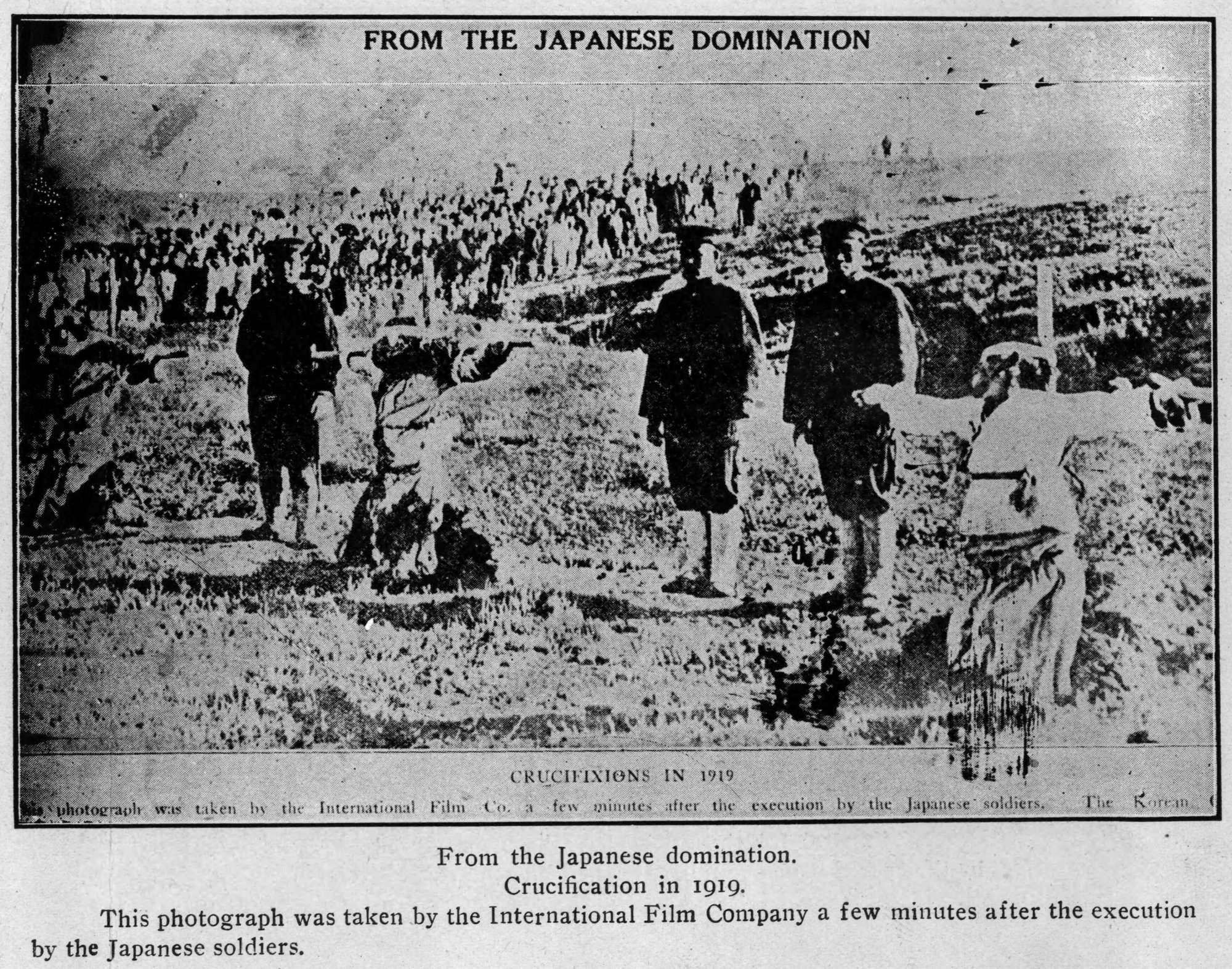
The March First Movement is remembered in large part because the protests were peaceful, but the response was not.
Japanese authorities violently suppressed the demonstrations. According to Korean records, over more than a year of protest, 46,948 people were arrested, 7,509 were killed, and 15,961 were wounded. Japanese figures gave lower totals, reporting 8,437 arrested, 553 killed, and 1,409 wounded. Even the existence of such sharply different figures shows how contested and politically charged this history became.
What is not in doubt is that the protests were crushed by force.
This pattern fit a broader colonial reality in which resistance was often met with severe repression. Elsewhere in colonial Korea, witnesses including Catholic priests reported that Japanese authorities could respond to suspected insurgency with extreme brutality. In the Jeamni massacre, for example, villagers were gathered inside a church that was then set on fire. The March First Movement unfolded within that larger climate of fear and violence.
Why the movement mattered even though it was suppressed
On the surface, Japan succeeded in putting down the demonstrations. The movement did not bring immediate independence. Korea remained under Japanese rule until 1945.
But the March First Movement changed the struggle in several crucial ways.
First, it turned independence into a truly mass movement. The demand for freedom was no longer confined to small political circles, exiled intellectuals, or armed resistance groups in border regions. It had been voiced publicly by enormous numbers of people inside Korea.
Second, the crackdown pushed many activists out of the peninsula. That exile helped create a more organized political center for the independence struggle abroad.
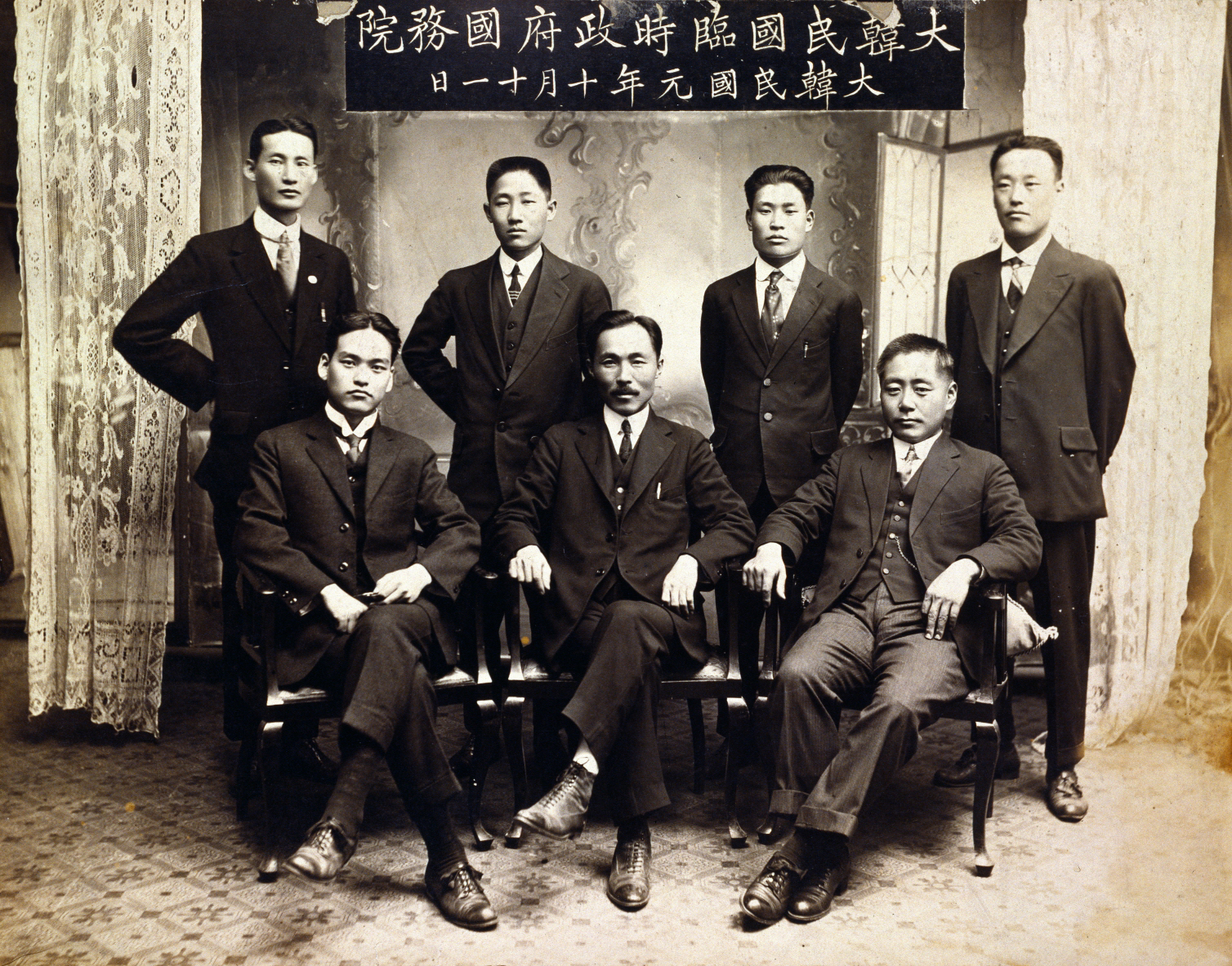
Just one month after the repression of the March First Movement, Korean activists gathered in Shanghai and founded the Korean Provisional Government, often shortened to KPG. A provisional government is a temporary government formed during a crisis, often by people who believe the existing rule is illegitimate. In this case, it became a government-in-exile, meaning it operated outside Korea while claiming to represent the Korean nation.
The Korean Provisional Government brought together a politically diverse group of independence activists, including both left- and right-leaning members. It supported both political and militant efforts for independence. Later, Kim Ku, one of its leading figures, founded the Korean Patriotic Organization, which carried out attacks on Japanese officials. Eventually, the Korean Liberation Army was formed and fought in China and Burma as World War II turned against Japan.
In that sense, the March First Movement was a bridge. It linked popular protest inside Korea with more organized international resistance outside it.
The wider independence struggle after March 1
The March First Movement did not end anti-Japanese resistance within Korea. Protests and activism continued.
In 1926, the June Tenth Movement broke out in Seoul during the funeral of King Sunjong. In 1929, the Gwangju Students Independence Movement became another major anti-Japanese protest. These events showed that the spirit of resistance had not vanished after 1919.
Outside Korea, guerrilla resistance also continued. Korean fighters in Manchuria and Russia waged armed struggle against Japanese forces. In 1920, forces led by Beom-do Hong ambushed Japanese troops in the Battle of Bongodong. In the Battle of Cheongsanri, combined Korean independence forces inflicted heavy losses on the Imperial Japanese Army. Japan responded with the Gando Massacre, in which between 5,000 and tens of thousands of Korean civilians were massacred in Gando.
These events reveal the broad shape of the independence movement after March First: peaceful demonstrations, underground activism, exile politics, and armed struggle all became part of the larger fight.
Colonial rule beyond the protests
To understand why the March First Movement resonated so deeply, it helps to remember the wider conditions of Japanese rule.
Japan imposed assimilation policies that aimed to absorb Koreans into the empire. Over time, the colonial government pushed Japanization more aggressively. Korean names and the Korean language were increasingly restricted, and by the early 1940s Korean language courses had been phased out in schools. Korean-language newspapers were also shut down as wartime controls intensified.
Japan also reshaped the economy and infrastructure of the peninsula. It built railways, ports, roads, and industrial facilities, but many scholars argue these were designed mainly to extract resources for Japan rather than benefit Koreans. Koreans often faced harsh labor conditions, discriminatory pay, and heavy taxation. Many peasants lost land and became tenant farmers.
During World War II, exploitation intensified. Around 5.4 million Koreans were mobilized to support Japan’s war effort. Many were forced into labor under terrible conditions. Many women and girls were forced into sexual slavery as so-called comfort women. These policies deepened the suffering that had already marked colonial rule.
Seen in that context, the March First Movement was an early mass uprising against a system that would grow even more coercive in the decades that followed.
The legacy of March First
The March First Movement failed to achieve immediate liberation, but it succeeded in something that often matters just as much in history: it changed political reality.
It showed that Korean resistance was broad, public, and impossible to dismiss as the work of a tiny fringe. It inspired later activism. It helped produce the Korean Provisional Government. And it became one of the defining symbols of Korea’s struggle for independence.
When Japan surrendered in August 1945, Korea was finally liberated from colonial rule after 35 years. Yet liberation was followed immediately by division into Soviet and American occupation zones, setting the stage for a new and painful chapter in Korean history.
Even so, the memory of March 1, 1919 endures because it captured a simple but powerful truth: a colonial state could suppress a protest, jail demonstrators, and kill civilians, but it could not erase the demand for independence.
Why this moment still stands out
Many episodes in colonial Korean history are remembered for military clashes, repression, or wartime atrocities. The March First Movement stands apart because it was a mass civic uprising built around a public declaration of national self-determination.
A declaration read aloud in a park became a nationwide wave. A peaceful movement was met with bullets. A crackdown meant to crush resistance instead helped give it new form, new institutions, and new international visibility.
That is why the March First Movement remains one of the clearest windows into Korea under Japanese rule: it reveals both the violence of the colonial system and the extraordinary scale of Korean resistance to it.