Tulip mania has become one of history’s favorite warnings about irrational markets. The image is irresistible: a flower bulb selling for astonishing sums, traders chasing easy profits, and a sudden collapse that seems to prove how wildly human beings can misprice value.
But the deeper story is more interesting than the myth.
During the Dutch Golden Age, some tulip bulb contracts reached prices of more than 10 times the annual income of a skilled artisan. Yet the famous episode was not simply about people passing around flowers. Much of the frenzy centered on contracts, promises to buy bulbs later at a price agreed upon in advance. In other words, traders were often buying and selling rights and obligations tied to tulips, not necessarily the bulbs themselves.
That distinction matters. It helps explain why tulip mania is remembered as both a spectacular financial craze and, according to many modern scholars, a much less devastating economic disaster than older stories claimed.
Why tulips became so desirable
Tulips were not ordinary flowers in Europe when they first appeared there. Their introduction is often attributed to Ogier de Busbecq, ambassador of Charles V, Holy Roman Emperor, to Sultan Suleiman the Magnificent, who sent tulip bulbs and seeds to Vienna in 1554 from the Ottoman Empire. From there, tulips spread to places including Augsburg, Antwerp, and Amsterdam.
Their rise in the Dutch Republic accelerated around 1593, when the botanist Carolus Clusius took up a post at the University of Leiden and established the hortus academicus, an academic botanical garden. He planted tulip bulbs and found they could tolerate the harsher conditions of the Low Countries. Soon afterward, the flower’s popularity took off.
Part of the appeal was visual. Tulips looked unlike other flowers familiar to Europeans at the time because of their intense petal colors. As Dutch commerce flourished, especially during the Golden Age, tulips became coveted luxury items and status symbols.
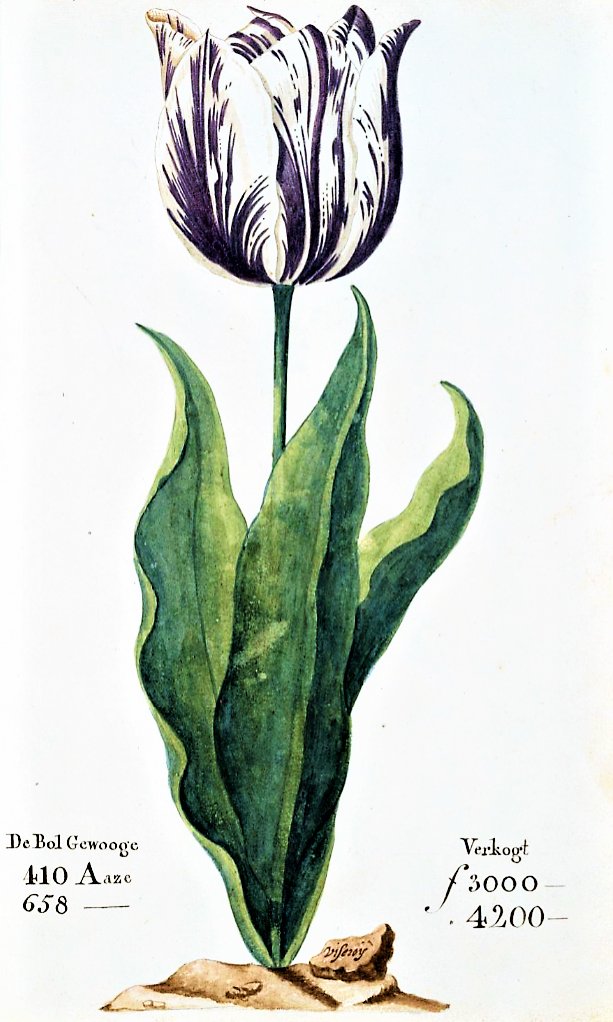
They also came in admired categories. Single-colored tulips were called Couleren. Multicolored varieties included Rosen, with white streaks on a red or pink background, and Violetten, with white streaks on purple or lilac petals. The rarest were Bizarden, marked by yellow or white streaks on red, brown, or purple backgrounds.
Those dramatic streaks and flame-like patterns made certain tulips especially prized. It is now known that this striking effect was caused by the tulip breaking virus, a tulip-specific mosaic virus that “broke” one petal color into two or more. Ironically, the same virus that made a tulip beautiful also progressively impaired the bulb’s ability to produce daughter bulbs, making prized varieties harder to multiply.
How a flower market became a contract market

Tulips only bloom in April and May, and for about one week. During the dormant period from June to September, bulbs could be uprooted and moved, so actual spot-market purchases took place then. A spot market is simply a market where the real goods are bought and delivered more or less directly.
But for much of the rest of the year, florists and traders used forward contracts. A forward contract is an agreement to buy something later at a price fixed now. In this case, people promised to buy tulip bulbs at the end of the season.
This was part of a broader development in Dutch finance. Forward markets appeared in the Dutch Republic during the 17th century, and one of the most notable centered on tulips. The Dutch had developed many techniques associated with modern finance, and tulips became part of that world.
Trading often happened in tavern “colleges,” where buyers paid a 2.5% fee called “wine money,” up to a maximum of three guilders per trade. No initial margin was required, and there was no mark-to-market system. In simple terms, traders were not posting ongoing collateral as prices changed. Contracts were between individual parties rather than through an exchange.
Because no bulbs were usually changing hands during this contract trading, the Dutch called it windhandel, or “wind trade.” The nickname captured the strange, intangible quality of the market: traders were dealing in promises, expectations, and future delivery rather than armfuls of flowers.
Why prices soared
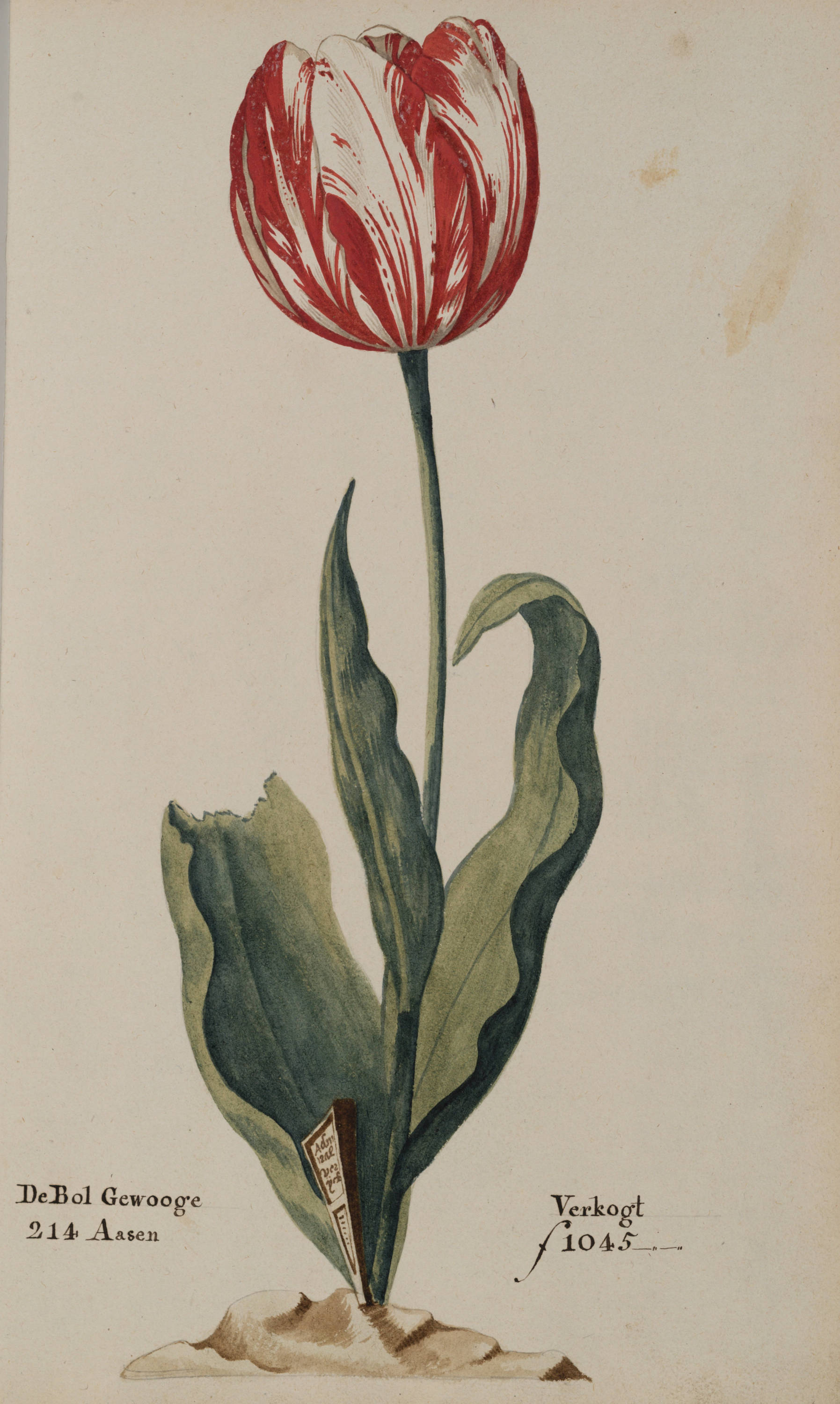
As tulips grew fashionable, professional growers paid more and more for bulbs that produced the spectacular broken-color effects. Prices rose steadily. By 1634, demand from the French helped attract speculators. Through 1636, the contract prices of rare bulbs continued to climb.
Then the boom broadened. By November 1636, even common, unbroken bulbs began increasing in price, and soon almost any tulip bulb could fetch hundreds of guilders.
At the peak in February 1637, some bulbs sold for extraordinary sums. Certain tulip bulbs sold for more than 10 times the annual income of a skilled artisan. That comparison helps explain why tulip mania has remained such a powerful symbol of runaway speculation.
Yet historians and economists have struggled to measure exactly how extreme the market was, because price records from the 1630s are limited and often come from biased or speculative sources. Available data combine several different kinds of transactions, including forward trades, spot sales, notarized forward sales, and estate sales, making neat comparisons difficult.
February 1637: the crash
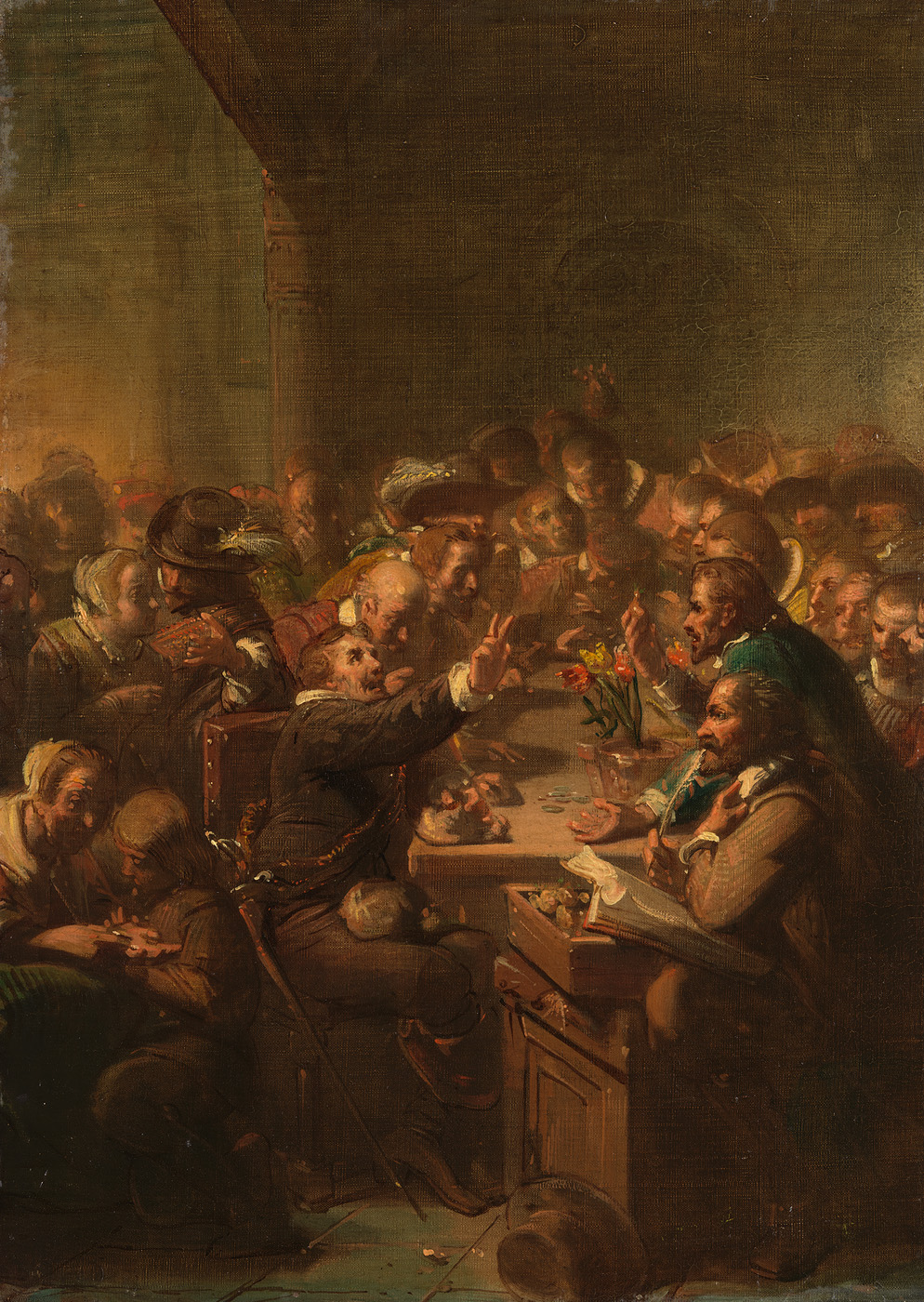
Tulip mania reached its peak during the winter of 1636–37. Some contracts changed hands five times in that period. Then, in February 1637, tulip bulb contract prices collapsed abruptly and trade ground to a halt.
A contemporary satire suggests the crisis began to unravel on 3 February in Haarlem, where an auctioneer reportedly failed to attract buyers even after lowering the asking price several times. The exact circumstances of the crash are unknown, but by the end of the first week of February the collapse seems to have become clear.
The practical problem was immediate: buyers no longer wanted to honor contracts, and there was no firm legal basis for forcing them to do so. Dutch law had already made short selling problematic, and forward contracts were deemed unenforceable, meaning traders could repudiate deals if losses loomed.
By the end of February, representatives gathered in Amsterdam and proposed a compromise. Contracts entered before December 1636 would remain binding, but later contracts could be cancelled by paying a fee equal to 10% of the price. The issue went to the Court of Holland, which declined to rule decisively and sent the matter back to city councils. In Haarlem, the city later ruled in May that buyers could cancel existing contracts by paying 3.5% of the price. The courts remained occupied with tulip disputes through 1639, but in the end most contracts were simply never honored.
Did tulip mania really wreck the Dutch economy?
This is where the story takes its biggest twist.
Tulip mania is often described as a national catastrophe that shattered Dutch commerce. That view owes much to the enormously influential 1841 book Extraordinary Popular Delusions and the Madness of Crowds by Charles Mackay. His dramatic retelling helped fix tulip mania in the public imagination as a classic case of mass irrationality.
Mackay claimed that people from every level of society rushed into the tulip trade, that fortunes were lost, and that Dutch commerce suffered a severe shock. His version included vivid stories and striking examples, such as land supposedly offered for a single Semper Augustus bulb.
But many modern scholars dispute how destructive the episode really was.
Research since the 1980s has argued that Mackay’s account was incomplete and often inaccurate. Anne Goldgar concluded that the phenomenon was limited to “a fairly small group,” and that most accounts from the period relied on a tiny amount of contemporary propaganda, repeated again and again. Her study of archived contracts found that even at the peak, the tulip trade was conducted almost entirely by merchants and skilled craftsmen who were wealthy, but not nobility.
The broader Dutch economy remained strong. The Dutch Republic was one of the world’s leading economic and financial powers in the 17th century, with the highest per capita income in the world from about 1600 to about 1720. Tulip mania had no critical influence on that prosperity.
Goldgar found fewer than half a dozen people who appear to have suffered financial troubles in the period, and even in those cases it is not clear that tulips were the cause. One reason the damage may have been limited is simple: in many cases, money had not yet changed hands. Prices rose, contracts changed owners, and people anticipated profits, but the collapse did not necessarily wipe out cash that had already been paid.
Why the “bubble” may be more complicated than it sounds
Tulip mania is often called the first recorded speculative bubble or asset bubble in history. An asset bubble is a situation in which the price of something rises far above what people consider its intrinsic value, meaning its fundamental or underlying worth.
But not all economists agree that tulip prices fit that story in a straightforward way.
Some argue that rare flower prices naturally behave in extreme ways, especially when a newly fashionable plant is introduced and supply cannot quickly increase. The article compares tulips with hyacinths, which showed a similar pattern: very high initial prices followed by steep declines as cultivation spread.
Others point to legal uncertainty. One influential argument is that late in 1636 and early in 1637, tulip buyers expected a decree that would effectively let them walk away from contracts by paying only a small penalty. That would transform a standard forward contract, which normally obliges the buyer to purchase, into something more like an option contract, where the buyer has the right but not the full obligation to go through with the purchase. If traders expected that shift, soaring contract prices might reflect changing legal rules rather than pure irrationality.
Still other economists think these explanations do not fully account for the dramatic speed of the rise and collapse.
So tulip mania remains fascinating partly because it resists a neat conclusion. Prices undeniably surged and crashed. Contracts were traded intensely. But the familiar image of a whole nation ruined by flower speculation is likely much more legend than reality.
Why the story lasted so long
Even if the economic fallout was limited, the cultural shock was real. Tulip mania challenged people’s understanding of value. In the 17th century, it seemed absurd that a summer flower could be tied to prices larger than many annual incomes, and that those prices could swing so wildly in winter.
That made the episode a powerful moral and social symbol. Religious pamphlets portrayed the upheaval as a warning about earthly obsession. Later writers used it to explain other booms and busts. Over time, “tulip mania” became shorthand for any moment when people appear to lose touch with common sense in a market.
That legacy may be why the story still blooms centuries later. It is not only about flowers or finance. It is about status, desire, collective belief, and how a market built on promises can become bigger than the thing being traded.
And that may be the most memorable twist of all: tulip mania became famous not just because prices rose and fell, but because the legend of the crash grew even larger than the crash itself.