Toilet training can feel like one of the biggest transitions in toddlerhood. Many parents and carers wonder when to start, how quickly it should happen, and what to do if progress seems slow. A helpful way to think about it is simple: toilet training works best when readiness comes before rushing.
The toddler years, roughly from ages 1 to 3, are a period of major cognitive, emotional, and social development. During this stage, children are learning to walk, run, climb, speak in short phrases, and explore their world with growing independence. With so much development happening at once, it makes sense that toilet training depends on more than age alone.
Watch the story on DeepSwipe

What “readiness” really means
Toilet training readiness has two main parts: physiological readiness and psychological readiness.
Physiological readiness refers to whether the child’s body is capable of doing the tasks toilet training requires. This includes being able to control the anal and urethral sphincters. These are ring-shaped muscles that control bowel movements and urination. Readiness also includes being able to sit upright and walk.
Psychological readiness is about the child’s mind and motivation. A toddler needs to be willing to participate in toilet training and able to understand and follow directions. In other words, the child is not just physically able to try, but mentally prepared to take part in the process.
When both kinds of readiness are present, training is more likely to go smoothly.
Why rushing can backfire

Experts note that development happens on a continuum. There is a wide range of what may be considered normal, and individual children can develop at different rates. Premature birth or illness during infancy may also slow a young child’s development. That is why carers are advised not to worry too much if a child does not reach every milestone at exactly the same time as another child.
This wider principle matters for toilet training too. Just as with walking or talking, children develop in their own time. The goal is not to push a toddler through a milestone before they are ready, but to support them when the pieces are in place.
A calm approach fits well with what is known about toddler development. These years are full of growing independence, strong preferences, and active exploration. Toddlers are learning that they are separate beings from their parents and are beginning to test boundaries while figuring out how the world works. Because of this, forcing a process can create stress when what the child really needs is guidance and consistency.
The physical side of toilet training

The physical requirements of toilet training may sound basic, but they are significant. A child must be able to control the muscles involved in peeing and bowel movements. Without that control, success is much harder, no matter how motivated the child or family may be.
Sitting upright is also important. Using a potty or toilet requires balance and posture, which connect to broader physical development during the toddler years. Walking matters too, because it gives the child the mobility needed to get to the toilet and take part more independently.
These skills belong to the larger world of toddler development. Physical growth includes getting bigger and stronger. Gross motor development involves control of large muscles used for walking, running, jumping, and climbing. Fine motor development involves controlling small muscles, which helps toddlers feed themselves, draw, and manipulate objects. Toilet training draws from this larger developmental picture rather than existing as a completely separate skill.
The mental side matters just as much
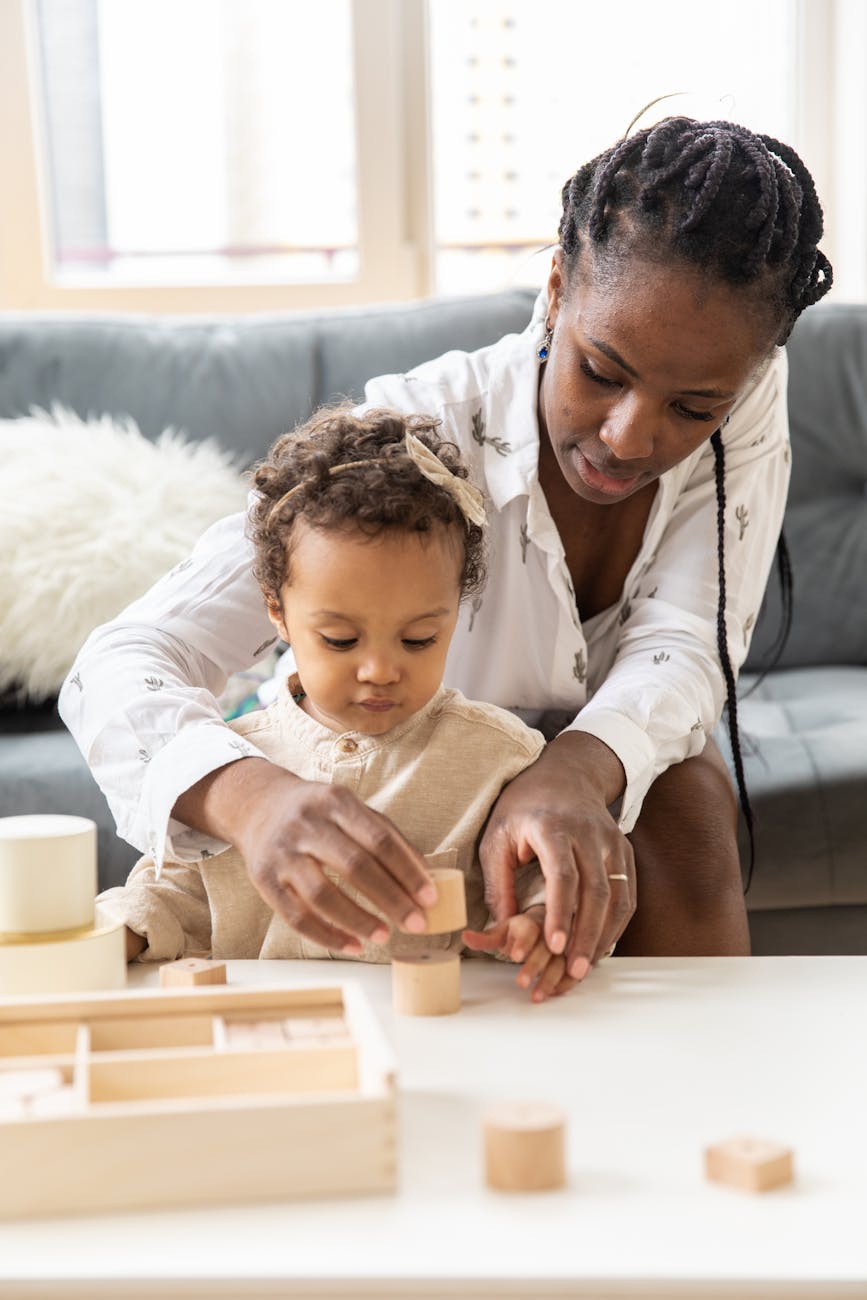
Even when a toddler’s body is capable, the process still depends on understanding and cooperation. That is where psychological readiness comes in.
A child who can follow directions is better able to learn the sequence of toilet training. That sequence should be taught calmly and consistently. This matters because toddlers are still developing language, self-awareness, and emotional regulation.
Language development during toddlerhood helps support learning. A toddler’s first word often appears around 12 months, though that is only an average. Vocabulary keeps growing, and around 18 months language often increases rapidly. Toddlers may learn as many as 7 to 9 new words a day, and around that time they generally know about 50 words. By 21 months, many begin using two-word phrases such as “I go,” “mama give,” or “baby play.” As children become more able to express wants and needs verbally, following routines like toilet training can become easier.
Calm teaching, consistent steps
The process of toilet training is not only about what the child can do, but how the steps are taught. Calm, consistent teaching is a core part of successful training.
Consistency helps toddlers learn patterns. Calmness matters because toddlers are highly emotional learners. They often have strong feelings but do not yet know how to express them in the way older children and adults do. This is one reason the toddler years are sometimes called the “terrible twos,” a period known for temper tantrums.
Temper tantrums can be triggered by hunger, discomfort, fatigue, or a child’s desire for more independence and control over the environment. During toilet training, these same emotional realities can shape how a child responds. A hurried or tense approach can make a difficult moment harder, while a calm and developmentally appropriate response can help steady progress.
Parental response plays an important role here. The way adults communicate with a toddler can either set off a tantrum or calm the situation. That does not mean toilet training has to be perfect. It means the adult’s tone and consistency are part of the learning environment.
Toilet training and toddler independence
Toilet training is closely tied to a bigger theme of toddlerhood: growing independence.
By age two, toddlers typically walk, run, climb, and speak in short phrases. Their vocabulary expands rapidly, and they begin to show increased independence as they explore and make their preferences known. Toilet training fits naturally into this stage because it asks the child to take part in a routine that involves body awareness, communication, and self-control.
This is also the age when self-awareness becomes more visible. Around 18 months, children begin to recognize themselves as separate physical beings with their own thoughts and actions. With self-recognition can come new emotions such as embarrassment and pride. These feelings can also shape toilet training experiences, since the process involves the child becoming more aware of their own body and actions.
A milestone, but not a race
Developmental milestones can be useful, but they are not a stopwatch. Research has found links between earlier passing of some developmental milestones and later intelligence, but experts still advise against rushing children through milestones as long as they are reaching them within a normal range.
That advice is especially valuable for toilet training. Families often compare children, but toddler development varies widely. The most practical question is not “Has another child already done this?” but “Is this child physically and psychologically ready?”
Starting from readiness respects how toddlers actually grow. It acknowledges that body control, language, emotional development, and independence all develop together, but not always on the same exact timetable.
The simple takeaway
Toilet training works best when a toddler is ready in body and mind. Body readiness means control of the anal and urethral sphincters, sitting upright, and walking. Mind readiness means motivation and the ability to understand and follow directions. From there, the process should be taught calmly and consistently, with parental response supporting steady progress.
In toddlerhood, readiness is not a small detail. It is the foundation.