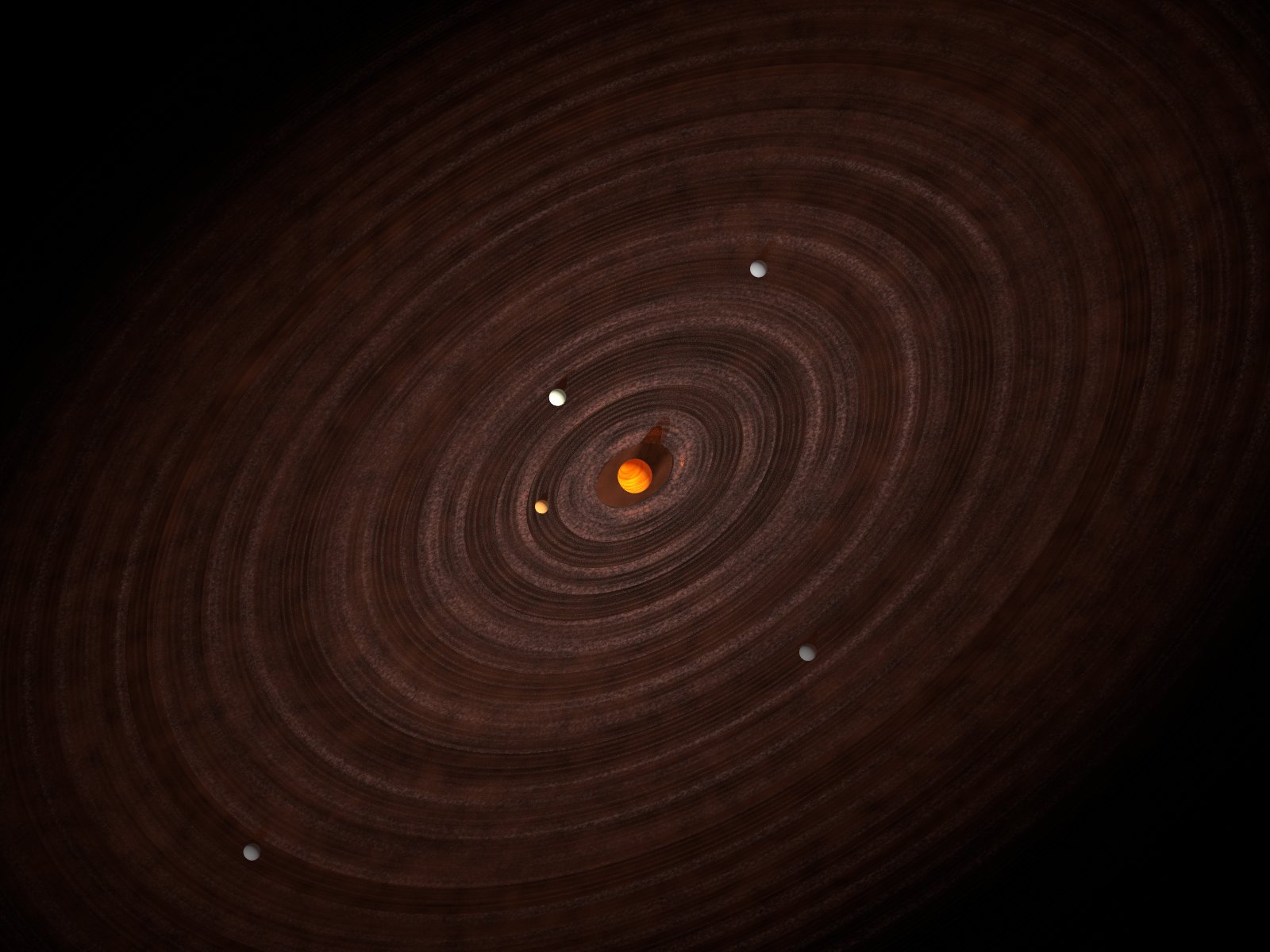
Formation of jovien planet moons. In gas and dust disk coagulates big moons, that reaches isolation masses. Them migrates in. Gals are vicinites of these moons. Moons can sometimes collide. Planet has very hot surface after formation and radiates lot of IR.

Earth Arrived Late

Jupiter likely began forming 50 million years before Earth, beyond a boundary called the snow line. There, water could freeze into solid material for building a planet.

Jupiter: The Giant That Turned Back

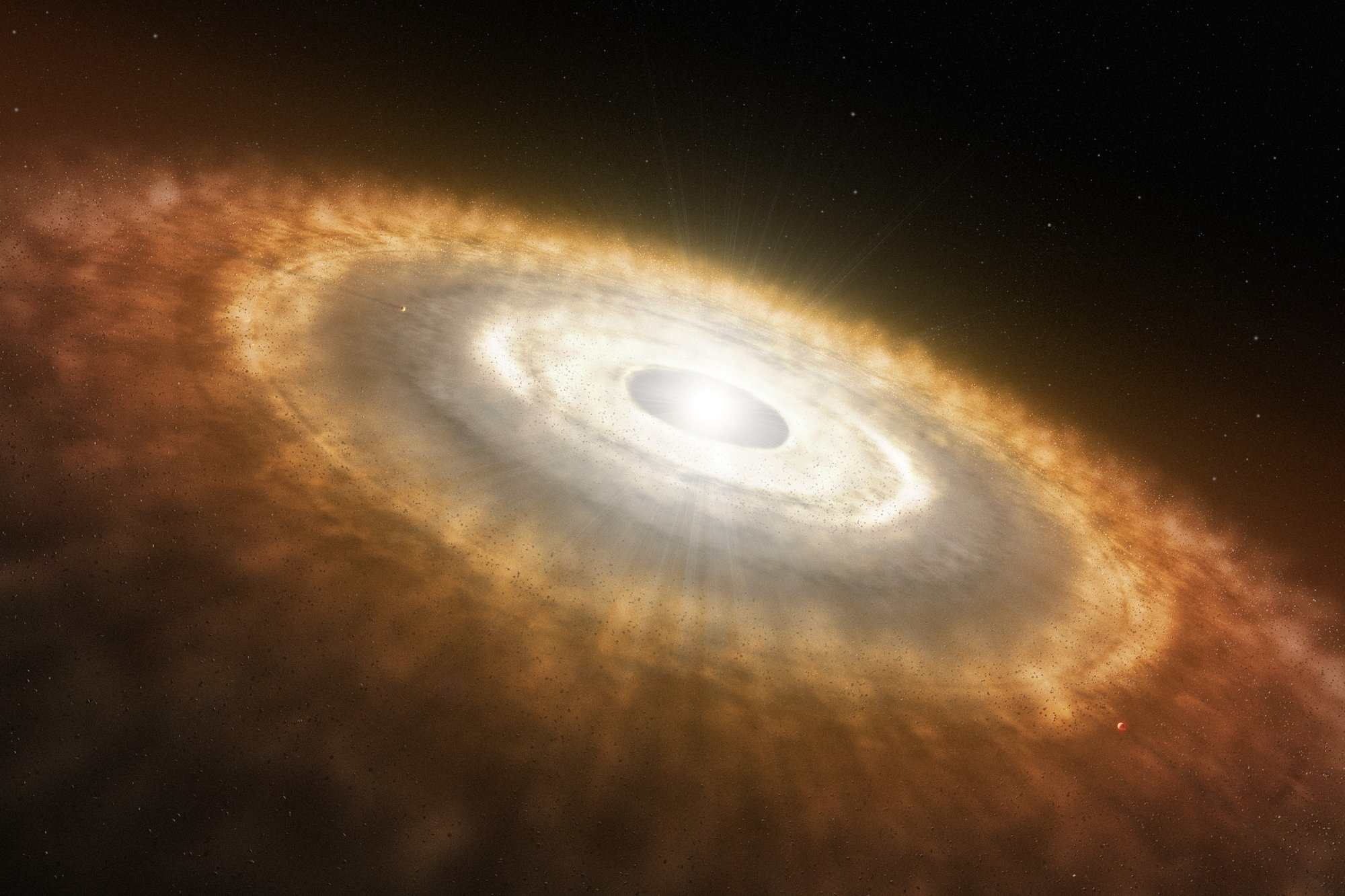
Artist’s impression of a baby star still surrounded by a protoplanetary disc in which planets are forming. Using ESO’s very successful HARPS spectrograph, a team of astronomers has found that Sun-like stars which host planets have destroyed their lithium much more efficiently than planet-free stars. This finding does not only shed light on the low levels of this chemical element in the Sun, solving a long-standing mystery, but also provides astronomers with a very efficient way to pick out the stars most likely to host planets. It is not clear what causes the lithium to be destroyed. The general idea is that the planets or the presence of the protoplanetary disc disturb the interior of the star, bringing the lithium deeper down into the star than usual, into regions where the temperature is so hot that it is destroyed.

A Race to Grab the Gas

A solid core formed first, then gathered a vast atmosphere from the gas surrounding the young Sun. Jupiter had to grow before that gas cloud dispersed.

Jupiter: The Giant That Turned Back

Jupiter: The Giant That Turned Back | DeepSwipe